

RJW Electrical
Street Lighting Contractors Across the Midlands
RJW Electrical provides street lighting installation, inspection and maintenance for commercial sites, public areas and managed developments across the Midlands. Project teams coordinate cabling, lighting controls and safety checks to support compliant, dependable external lighting systems.
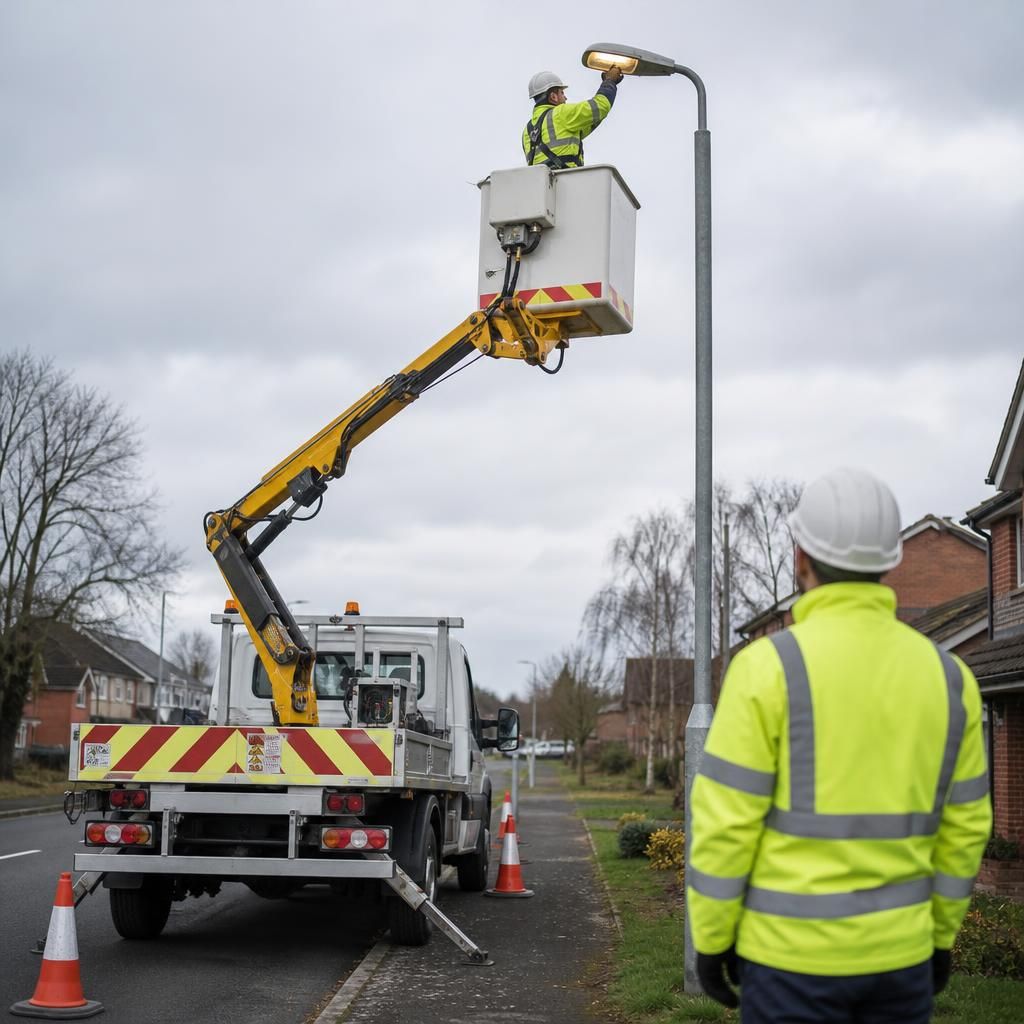
Experienced, Accredited Street Lighting Specialists
Street lighting contractors manage the electrical infrastructure that illuminates roads, access routes, car parks and shared external areas. Their work can include column wiring, feeder cabling, lantern connections, photocells, timers, controls, inspection and fault diagnosis, with each element selected for safe, dependable operation.
RJW Electrical’s qualified, insured and DBS-checked engineers work to the current 18th Edition wiring regulations. NAPIT and Trustmark membership, together with registration on the Electrical Safety Register, provides independent evidence of professional competence and attention to recognised installation standards.
With 20 years’ experience, RJW Electrical can support projects requiring coordinated installation, testing, remedial work or planned maintenance. Clear quotations help clients compare the work involved and specification provided, with quotes available without a call-out fee.
From Enquiry to Completion: How Street Lighting Projects Are Managed
A well-managed street lighting project follows a defined process: the contractor establishes requirements, assesses the site, prepares the installation, coordinates site work, verifies electrical performance, and records completion details for the client or responsible authority.
- 01
1. Initial Enquiry and Project Brief
The contractor establishes the location, type of external area, lighting objectives and known issues. Relevant details may include roads, access routes, car parks, communal areas, existing columns, controls and any planned changes to the site.
- 02
2. Site Assessment and Electrical Review
A site assessment examines the existing lighting infrastructure, column wiring, feeder cabling, lantern connections, control equipment and visible condition. This helps identify access requirements, potential remedial work and the testing needed before or after installation.
- 03
3. Scope, Specification and Quotation
The findings are used to define the proposed works, including equipment connections, cabling, control arrangements, inspection requirements and any remedial items. A clear quotation enables the client or responsible authority to compare the work included and the specification provided.
- 04
4. Installation Preparation
Before work starts, the contractor confirms the agreed scope, prepares the required materials and coordinates the sequence of site activities. The installation approach should account for safe working, circuit arrangements and the need to limit disruption within the managed external area.
- 05
5. Electrical Installation and Remedial Work
Engineers carry out the agreed street lighting works, which may include column wiring, feeder cabling, lantern connections, photocells, timers and lighting controls. Existing faults or defects identified within the scope can be addressed as part of the project.
- 06
6. Inspection and Electrical Testing
Completed circuits and connected equipment are inspected and tested to verify safe electrical performance. Testing can also be used to assess existing installations, investigate faults and identify work requiring further attention.
- 07
7. Completion and Handover Information
At completion, the contractor reviews the finished installation with the client or responsible authority and records relevant inspection, testing and remedial details. This provides a practical reference for future maintenance, fault diagnosis and planned electrical work.
Accredited Expertise
NAPIT, Trustmark and Electrical Safety Register membership supports accountable work, while qualified, insured and DBS-checked engineers apply current wiring requirements.
Street Lighting Project Questions Answered
What site information do street lighting contractors need before preparing a quotation?
Before work starts, agree access arrangements, traffic or pedestrian controls, isolation requirements and deliverables. After completion, request test results, updated records and details of any outstanding remedial recommendations for review.
What happens if a street lighting inspection identifies a fault?
The contractor should isolate unsafe equipment, diagnose the cause, document findings and recommend repair or replacement. Remedial work can then be quoted separately, subject to client approval and site requirements.
How disruptive is street lighting installation for residents, tenants, or site users?
Disruption depends on access, excavation, cabling and traffic controls. Contractors should phase work, protect pedestrian routes, coordinate with site users, and reinstate disturbed surfaces before final handover, inspection and testing.
What should a street lighting maintenance contract include?
A maintenance contract should define inspection intervals, asset registers, cleaning requirements, fault reporting, repair authorisation, safety responsibilities, documentation, and review arrangements, with costs and exclusions clearly stated before work begins.
How are street lighting columns and foundations assessed before installation?
Before installation, assess ground conditions, drainage, services, column loading, clearances and access. Foundation design should reflect column type, wind exposure and soil findings, with structural requirements documented for construction purposes.
Reliable Street Lighting Project Standards
Street lighting contractors should set out the scope, site arrangements, access requirements and agreed attendance clearly, with updates when agreed details change. This gives clients a practical basis for coordinating works and reviewing decisions.
RJW Electrical’s careful workmanship includes tidy cable routes, secure connections and protection of surrounding surfaces, followed by a professional handover recording completed work and any recommendations.
Clear Project Communication
RJW Electrical keeps technical decisions and agreed changes clear, helping domestic, commercial and managed-site clients understand what each stage involves.
Coordinated Site Attendance
Planned attendance is arranged around site access, working areas and relevant project contacts, reducing avoidable disruption during street lighting works.
Safety-Conscious Planning
Electrical risks, existing infrastructure and the interface between lighting equipment and controls are considered before installation or remedial work proceeds.
Careful Technical Work
Engineers take a methodical approach to component connections, equipment positioning and system interfaces so that the completed installation is suitable for its intended use.
Professional Handover
Clients receive a clear account of completed work, relevant test information and any points requiring future attention, supporting informed decisions after the project.
Discuss Your Street Lighting Requirements
Discuss your street lighting requirements with RJW Electrical to clarify the proposed scope, technical considerations and testing needs. Request clear advice or a quotation without a call-out fee, based on the requirements of your site and project.
Explore
More about street lighting contractors
Common questions
- What site information do street lighting contractors need before preparing a quotation?
- What happens if a street lighting inspection identifies a fault?
- How disruptive is street lighting installation for residents, tenants, or site users?
- What should a street lighting maintenance contract include?
- How are street lighting columns and foundations assessed before installation?