
RJW Electrical
Professional Access Control Installation
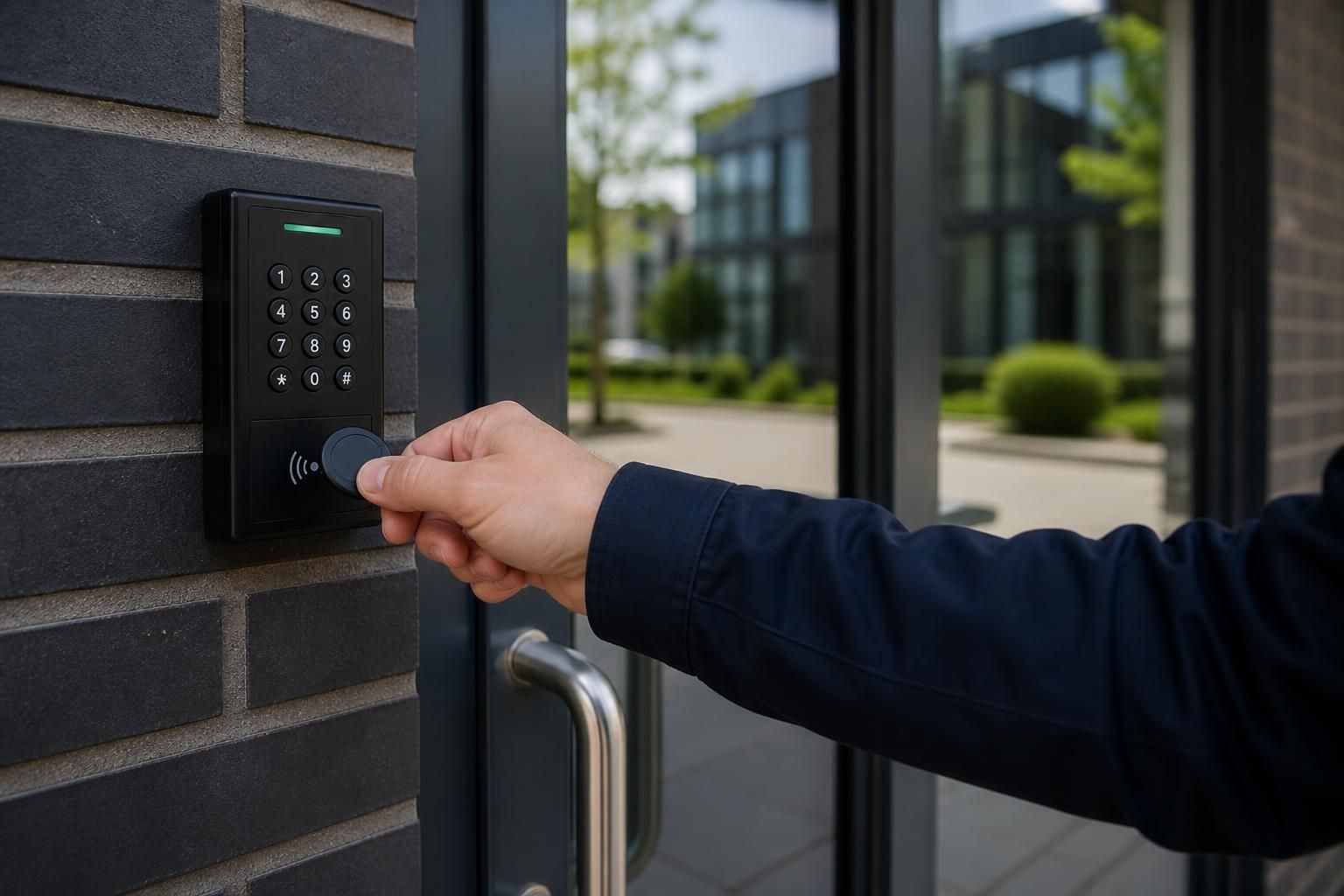
Access control installation manages entry to workplaces, residential buildings and shared premises through coded doors, key fobs or intercoms. RJW Electrical provides professionally planned systems, with fully qualified engineers, clear quotations and installations designed around each property’s security requirements.
Choosing the Right Access Control System
Which access control system is right for my property?
The right system depends on door numbers, user turnover, security levels, fire strategy, and integration needs. Options include standalone keypad units, networked fob readers, video intercoms, and managed multi-site platforms.
What should an access control installation include?
A complete installation should cover site assessment, suitable readers and locks, secure cabling, controller programming, user credentials, exit arrangements, testing, compliance checks, and handover guidance so systems can be managed.
How does access control affect fire safety requirements?
Access control must support escape, not obstruct it: specify fail-safe release, emergency override, suitable door hardware, and testing alongside the building’s fire strategy and relevant regulations by suitably qualified installers.
Can access control integrate with existing security systems?
Yes. Access control can connect with CCTV, alarms, intercoms and building management platforms, allowing events such as forced entry or denied credentials to trigger coordinated monitoring, alerts and recorded evidence.
What affects the cost of access control installation?
Cost depends on door hardware, reader type, controller capacity, cabling complexity, power requirements, user numbers, software licensing, building condition and commissioning needs. An itemised quotation helps compare installation options accurately.
Access Control Options Compared
Access control systems vary in how they identify users, manage permissions and record activity. Comparing standalone, networked and integrated approaches helps determine which arrangement suits a property’s occupancy, risk profile, management requirements and future expansion plans.
- 01
Standalone keypad or fob systems
A standalone system controls one door or a small number of doors from local equipment. Keypad codes and proximity fobs are straightforward to issue or change, making this option suitable for smaller offices, shared buildings and low-complexity access arrangements.
- 02
Networked access control
Networked systems connect multiple doors to central management software. Authorised users, access schedules and permissions can be managed from one point, which is more suitable for larger premises or buildings with several entry routes.
- 03
Intercom-based entry
Intercom access control allows an occupant, receptionist or security contact to speak to a visitor before releasing the door. It suits flats, offices and shared entrances where visitor verification is needed alongside controlled access.
- 04
Biometric access control
Biometric systems identify users through characteristics such as fingerprints or facial features rather than cards or codes. They can reduce the need to issue physical credentials, but require careful consideration of privacy, data handling, user suitability and system compatibility.
- 05
Integrated security systems
Access control can be linked with related security equipment, such as door monitoring, alarms or CCTV, so events can be reviewed as part of a wider security arrangement. This approach is useful where a property needs coordinated protection rather than isolated door control.
- 06
Choosing the appropriate installation
The most suitable option depends on the number of doors, user turnover, visitor access, administration requirements and the need for recorded activity. A professional survey should also consider door hardware, escape routes, power supplies and compliance before the system is specified.
Access Control Installation Standards and Support
RJW Electrical’s access control work includes suitable equipment selection, secure cable routing, configuration of user permissions and documented testing. Installations follow the latest 18th edition wiring requirements, with handover information to support ongoing system management and future alterations.
Planned Around the Property
Each access control installation is considered in relation to the building layout, entry points and the people who need to use it. This helps ensure the chosen arrangement is practical for workplaces, homes and shared premises.
Qualified Security Engineers
RJW Electrical’s engineers are fully qualified, insured and DBS-checked. Work is delivered by a professional electrical contractor that is a NAPIT member and part of the TrustMark scheme.
Clear Project Quotations
A clear quotation sets out the proposed access control work before installation begins. RJW Electrical also provides a no call out fee quote, helping customers assess the project on defined requirements rather than uncertain initial charges.
Security-Focused Installation
Access control equipment is installed with attention to dependable operation, secure routing and appropriate user access. The system is configured to reflect the agreed security requirements of the property.
Useful Handover Information
Customers receive information to help them understand and manage the installed system. This provides a practical reference when access arrangements need to be reviewed or altered in future.
Questions to Ask Before Approving Access Control Installation
Before approving access control installation, confirm which doors and entry points require protection, who needs access, and how visitors, contractors and former users will be managed. Ask whether the proposed system supports the credentials you intend to use, how emergency egress and power failure will be handled, and whether it can integrate with existing security or building systems where required.
Request a written scope that identifies equipment, labour, commissioning, user setup, alterations to doors and any exclusions. Also ask how faults, additional users, lost credentials and future changes will be dealt with, what records you will receive, and whether the installer can demonstrate relevant qualifications, insurance and compliance arrangements.
Will the system suit the building and users?
Confirm whether the proposed arrangement supports the required combination of key fobs, coded entry, intercoms or other credentials. Ask how permissions will be created, amended and removed, whether access can be limited by door or user group, and how lost or unreturned credentials will be cancelled.
How will safety and emergency exit requirements be handled?
Ask which locks, release mechanisms, exit devices and request-to-exit controls are included, and how they will work with the existing doors and escape routes. Confirm who is responsible for coordinating any requirements affecting fire doors, alarm interfaces or other life-safety systems before installation begins.
What qualifications and compliance evidence should be provided?
RJW Electrical is a member of NAPIT, the TrustMark scheme and the Electrical Safety Register, with fully qualified, insured and DBS-checked engineers. Ask what certification, test results and completion records will be supplied for the particular installation, and how the work is assessed against the latest 18th edition wiring requirements.
What should the written quotation include?
Check that the quotation identifies the proposed devices, control equipment, power supplies, cabling, containment, door alterations, programming, commissioning and user setup. It should also state the treatment of access equipment supplied by others, remedial work, taxes or other exclusions, and whether the quotation is provided without a call-out fee.
What support and records will be provided after installation?
Ask for user and door schedules, programming details, test documentation, operating guidance and information about any passwords or administrator permissions that must be retained securely. Clarify who can add or remove users, how changes to doors or credentials are requested, and what information will be needed if another engineer later works on the system.
Discuss Your Access Control Requirements
Contact RJW Electrical to discuss your access control requirements, review suitable options for your property and request a clear, tailored quotation. The team can help you define the installation scope before you approve the work.