
RJW Electrical
Commercial Access Control Installation
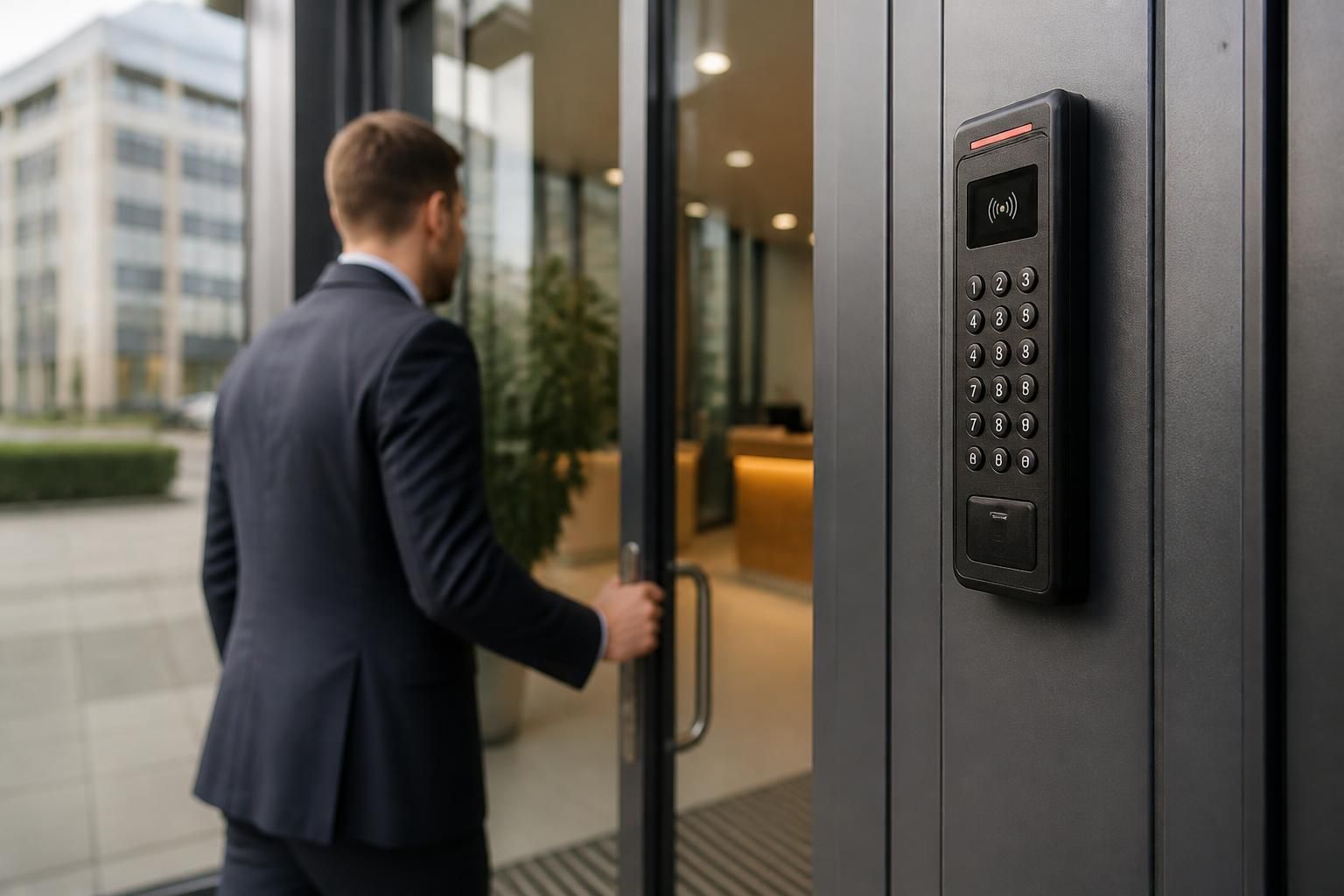
Commercial access control installation secures business premises by managing who can enter specific areas. RJW Electrical designs and installs door entry, intercom and Paxton systems for dependable control across offices, retail sites and commercial buildings.
Commercial Access Control Questions Answered
Which access control system is right for your commercial property?
System choice depends on door numbers, user permissions, visitor handling, credentials and existing security equipment. A site survey identifies suitable readers, locking hardware, intercoms and management features for every entrance.
What does commercial access control installation involve?
It covers assessing entrances, specifying readers and locking hardware, installing controllers and cabling, connecting management software, configuring credentials and permissions, then testing each door before handover to staff and administrators.
Can access control be added to an existing commercial security system?
Yes. Access control can connect with compatible alarms, CCTV and intercoms, allowing events, video verification and entry records to support coordinated security management without replacing suitable existing equipment where appropriate.
Which credentials suit a commercial access control system?
Credentials should match user numbers, security requirements and operating habits. Proximity cards or fobs suit routine staff access, while PINs, mobile credentials or biometrics provide alternative options for different users.
What maintenance does a commercial access control system require?
Maintenance includes checking locks, readers, exit devices, cabling, power supplies and software, reviewing access permissions, testing alarms and release mechanisms, and investigating faults before they disrupt controlled entry or business operations.
Commercial Access Control Options Compared
The most suitable access control arrangement depends on premises layout, user numbers, security requirements and existing infrastructure. The options below compare standalone door entry, intercom and Paxton systems by control, scalability, integration and ongoing management needs.
- 01
Standalone Door Entry
A standalone keypad or proximity-reader system is suited to a single entrance or small commercial premises. Access permissions are managed at the door, making the installation relatively straightforward, but it offers less central control and fewer integration options than a networked system.
- 02
Intercom Access Control
Intercom systems are useful where visitors need to speak to someone before entry is released. They suit shared entrances, offices and sites with a reception point, with audio or video communication helping staff identify visitors before unlocking the door.
- 03
Paxton Networked Access Control
A Paxton system is better suited to premises with multiple doors, larger user groups or changing access permissions. Central administration can support credentials, door schedules and access records across the site, with greater scope for future expansion than standalone entry.
- 04
Selecting the Right Arrangement
The practical choice depends on the number of controlled doors, how users and visitors enter, the level of record-keeping required and whether the system must connect with existing security equipment. Reviewing these points before installation helps avoid paying for unnecessary features or choosing a system that cannot support future changes.
Professional Standards for Commercial Access Control Installation
Every installation should provide a clear audit trail and consistent operation. RJW Electrical applies current wiring standards, documents access permissions and system settings, and explains routine administration to the person responsible for the premises.
Controlled Entry Points
Door entry, intercom and Paxton systems can be configured to manage access through defined doors and areas, helping businesses apply consistent entry permissions across their premises.
Standards-Led Installation
RJW Electrical works to the latest 18th edition wiring regulations, with NAPIT membership, TrustMark registration and inclusion on the Electrical Safety Register supporting a professionally delivered installation.
Qualified, Vetted Engineers
Installations are carried out by fully qualified, insured and DBS-checked engineers, providing a suitable professional standard for offices, retail premises and other commercial buildings.
Documented System Setup
The installation includes clear records of access permissions and system settings, giving the person responsible for the premises a practical reference for ongoing administration.
Questions to Ask Before Approving Your Access Control Installation
Before approving a commercial access control installation, confirm that the proposed system matches the building’s entry points, user groups and security requirements. Ask how credentials will be issued and withdrawn, how authorised access is recorded, and how doors behave if power, communications or the fire alarm is interrupted.
Request a written scope covering equipment, cabling, programming, testing, documentation and handover. The quotation should also identify any required building alterations, ongoing administration arrangements and costs that are excluded, so you can compare proposals on a like-for-like basis.
Are the installer and certification arrangements suitable?
Ask for details of the engineers carrying out the work and the certificates that will be provided after completion. RJW Electrical has 20 years of experience and is a NAPIT member, a member of the TrustMark scheme and listed on the Electrical Safety Register. Confirm that the final documentation identifies the installed equipment, test results, alterations and any limitations that the person responsible for the premises needs to know.
Will the system suit the building and its doors?
The assessment should consider door construction, hinges, closers, electric locking hardware, reception points and any shared entrances. It should also address emergency release, escape routes, accessibility and the relationship between controlled doors and fire safety arrangements. Request clarification where the installation requires replacement hardware, new power supplies, containment or alterations to fire-resisting doors.
How will access be managed after installation?
Ask whether the proposed system supports separate permission levels for offices, stores, plant areas and other restricted spaces. Establish who owns the administrator credentials, how lost credentials are cancelled, how former users are removed and how access events can be reviewed. The handover should explain routine administration in terms that the nominated premises manager can apply consistently.
What exactly is included in the quotation?
Ask whether the quotation includes the specified readers, controllers, locks, power supplies, cabling, configuration, testing, user training and handover information. Confirm the treatment of software, replacement credentials, future additions, remedial building work and ongoing maintenance, including which items are excluded. RJW Electrical provides a No Call Out Fee Quote; ask for the agreed scope and pricing in writing before approval.
Discuss Your Commercial Access Control Requirements
Contact RJW Electrical to discuss your commercial access control requirements. We can advise on the appropriate next steps, answer practical questions about your premises and arrange a tailored quotation or installation booking.