
RJW Electrical
Safe, Compliant Distribution Board Upgrades
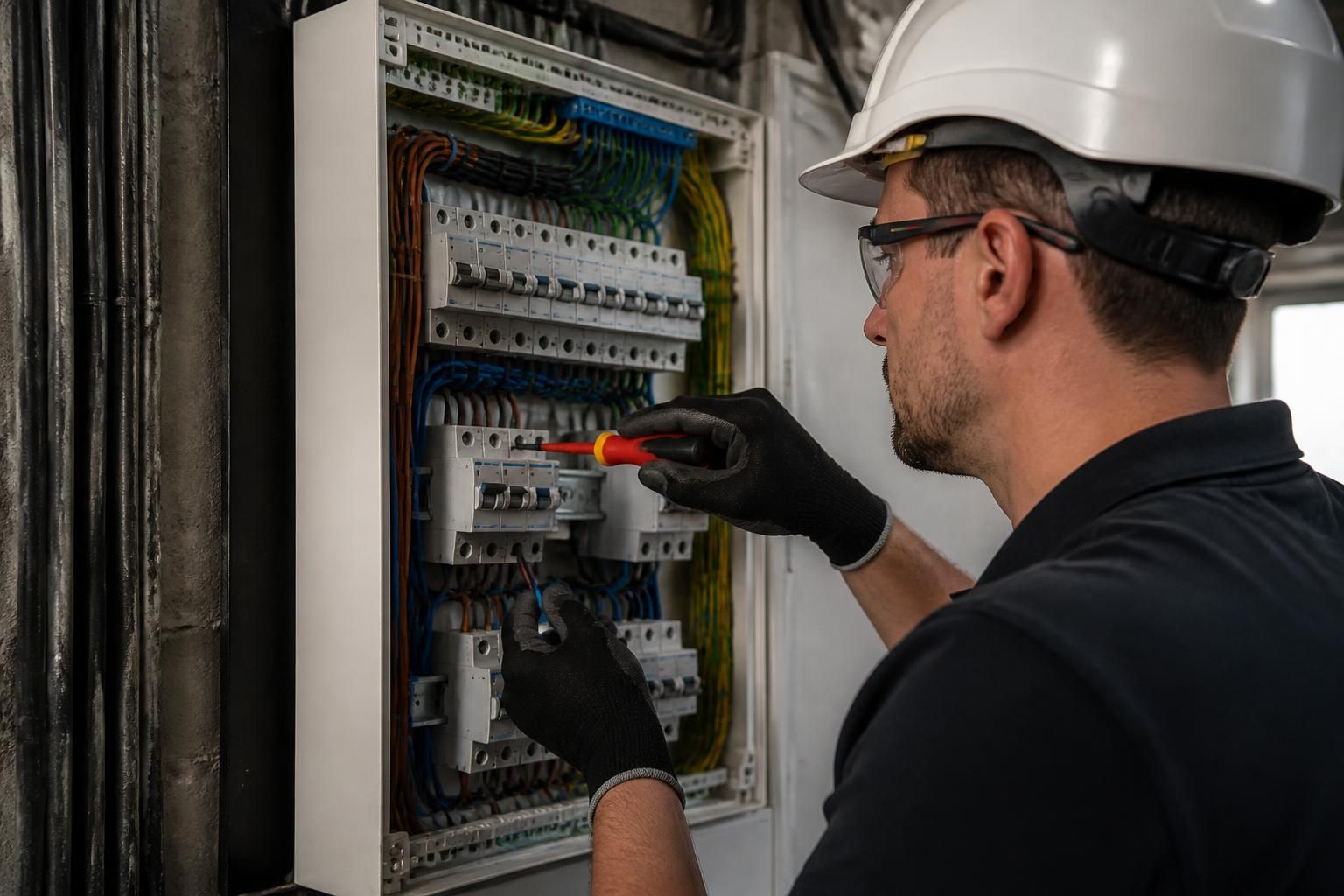
A distribution board (often called an electricity panel board) supplies and protects circuits throughout a property. RJW Electrical assesses existing equipment and carries out upgrades or replacements for domestic and commercial installations, with testing and certification.
What a Distribution Board Upgrade Includes
A distribution board is the enclosure where electrical circuits are divided, switched and protected by devices such as circuit breakers and residual current protection.
A suitable upgrade considers circuit capacity, fault protection, cable condition, earthing and access, with work carried out to current wiring requirements. RJW Electrical can assess the arrangement and specify changes suited to the property’s intended use.
Circuit capacity
The board is specified around the property’s expected electrical demand, with circuit loading and available capacity considered for domestic or commercial use.
Protective devices
Circuit breakers and residual current devices are selected to provide appropriate protection for the circuits and the installation’s intended operation.
Suitable enclosure
The enclosure is chosen to accommodate the required protective devices, cable entries and circuit arrangement while remaining accessible for inspection and maintenance.
Cable and earthing checks
Existing cable condition, conductor arrangements and earthing are checked so that the new or altered board is compatible with the installation.
Clear circuit identification
Each circuit is identified at the board, helping users and future electricians locate the correct supply when isolation or maintenance is required.
Testing and verification
After installation, testing covers continuity, polarity, insulation resistance and protective-device operation before the completed work is documented.
Regulation-led installation
RJW Electrical’s fully qualified engineers carry out distribution board work in line with the latest 18th edition wiring regulations, supported by NAPIT and Trustmark membership.
Distribution Board Upgrade Questions Answered
When should a commercial property replace its distribution board?
Following installation, each circuit should be tested, protective devices verified, labels updated, and results documented. Certification provides evidence that distribution board work meets applicable requirements and supports future maintenance.
How do you choose a distribution board for a commercial property?
A suitable commercial distribution board matches circuit numbers, expected demand, enclosure conditions, protective-device compatibility, discrimination and planned expansion. It should permit isolation and inspection by authorised personnel during routine servicing.
What protective devices should a commercial distribution board include?
Depending on the design, protection may include circuit breakers, residual current devices, surge protection and isolation facilities. Selection depends on earthing, fault conditions, circuit use and applicable requirements for the installation.
What does a distribution board upgrade involve?
An upgrade involves surveying the existing board, identifying defects or capacity limitations, planning compatible equipment, arranging safe isolation, installing the replacement, then completing inspection, testing and documentation for the installation.
What signs indicate a distribution board needs urgent attention?
Burning smells, scorch marks, buzzing, repeated tripping, heat, water ingress or exposed parts indicate potential danger. Isolate the affected supply if safe, restrict access, and arrange prompt professional assessment immediately.
Distribution Boards for Different Property Requirements
Distribution board requirements differ between homes, offices, workshops and mixed-use premises. The appropriate arrangement depends on circuit numbers, available space, operational demands and future changes, allowing protection and control to be considered alongside the building’s practical use.
Office and Professional Premises
Office distribution boards need to separate lighting, socket outlets, kitchen facilities and dedicated equipment so faults can be identified without unnecessarily affecting unrelated circuits. The board layout should also allow for changes such as revised workspaces or additional fixed equipment.
Workshops and Practical Workspaces
Workshops may combine general power with machinery, extraction, compressors or other higher-demand equipment. Distribution board planning takes account of circuit loading, isolation requirements, cable routes and the need to distinguish equipment supplies clearly.
Retail and Customer-Facing Areas
Retail premises often require separate supplies for display lighting, signs, tills, security equipment and back-of-house facilities. A well-considered arrangement helps keep these functions clearly identified and supports safer inspection and maintenance.
Mixed-Use Buildings
Where a building contains commercial units, offices, storage or residential areas, distribution boards can be arranged to reflect the different occupiers and uses. Separating circuits and labelling supplies accurately helps clarify responsibility and supports future alterations.
Capacity for Future Changes
A replacement board should be considered in relation to planned additions, such as new lighting, appliances, machinery or electric vehicle charging. Reviewing spare ways, incoming supply capacity and existing circuit condition helps avoid treating every installation as a one-size-fits-all upgrade.
Qualified, Insured and Compliant Distribution Board Work
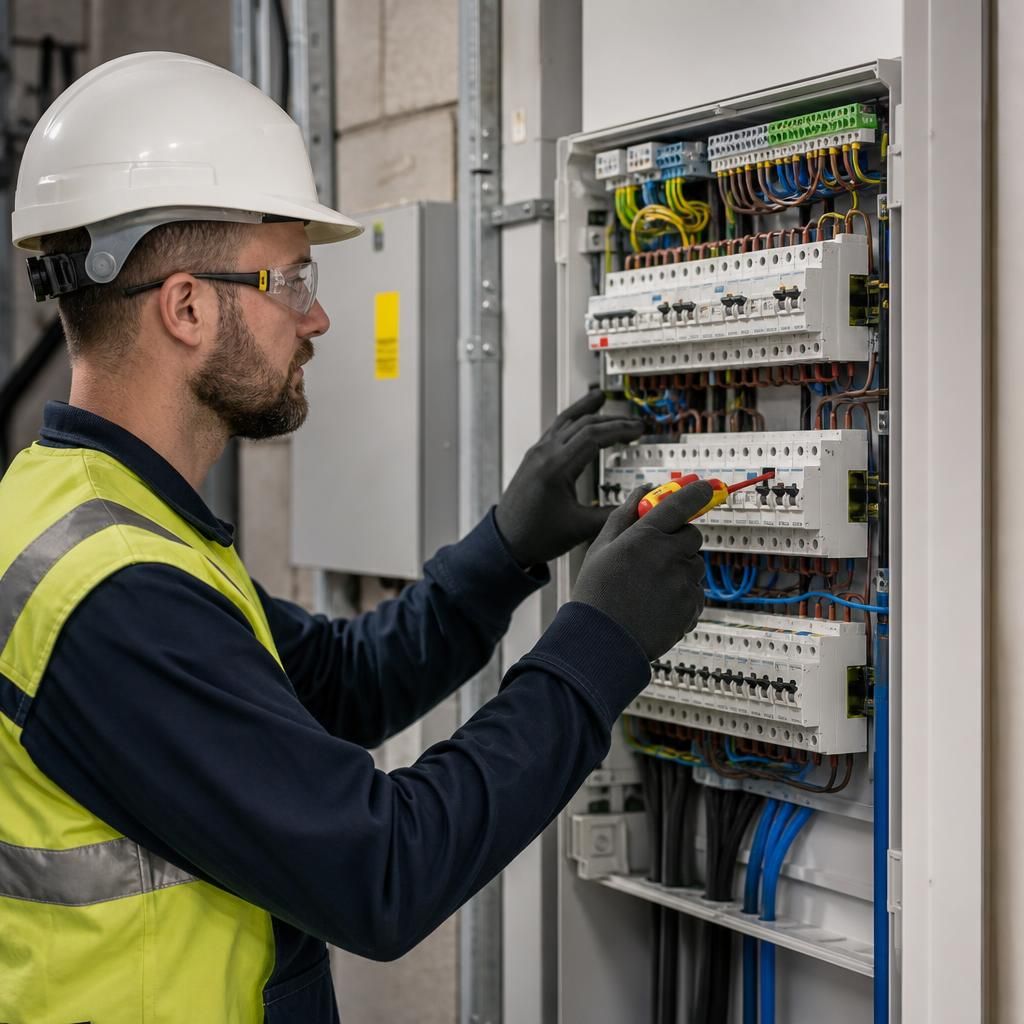
Distribution board work involves assessing, installing or replacing the equipment that houses circuit protection and distributes electricity safely around a property. It should be completed by people able to interpret existing wiring, select suitable protective devices and verify the finished installation against current requirements.
RJW Electrical uses fully qualified, insured and DBS-checked engineers, working to the 18th edition wiring regulations. Membership of NAPIT, the TrustMark scheme and the Electrical Safety Register provides additional evidence that its procedures and competence meet recognised industry expectations.
With 20 years’ experience serving domestic and commercial projects across the Midlands, RJW Electrical brings established regional knowledge to distribution board work. Customers can also request a quotation without a call-out fee, helping them compare the likely scope of an upgrade or replacement before proceeding.
Questions to Ask Before Appointing a Distribution Board Contractor
An effective contractor checklist tests more than the price of a new distribution board. It should establish whether a site survey has identified the existing circuits, available space, condition of the wiring, suitable equipment and any access constraints before work is specified.
Before comparing quotations, ask how protective devices and equipment will be selected, which standards will apply, what testing will be completed, and what records you will receive. Clarify who is responsible for isolations, access, remedial work, future maintenance and any defects or alterations identified after completion.
Site survey and circuit condition
The survey should record the number and purpose of circuits, the board’s available capacity, cable condition, earthing and bonding arrangements, signs of heat damage, and any known alterations. Ask how concealed or inaccessible wiring will be considered, and whether remedial work is likely to be needed before a replacement board can be safely installed.
Board type and protective devices
Ask about the board’s size, spare ways for possible future circuits, enclosure suitability and the type of protection proposed for each circuit. The contractor should explain how devices such as circuit breakers and residual current protection will address the risks present, including whether existing equipment could cause nuisance tripping or leave circuits inadequately protected.
Standards and installation method
Ask which edition of the wiring regulations and other applicable requirements will be used, whether the work is an upgrade, replacement or alteration, and how compliance will be assessed. Clarify whether the proposed method depends on remedial work, additional bonding or changes to circuit arrangements, and ask for any exclusions to be stated in writing.
Access, isolation and working arrangements
Ask what clear working space is required around the board, whether cupboards, fixtures or stored items need to be moved, and who will provide access to locked areas. Confirm how circuits will be identified before isolation, who is responsible for making connected equipment safe, and whether other trades or building representatives need to be involved.
Testing and certification
The contractor should explain how continuity, insulation resistance, polarity, earthing, protective-device operation and other relevant characteristics will be checked. Ask for the appropriate electrical installation certificate or condition report, test results and details of any limitations, observations or further work identified during verification.
Maintenance and responsibilities after completion
Ask who will retain the certificates, circuit schedules, board details and test records, and ensure the circuits and protective devices are clearly labelled. Clarify who is responsible for arranging future inspections, reporting faults, approving alterations and addressing defects discovered after completion, particularly where the property is occupied by several users or managed by more than one party.
Use the answers to create a written scope of work that distinguishes the distribution board replacement from any separate remedial work. Quotations should identify assumptions, exclusions, certification arrangements and the person responsible for coordinating access and isolations.
If the existing installation cannot be fully assessed before quoting, ask for that limitation to be recorded and for any additional work to require your approval. This gives you a clear basis for comparing proposals and confirms what will be delivered before the distribution board work begins.
Request a Properly Specified Distribution Board Quotation
Discuss your distribution board requirements with RJW Electrical and request a properly specified quotation. We can consider the property’s existing arrangement, intended use and proposed changes, helping define the appropriate scope before any upgrade or replacement is undertaken.
Explore