
RJW Electrical
Commercial Interior Lighting Solutions
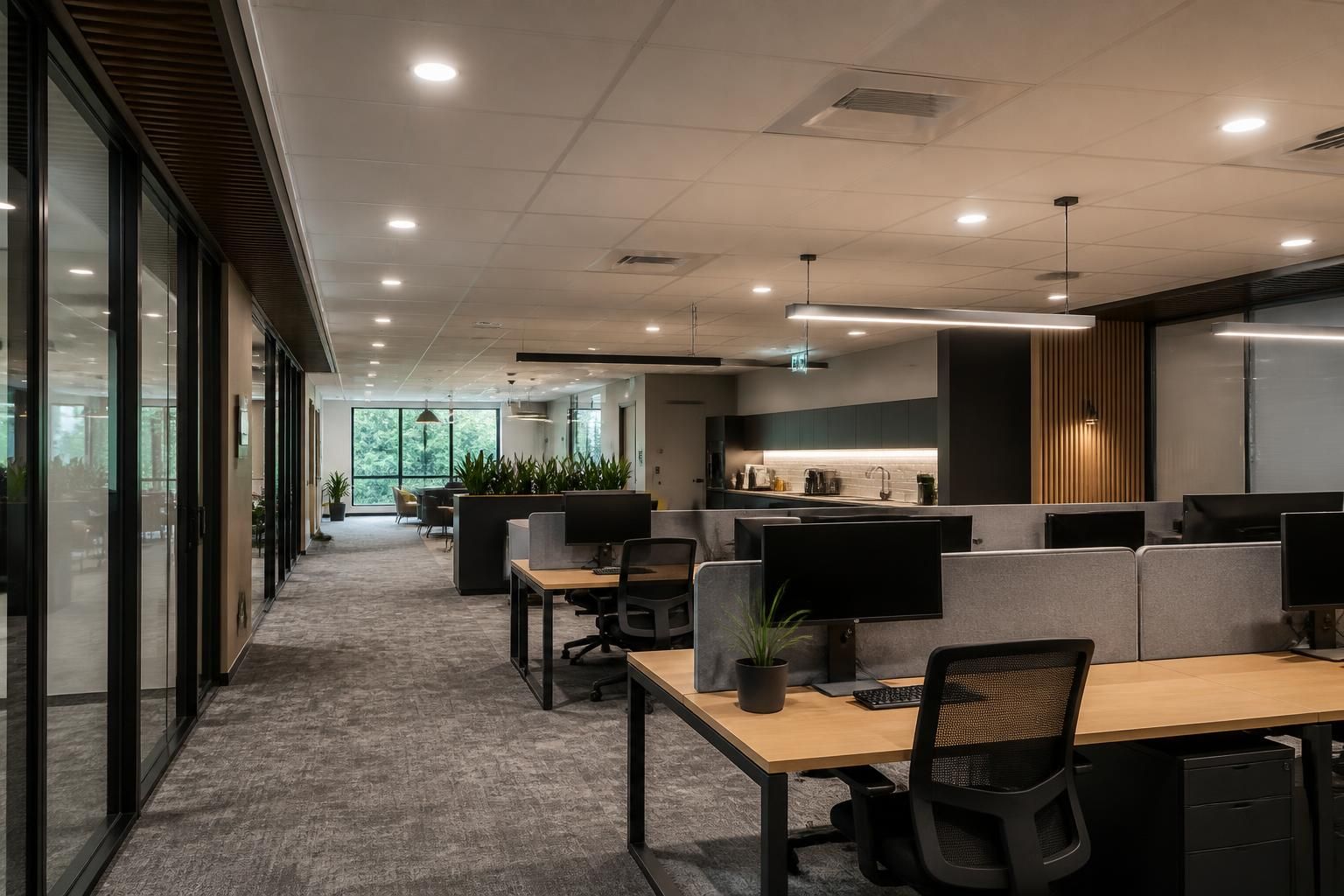
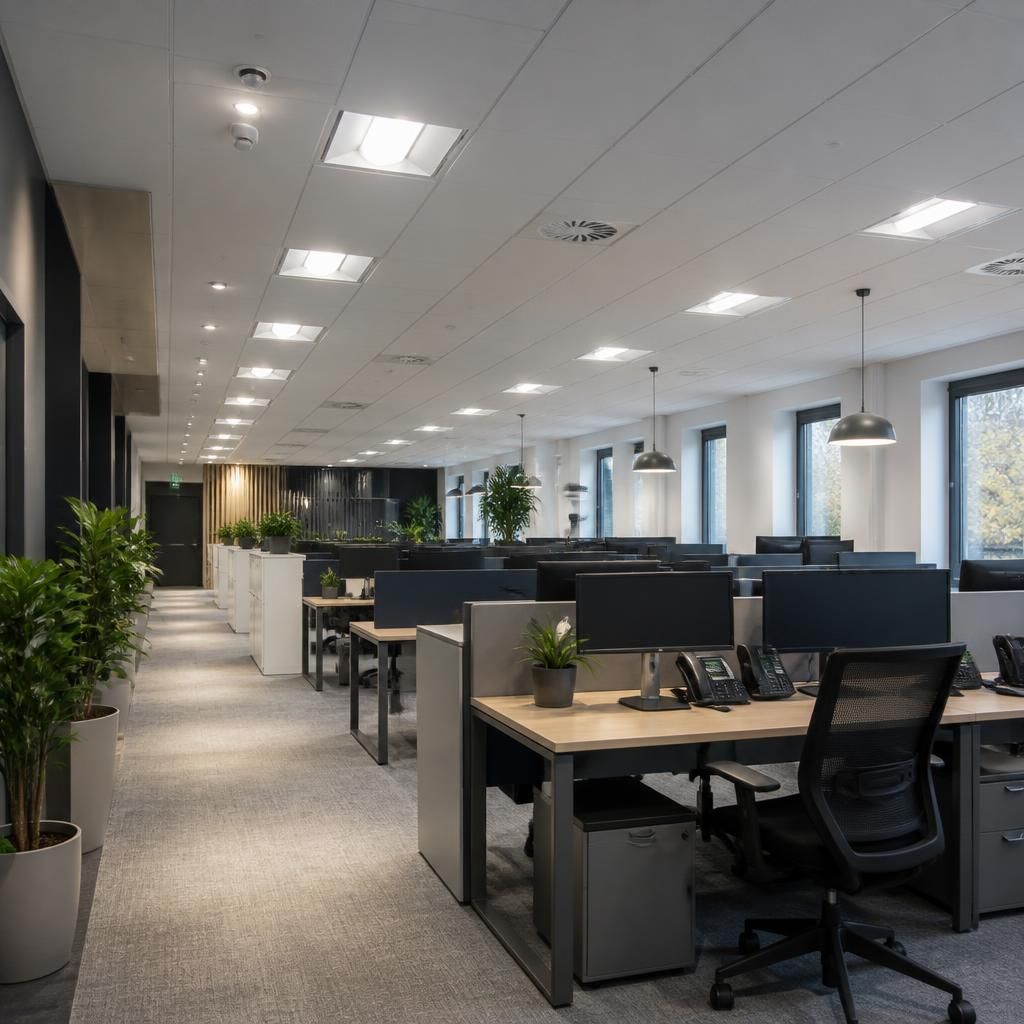
Commercial interior lighting uses carefully positioned fittings to provide safe, comfortable and functional illumination throughout workplaces. A considered scheme can combine commercial downlights, pendant lighting, track lighting and strip lighting to support focused tasks, circulation and a consistent professional appearance.
Lighting Designed Around How Your Workplace Is Used
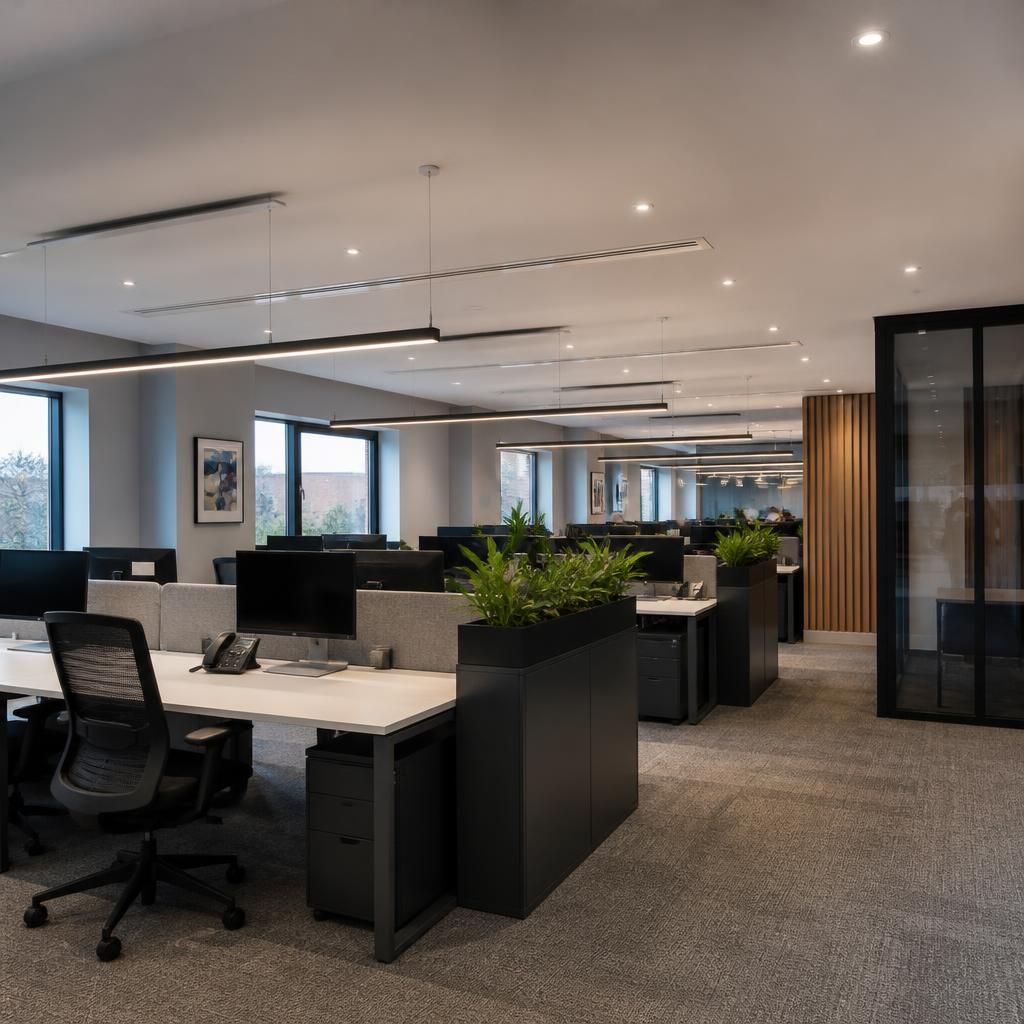
Commercial interior lighting is the planned use of luminaires inside workplaces to provide suitable illumination for tasks, movement and display areas. The design considers ceiling height, room proportions, working surfaces, reflections and the visual character required by the business.
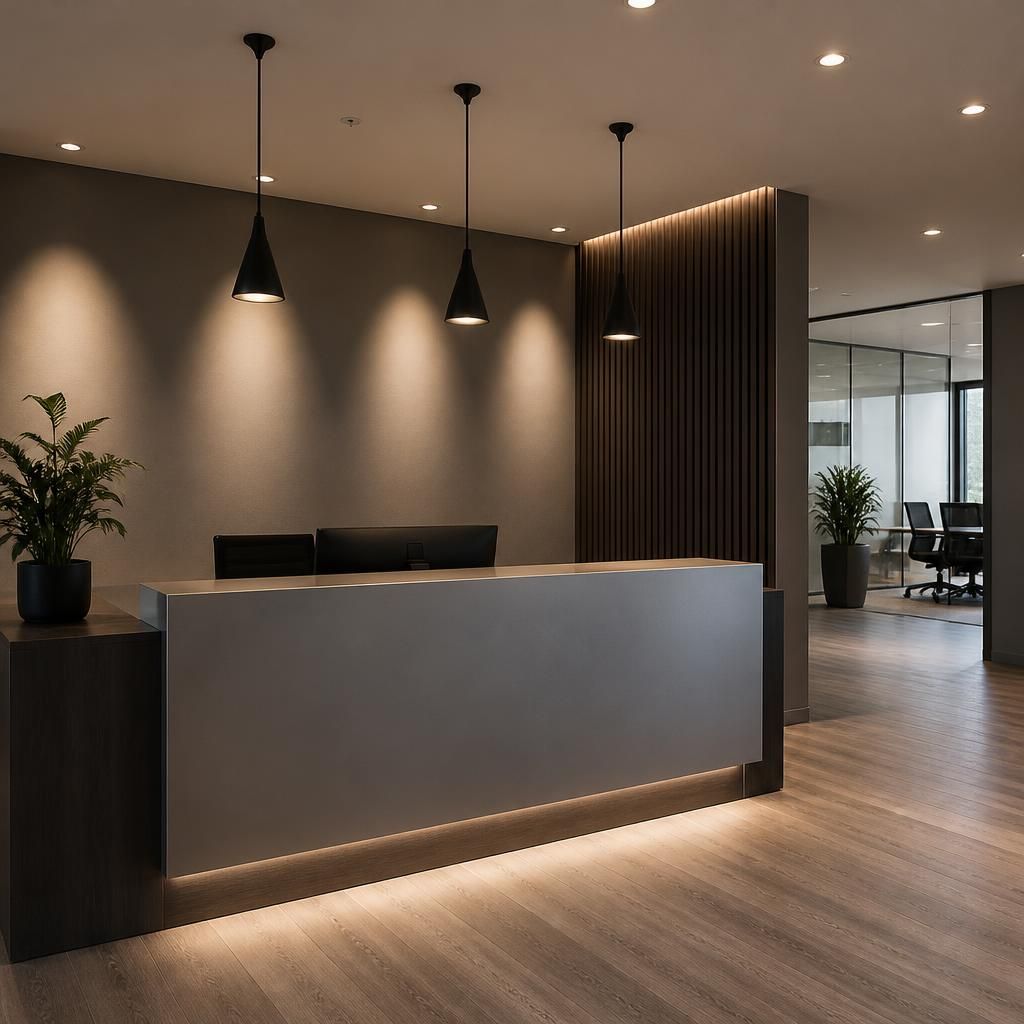
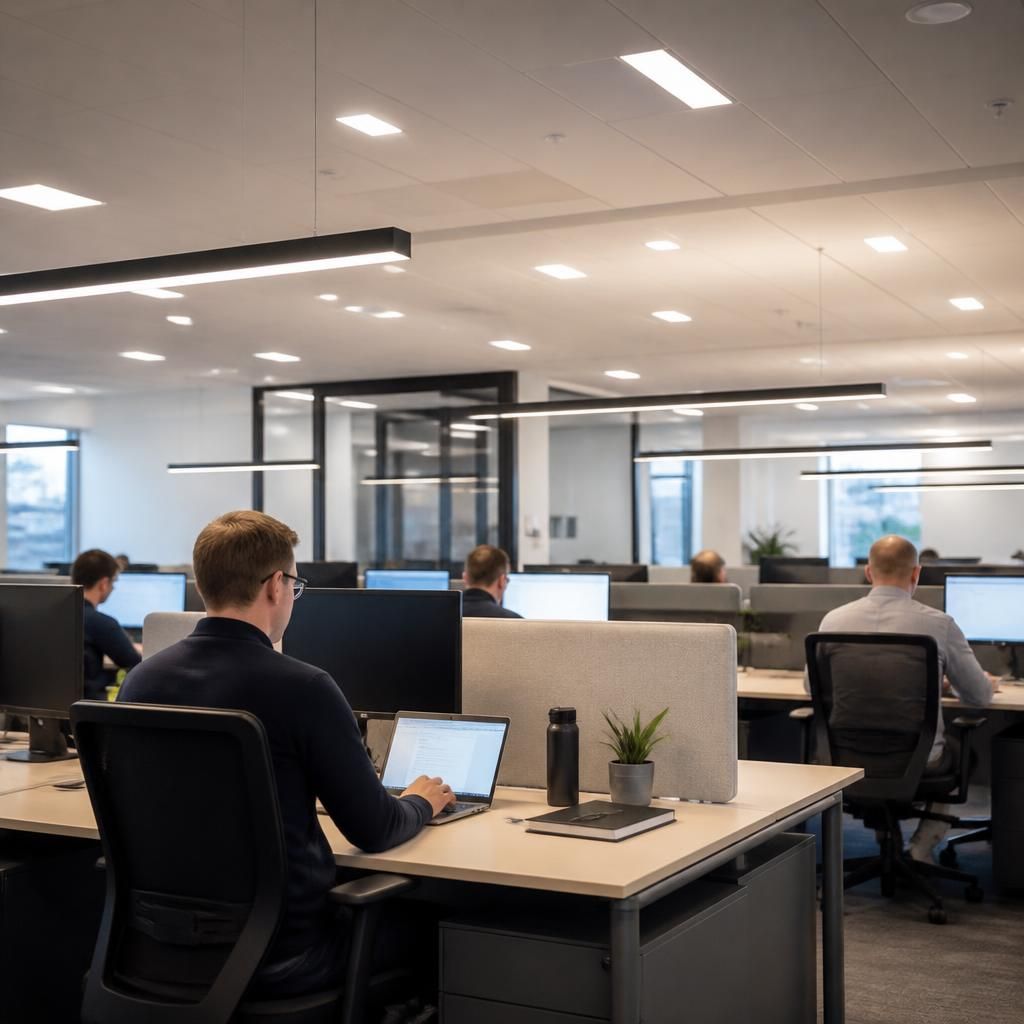
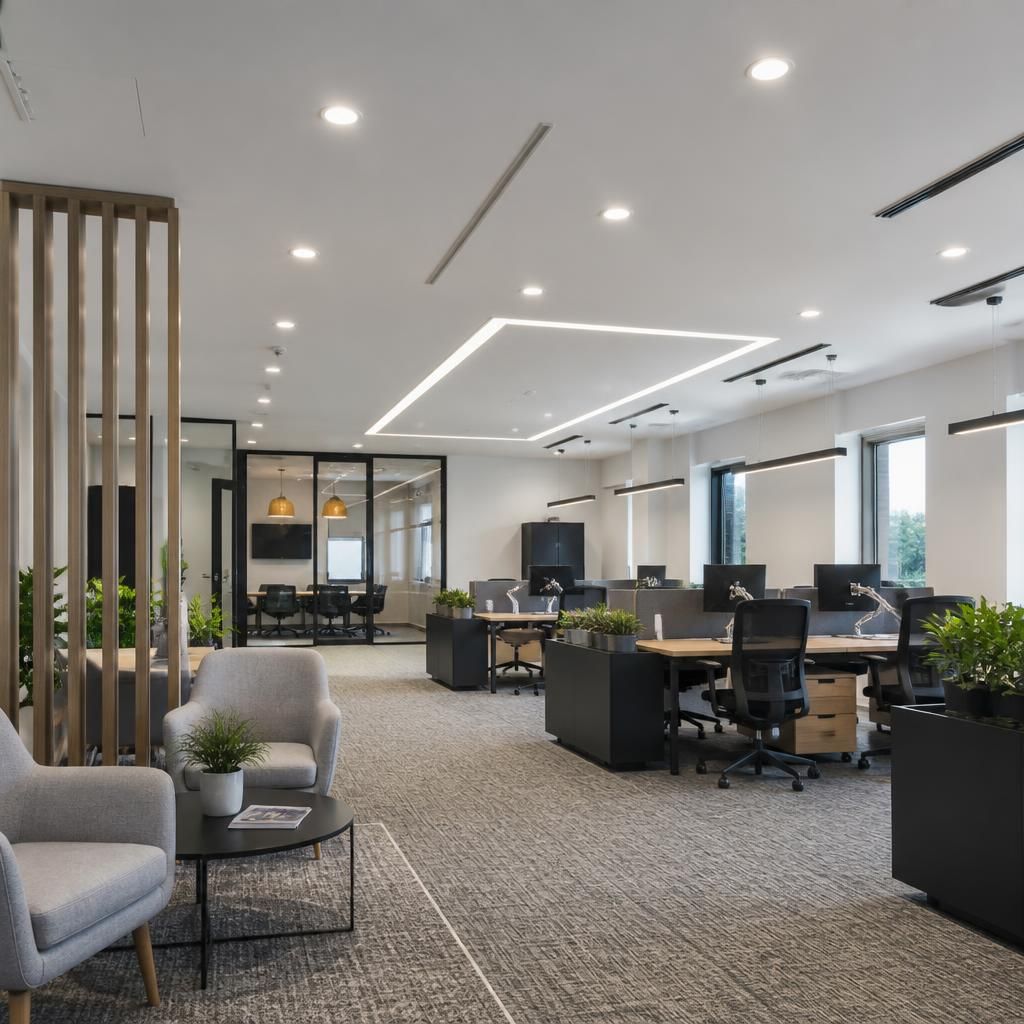
Commercial downlights and LED spotlights provide controlled, discreet illumination. Pendant fittings create a visible feature above desks, reception areas or shared tables, while track lighting directs individual heads towards walls, displays or work zones. Strip lighting adds continuous light beneath units, along shelving or within architectural details.
The result is a clearer, more consistent environment for staff and visitors. RJW Electrical can assess the existing arrangement and install a coordinated combination of fittings, with positioning and switching planned around how each space is used.
A More Effective Interior Lighting Arrangement
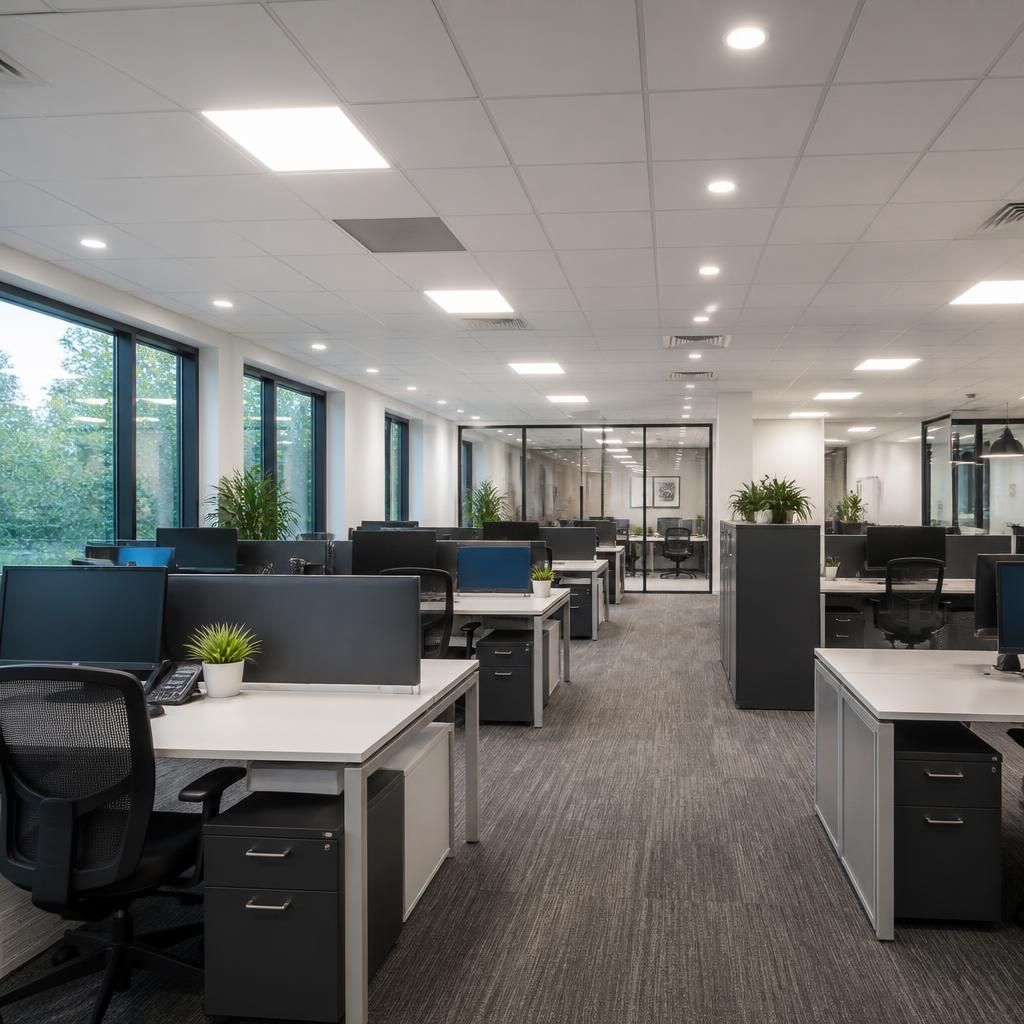
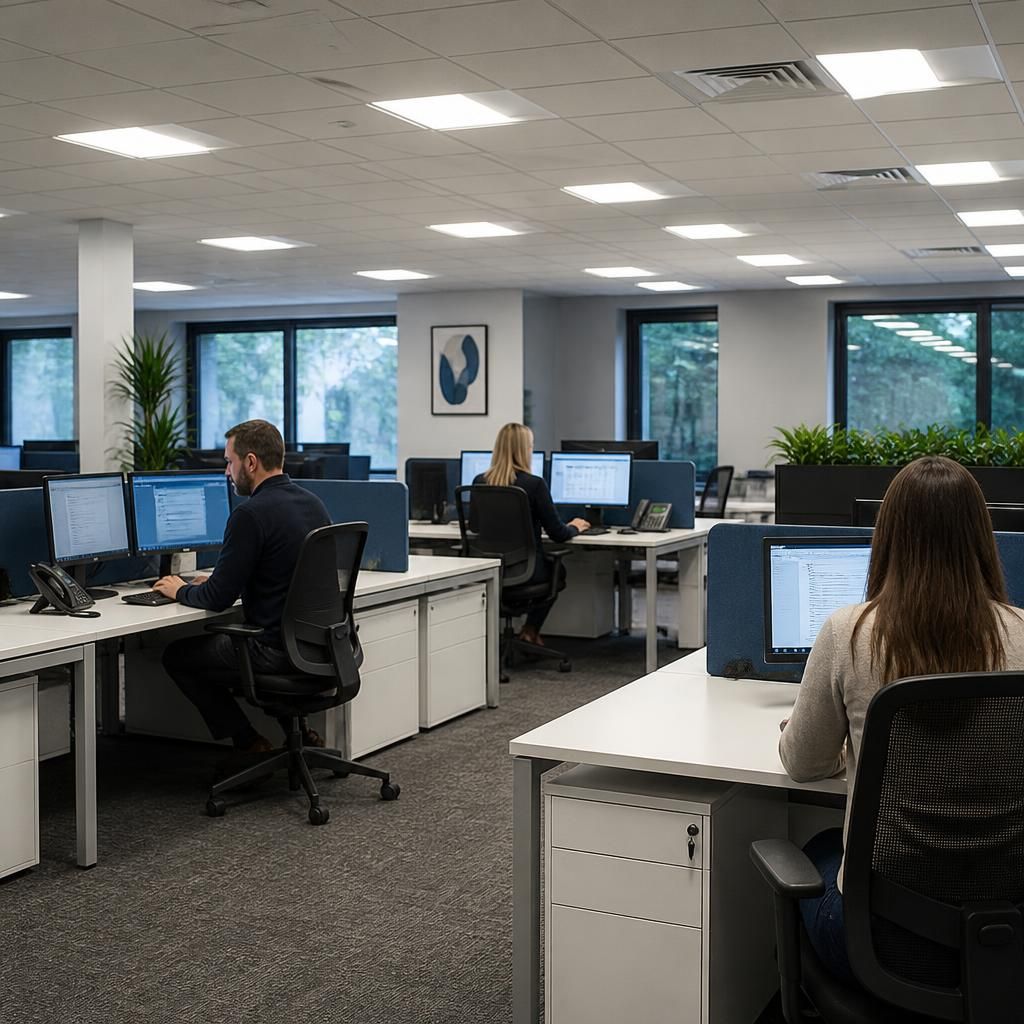
A coordinated commercial office lighting scheme replaces mismatched fittings and poorly controlled illumination with a more deliberate arrangement. The finished installation can use suitable beam angles, colour characteristics and switching zones to distinguish work areas, reception points and circulation routes without adding unnecessary visual clutter.
The change is also practical: fittings are selected for their position, access requirements and role within the room, making the installation easier to operate and maintain. RJW Electrical can review the existing interior lighting, identify unsuitable or inefficient elements and install a scheme that fits the building’s layout and day-to-day use.
A Careful Transition to More Suitable Interior Lighting
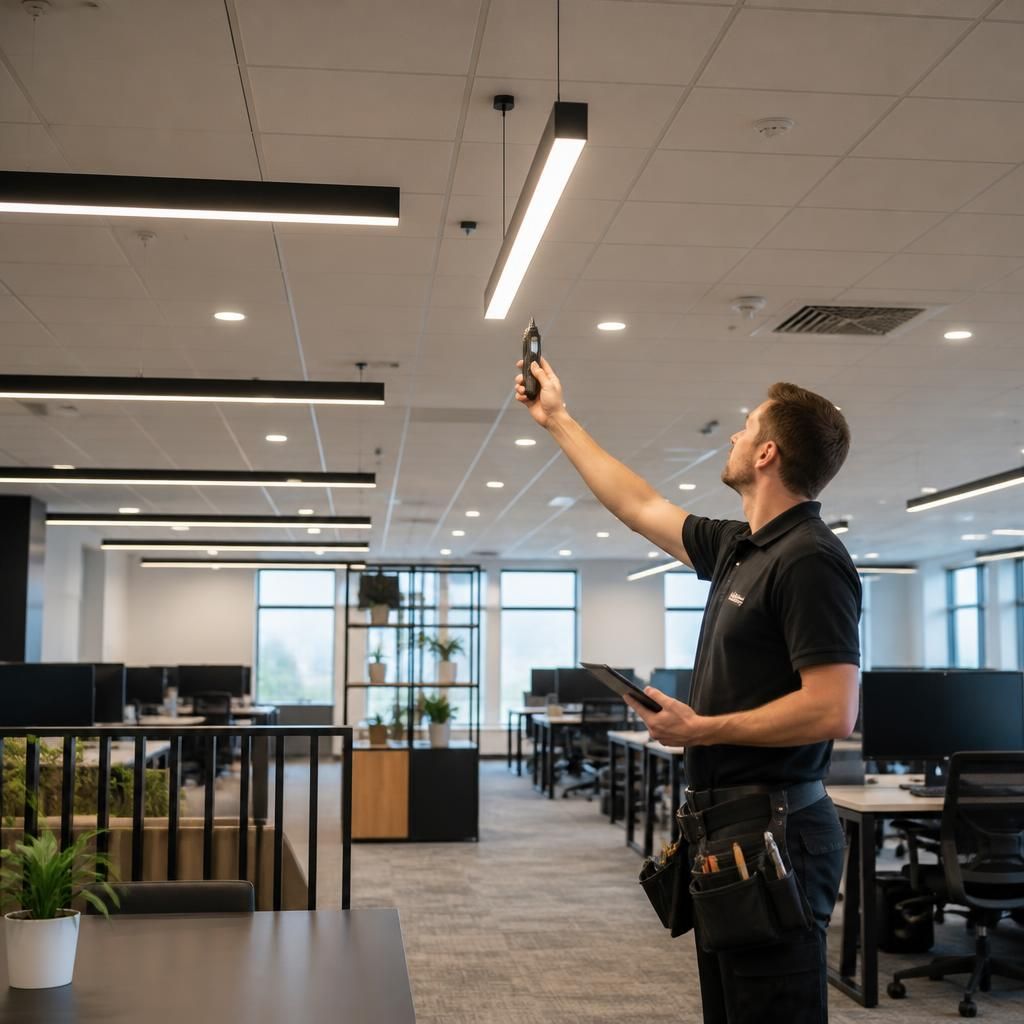
Commercial interior lighting should be assessed against how a workplace is used, not simply replaced fitting for fitting. Dark corners, glare, inaccessible lamps or unnecessary illumination can show that the existing arrangement no longer meets operational needs.
When RJW Electrical reviews a project, the discussion can cover room use, maintenance access and controls. This helps establish whether fittings should be repositioned, grouped into sensible circuits or selected to suit the ceiling and working environment.
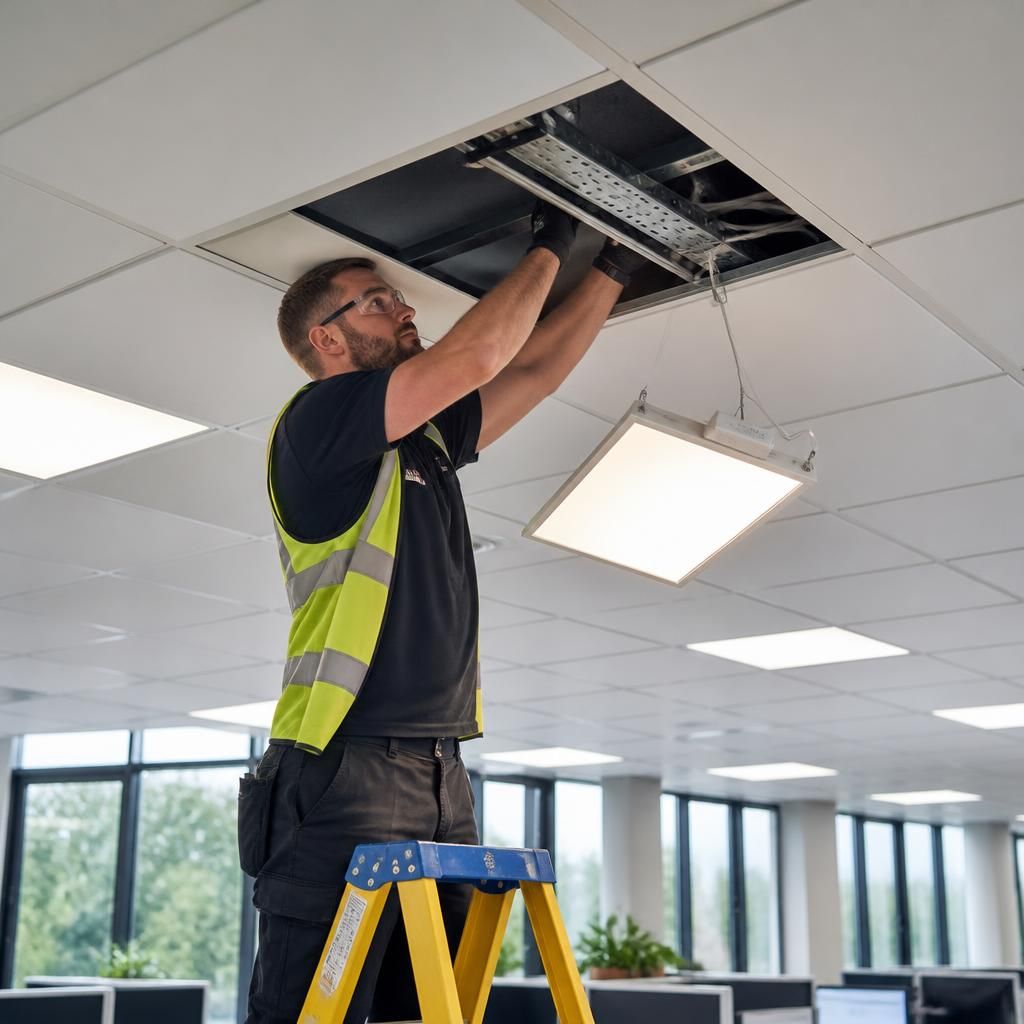
Installation is then carried out with attention to neat cable routes, secure mounting and consistent positioning. The result is an arrangement that is easier to use, with each fitting serving a defined purpose and the overall appearance treated as part of the electrical work.
Commercial Interior Lighting in Practice
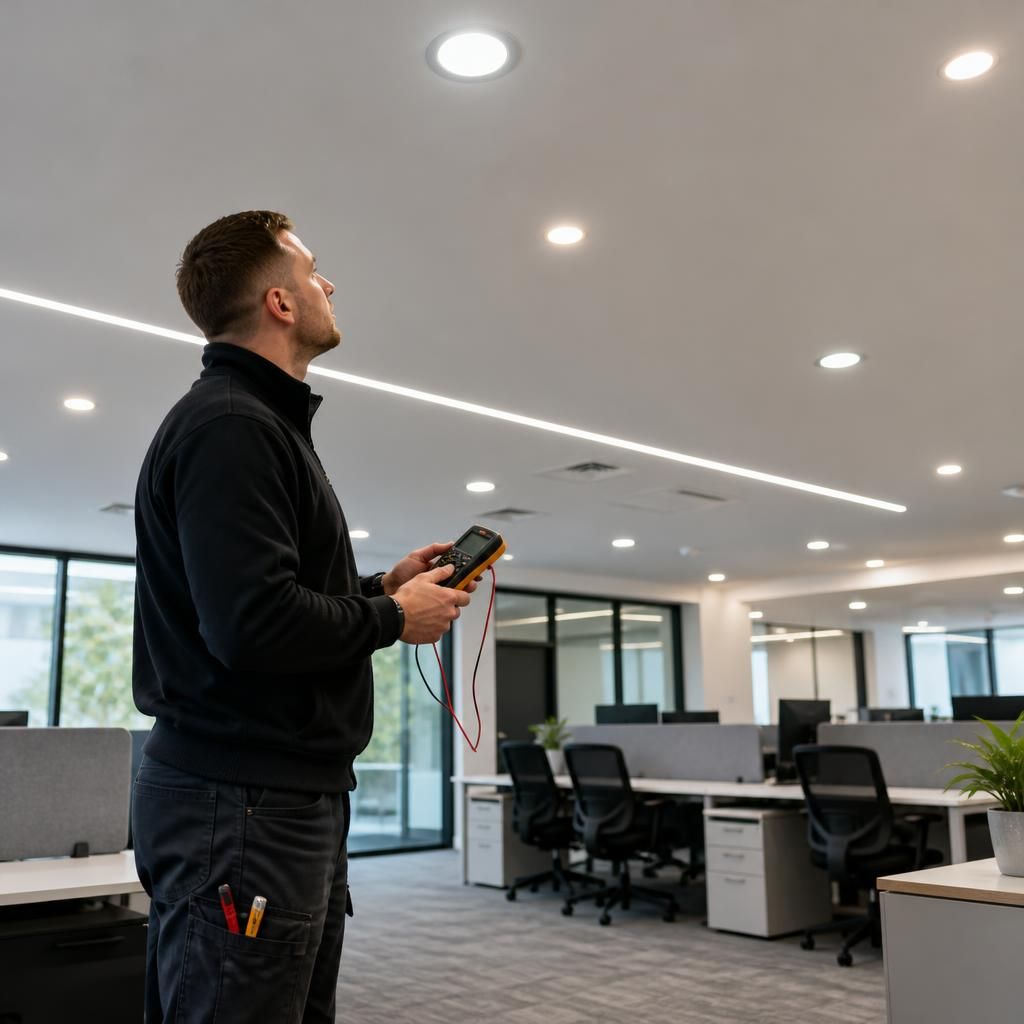
A sound commercial interior lighting installation should be assessed by the quality of its design, fitting, cablework and final testing. RJW Electrical applies its experience to projects involving commercial downlights, LED spotlights, pendant, track and strip lighting, with the completed arrangement checked against the building’s intended use.
For businesses comparing contractors, RJW Electrical’s membership of NAPIT, the TrustMark scheme and the Electrical Safety Register provides recognised evidence of professional standards. Its 20 years of experience also supports a practical approach to selecting and installing interior lighting for offices and other commercial premises.

Commercial Interior Lighting: Frequently Asked Questions
How disruptive is a commercial interior lighting installation?
RJW Electrical can assess existing circuits, ceiling construction, controls and intended use before recommending fittings, helping businesses compare options without committing to unnecessary replacement or unsuitable equipment for their premises.
Which standards apply to commercial interior lighting?
Commercial interior lighting must comply with current wiring regulations, applicable building requirements and fire-safety considerations. Final inspection and testing should confirm that installation, protection, switching and emergency provisions are appropriate.
What should a commercial interior lighting quotation include?
A quotation should identify proposed fittings, quantities, controls, circuit alterations, cablework, testing and any exclusions. Clear itemisation helps businesses compare like-for-like options and understand the project’s electrical scope before approval.
Which commercial interior lighting fittings suit different workplace spaces?
Offices often benefit from low-glare downlights or panels, reception areas from pendants, and open-plan zones from tracks or strips. Selection should reflect ceiling layout, tasks, visual requirements and maintenance access.
How long does commercial interior lighting installation take?
Installation time depends on the number of fittings, access conditions, circuit alterations and testing required. RJW Electrical can establish a realistic programme after assessing the proposed commercial interior lighting.
Discuss Your Commercial Interior Lighting Requirements
Discuss your commercial interior lighting requirements with RJW Electrical to review room functions, fitting types, controls and installation constraints. Request a no-call-out-fee quote and take the next step towards a lighting arrangement suited to your workplace.