
RJW Electrical
What happens if a street lighting inspection identifies a fault?
A street lighting fault is recorded, assessed for safety and prioritised before the appropriate repair or replacement is arranged. Once the work is complete, the installation is tested again and the inspection and remedial actions are documented.
After a street lighting inspection identifies a fault, the next step is to determine its cause, risk and required remedy. The response may involve a minor component change, an electrical repair, temporary isolation, or replacement of a larger part of the installation, depending on the evidence from the inspection.
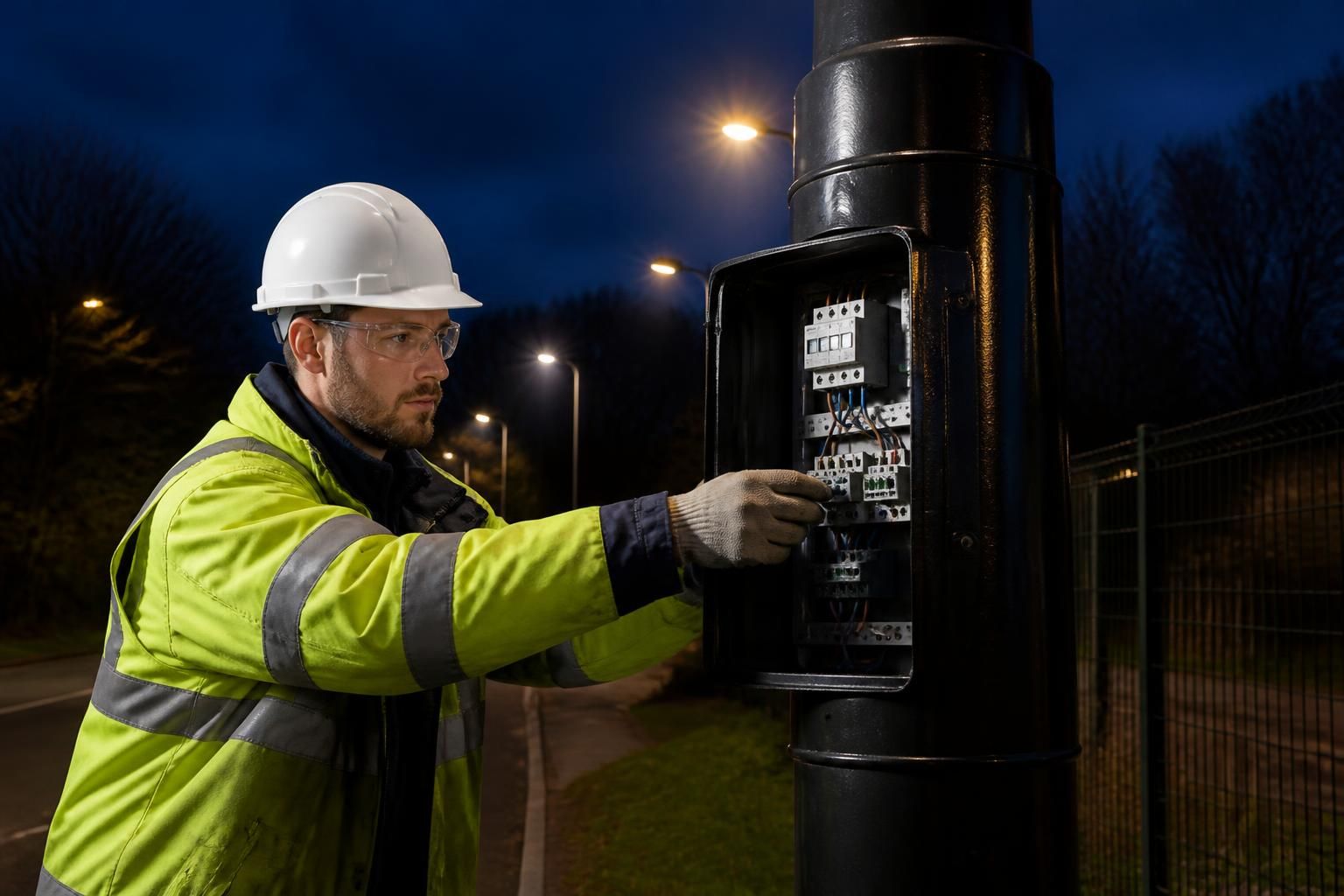
The inspection findings should first be reviewed against the condition and function of the asset. Common faults include a failed lamp or LED driver, defective photocell, damaged lantern, loose or corroded connections, water ingress, an open column door, damaged cabling, poor earthing, or deterioration to the column itself. A light that is not operating is not necessarily the only concern: exposed conductors, impact damage, instability or signs of overheating can create a more serious risk.
Where there is an immediate danger, the affected equipment may need to be isolated or otherwise made safe before a permanent repair is arranged. This can include securing an access door, restricting access around a damaged column, removing a hazardous component or arranging temporary traffic and pedestrian controls. The appropriate action depends on the location, the nature of the defect and who controls the land or highway.
For faults that do not present an immediate danger, the contractor will normally identify the parts, access equipment and specialist skills needed to complete the work. A straightforward defect may be dealt with by replacing a failed electrical component. More involved faults can require cable testing, investigation of an underground supply, renewal of connections, excavation, column replacement or remedial work to the base and foundation. The visible symptom may therefore not be the actual source of the problem.
Any proposed repair should take account of the existing installation, electrical protection, column loading, cable condition and the intended lighting performance. Replacing a lantern or control component without checking the associated wiring may leave an underlying defect unresolved. Similarly, damage to a column or foundation needs a structural assessment rather than an electrical repair alone.
Responsibility and permissions should also be confirmed before work starts. A street light may belong to a local authority, developer, managing agent, commercial premises, housing provider or another asset owner. Work affecting a public highway, traffic route, private estate or shared access may require approval, permits, traffic management or coordination with other parties. These arrangements can affect the method of repair and the information needed for the quotation.
Once the remedial work is completed, the installation should be checked for correct operation and electrical safety. Depending on the fault, this can include inspection of terminations, continuity and insulation tests, verification of protective measures, checking the switching or photocell operation, and confirming that the lantern and column are securely installed. If excavation or structural work has taken place, the surrounding area and any reinstatement should also be examined.
The completed records should link the original defect to the work carried out and the results of the subsequent checks. Useful information includes the asset location or reference, nature of the fault, photographs where relevant, parts replaced, test results, any limitations identified and recommendations for future maintenance. Clear records help the asset owner demonstrate that the defect was addressed and provide a reliable history for later inspections.
Some findings indicate a wider maintenance issue rather than an isolated failure. Repeated water ingress, corrosion, cable faults or damage at several locations may justify a broader condition survey or a planned replacement programme. Reviewing recurring defects can help an owner decide whether continued reactive repairs remain appropriate or whether renewal of columns, lanterns, controls or cabling would provide a more suitable long-term solution.
A competent electrical contractor can support this process by separating urgent safety measures from permanent remedial work, explaining the practical options and carrying out the necessary testing after the repair. For organisations responsible for several assets, combining inspection findings with a prioritised maintenance schedule can also make it easier to track outstanding defects and plan future expenditure.
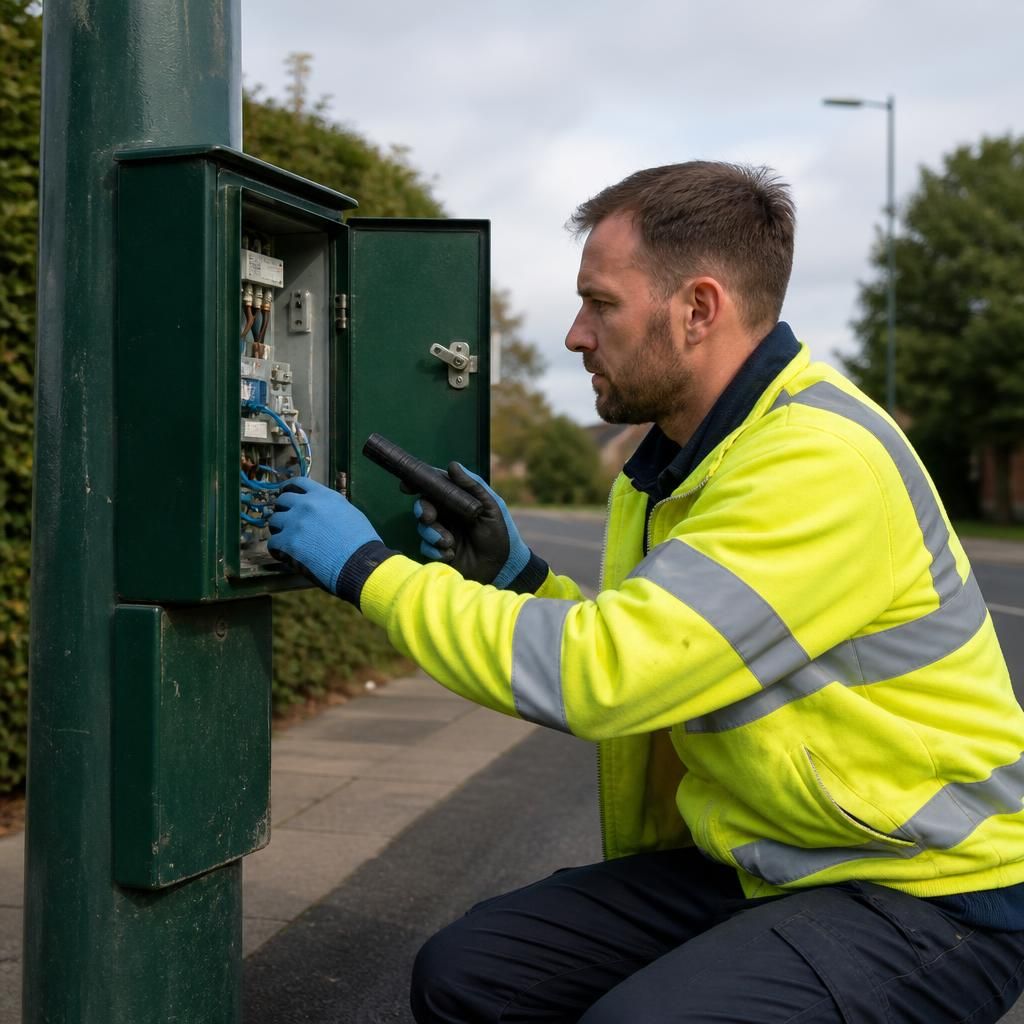
A street lighting inspection report should distinguish between an observed defect, a temporary safety measure and a completed repair. Recording a column as “made safe” does not mean the underlying fault has been corrected; it may still require a planned electrical, structural or cabling repair. This distinction prevents outstanding work from being treated as closed.
For each affected asset, the report should state the fault category, its current status, the action still required and any restriction on use. Clear status information allows the asset owner to compare defects across a site, approve the correct remedial work and confirm that the issue has been formally closed only after the necessary verification.
Discuss the Next Steps After a Street Lighting Fault
If a street lighting inspection has identified a fault, contact RJW Electrical Ltd to discuss the findings and the remedial work required. The team can help identify the appropriate next step and provide a no-call-out-fee quote.