
RJW Electrical
Commercial Lighting & Practical Systems
Commercial lighting installation covers task lighting, emergency lighting, outdoor illumination and practical controls for workplaces and public areas. RJW Electrical plans and installs suitable LED, pendant, strip and downlight systems, with testing and certification where required.

Clearer Visibility and Practical Property Control
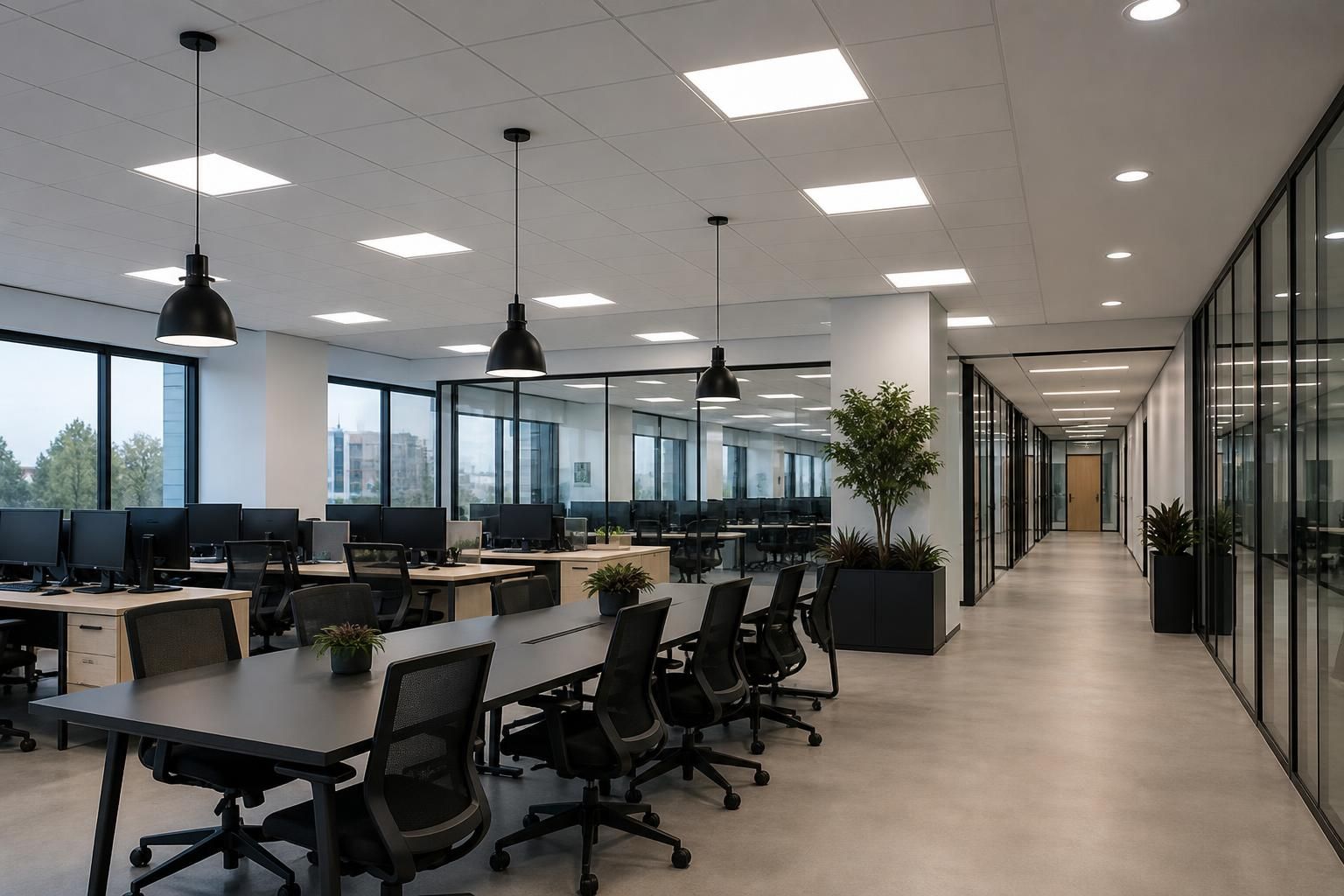
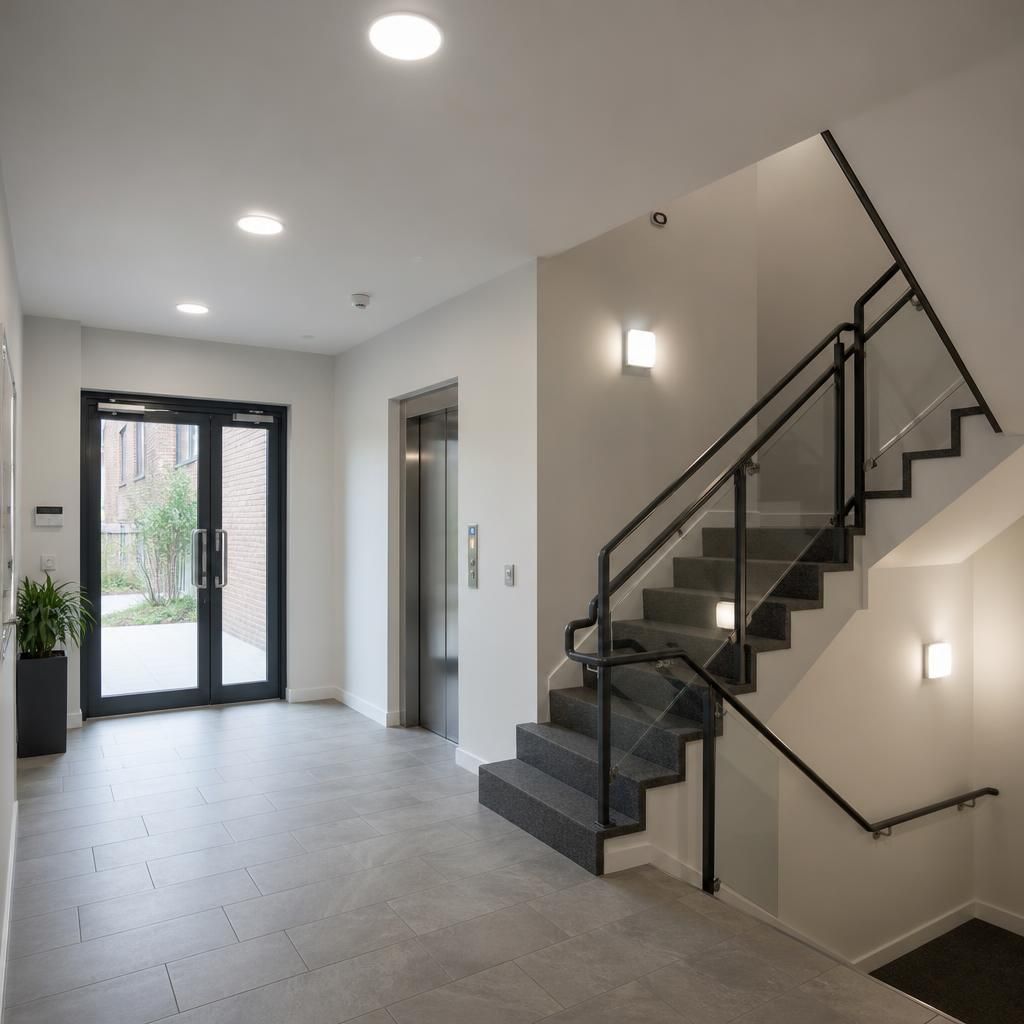
A practical commercial lighting system combines luminaires, switching and controls around how a property is used. Work areas may need even, low-glare illumination, while corridors, entrances, displays and external approaches require different levels and distribution. This prevents a single fitting type being applied across every space.
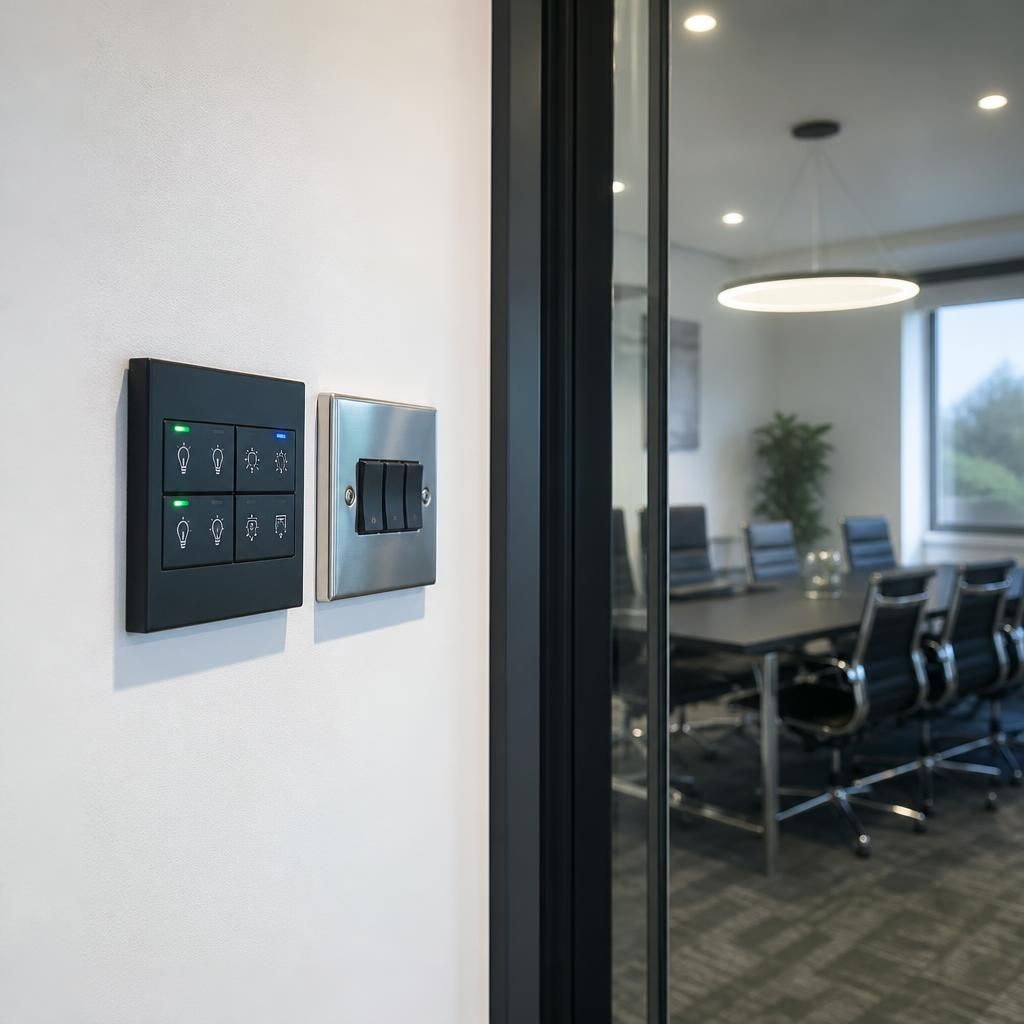
The result is easier navigation, clearer task visibility and a more deliberate appearance. Occupancy sensors, timed controls or separate switching can help staff manage areas independently, while suitable exterior lighting supports safer access and helps identify activity around entrances, yards and signs.
RJW Electrical can assess the layout, existing wiring and intended use before recommending a proportionate solution. The design should also consider access for lamp or driver replacement, control locations, future changes and the records needed for responsible property management.
Lighting for Workplaces, Public Areas and External Spaces
Commercial lighting systems are selected according to the property’s use, layout and operating priorities. Office lighting may focus on consistent illumination at desks and screens, while retail, reception and display areas may require more controlled accent lighting to support visibility and presentation.
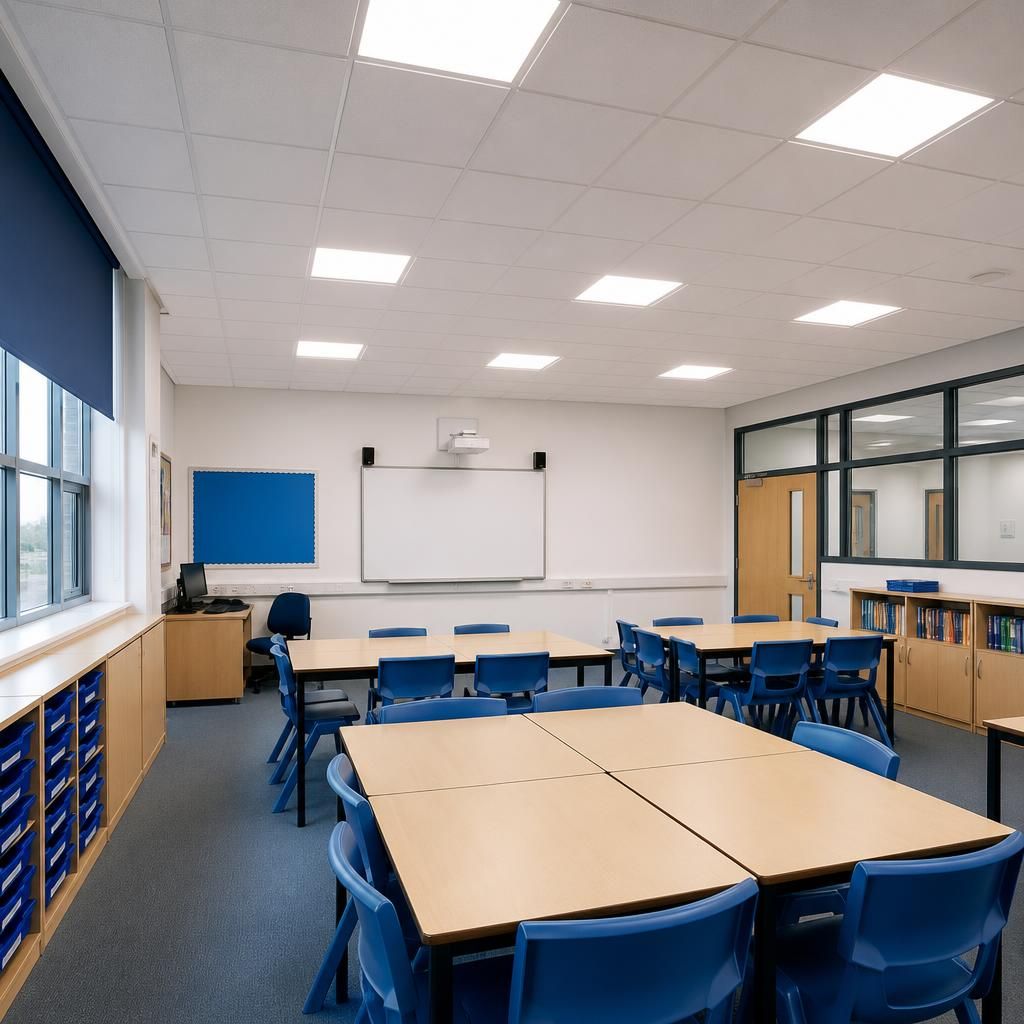
Different requirements apply in workshops, storage areas, communal spaces and external approaches. RJW Electrical can help compare suitable fittings, switching arrangements and practical controls for each setting, taking account of maintenance access, safety requirements and how the space is used day to day.

Commercial Lighting & Practical Systems: Key Questions Answered
How is emergency lighting incorporated into a commercial lighting installation?
Commercial lighting specifications should document illuminance requirements, colour temperature, glare control, emergency provisions, switching, controls, access arrangements and compatibility with existing circuits before installation begins, while maintenance responsibilities are agreed.
What distinguishes commercial lighting systems from domestic lighting?
Commercial lighting systems are designed for larger, varied-use environments, with higher demands for durability, controllability, compliance documentation and maintainability. Domestic systems typically prioritise simpler layouts, familiar controls and decorative choices.
What should businesses consider when choosing commercial lighting fittings?
Businesses should compare fittings by light output, colour rendering, beam distribution, efficiency, durability and cleaning requirements. Check compatibility with ceiling heights, mounting methods, controls, wiring and replacement access before approval.
What is involved in installing commercial lighting in an occupied building?
Installation in an occupied building requires phased work, agreed isolation procedures, secure segregation, clear signage and coordination with occupants. Electricians should manage dust, noise, access and disruption before testing circuits.
When should a commercial lighting system be upgraded rather than repaired?
Upgrade when repeated failures, obsolete components, poor efficiency or changed occupancy indicate the existing system no longer meets needs. Repair remains appropriate where faults are isolated and equipment remains serviceable.
From Lighting Concern to Planned Installation
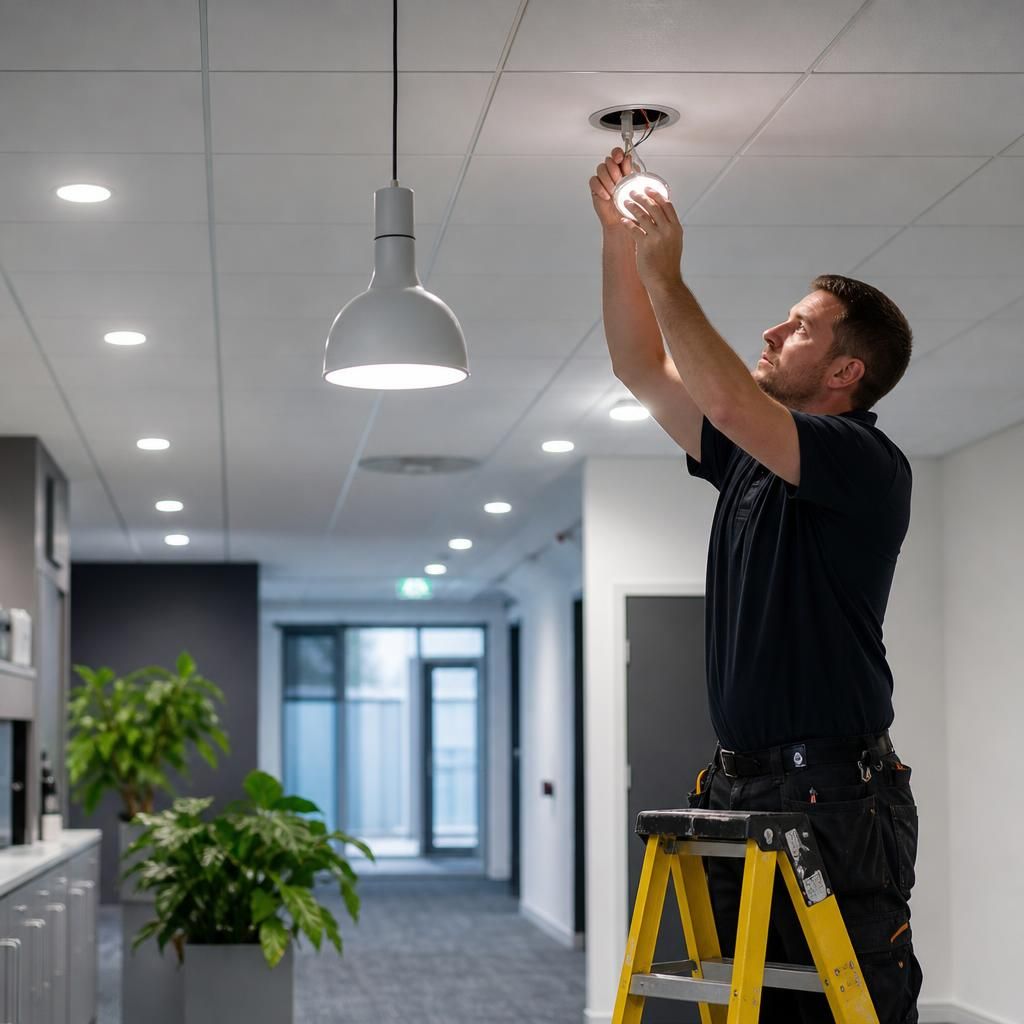
A commercial lighting installation is a planned electrical upgrade or addition that addresses a defined concern, such as outdated fittings, poor task visibility or inconvenient switching. The brief should record the rooms affected, operational requirements and any areas that must remain usable during the work.
Before work begins, RJW Electrical can inspect relevant circuits, protective devices, mounting points and cable routes. This helps identify remedial work and specify components compatible with the installation, rather than treating each fitting as a standalone item.
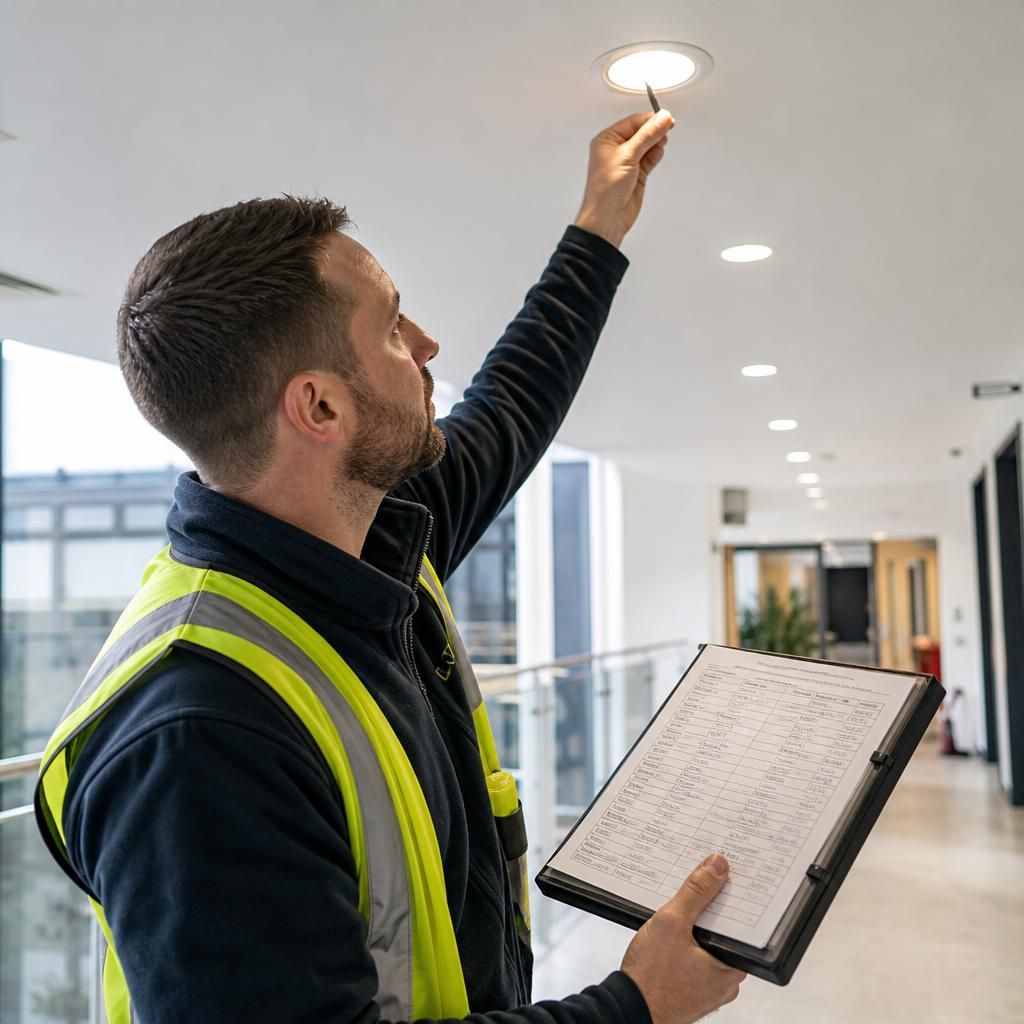
At completion, the system should be commissioned systematically. Connections, switching, illumination and protective measures can be checked, with certification and handover information provided for property records. This creates a clear basis for future maintenance or alterations.
Professional Standards You Can Verify
Professional commercial lighting work should be assessed through the quality of the installation, the engineer’s qualifications and the contractor’s documented standards. RJW Electrical uses fully qualified, insured and DBS-checked engineers who work to the 18th edition wiring regulations, with installation details and certification available for the client’s records where required.
Independent scheme membership provides an additional point of comparison when reviewing a contractor. RJW Electrical is a NAPIT member, participates in the TrustMark scheme and is listed on the Electrical Safety Register. Customer feedback can then be considered alongside these verifiable credentials and the detail included in the quotation, which is provided without a call-out fee.



Discuss Your Commercial Lighting Requirements
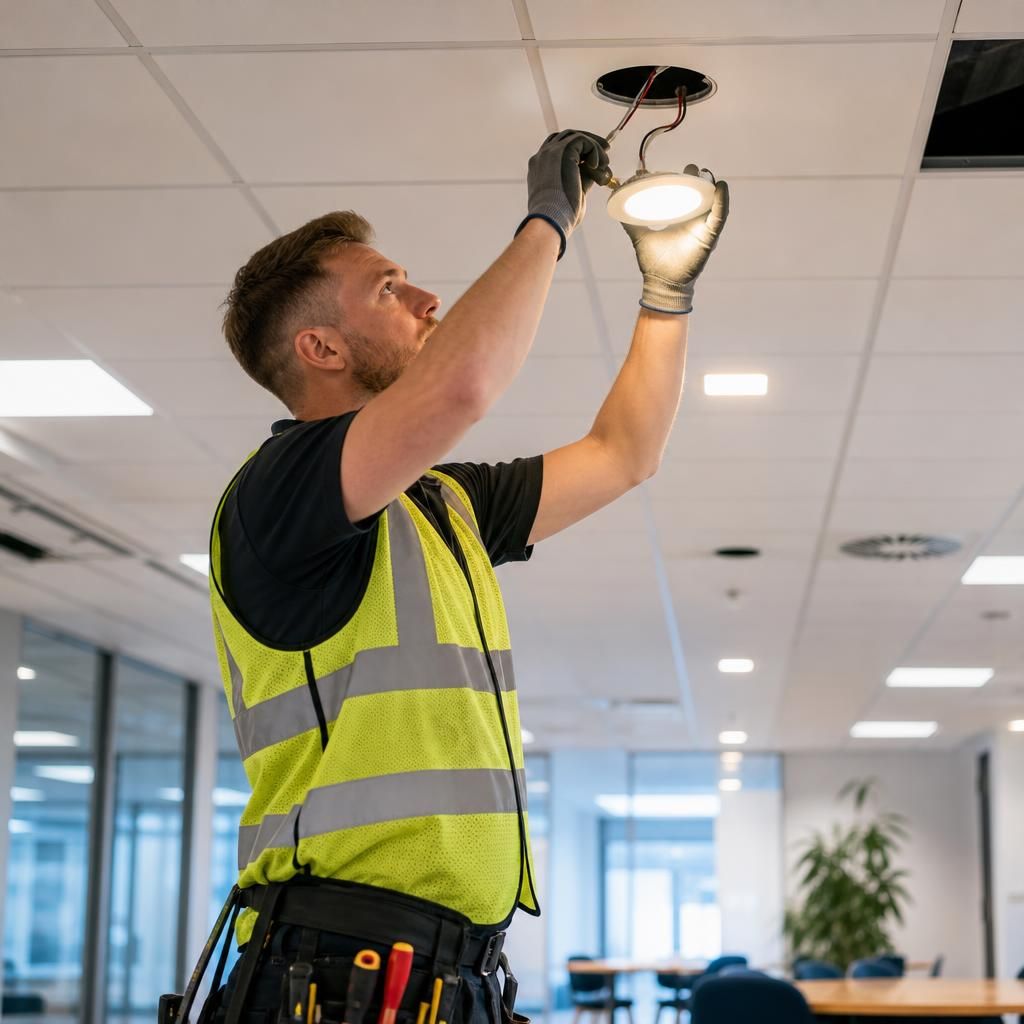
Discuss your property’s lighting layout, control requirements and intended use with RJW Electrical. We can help define the appropriate practical system, identify relevant installation considerations and establish the next step for your project.
Explore