
RJW Electrical
How disruptive is street lighting installation for residents, tenants, or site users?
Street lighting installation usually causes temporary, localised disruption rather than prolonged disturbance. Residents, tenants and site users may experience restricted access, pedestrian diversions, noise, excavation and short-term vehicle restrictions while foundations, columns, cabling and connections are installed, with the exact impact depending on the site layout and installation method.
Street lighting installation is normally managed as a series of controlled work stages, so disruption is limited to the areas directly affected by excavation, column installation and electrical connections. The most noticeable effects are usually temporary changes to pedestrian and vehicle routes, access arrangements and parking, rather than disruption across an entire residential development or commercial site.
The extent of disruption depends on the installation design. A new column installed in soft ground with straightforward cable access will generally involve fewer site constraints than work beside a busy road, within a paved area, near underground services or close to a building entrance. The location of the feeder point, the depth and condition of the ground, traffic requirements and the need to connect to existing electrical infrastructure all influence the work plan.
Before work starts, the contractor should establish how people use the site. This includes identifying homes, flats, offices, shops, schools, communal areas, delivery routes, fire access points, bin stores, parking spaces and accessible routes. The installation plan should then show where barriers, excavations, plant, materials and temporary route changes will be positioned. On managed developments, the contractor may need to coordinate with the property manager, landlord, facilities team or managing agent as well as individual residents and tenants.
Residents and tenants should receive clear information about the sections of the site affected and any action required from them. Useful information includes the planned work area, expected stages, changes to access, restrictions on parking, arrangements for deliveries and the method for reporting a concern. Where a route to a property must change, the alternative should be identified before the original route is closed. Notices should be positioned where they can be seen by people entering the affected area, not only at the work compound.
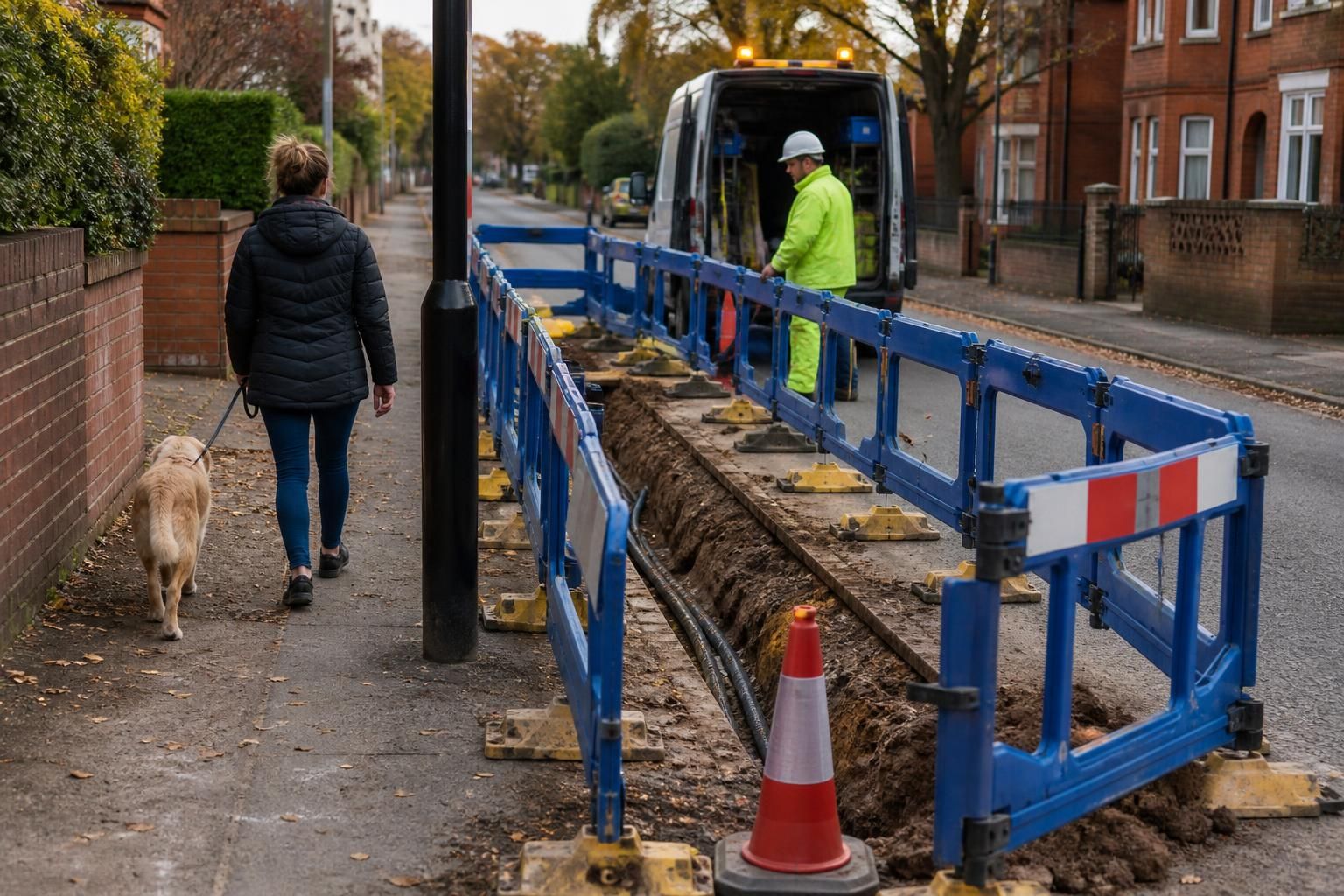
Pedestrian safety is a primary control. Open excavations, temporary cables, barriers and construction equipment should be separated from pedestrians. Where the usual pavement or footway cannot remain in use, a suitable alternative route is needed. The route should be stable, clearly defined and usable by people with mobility restrictions, pushchairs and visual impairments. Barriers should not be moved by residents or site users, even if the work appears inactive, because ground may remain open or electrical work may still be in progress.
Vehicle movements may be affected while materials are delivered, plant is positioned or a work area is established. On a private development, this could mean temporary restrictions around a parking bay, access road or service yard. On a commercial site, deliveries may need to use a different entrance or be coordinated around the work zone. Traffic control requirements should be assessed in advance where the installation is close to a public road, junction or frequently used access.
Noise and vibration are usually linked to particular tasks rather than continuing throughout the installation. Breaking out paving, drilling, excavation, compaction and reinstatement can be more noticeable than cable termination or inspection work. Noise-sensitive locations such as flats, care settings, offices and education premises require greater attention to the timing and sequencing of these activities. The contractor should also avoid leaving materials, spoil or equipment in a position that creates additional obstruction after the noisy work has finished.
The installation process commonly involves several distinct stages:
- Confirming the column position, cable route, existing services and work boundaries.
- Setting out barriers, warning signs and any temporary pedestrian or vehicle arrangements.
- Excavating for the foundation and cable route, with care taken around identified underground services.
- Installing the foundation, ducting, cable and column or carrying out the relevant connection work.
- Completing electrical connections, inspection and testing before the installation is put into service.
- Removing surplus materials, making the area safe and reinstating affected surfaces.
These stages do not necessarily affect residents in the same way. Excavation and deliveries create the greatest physical obstruction, while testing and connection work may require controlled access to the column, feeder or electrical enclosure. A work area should remain protected until the installation has been checked and the ground, covers and surrounding surfaces are safe for normal use.
Access arrangements need particular care for people who cannot use an alternative route easily. Residents with mobility needs, carers, visitors, delivery drivers and emergency services may all require a route that differs from the general pedestrian diversion. On a commercial or residential site, the responsible person should identify these requirements before work begins. If access to a doorway, garage, loading area or communal facility is temporarily restricted, the proposed arrangement should be agreed and communicated in advance wherever practicable.
Existing services are another important source of potential disruption. Street lighting routes may pass near water, gas, telecommunications, drainage or other electrical infrastructure. Service records and on-site detection help inform the excavation method, but they do not remove the need for controlled digging and suitable precautions. If an unexpected service or obstruction is found, the work may need to pause while the design or route is reviewed. This is preferable to continuing in a way that could damage infrastructure or create a safety risk.
Reinstatement is part of the resident and site-user experience, not an afterthought. The contractor should remove spoil and unused materials, secure covers, restore disturbed paving or other surfaces where included in the works, and leave routes free from avoidable trip hazards. Landscaping, tarmac, block paving and other finishes may require different treatment. Residents should report loose slabs, uneven surfaces, damaged barriers or remaining obstructions to the site contact so that they can be assessed.
For larger developments or commercial premises, the main disruption can often be reduced by dividing the work into manageable sections rather than opening several areas at once. This may allow one route, entrance or parking zone to remain available while another is being worked on. The suitable approach depends on the lighting layout, cable route, safety requirements and the operational needs of the site; keeping an area open must not compromise separation from excavation or live electrical work.
Once the installation is complete, the responsible contractor should verify the electrical work and confirm that the column, foundation, cabling and associated equipment are suitable for service. Any temporary signs, barriers or route changes should be removed only when the area is safe and no further construction activity requires them. A clear handover should identify the completed installation, outstanding surface work if applicable and the person responsible for subsequent maintenance.
In practical terms, the best way to limit inconvenience is to plan around how residents, tenants and site users actually move through the area. Early route planning, visible barriers, safe diversions, controlled deliveries, protection of vulnerable users and proper reinstatement prevent short-term installation work from becoming a longer-lasting access or safety problem.
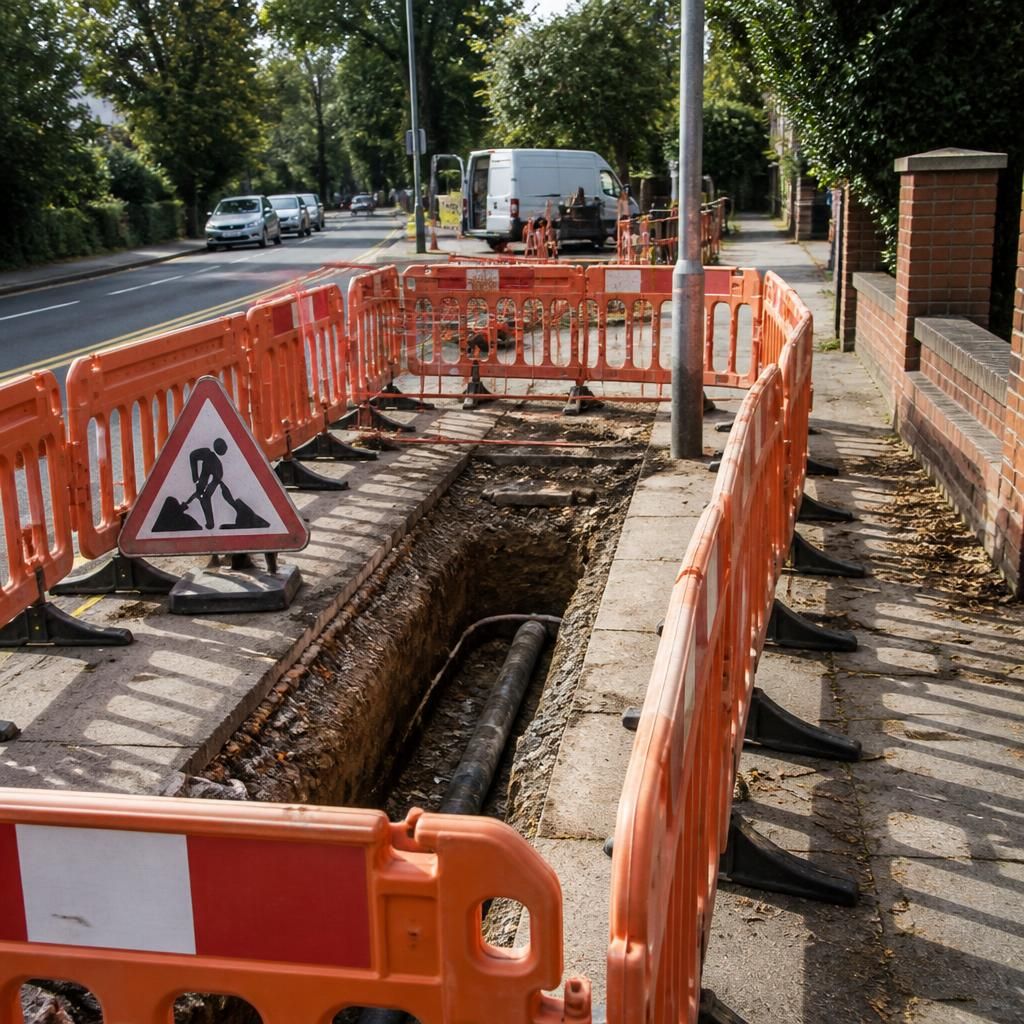
The installation method can materially affect how disruptive street lighting work is. An open trench may be needed where cables or ducts must be laid along a defined route, creating a continuous area of excavation and temporary surface disturbance. In other locations, a less invasive duct installation method may be considered if the ground conditions, existing services, access and design make it suitable.
Methods that reduce the length of open excavation do not remove the need for controlled working. They may still require access points, plant, barriers, spoil storage and local restrictions around the column or cable connection. The contractor should explain why the proposed method is appropriate for the site and identify which areas will remain inaccessible during each stage. This allows residents, tenants and site users to distinguish between unavoidable work zones and restrictions that could be reduced through better sequencing or a different installation approach.
Discuss your street lighting installation requirements
Discuss your street lighting installation requirements with RJW Electrical, including site access, resident routes and any restrictions affecting tenants or site users. Share your project details to request a no-call-out-fee quote for the proposed works.