
RJW Electrical
Home EV Charging Station Installation
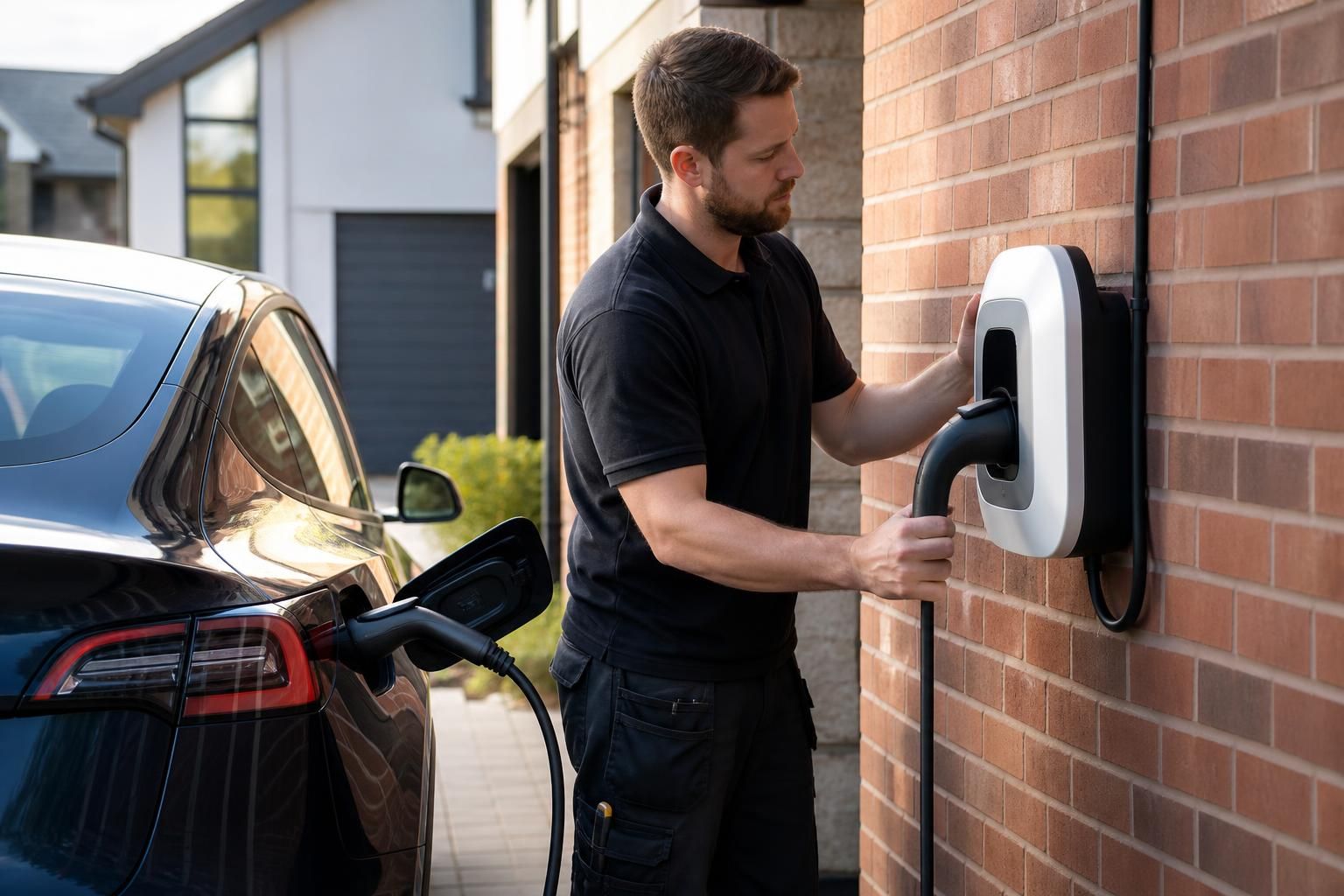
RJW Electrical installs home electric vehicle charging points for homeowners and property managers, assessing the supply, cable route and parking arrangement before fitting. You receive a compliant, practical charging solution designed around your vehicle, property and everyday use.
Choosing the Right Home EV Charging Setup
Which home EV charger is right for your property?
Selection depends on vehicle connector, parking position, available electrical capacity and preferred cable arrangement. A site assessment identifies suitable equipment, protective devices and any load-management requirements before installation proceeds safely.
Can an EV charger be installed at any home?
Most properties can support installation, subject to adequate electrical capacity, safe cable routing, suitable parking access and compliant earthing. An assessment first identifies any upgrades or alternative charging arrangements required.
What electrical work does a home EV charger installation require?
Work may include installing a dedicated circuit, protective devices, isolation equipment, earthing and cable containment, followed by inspection, testing and certification to confirm the installation meets current electrical wiring requirements.
Should you choose a smart home EV charger?
Smart chargers offer app-based monitoring, scheduled charging and energy management, helping households control when electricity is used. Suitability depends on vehicle compatibility, connectivity and the property’s existing electrical installation capacity.
Should you choose a tethered or untethered home EV charger?
Tethered chargers have a permanently attached cable, making regular use convenient. Untethered units provide a socket, allowing cable choice and neater storage. Select based on parking, vehicle compatibility and preferences.
Comparing Home EV Charging Options
Choosing a home EV charging station involves comparing charger type, power supply requirements, cable arrangements and control features. The right option depends on your vehicle, parking position, electricity installation and whether convenience, flexibility or straightforward operation matters most.
- 01
Tethered home charging point
A tethered charger has a permanently attached charging cable, so it is ready to use without storing a separate lead. It suits households that charge one compatible vehicle regularly, although the cable needs to be managed neatly when not in use.
- 02
Untethered home charging point
An untethered charger uses a detachable cable that is stored separately. This creates a neater fixed unit and can offer more flexibility where different vehicles use the charger, but the correct cable must be available whenever charging is required.
- 03
Smart EV charger
A smart charger adds control features such as scheduled charging, remote monitoring and settings that can work with the property’s electricity use. It is suitable for drivers who want more control over charging, but the installation must include a reliable connection and configuration of the relevant controls.
- 04
Load-managed charging
Load management monitors the property’s electrical demand and adjusts vehicle charging to help keep the installation within suitable limits. This can be useful where the existing supply has limited spare capacity, subject to an assessment of the incoming supply, consumer unit and other significant loads.
- 05
Dedicated higher-power installation
A dedicated higher-power charger can reduce the time needed to charge a compatible vehicle, but the vehicle, supply capacity, protective devices and cable route must all be suitable. A qualified installer should confirm the practical and regulatory requirements before this option is selected.
- 06
Parking and cable-route suitability
The best charger type also depends on where the vehicle is parked and how the cable will reach it. Installation planning should consider wall position, cable protection, access routes, drilling requirements and the risk of creating a trip or vehicle hazard, with the final arrangement installed in line with current wiring requirements.
Compliant EV Charger Installation With Clear Handover
Every installation follows the 18th Edition Wiring Regulations, with attention to protective devices, earthing and cable protection. RJW Electrical supplies certification, clear handover information and practical guidance, helping homeowners and property managers operate and maintain their charging equipment correctly.
20 Years of Electrical Experience
Established in 2006, RJW Electrical brings extensive electrical installation experience to domestic and commercial EV charging projects.
Qualified, Insured and DBS-Checked Engineers
Your installation is carried out by fully qualified, insured and DBS-checked electrical engineers, with work completed to a professional standard.
Recognised Electrical Standards
RJW Electrical is a NAPIT member and part of the TrustMark scheme and Electrical Safety Register, providing independent reassurance when choosing an installation specialist.
Clear Quote Before Installation
You receive a clear quotation for the proposed EV charging installation, with no call-out fee for the quote.
Practical Installation Support
RJW Electrical explains the operation and maintenance of your charging equipment during handover, so you can use the installation correctly from the outset.
Questions to Ask Before Approving Your EV Charger Installation
Before approving a home EV charging station installation, confirm that the proposed charger is suitable for your vehicle and electrical supply. Ask who will carry out the work, what qualifications they hold, and whether the installation will meet the current requirements for domestic electrical work, including any permissions needed for your property.
Request an itemised quotation that separates the charger from installation and identifies what is included. It should make clear whether testing, commissioning, app setup, additional cabling, consumer-unit alterations, drilling, trenching or remedial work are covered, and explain how any changes to the agreed scope or price will be handled.
Is the electrical supply suitable?
The assessment should consider the incoming supply, consumer unit, earthing arrangement and other significant electrical loads at the property. Ask whether the proposed charger can operate within those limits and whether any alterations, protective equipment or network-related requirements are needed. These points should be confirmed before you approve the installation rather than left as assumptions in the quotation.
Where will the charger and cable be installed?
The written proposal should identify the charger position, cable entry point, route, fixing method and any drilling, surface work or trenching required. It should also explain how the cable will be protected and whether the proposed arrangement is suitable for the way vehicles are parked and charged. If the route crosses shared, rented or externally managed areas, establish who must approve the work before installation.
What testing and certification will be provided?
The handover should identify the tests carried out, the installation details and any certification relevant to the domestic electrical work. Ask when these documents will be issued and whether they will record limitations, recommendations or outstanding work. RJW Electrical works to the 18th Edition Wiring Regulations and can provide certification and handover information for the completed installation.
Who will install and commission the equipment?
Ask whether the installer is appropriately qualified, insured and registered for the work, and whether the business’s NAPIT, TrustMark and Electrical Safety Register memberships apply to the installation being proposed. The completion process should cover testing, basic charger operation, relevant controls or app setup where included, and the information you need to use and maintain the equipment correctly.
Discuss Your EV Charging Installation
Contact RJW Electrical to discuss your vehicle, property and charging requirements. Request practical advice on the installation approach, a tailored quotation covering the recommended work, or guidance on arranging the next step.