
RJW Electrical
Compare EV Charger Brands & Models
Compare EV charger brands and models by charging features, compatibility and installation requirements. RJW Electrical provides practical guidance and professional installation for homes and businesses across the Midlands, with qualified, insured engineers and clear quotations.
Questions About Choosing an EV Charger Brand
Which EV charger brand is best suited to your property?
Choose a charger by checking vehicle compatibility, charging speed, app functionality, cable arrangement, solar integration, warranty terms and electrical requirements, then match those features to your property and usage needs.
Which EV charger models support solar integration?
Solar-compatible models can divert surplus photovoltaic generation to the vehicle, subject to system compatibility. Check inverter integration, energy-management controls, load monitoring and electrical capacity before selecting suitable installation requirements.
How do EV charger warranties vary between brands?
Compare warranty length, covered components, installation conditions, registration requirements and exclusions. Confirm whether labour, replacement parts and software support are included, and identify who administers warranty claims throughout vehicle ownership.
Do all EV charger brands support three-phase charging?
Not all chargers support three-phase charging; many domestic units use single-phase supplies. Confirm the property’s incoming supply, charger specification, vehicle compatibility and distribution-board capacity before selecting an installation approach safely.
How do EV charger brands differ in load balancing?
Load balancing adjusts charger output to limit demand when other equipment operates. Brand implementations differ in monitoring method, phase support, configuration and whether additional hardware or compatible meters are required.
EV Charger Brands Compared: Features, Compatibility and Installation Considerations
EV charger brands vary in charging control, tariff integration, cable arrangement, connectivity and installation requirements. Comparing these factors alongside vehicle compatibility, property wiring and usability helps identify whether a model suits a home, private or workplace parking setting.
- 01
Tethered home chargers
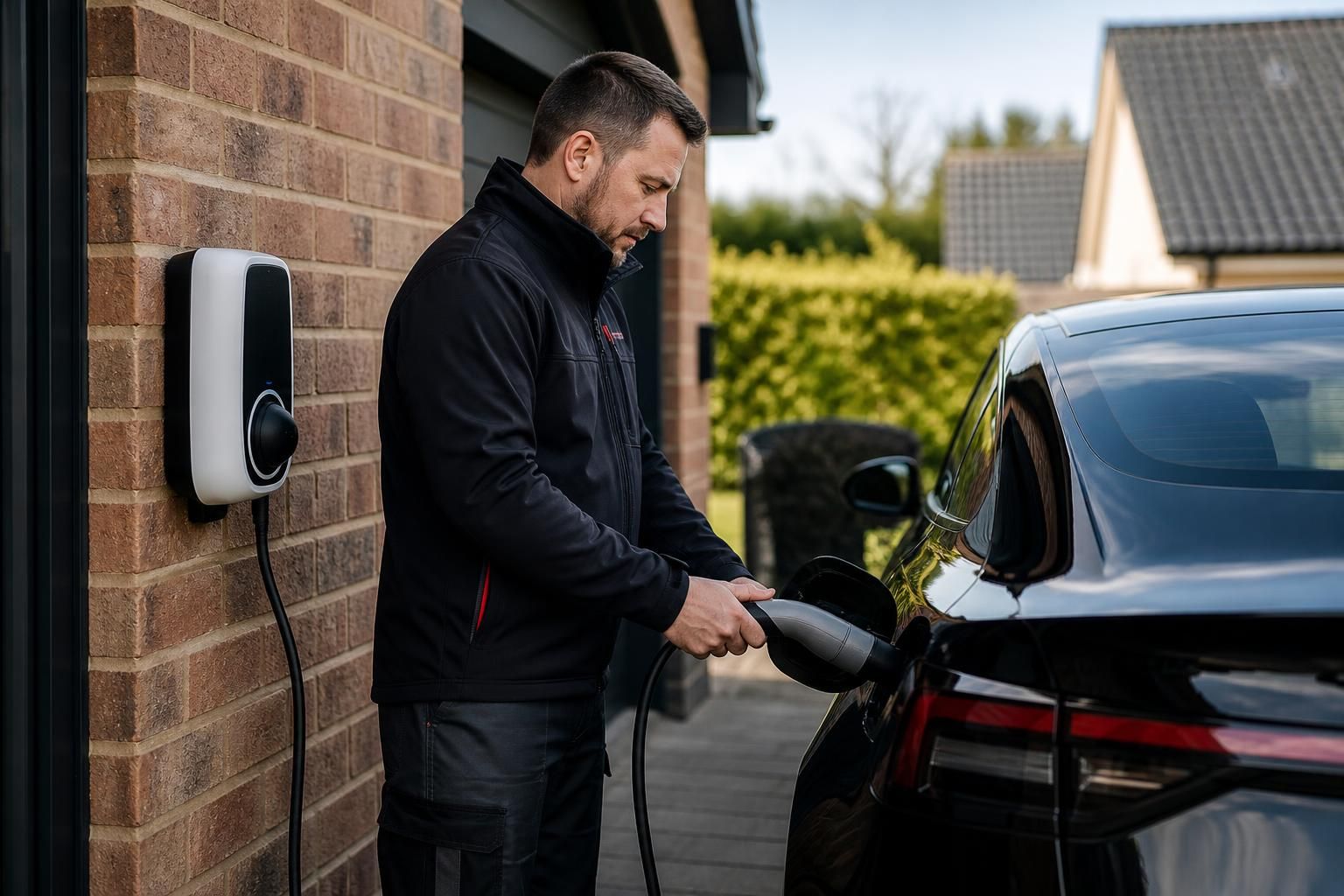
A tethered charger has a permanently attached charging cable, making it convenient for regular home use. It is practical where the same vehicle is charged repeatedly, but the cable must be managed when not in use and the connector type should match the vehicle.
- 02
Untethered home chargers
An untethered charger uses a separate cable, which can be stored securely and used with compatible vehicles. This arrangement offers more flexibility for households with different cars, although the cable must be available whenever charging is required.
- 03
Connected smart chargers
Smart models add app-based control, charging schedules and usage information. They may suit drivers who want to coordinate charging with their electricity arrangements, but the available functions depend on the charger, vehicle, app and home internet connection.
- 04
Chargers with load management
Load-management features monitor the property's electrical demand and can regulate vehicle charging when other equipment is operating. They are worth considering where the available electrical capacity needs careful management, with the installation assessed against the existing consumer unit and supply.
- 05
Solar-compatible chargers
Solar-compatible models can be considered at properties with photovoltaic generation. Their usefulness depends on the charger's control functions, the solar installation and how charging is configured, so compatibility should be checked rather than assumed from the product description.
- 06
Workplace and shared-parking chargers
Chargers for workplaces, managed developments and shared parking may need different cable arrangements, user access controls, metering or multiple charging points. The right model depends on how spaces are allocated, who will use the equipment and whether the site's electrical infrastructure can support the planned installation.
- 07
Vehicle compatibility and connector choice
A charger should be checked against the vehicle's inlet, maximum AC charging capability and any manufacturer-specific requirements. Selecting a higher-rated model does not necessarily make a vehicle charge faster if the car, cabling or property supply limits the usable charging rate.
Professional Standards Behind Your EV Charger Installation
An appropriate EV charger installation combines a compatible model with compliant electrical work, documented testing and clear handover information. RJW Electrical assesses the proposed installation, follows manufacturer instructions, provides relevant certification and explains controls and settings.
Model suitability assessed
RJW Electrical compares charger specifications against your vehicle, expected charging use, parking arrangement and available electrical capacity before recommending a suitable model.
Connector and cable choices
The installation can be planned around the vehicle connector and the practical choice between a tethered cable or a socketed charger, helping avoid an unsuitable charging arrangement.
Smart charging capability
Where supported by the selected model, features such as load management, scheduled charging and app-based control can be considered alongside the way the property uses electricity.
18th edition installation standards
Installation work is carried out by qualified, insured engineers in line with the latest 18th edition wiring regulations, with attention to protection, cable routing and the existing installation.
Useful installation records
The handover covers the relevant certification and key information about the installed charger, including applicable controls, settings and operating guidance.
Clear model-specific quotations
A clear quotation sets out the proposed charger, installation scope and any relevant site requirements. RJW Electrical also provides no-call-out-fee quotes to support straightforward comparison.
Questions to Ask Before Choosing an EV Charger Brand or Model
Before approving an EV charger model or installation quote, ask how the proposed unit suits your vehicle, electricity supply and expected charging pattern. Confirm the planned cable route, protective equipment, load management requirements and whether the price includes the charger, cabling, mounting, configuration and any necessary remedial electrical work.
Also check who is responsible for the design, testing and compliance of the installation, what qualifications and insurance the installer holds, and which manufacturer requirements apply to the chosen model. Request a written breakdown of included and excluded work, warranty arrangements, certification and any assumptions that could affect the final cost.
Will the charger work with my vehicle?
Confirm whether the charger uses a tethered cable, an untethered socket or requires a separate charging lead. Ask if it supports the charging mode recommended by the vehicle manufacturer and whether its controls can prevent charging interruptions or errors. The installer should identify any limitations rather than treating all EV chargers as interchangeable.
Is the charger suitable for my electrical supply?
Request an explanation of any assessment needed before installation, including the proposed circuit, protective devices, earthing arrangements and cable size. Where the available supply cannot support the charger’s full output, ask whether the model can be configured to a lower rate or whether a compliant load-management solution is required.
What smart features are genuinely useful?
Ask whether the charger supports scheduled charging, user access controls, remote monitoring and adjustable power settings. Clarify what happens if the internet connection or app is unavailable, which devices and operating systems are supported, and whether any ongoing digital service costs or account requirements apply.
Where can the charger be installed?
The quotation should identify the mounting surface, route from the consumer unit, cable containment and the position of any isolating equipment. For external installations, ask whether the selected charger and accessories are appropriate for the location and how the finished work will be protected, labelled and left accessible for inspection.
What work is included in the price?
Check whether the price includes the charger, standard cabling, mounting, protective equipment, configuration, testing, certification and handover guidance. Ask the installer to identify assumptions such as cable length, wall construction, consumer-unit capacity and remedial work, along with the basis for any additional charges if those assumptions change.
Who will test and certify the installation?
Ask for the installer’s relevant qualifications, insurance and scheme memberships, and confirm that the work will follow current wiring requirements and the manufacturer’s instructions. Before sign-off, establish which inspection and testing results, electrical certificates, user instructions and warranty information will be supplied. RJW Electrical is a NAPIT and TrustMark member, with engineers who are qualified, insured and DBS-checked.
Discuss Your EV Charger Options
Discuss your preferred EV charger with RJW Electrical to check its suitability for your property and charging needs. We can clarify the installation requirements, answer questions about available models and provide a tailored quotation.