
RJW Electrical
EV Charging Point Installation
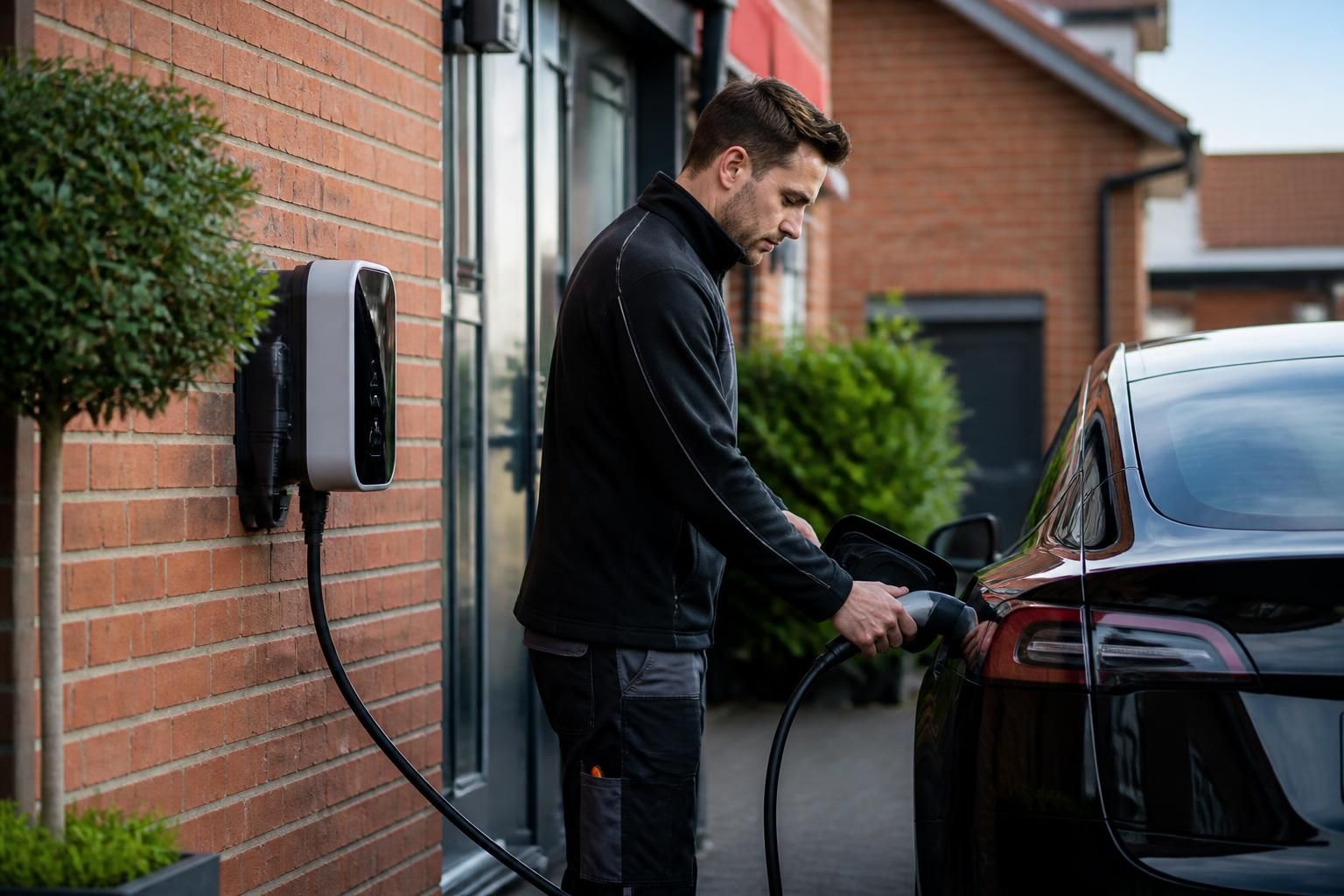
EV charging point installation connects your electrical supply to a dedicated electric vehicle charger. RJW Electrical fits charge points for homes and businesses across Sutton Coldfield, Walsall and the surrounding Midlands, with qualified engineers delivering compliant, dependable workmanship.
EV Charging Point Installation Questions Answered
What power rating should my EV charger have?
Selection depends on your vehicle’s charging capability, available electrical capacity, parking arrangement, cable preference, and future requirements. A qualified assessment identifies a suitable charger and installation method for your property.
Should I choose a tethered or untethered EV charger?
Tethered chargers keep the cable attached, offering convenience and reducing misplaced leads. Untethered units provide flexibility for different vehicles but require a separate compatible cable and secure storage when parked.
Can my property support an EV charger installation?
A property assessment checks the consumer unit, earthing, protective devices, cable route and available capacity. Necessary upgrades may be identified before installation, helping ensure the charger operates safely and compliantly.
Should I choose a single-phase or three-phase EV charger?
Single-phase supplies suit many domestic installations, while three-phase can support higher combined electrical demand where available. The choice depends on supply characteristics, charger requirements and the site's intended usage.
Do I need a smart EV charger installation?
Smart chargers connect with digital controls, enabling scheduled charging, usage monitoring and remote management through compatible systems. They may help coordinate charging with tariffs, solar generation or household demand patterns.
Compare EV Charging Point Installation Options
Choosing an EV charging point involves more than selecting a wall-mounted unit. The electrical supply, charging speed, cable arrangement, parking position, property type and future vehicle use all affect which installation approach is practical, compliant and proportionate.
- 01
Home AC wallbox installation
A dedicated AC wallbox is usually suitable for residential driveways where the vehicle is parked for several hours. The installation is assessed against the property’s consumer unit, earthing arrangement, cable route and available electrical capacity before the charger is selected.
- 02
Tethered or untethered charging
A tethered unit has a permanently attached charging cable, making routine use straightforward but requiring suitable cable storage. An untethered unit has a socket instead, which can look neater and support different vehicle cables, although the cable must be stored and connected separately.
- 03
Cable routing and parking position
The charger’s position affects installation complexity, appearance and everyday usability. External walls, detached garages and longer routes may require additional cable protection, careful fixing and consideration of where the vehicle can park without creating a trip or obstruction risk.
- 04
Load-managed charging
Where the property has limited electrical capacity or several significant loads, load management can help control the charger’s demand in relation to the rest of the installation. This may be more proportionate than assuming the supply can support unrestricted simultaneous use.
- 05
Workplace and commercial charging
Commercial installations require a broader assessment than a single domestic charge point. The design may need to consider multiple parking bays, distribution equipment, cable routes, user access, future expansion and the impact of charging demand on the premises’ electrical system.
- 06
Solar-linked charging
A charge point can be considered alongside an existing solar photovoltaic system where the aim is to use generated electricity for vehicle charging. The assessment should establish how the systems interact, whether export or household demand takes priority, and whether the proposed controls are compatible with the installation.
- 07
Inspection, testing and compliance
A safe installation includes appropriate circuit protection, earthing and bonding considerations, correct equipment mounting, testing and certification. Using a qualified, insured and DBS-checked electrical contractor that follows the latest 18th edition wiring regulations helps ensure the work is assessed and documented properly.
What a Professional EV Charging Point Installation Includes
An installation should leave more than a functioning charger. Professional delivery includes assessment against current wiring requirements, suitable protective measures, clear records of the work and practical guidance so the owner understands operation, maintenance and future electrical considerations.
Site and Load Assessment
The existing electrical supply, available capacity, cable route and proposed charger position are assessed before installation. This helps determine the appropriate connection and any electrical work needed.
Work to Current Standards
Qualified, insured and DBS-checked engineers carry out the installation in line with the latest 18th edition wiring regulations, with suitable protective measures included for the charging circuit.
Testing and Documentation
The completed installation is tested as part of the commissioning process, with clear records provided so the owner has useful information about the work carried out.
Practical Handover Guidance
Handover information covers charger operation, routine maintenance and relevant future electrical considerations, helping homeowners and businesses use the equipment correctly.
Recognised Electrical Credentials
RJW Electrical is a member of NAPIT, the TrustMark scheme and the Electrical Safety Register, supported by 20 years of experience in electrical installation work.
Questions to Ask Before Approving an EV Charging Point Installation
Before approving an EV charging point installation, use the quotation discussion to establish exactly what work is proposed and whether it suits the property. Ask how the proposed charger, position and cable route have been selected, and whether any changes to the existing electrical installation, parking arrangements or permissions are required.
Clarify who will carry out the work, which wiring regulations and certification requirements apply, and what is included in the price. The written scope should identify the charger and accessories, installation work, testing, commissioning, documentation and any exclusions, so that additional costs and responsibilities are understood before work begins.
Can the existing supply support the charger?
Ask the installer to assess the incoming supply, consumer unit, earthing arrangement and other significant electrical loads before finalising the design. If capacity is limited, the quotation should explain the proposed solution, any limitations on charging and whether future additions such as another vehicle or electrical equipment have been considered.
What protective measures will be installed?
The written proposal should identify the relevant protective devices, cable specification, isolation method and earthing considerations, without relying on unexplained technical shorthand. Ask how the installation will be tested and what evidence will confirm that the protective measures operate as intended.
Is the installer properly qualified and registered?
RJW Electrical states that its engineers are fully qualified and that the company is a member of NAPIT, the TrustMark scheme and the Electrical Safety Register. Ask which certification will be issued for this particular installation and retain the contractor's details and scheme information with the property records.
Does the quotation cover the complete installation?
Confirm whether the quotation includes mounting, cable protection, routing, drilling, access equipment, testing, commissioning, certification and making good any affected surfaces. It should also state what is excluded, such as alterations to parking areas, building work or supply upgrades, so that responsibilities and possible additional charges are clear before approval.
What will be tested and handed over?
Request confirmation that the installation will be tested, commissioned and documented in accordance with the applicable requirements. The handover should identify the installed equipment, provide relevant certificates and explain basic operation, isolation, fault reporting and any maintenance considerations for the property owner or facilities manager.
Discuss Your EV Charging Point Installation
Contact RJW Electrical to discuss your property, vehicle and charging requirements. The team can advise on a suitable installation approach and prepare a tailored quotation, helping you decide the next step with clear information.