
RJW Electrical
Emergency Electricians
An emergency electrician assesses dangerous faults such as burning smells, exposed wiring, repeated tripping or loss of power, then makes safe, repairs or isolates the affected circuit. This page explains when to seek professional help and what information to provide.
Problems that need urgent electrical attention
An electrical emergency is a fault that could cause injury, fire or further damage if left unresolved. Warning signs include sparks, electric shocks, buzzing, flickering lights, hot accessories, water near electrics, or a socket that has stopped working.
- 01
A circuit will not stay reset
If a fuse or circuit breaker trips again after being reset, the fault may still be present. Avoid repeatedly restoring the supply, as this can increase the risk of electric shock, fire or damage to connected equipment.
- 02
Damage caused by DIY or building work
Drilling, cutting, decorating or other building work can damage cables concealed in walls and floors. Stop work if a cable may have been struck, and do not touch exposed conductors until the installation has been made safe.
- 03
Water has reached electrical equipment
A leak, flood or damp area near sockets, switches or the consumer unit can make an installation dangerous. Keep away from the affected equipment and arrange an electrical assessment rather than testing it yourself.
- 04
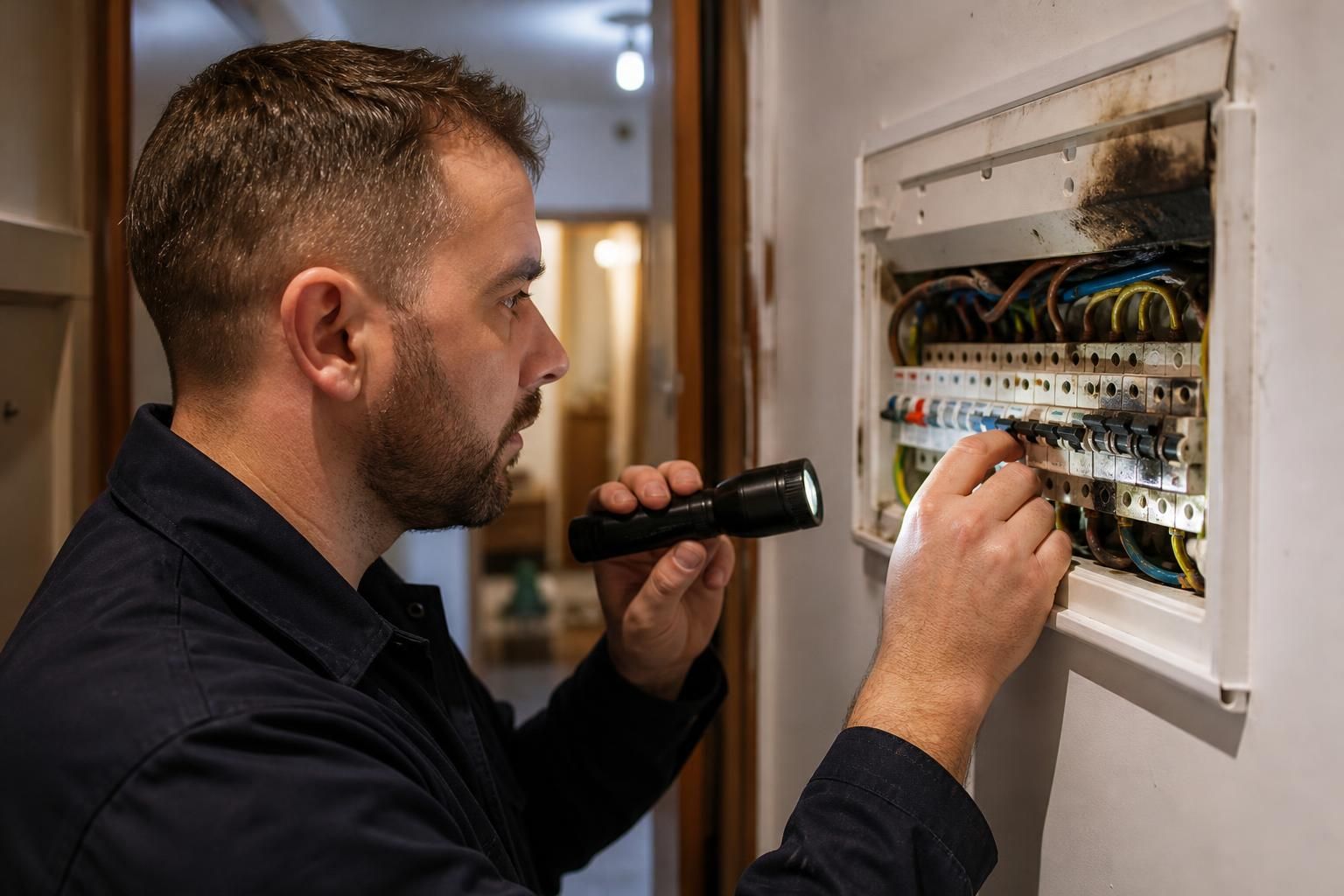
A consumer unit shows signs of damage
Cracked covers, scorching, loose components or a persistent fault at the consumer unit require professional attention. The consumer unit controls multiple circuits, so a defect can affect the wider installation.
- 05
Temporary electrical fixes are being relied on
Trailing leads, adaptors or makeshift connections may indicate that an electrical fault or capacity problem has not been resolved. Continued use can lead to overheating, damaged equipment or further faults.
- 06
You are unsure whether an installation is safe
Unfamiliar noises, unexplained faults or damage that cannot be identified should be treated cautiously. An emergency electrician can assess the affected circuit, explain the risk and repair or isolate it where appropriate.
Emergency electrical questions answered
How can I make an electrical emergency safe before professional help?
Switch off the affected circuit if safe, avoid touching damaged equipment, keep clear of water, and contact a qualified electrician with details of the fault and its location and cause.
What happens during an emergency electrical repair?
The electrician identifies the fault, tests affected circuits, explains required work, and provides a quotation. They then isolate danger, complete suitable repairs, and verify the installation is safe before leaving.
When should I call an emergency electrician?
Call an emergency electrician when a fault presents immediate risk, cannot be safely isolated, affects essential power, or returns repeatedly after resetting a protective device without identifying the likely cause.
Should I leave appliances unplugged after an electrical emergency?
Yes. Leave appliances unplugged if involved in the fault, becoming wet, overheating, sparking, or causing tripping. Reconnect them only after a qualified electrician confirms they are safe again.
What information should I give an emergency electrician?
Provide your name, property address, contact number, affected circuit or appliance, symptoms, when they began, any visible damage, and whether power, water, smoke or fire is involved at the property.
The benefits of professional emergency electrical work
A professional emergency repair confirms the fault and circuit, allowing a safe remedy. This reduces risks from shock, overheating and further damage, while replacing unsafe components can improve reliability.
After control of the fault, restoring a socket, light or circuit makes the property usable. Advice about completed work and testing helps you make informed decisions and provides peace of mind.
Accurate fault identification
A structured inspection traces the problem to the affected circuit or component, helping prevent unnecessary changes and supporting the correct repair.
Reduced electrical risk
Professional control of burning smells, exposed wiring and repeated tripping helps reduce the risk of electric shock, overheating and fire.
Safer restored power
Once the fault is addressed, damaged sockets, switches, lights or circuits can be returned to safe use rather than relying on temporary workarounds.
Repairs suited to the fault
A qualified electrician can repair, replace or isolate affected equipment according to its condition, installation requirements and the wider circuit.
Clearer next steps
Information about the work completed and any recommended follow-up testing helps homeowners, landlords and businesses make informed decisions about the installation.
Professional standards
Work carried out by an insured, qualified electrician following current wiring regulations provides a more dependable basis for ongoing electrical safety.
Qualified and compliant emergency electrical work
RJW Electrical’s emergency electrical work is carried out by fully qualified, insured and DBS-checked engineers in line with the current 18th Edition wiring regulations. Membership of NAPIT, the TrustMark scheme and the Electrical Safety Register demonstrates adherence to recognised professional and compliance standards.
The engineer explains the identified fault, the proposed remedy and the work involved before proceeding, with a quote provided without a call-out fee. Recommendations are based on the condition and safety of the installation, helping you make an informed decision about urgent electrical repairs.
Safety-first fault assessment
The engineer checks for signs such as heat damage, exposed conductors, water ingress, damaged accessories or repeated protective-device operation. Where energised equipment presents a danger, the relevant supply can be isolated and the area left in a safer condition while the cause is investigated. Work is carried out using suitable procedures and equipment for the installation.
Clear explanation before work
The engineer can identify the affected circuit or equipment, describe the apparent cause and explain the proposed repair. If the available evidence indicates a wider installation issue, this is distinguished from the immediate fault so that necessary remedial work is not confused with optional improvements. This gives domestic and commercial customers a clear basis for authorising the work.
Testing and responsible completion
Once work is complete, the engineer checks the relevant connections, protective devices and repaired equipment as appropriate to the fault. Any limitations, further recommendations or areas requiring additional investigation are explained, helping you understand the condition of the installation rather than relying only on restored operation.
Professional standards and documentation
Work is planned around the condition of the existing installation and the requirements of the current 18th Edition wiring regulations. Membership of the Electrical Safety Register supports a documented, safety-focused approach, while the company’s professional credentials and insurance provide relevant assurance when urgent electrical work is authorised.
If an electrical fault is causing burning, sparking, exposed conductors or repeated loss of power, stop using the affected equipment or circuit and do not attempt a DIY repair. If there is smoke or fire, leave the property and contact the emergency services.
When contacting RJW Electrical, describe what happened, which areas or appliances are affected and any warning signs you have noticed. This helps the electrician understand the situation and identify the appropriate next step for investigating the emergency electrical fault.
Discuss Your Electrical Emergency
Contact RJW Electrical to discuss the fault affecting your property and arrange the appropriate next step. Share the relevant details so the electrician can assess your enquiry and explain the recommended course of action for the electrical emergency.
Explore