
RJW Electrical
Domestic PAT Testing
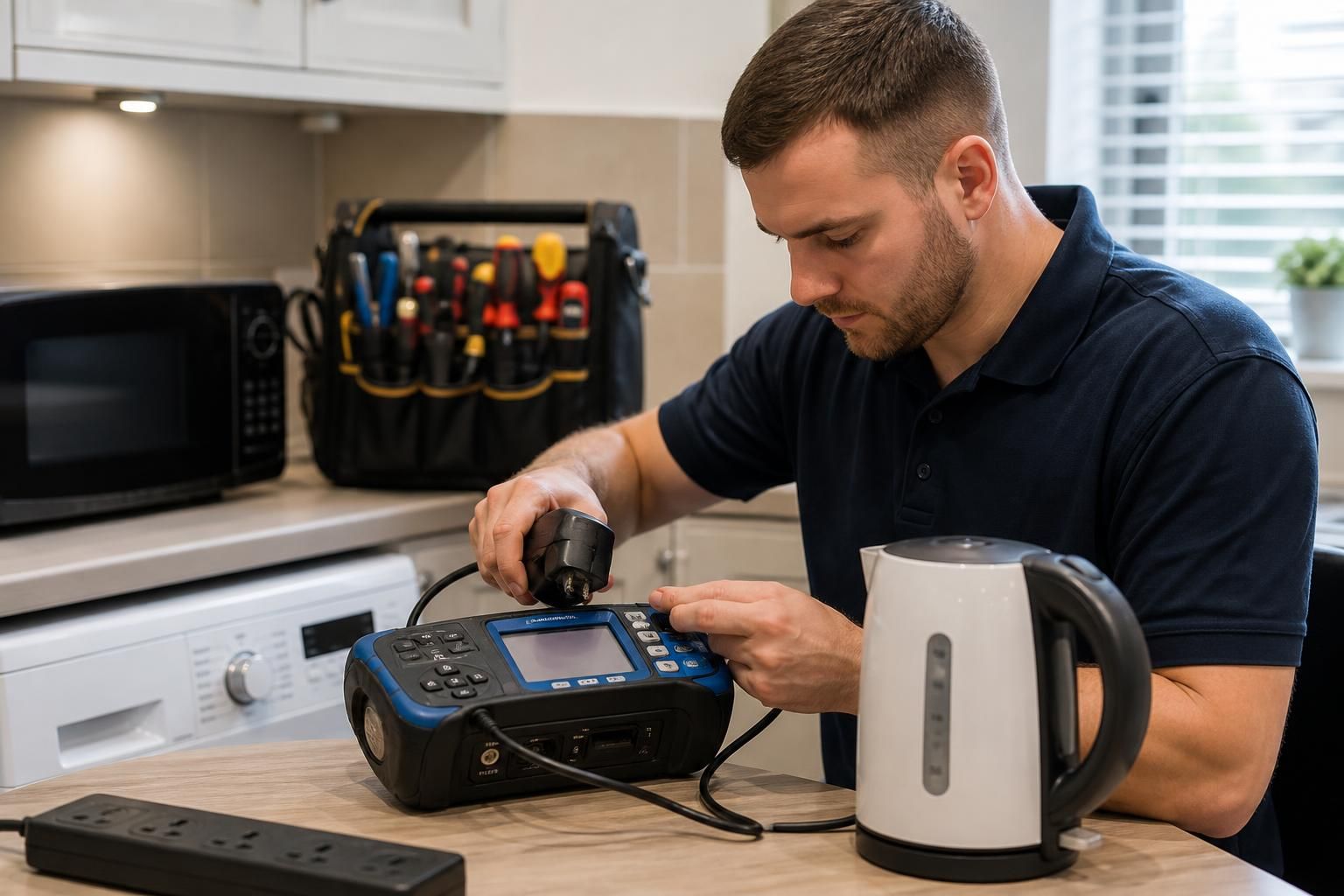
Domestic PAT testing involves inspecting and electrically testing portable appliances, plugs and leads to identify faults or damage. Qualified engineers record results clearly, label tested items where appropriate, and provide practical safety information for homes and businesses.
What Domestic PAT Testing Covers
Checks may cover kettles, vacuum cleaners, power tools, IT equipment and extension leads, with methods matched to appliance construction. Class I items require protective-earth testing, while double-insulated Class II items follow a different approach.
The assessment distinguishes equipment suitable for continued use from items requiring isolation or repair. Findings provide a practical basis for household maintenance decisions and related electrical safety records.
Visual inspection first
Each appliance is checked for visible damage, loose parts, heat effects, damaged casings, and defects around the plug, flex and connections before electrical testing takes place.
Plug and lead checks
Plugs and flexible leads are examined for correct assembly, secure terminations, suitable fusing, exposed conductors and signs of strain or overheating.
Class I protection
Class I appliances with exposed conductive parts are assessed for protective-earth continuity and insulation performance, helping identify faults that could create an electric shock risk.
Class II equipment
Double-insulated Class II appliances are tested using methods appropriate to their construction, without relying on a protective-earth connection.
Fault identification
An appliance that fails inspection or testing is clearly identified for isolation, repair or further assessment rather than being treated as suitable for continued use.
Technical records
Test information can be organised by appliance, location and result, creating a useful reference for household equipment checks and ongoing electrical safety management.
Domestic PAT Testing Questions and Answers
Is PAT testing legally required in a domestic property?
Domestic PAT testing is not universally mandated in private homes, but landlords and organisations should base inspection intervals on risk, equipment condition, usage, and operating surroundings.
What appliances should be included in domestic PAT testing?
Include portable items such as irons, hairdryers, lamps, fans, chargers, audio equipment and kitchen appliances; prioritise anything moved, frequently handled, visibly damaged or heavily used within homes during normal use.
What does a domestic PAT testing certificate confirm?
A certificate records the appliances examined, test results, identification details, inspection date and any failures. It provides documented evidence of the assessment, but does not replace repairs or ongoing checks.
Does domestic PAT testing include fixed appliances?
PAT testing generally covers appliances connected by a plug, not permanently wired equipment. Fixed appliances require inspection and testing within the electrical installation, often during broader safety assessments or inspections.
What qualifications should a domestic PAT tester have?
A competent tester should understand electrical safety, appliance classifications, visual inspection and instrument use, with suitable training and experience. For landlords, documented competence supports defensible safety records and consistent decisions.
PAT Testing for Different Home Environments
Domestic PAT testing can be adapted to the property and equipment being assessed, from individual household items to appliances in rented homes, home offices or shared accommodation. The scope, records and recommendations depend on equipment type, use and responsible person.
Family Homes
Testing can focus on portable appliances used throughout the home, including kitchen equipment, vacuum cleaners, extension leads and garden appliances. The assessment considers visible condition, cable integrity, plug protection and safe use in the relevant rooms.
Rented Properties
Landlords and property managers may use domestic PAT testing as part of an electrical safety record for appliances supplied with a rental property. The inventory can identify which items belong to the property and which are the tenant’s responsibility.
Home Offices
A home office may contain computers, monitors, printers, chargers and extension leads that remain connected for long periods. Testing can be organised around the equipment in use and highlight damaged leads, overloaded extensions or appliances requiring attention.
Shared Accommodation
Shared homes can contain appliances used by several people, increasing the importance of clear identification and consistent records. Testing may cover communal kitchen and laundry equipment alongside portable items provided for individual rooms.
Equipment-Specific Assessment
The appropriate checks depend on the appliance, its construction, operating environment and frequency of use. Results can distinguish equipment that passes from items requiring repair, removal from service or further investigation, rather than applying one test approach to every appliance.
Qualified, Insured Engineers for Domestic PAT Testing
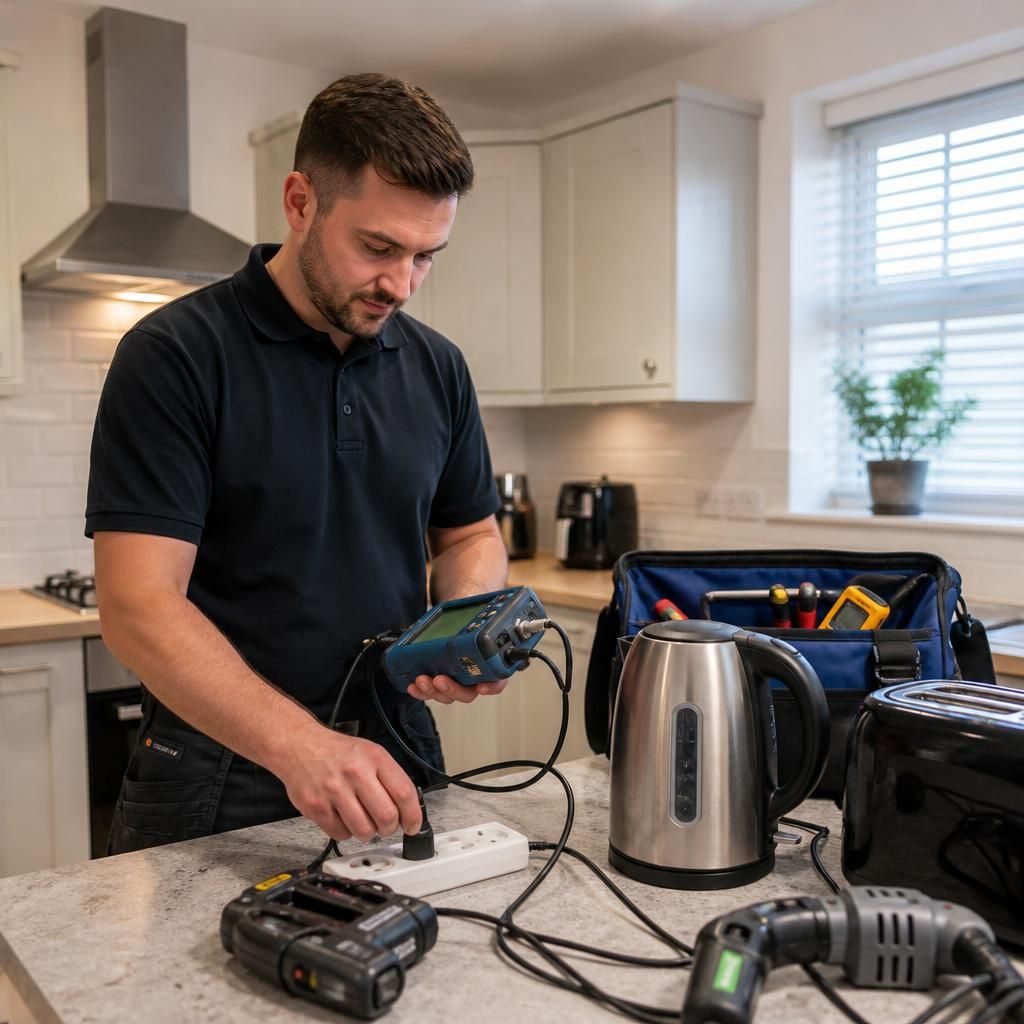
Domestic PAT testing provides documented evidence that selected household appliances have been assessed for electrical safety, helping the responsible person understand whether further action is needed. The appropriate approach depends on the appliance, its condition and how it is used, rather than relying on a label alone.
RJW Electrical’s fully qualified, insured and DBS-checked engineers apply professional judgement when examining domestic equipment. Their qualifications support methodical work in private homes, rented properties and home-working environments, while keeping the process appropriate to the setting.
The company follows the latest 18th edition wiring regulations and is a NAPIT member, part of the TrustMark scheme and a member of the Electrical Safety Register. Backed by 20 years’ experience, RJW Electrical can provide a no-call-out-fee quote before work is arranged.
Questions to Ask Before Arranging Domestic PAT Testing
Domestic PAT testing is a planned check of portable electrical appliances, including their plugs, leads and connections, to identify defects that may create a safety risk. Before arranging it, ask which appliances are within scope, whether any fixed appliances need separate assessment, and whether the proposed testing method is suitable for the equipment and its condition.
Also confirm what access is required, which standards and inspection criteria will be applied, and whether you will receive test results, labels or a PAT testing certificate. Ask how failed items will be identified, who is responsible for repairs or removal, what records should be retained, and whether any maintenance or repeat-testing recommendations will be provided.
What should be included in the assessment?
Provide an inventory, or ask whether one will be created during the initial survey. Clarify whether chargers, extension leads, multi-way adapters, kitchen appliances, garden equipment and items in garages or outbuildings are included. Fixed wiring and permanently connected appliances may require a different inspection, so ask how these will be dealt with if they fall outside domestic PAT testing.
Which testing method will be used?
A suitable process normally combines a visual examination with electrical tests where appropriate. Ask whether equipment will be identified by class, inspected for damaged cases, plugs, flexes and strain relief, and tested using equipment suitable for the appliance. Some electronic or sensitive devices may need particular care, so confirm how the contractor will avoid inappropriate testing.
Does the property need a preliminary survey?
Ask whether the contractor will consider the age and condition of appliances, their operating environment and the way they are handled between tests. For rented homes, shared accommodation or home offices, establish whether the responsible person, landlord, tenant or occupier needs to provide information and approve access to particular equipment.
What documentation will be supplied?
Useful documentation may identify each item, record its result, note any observations and distinguish appliances that were not available or could not be tested. Ask whether the records will be supplied in a format that can be retained and updated, and whether labels are used as a quick reference without replacing the full test record.
What happens when an appliance fails?
Ask how failed or damaged items will be isolated and identified, whether minor defects can be reported separately, and who is authorised to arrange repairs or disposal. Confirm who will keep the records, check that remedial work has been completed and decide when an appliance can be returned to service. A maintenance plan should reflect the equipment's condition and use rather than rely on an automatic retest interval.
Once the scope and responsibilities are clear, prepare a list of appliances to be assessed and identify any items that cannot be safely accessed or switched off. This helps the contractor confirm a suitable testing plan and provide a quote based on the equipment involved rather than an assumed number of items.
After testing, keep the results with your household or property records and act on any failed or conditionally passed items in line with the engineer’s advice. A clear record makes it easier to demonstrate what was checked, what action was recommended and when further assessment may be appropriate.
Discuss Your Domestic PAT Testing Requirements
Discuss your domestic PAT testing requirements with RJW Electrical to confirm the appliances and records involved. Request a properly specified quotation based on the proposed scope, including any questions about testing methods, reporting or follow-up recommendations.
Explore