

RJW Electrical
Commercial Electrical Installation Services
RJW Electrical delivers commercial electrical installations, inspections and testing for offices, retail premises, industrial units, landlords and facilities teams across the Midlands. Its engineers support new systems, alterations, remedial work and compliance documentation, helping clients compare scope before work begins.
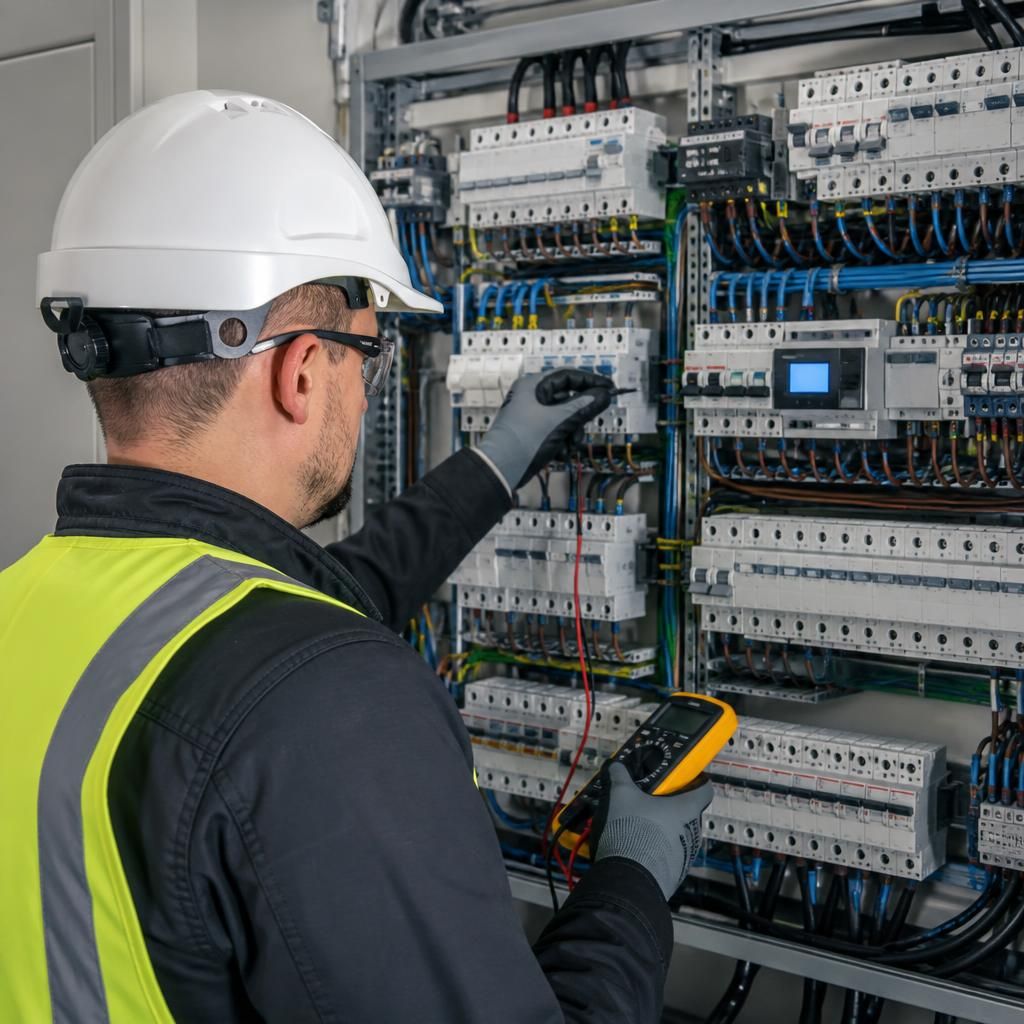
Experienced Commercial Electrical Expertise, Backed by Accreditation
Commercial electrical work covers the design, installation, alteration and maintenance of power, lighting and control systems within workplaces and other business premises. The approach depends on the building, equipment, occupancy and operational risks, so scope should be assessed before specifications are finalised.
RJW Electrical’s engineers are fully qualified, insured and DBS-checked, with work carried out to the current 18th Edition wiring regulations. This supports consistent technical standards across new installations, upgrades and remedial projects, while clear records help clients review what has been completed.
As a NAPIT member and TrustMark scheme participant, RJW Electrical works within recognised competency and consumer-protection frameworks. Registration on the Electrical Safety Register provides an additional reference point when comparing electrical installation companies for commercial work.
How Commercial Electrical Projects Are Managed
A commercial electrical project typically moves from an enquiry through scope discussion and preparation to site work, testing and completion. This sequence helps clarify responsibilities, identify constraints, organise access and establish checks required before the installation is handed over.
- 01
Initial Enquiry and Project Brief
The process begins by defining the commercial premises, the type of electrical work required and the reason for the project. Useful information includes existing drawings, equipment details, known faults, intended changes and any relevant compliance requirements.
- 02
Site Discussion and Scope Review
A site discussion helps assess the building, electrical infrastructure, access arrangements and operational constraints. The scope can then distinguish between new installation work, alterations, remedial tasks, inspections or testing, reducing uncertainty before preparation begins.
- 03
Specification and Quotation
The proposed work is set out in a clear quotation or specification, covering the relevant installation areas, materials, testing requirements and any assumptions. This gives owners, landlords, facilities teams and contractors a defined basis for comparing the work required.
- 04
Preparation and Site Coordination
Before work starts, the project requirements are organised around site access, affected areas, equipment, isolation points and coordination with other trades. This preparation is particularly important where electrical work must be completed within an occupied or operational commercial building.
- 05
Installation, Alteration or Remedial Work
Qualified engineers carry out the agreed electrical work, which may include power and lighting installations, control systems, alterations, upgrades or remedial repairs. The work is completed in accordance with the applicable 18th Edition wiring regulations and the agreed project scope.
- 06
Testing, Certification and Handover
On completion, the relevant circuits and systems are inspected and tested to identify defects and confirm that the installation has been completed correctly. The client receives the appropriate records and compliance documentation for review, retention and future maintenance planning.
Compliance Credentials
Documented qualifications, insurance, DBS checks and regulatory procedures give commercial clients a clear basis for assessing installation competence before appointing contractors.
Commercial Electrical Services: Questions and Answers
How is disruption managed during commercial electrical installation?
Before work starts, agree access arrangements, isolation requirements, site constraints and responsibilities. The contractor should explain proposed disruption, protect occupied areas, and provide test documentation after completion for client records.
What happens if an electrical issue is found during commercial testing?
If testing identifies an issue, the contractor should record its location, severity and likely cause, then explain repair or replacement options. Further testing confirms whether the installation is safe for use.
What should a commercial electrical survey cover?
A commercial electrical survey should assess existing circuits, protective devices, earthing, load demand, equipment condition, access, fire risks and planned changes, producing prioritised findings with supporting photographs and clear recommendations.
What information do electrical installation companies need before quoting commercial work?
Useful information includes the premises’ address, building use, floor plans, existing electrical documentation, required systems, equipment loads, access constraints, programme, compliance requirements, and any planned future expansion details in advance.
Which certificates are required for commercial electrical work?
Required certificates depend on the work, but may include an Electrical Installation Certificate for new installations, a Minor Works Certificate for alterations, and an Electrical Installation Condition Report where appropriate.
Clear Communication and Careful Commercial Workmanship
Commercial service standards cover how electrical work is managed from agreed scope to completion. Clients should expect clear explanations, recorded decisions and coordination around site constraints.
Workmanship should suit the premises, with testing information included in the handover. A professional finish means tidy installation, sensible labelling and clear communication about outstanding items, allowing businesses to review completed work.
Scope-led quotations
Commercial quotations can separate installation, alteration and remedial requirements, giving decision-makers a clearer basis for comparing proposed work and associated documentation.
Coordinated site attendance
Site access, responsible contacts and working arrangements can be agreed in advance so electrical work fits the premises and the client’s operational requirements.
Clear project communication
Technical decisions, changes to scope and any matters requiring client input should be explained in practical terms and recorded for reference.
Safety-led working practices
Commercial electrical tasks are approached with attention to building use, equipment and operational risk, helping ensure the installation method is appropriate to the site.
Professional completion
Completion information should make the finished installation easier to review, with relevant test results, outstanding items and practical guidance identified at handover.
Discuss Your Commercial Electrical Requirements
Discuss your commercial electrical requirements with RJW Electrical to clarify the work involved, identify suitable testing or installation options, and request a clear quotation based on your premises, equipment and compliance needs.
Explore