
RJW Electrical
Home EV Charger Installation
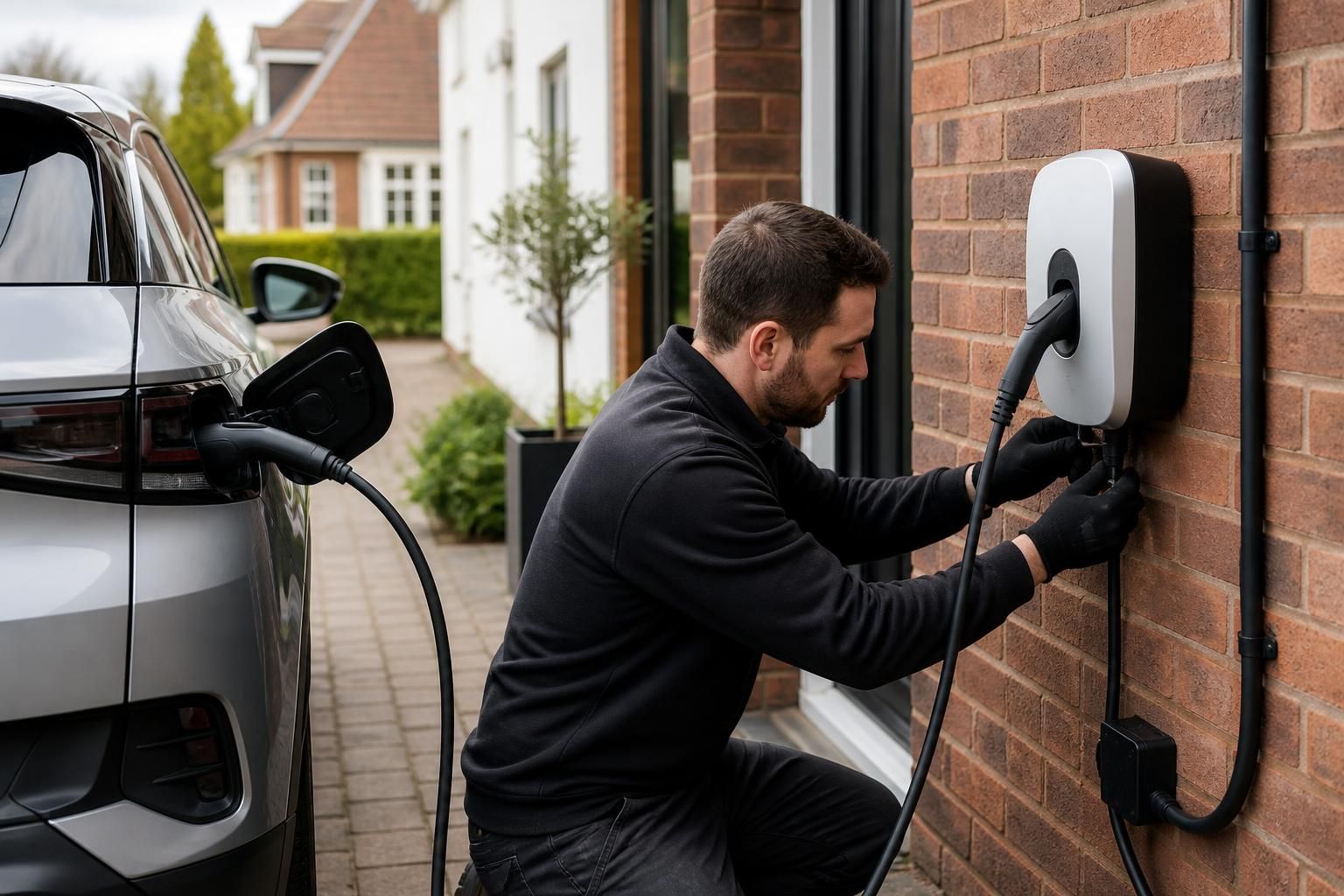
Home EV charger installation provides a dedicated connected charging point for electric cars and plug-in hybrids. RJW Electrical assesses your property, installs compliant equipment and completes electrical checks for safe, practical charging across Sutton Coldfield, Walsall and the Midlands.
Choosing the Right Home EV Charger Installation
Which home EV charger installation is suitable for your property?
The suitable EV charger depends on vehicle compatibility, daily mileage, parking position, cable route, available electrical capacity and whether tethered convenience outweighs untethered flexibility. Professional assessment confirms the practical option.
What home EV charger power rating is right for your vehicle?
Choose a rating compatible with your vehicle and daily driving pattern. Higher power can shorten charging time, but the installation must also suit the property’s electrical capacity and cable route.
Should you choose a tethered or untethered home EV charger?
Tethered chargers keep the cable attached for convenience, while untethered units offer flexibility for shared or occasional use. Choose according to parking arrangements, cable storage preferences, and vehicle compatibility needs.
Do you need a smart home EV charger?
A smart home EV charger connects with digital controls, enabling scheduled charging, usage monitoring and potential tariff-based management. Confirm app compatibility, connectivity and control features before choosing a suitable model.
Where should a home EV charger be positioned?
Position the charger close to the usual parking space, with cable reach, vehicle access, wall condition, drainage and protective clearances considered. Avoid trip hazards and exposed impact points where possible.
Home EV Charger Installation Options Compared
Choosing a home EV charger involves comparing more than purchase price. Tethered and untethered units, charging capability, cable routing, electrical capacity and smart features affect installation requirements, everyday convenience and overall value for your property.
- 01
Tethered home chargers
A tethered unit has a permanently attached charging cable, making it convenient for regular use. It is useful where the same vehicle is charged at home and there is a suitable place to store the cable securely when not in use.
- 02
Untethered home chargers
An untethered unit uses a separate charging cable, which can be stored indoors or kept in the vehicle. This offers a neater appearance when not in use and may suit households that need flexibility between compatible vehicles.
- 03
Standard home charging
A dedicated home charger is generally more practical for routine vehicle charging than relying on a standard domestic socket. Installation includes assessing the supply, selecting suitable protective equipment and positioning the unit for safe cable access.
- 04
Smart charging features
Smart functionality can provide control through connected systems and may help coordinate charging with household electricity use. The value depends on the vehicle, tariff arrangements, connectivity and the features supported by the selected charger.
- 05
Cable routing and charger position
The shortest route is not always the most suitable. The charger position should account for the parking space, cable reach, pedestrian routes, wall construction and protection from accidental damage, while keeping the installation tidy and accessible.
- 06
Electrical capacity and compliance checks
The existing installation must be checked before a home EV charger is selected. RJW Electrical assesses the supply, earthing and protective arrangements, then completes the required electrical checks in line with current wiring regulations. Its engineers are members of NAPIT and the TrustMark scheme.
What to Expect from a Professional Home EV Charger Installation
RJW Electrical’s approach combines 18th edition wiring practice with qualified installation work, clear records and practical guidance. You can compare the proposed charger, cable route and protective measures, then retain documentation for future servicing, certification and property records.
20 years of electrical experience
Established in 2006, RJW Electrical brings long-standing electrical installation experience to the design and delivery of domestic EV charging points.
Qualified and safety-focused delivery
Installations are carried out by fully qualified, insured and DBS-checked engineers, with work aligned to current electrical safety requirements.
Recognised industry credentials
RJW Electrical is a NAPIT member, part of the TrustMark scheme and listed on the Electrical Safety Register, giving you clear indicators of professional standards.
A documented handover
Following installation, you receive relevant records and certification for your electrical files, future servicing and property documentation.
Practical advice for charger use
The installation includes clear guidance on the charger arrangement, protective equipment and everyday operation, helping you understand the system you are choosing.
Quote without a call-out fee
The quotation is based on the property requirements and proposed installation, with no call-out fee included in the quote.
Questions to Ask Before Approving Your Home EV Charger Installation
A suitable home EV charger installation should match your vehicle, household electricity supply and preferred charging location. Before approving the work, ask which charger type is proposed, whether your vehicle or plug-in hybrid is compatible, where the cable will run, and what electrical protections and isolation arrangements are included.
Request an itemised quotation that separates equipment, labour, additional cabling, consumer-unit work and any required remedial items. Also confirm what testing and certification you will receive, whether planning or landlord permission is relevant to your property, and how future servicing or charger replacement would be handled.
Is the installer suitably qualified?
Confirm that the installer is qualified to undertake domestic electrical installation work and follows the current 18th edition wiring regulations. RJW Electrical is a NAPIT member, participates in the TrustMark scheme and is listed on the Electrical Safety Register, with fully qualified, insured and DBS-checked engineers.
Can the property support the charger?
Ask whether the consumer unit, earthing arrangement, supply capacity and intended charging load have been assessed. Where the existing installation needs improvement, the quotation should identify the necessary work clearly rather than treating it as an unexpected addition after installation has started.
How will the charger be protected?
Request details of the protective devices, RCD or equivalent arrangements, isolation point and any surge or fault protection that applies to the design. The installer should explain how the completed installation will be tested and how the results will be recorded for your property documents.
What exactly does the quotation include?
Check whether the price covers the charger, mounting, standard cable route, containment, connections, consumer-unit alterations, testing and certification. Ask the installer to identify exclusions such as longer or difficult cable routes, remedial electrical work, making good and permissions, so competing quotations can be compared on the same basis.
What records will you receive afterwards?
Ask for the relevant electrical certification, test results and charger documentation on completion, together with details of the isolation arrangement and any user controls that need to be understood. Keep these records with the property documents, particularly if the charger is serviced, altered or replaced later.
Discuss Your Home EV Charger Installation
Contact RJW Electrical to discuss your vehicle, property layout and preferred charging arrangement. The team can advise on a suitable home charger installation, explain the proposed work and prepare an itemised quotation for your consideration.