
RJW Electrical
What should a street lighting maintenance contract include?
A street lighting maintenance contract should define inspection schedules, testing, fault reporting, repair responsibilities, emergency call-out arrangements, record-keeping and pricing. It should also state which columns, lanterns, controls, cabling and associated equipment are covered, along with reporting requirements and procedures for making safe any identified hazards.
A street lighting maintenance contract should set out the assets covered, the standard of care required, how work is authorised and documented, and how responsibility is divided between the contractor, client and other parties. A useful contract is specific enough to manage routine maintenance and faults, while allowing properly controlled work when site conditions or asset condition differ from the original information.
Asset scope and ownership
- List the streets, estates, car parks, access roads or other areas included.
- Identify each maintainable asset using its location, identification number or other agreed reference.
- State whether the contract covers public, private, adopted or unadopted infrastructure.
- Clarify responsibility for equipment connected to the lighting installation but owned or controlled by another party, such as a distribution network operator, local authority or property owner.
- Record exclusions, including assets that are inaccessible, unsafe to work on, subject to a separate agreement or awaiting replacement.
This prevents uncertainty when a fault is reported near the contract boundary or when ownership of a column, supply or control system is unclear.
Maintenance activities and standards
The specification should describe what planned maintenance involves rather than simply referring to “servicing”. Depending on the installation, this may include visual condition checks, examination of access doors and fixings, cleaning of optical or control components, checks for corrosion or impact damage, and confirmation that the installation remains suitable for its intended use. Any electrical work should be carried out by appropriately competent personnel and in accordance with the applicable requirements, including the current edition of the IET Wiring Regulations where relevant.
The contract should also identify the inspection method and the condition categories to be used. For example, it can distinguish between a defect requiring prompt attention, a developing defect that should be monitored, and an improvement or replacement recommendation. Consistent terminology makes reports easier to compare over the life of the agreement.
Fault assessment and authorisation
Define how the contractor records the reported symptom, investigates the likely cause and recommends corrective work. The contract should explain which remedial tasks are included within the agreed service and which require separate approval. It should also state who can authorise additional expenditure, what evidence is needed for approval, and how work is handled where making an installation safe is necessary before a full repair can be completed.
Where replacement is recommended, the contract can require the quotation or report to distinguish between repair, component replacement, full asset renewal and longer-term improvement. This helps the client compare immediate corrective work with planned capital expenditure.
Site safety and access arrangements
Responsibilities should be allocated for site access, keys, permits, traffic management, pedestrian protection and coordination with other contractors. The document should explain how work is planned where columns are beside roads, footways, schools, commercial premises or residential areas. It should also cover isolation procedures, working near live equipment, protection of the public and the process for dealing with suspected damage to underground or adjacent services.
The contractor and client should agree who obtains any permissions required from a highway authority, landowner or managing agent. If access is prevented, the contract should state how the visit is recorded, who is notified and how a return visit is commissioned.
Records and reporting
Reports should normally link each visit and completed task to the relevant asset reference. A suitable record may include the date, location, observed condition, work undertaken, parts used, photographs where useful, outstanding recommendations and any restrictions that affected the inspection. The agreement should specify the format, recipient and retention period for these records, as well as how the client receives updated asset information after alterations or replacements.
Good records support future fault diagnosis, budget planning and decisions about replacement. They are particularly important where responsibility transfers between a managing agent, landlord, local authority or facilities team.
Pricing and contract management
- Separate the recurring maintenance charge from prices for excluded repairs, replacement assets, access equipment, traffic management and specialist investigations.
- Explain whether materials, disposal, testing, certification and reinstatement are included in each type of work.
- Set out how variations are priced and approved before work proceeds, except where immediate safety action is necessary.
- State the invoicing information required, such as asset references, job references and supporting completion records.
- Include arrangements for reviewing the asset list, service specification and prices when the installation changes.
The contract should also define service review meetings, escalation contacts, complaint handling, insurance responsibilities, subcontracting controls and the process for ending or renewing the agreement. These provisions are not substitutes for a clear technical specification: both parts are needed to establish what work is required and how performance will be managed.
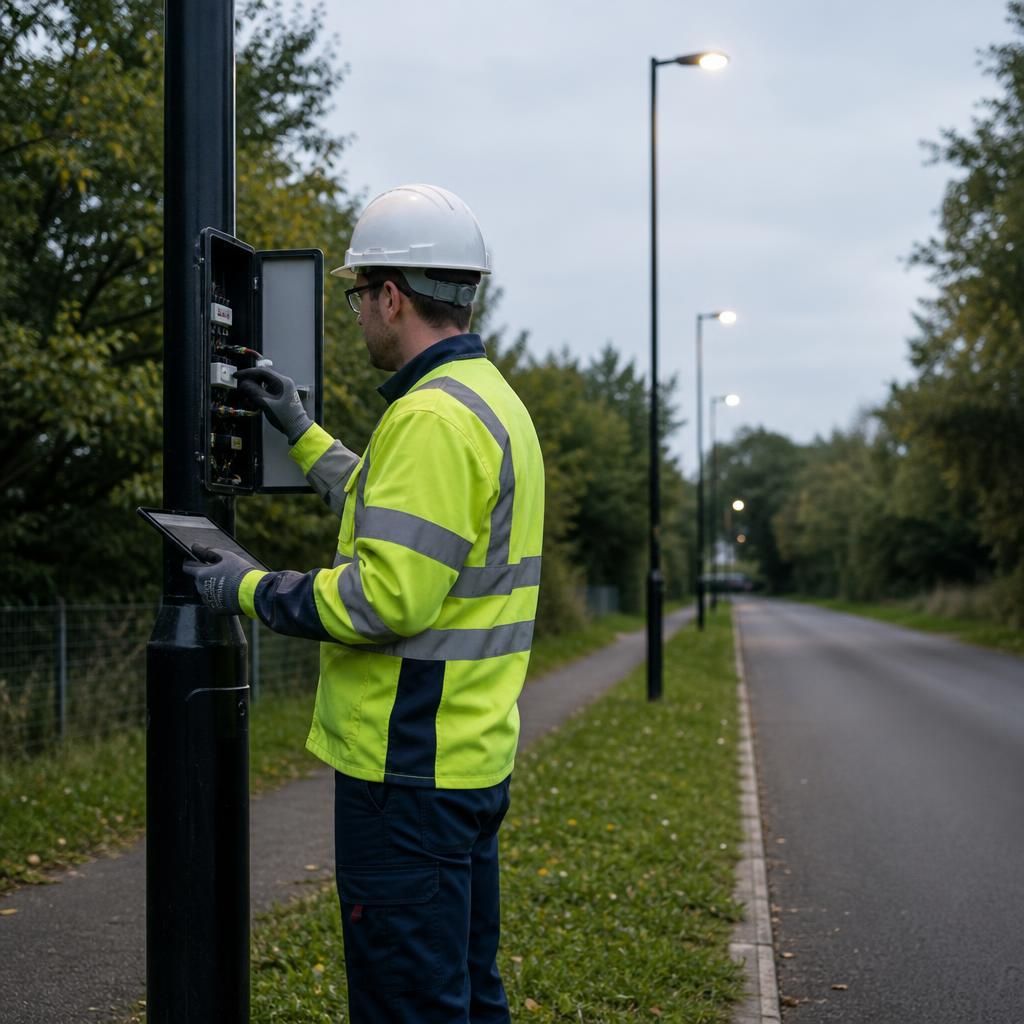
A street lighting maintenance contract should include a mobilisation and handover process before routine maintenance begins. This establishes the starting condition of the installation and prevents existing defects, incomplete information or unresolved safety concerns from being mistaken for failures arising during the contract.
- Agree how the initial asset information will be checked against the equipment found on site.
- Record known defects, temporary repairs, damaged equipment and locations requiring further investigation.
- Transfer relevant keys, access details, control-system information, drawings and previous maintenance records.
- Confirm the process for accepting newly installed, altered or replaced lighting assets into the maintenance schedule.
- Define how information is transferred when the contract ends, including outstanding faults, inspection history and current asset data.
This provision is particularly useful when responsibility moves between contractors or when a lighting network has been extended over time. It gives both parties an agreed baseline against which future maintenance work can be assessed.
Discuss your street lighting maintenance requirements
Discuss your street lighting maintenance requirements with RJW Electrical to establish the appropriate inspection and maintenance scope for your installation. Request a quote with no call-out fee.