
RJW Electrical
What happens during an emergency electrical repair?
During an emergency electrical repair, a qualified electrician first assesses immediate risks, identifies the fault and makes the affected circuit safe, usually by isolating the power where necessary. They then carry out an appropriate repair or temporary safe measure, followed by testing to confirm the installation is safe to use.
An emergency electrical repair is a controlled process for finding the source of an immediate electrical fault, reducing the risk it presents and restoring safe operation where a suitable repair is possible. The electrician does not simply replace the first damaged component they find; they establish whether the problem is limited to one accessory, affects a complete circuit or indicates a wider installation defect.
Before examining the installation, the electrician will usually confirm what happened and which parts of the property are affected. Useful information includes whether the fault followed a power cut, water ingress, building work, a burning smell, unusual noise, sparks or the use of a particular appliance. They may also ask which lights, sockets or fixed equipment have stopped working and whether protective devices have operated repeatedly. This helps focus the investigation without relying on assumptions.
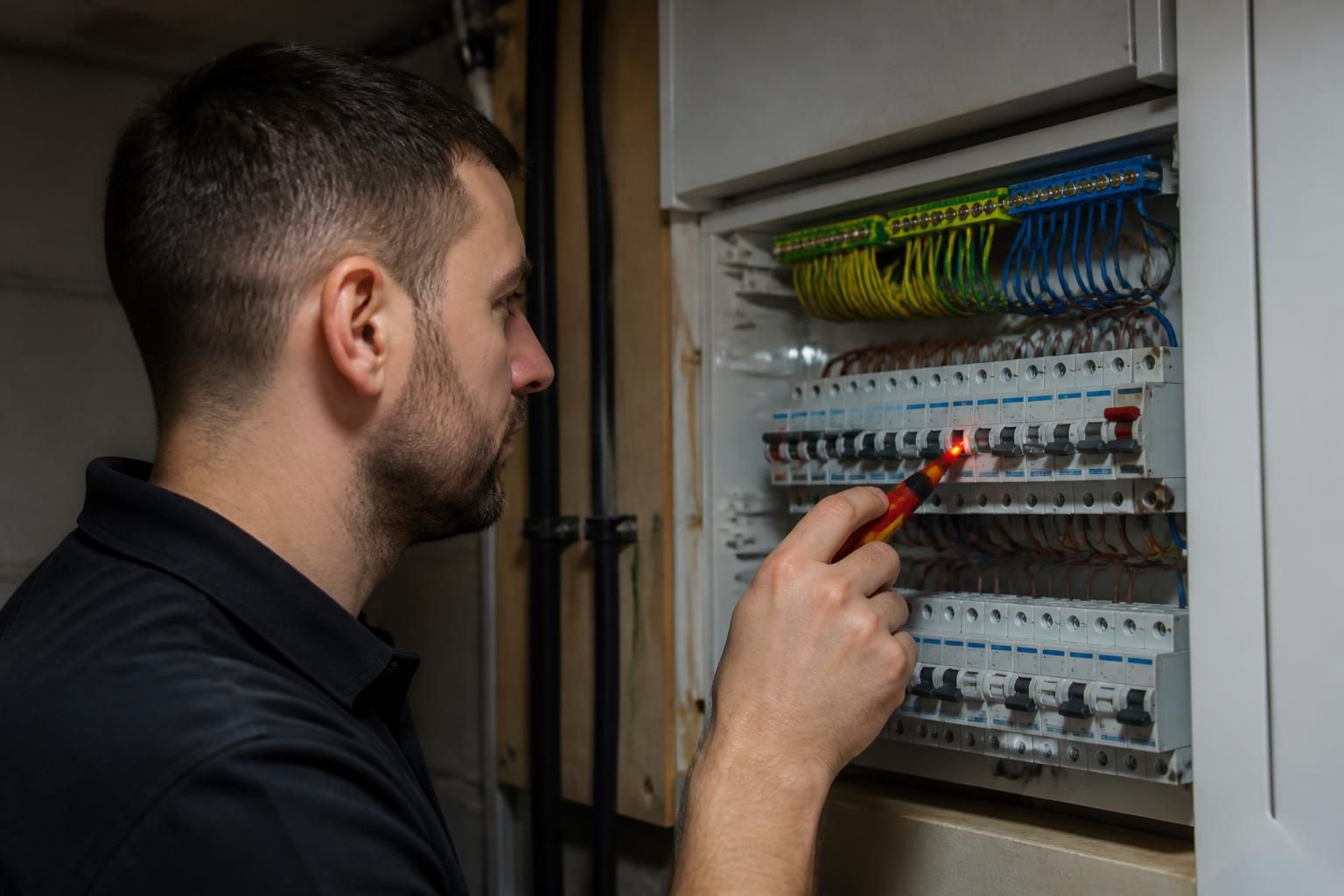
The initial inspection normally considers the consumer unit, accessible accessories, visible cables and any equipment connected to the affected circuit. Signs such as scorching, melted plastic, loose connections, damaged insulation, moisture, exposed conductors or heat around a terminal can indicate the type and extent of the fault. An electrician may need access to more than the visibly affected point because a damaged socket or light fitting can be the symptom of a problem elsewhere on the circuit.
Electrical testing is selected according to the fault and the condition of the installation. This can include checking continuity, polarity, insulation resistance, earthing and the operation of protective devices. Where relevant, the electrician may separate appliances or sections of a circuit to determine whether one item is causing the problem. Testing is carried out using suitable procedures and equipment; a customer should not attempt to reproduce a fault by repeatedly resetting a tripped device or touching exposed wiring.
Once the cause is understood, the electrician explains what needs to be done and distinguishes between an immediate repair and additional remedial work. A repair could involve replacing a damaged accessory, correcting a poor connection, repairing a section of cable or dealing with an identified fault in connected equipment. If the installation has wider defects, these should be explained separately rather than concealed by replacing only the most obvious component.
In some situations, a permanent repair cannot safely be completed during the same visit because parts, access or further investigation are required. The appropriate alternative may be to leave the affected part isolated or apply a clearly defined temporary measure. A temporary measure is not the same as a completed repair: the electrician should explain what remains unavailable, what restrictions apply and what further work is needed. Temporary wiring or improvised repairs should not be accepted where they create additional risk.
After the physical work, the affected circuit is checked again before it is returned to service. The electrician looks for secure terminations, correct protective conductors, suitable cable protection and any remaining signs of damage. Relevant tests are repeated to confirm that the repair has not introduced a new defect. Equipment that caused or was affected by the fault may need to remain disconnected until it has been assessed as safe.
The final outcome depends on the fault found:
- A minor, localised defect: the damaged component or connection may be replaced, followed by testing of the relevant circuit.
- A circuit fault: the circuit may remain unavailable until damaged wiring, accessories or connected equipment have been dealt with.
- A consumer unit or protective-device issue: further investigation may be required to determine whether the device, the circuit or the installation is responsible.
- Damage caused by water, fire or impact: affected parts may need to remain isolated while the underlying source of damage is addressed.
The electrician should also explain any limitations, recommended follow-up work and precautions for using the installation afterwards. For relevant electrical work, certification or written records may be appropriate, particularly where a circuit has been altered or repaired in a way that affects its safety verification. Keep these documents with the property records, especially in a commercial premises, rented property or building with planned maintenance responsibilities.
RJW Electrical approaches emergency repairs with qualified, insured and DBS-checked engineers working to the 18th edition wiring regulations. As a NAPIT and Trustmark member listed on the Electrical Safety Register, the company can assess the immediate fault while identifying whether the installation needs further attention. A no call out fee quote can also set out the proposed work before chargeable repair work proceeds, where the circumstances allow.
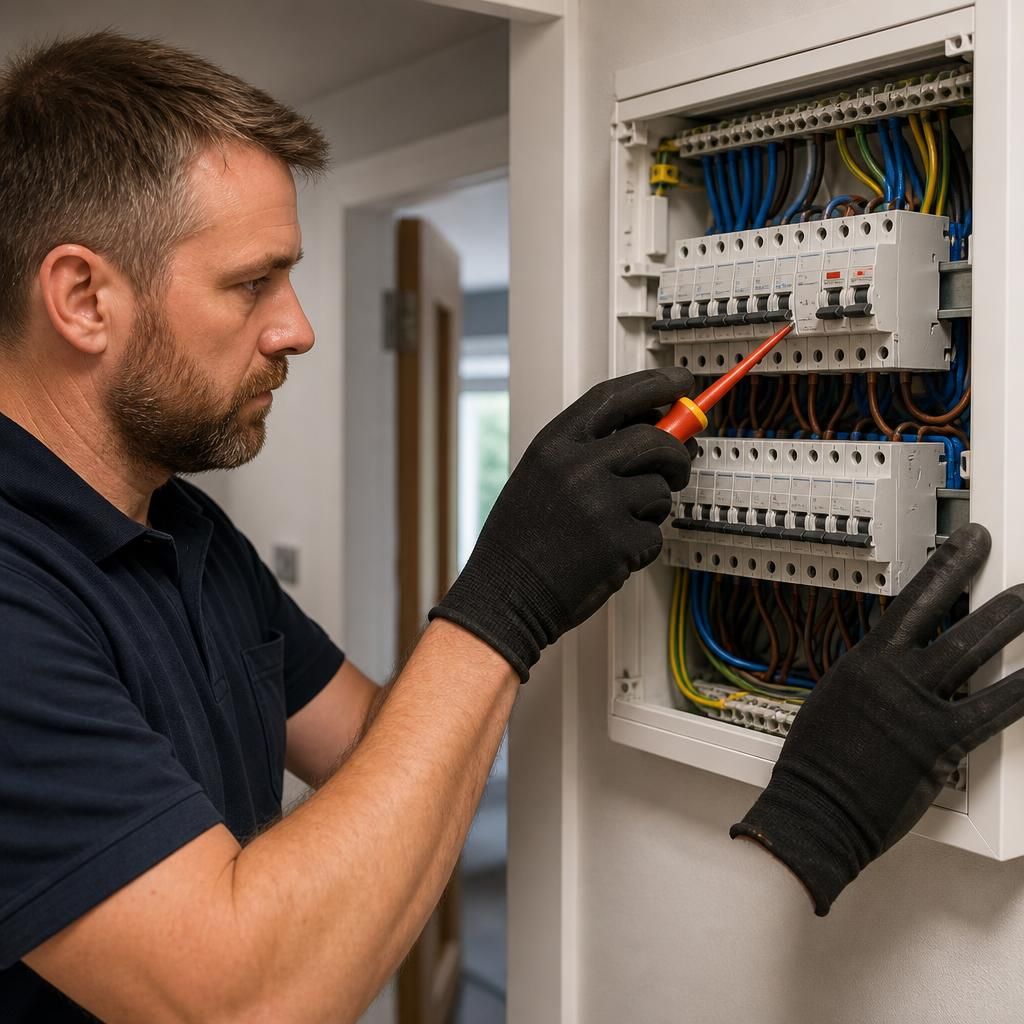
An emergency electrical repair may begin by establishing whether the fault is inside the property or originates with the incoming electricity supply. If neighbouring premises are also affected, or the installation has power up to the consumer unit but not beyond it, the electrician can distinguish a property fault from an issue requiring the electricity network operator or another responsible party.
This distinction prevents unnecessary work on the installation and helps identify who must take the next step. The electrician will explain which parts of the system have been assessed, what remains outside their control and whether any equipment or circuits should stay isolated until the external issue has been resolved.
Discuss Your Emergency Electrical Repair
Contact RJW Electrical to discuss your emergency electrical repair and the circumstances surrounding the fault. The next appropriate step for your property can be explained before any work is agreed.