
RJW Electrical
Should I leave appliances unplugged after an electrical emergency?
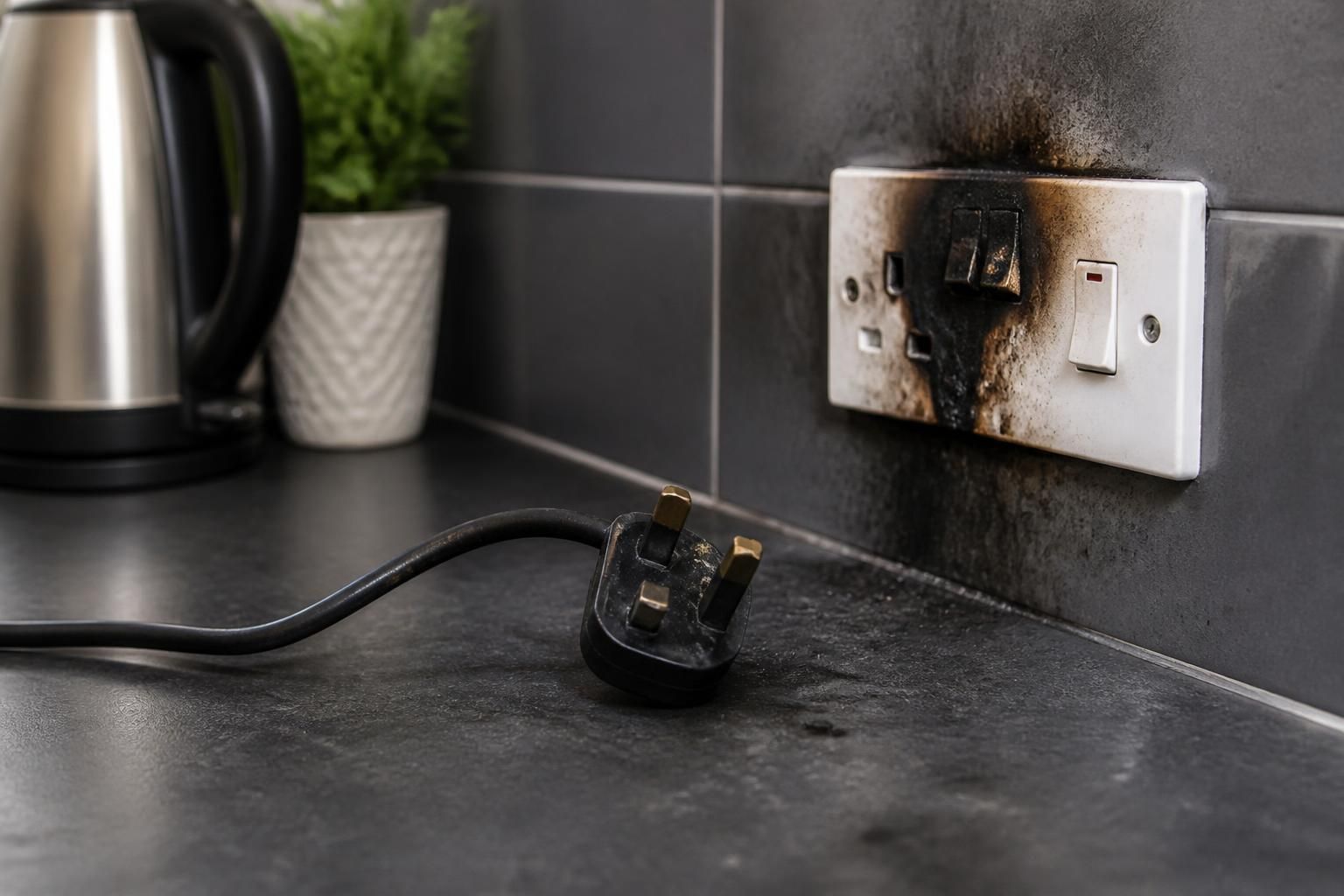
Yes, leave appliances unplugged after an electrical emergency until the cause has been identified and the appliance and socket have been checked. Do not unplug anything that is wet, hot, sparking or visibly damaged; keep clear, switch off the electricity supply only if it is safe to do so, and contact a qualified electrician.
Leaving an appliance unplugged is a precaution, not a repair. It prevents the appliance from drawing power while the fault is investigated, but it does not prove that the appliance, plug, socket or circuit is safe to use again.
Why the appliance should stay isolated
- A fault may be inside the appliance, such as damaged insulation, overheating components or an internal short circuit.
- The plug, flex or socket may have been affected even if the appliance itself appears undamaged.
- A protective device may have operated because of a wider circuit fault rather than a problem with the appliance alone.
- Heat, burning, moisture or arcing can leave damage that is not immediately visible.
Do not treat a successful reconnection as proof that the problem has gone away. Intermittent faults can return when an appliance reaches its normal operating temperature, when a motor starts, or when a heating element switches on. Repeatedly restoring the supply or resetting a tripped circuit can worsen damage and may expose people to electric shock or fire risk.
What to do with the appliance
- Leave the appliance in place if moving it would mean handling a damaged flex, plug or socket.
- Keep the area dry and prevent other people from using the affected socket.
- Do not remove covers, attempt an internal repair or use a replacement fuse simply to see whether the appliance works.
- Do not reconnect it to another socket as a test. If the appliance is faulty, this can transfer the risk to another part of the installation.
- Make a note of what happened, including any smell, sound, visible flash, unusual heat, tripped protective device or moisture involved.
If the appliance was affected by flooding or a significant water leak, it should remain disconnected until it has been assessed. Drying the outside does not make internal electrical parts safe. Smoke, flames or continuing signs of overheating require evacuation and contact with the emergency services rather than further investigation.
When can it be used again?
It should only be reconnected after the likely source of the fault has been identified and the relevant equipment has been checked by a competent electrician or suitably qualified appliance repair professional. The inspection may need to cover the appliance, its plug and flex, the socket, the circuit protective devices and the surrounding wiring. A visual check alone may not identify insulation or earthing problems, so testing may be appropriate.
If the appliance is found to be safe but the socket or circuit is defective, keep the appliance disconnected until the electrical installation has been repaired and tested. If the appliance is the source of the fault, it may need repair or replacement before it can be used safely.
RJW Electrical can assess faults affecting domestic and commercial electrical installations and explain whether the problem appears to be with an appliance, socket or circuit. A no-call-out-fee quote is available before proceeding with work, so the required inspection or repair can be discussed on the basis of the findings.
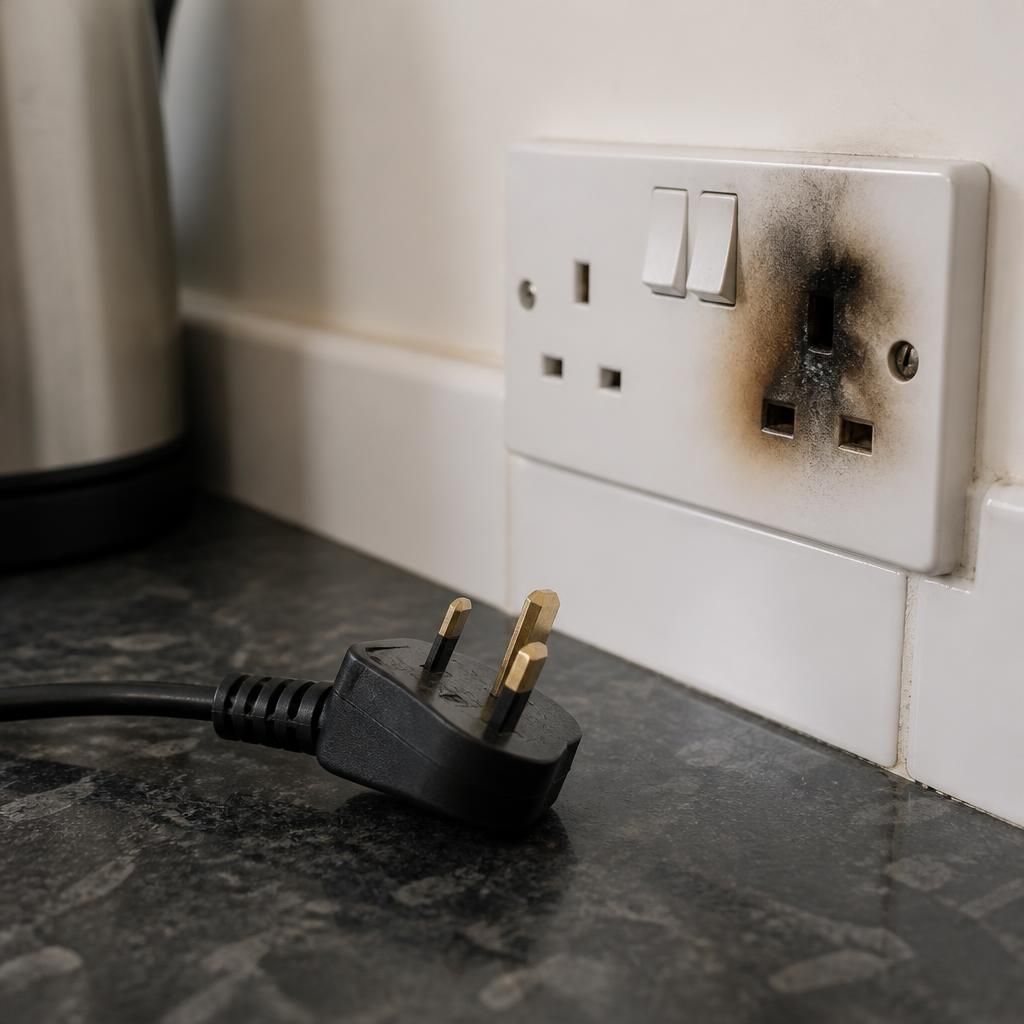
Unplugging applies mainly to portable appliances with an accessible plug. Fixed equipment such as cookers, boilers, immersion heaters and hard-wired machinery should not be disconnected by removing covers or handling its wiring. If it may be involved in the fault, leave it alone and do not use its local controls as a test.
Remember that unplugging one appliance does not make the surrounding installation safe. Other sockets or equipment may remain connected to the same circuit, and a damaged socket can still present a hazard even when nothing is plugged into it. Keep people away from the affected area until the installation has been assessed.
Have the appliance and circuit checked before reconnecting
If an appliance or electrical circuit remains in doubt after an emergency, contact RJW Electrical for a qualified assessment before restoring power. A no-call-out-fee quote can be provided before any inspection or repair work is agreed.