
RJW Electrical
What does a distribution board upgrade involve?
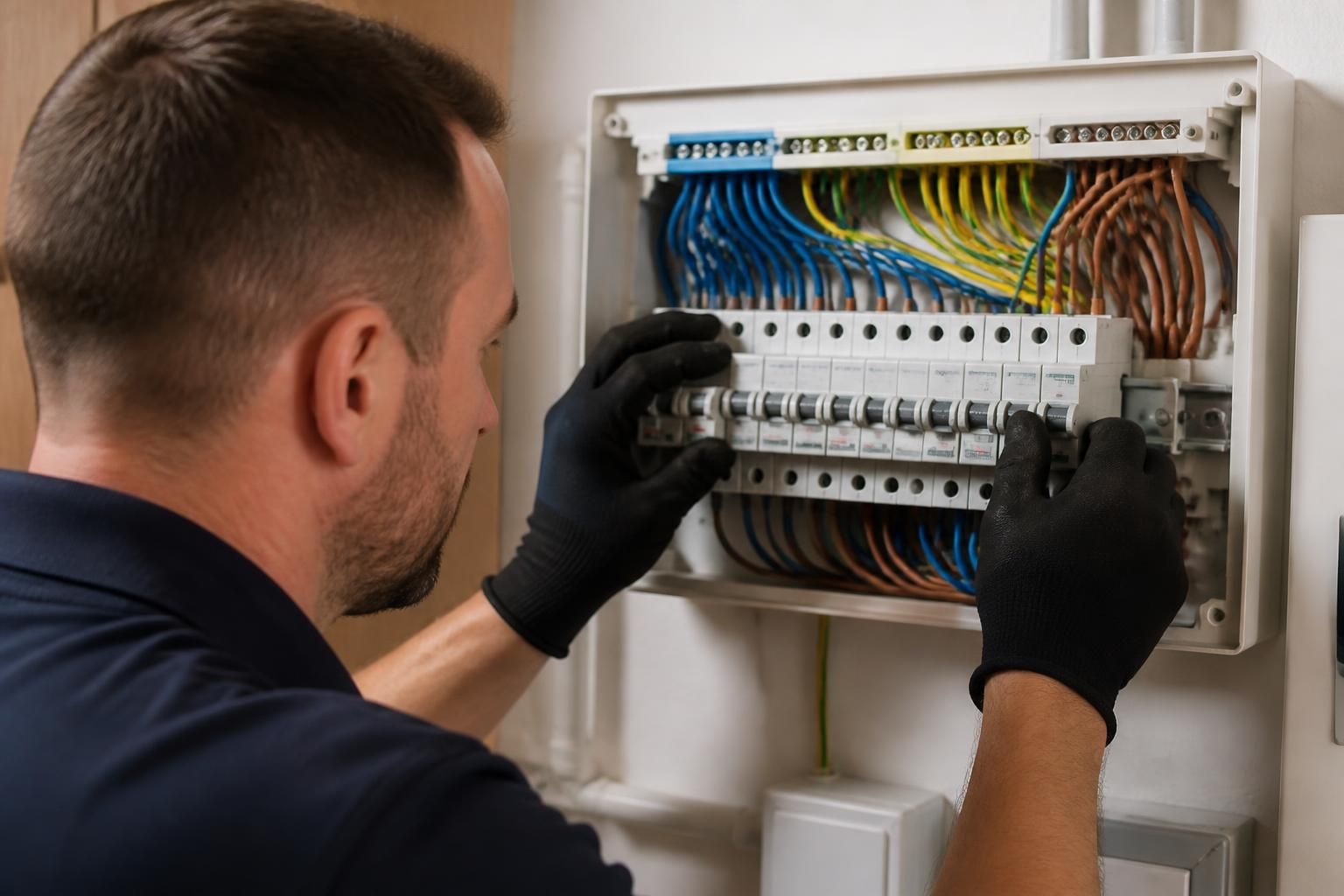
A distribution board upgrade involves assessing the existing board and circuit protection, isolating the electrical supply, and replacing or modifying components to meet current safety requirements. The completed work is then inspected and tested, with the relevant documentation provided for the installation.
A distribution board upgrade is a controlled improvement to the main electrical panel and its protective arrangements. It may involve fitting modern circuit protection, improving the board’s configuration, addressing earthing or bonding issues, and making the installation easier to operate and maintain. An upgrade does not automatically mean that every cable in the property must be replaced.
The scope is established before work begins. The electrician considers the condition and capacity of the existing board, the circuits it supplies, the available space for protective devices, and the way the incoming supply is arranged. The assessment also considers the property’s present and likely electrical demand. A domestic installation with lighting, socket and cooker circuits will have different requirements from a commercial premises with plant, equipment, three-phase loads or multiple occupiers.
Where the existing enclosure is damaged, overcrowded, obsolete or unsuitable for modern protective devices, a new board may be more appropriate than modifying the old one. In other cases, the enclosure can remain while selected components are improved. The decision depends on compatibility, condition, available space and whether the finished arrangement can meet the requirements of the current wiring regulations.
Protective devices are a central part of the upgrade. Depending on the circuits and the risks identified, the board may include:
- MCBs to protect individual circuits against overcurrent and short circuits;
- RCBOs to provide combined overcurrent and residual-current protection for individual circuits, which can reduce the effect of a fault on unrelated circuits;
- RCD protection where required for protection against residual current; and
- surge protective devices where the installation and risk assessment indicate that protection from transient overvoltage is appropriate.
Arc fault detection devices may also be considered for particular higher-risk applications. Their suitability is not determined by fitting the same arrangement to every property; the protective design should reflect the building, the circuits and the equipment being supplied.
Earthing and bonding are checked as part of the overall arrangement. A modern board cannot compensate for a problem with the incoming earthing system, main bonding or circuit conductors. If these elements are inadequate, damaged or incorrectly connected, corrective work may be needed before the board can be put into service. In some properties, the electricity supply characteristics may also affect which protective devices are suitable and how they must be arranged.
The physical installation normally includes preparing a safe working area, identifying and organising the outgoing circuits, fitting compatible equipment, and ensuring that conductors are securely terminated. Cable entries must be protected, connections must be accessible for inspection, and the enclosure must provide suitable segregation and protection against contact with live parts. The board should also have clear circuit identification so that occupants, facilities staff or future electricians can determine which device controls each part of the installation.
An upgrade may highlight issues outside the board itself. Examples include damaged accessories, overloaded circuits, poor cable terminations, unsuitable alterations, or equipment that draws more current than the existing installation was designed to handle. These matters should be explained separately rather than concealed within the board work. A full rewire, a supply-capacity change or work owned by the electricity distributor is a different project and may require additional investigation.
For a commercial property, the design also needs to take account of operational continuity, critical equipment and the division of circuits between areas or tenants. A staged approach may be considered where the installation is extensive, but the proposed arrangement must still leave each stage safe and properly protected. For a domestic property, the emphasis may be on individual circuit protection, safe provision for fixed appliances and reducing the likelihood that a fault will disconnect the whole home.
Once the upgrade is complete, the electrician verifies that the new arrangement operates correctly and that the protective measures correspond with the circuits they serve. The owner should receive the relevant electrical documentation and an understandable record of the board’s circuit layout. This information is important for future maintenance, alterations, fault finding and property records.
In practical terms, a distribution board upgrade should leave the installation with a suitable board, correctly selected protective devices, sound connections, appropriate earthing and bonding, clear identification and a design that matches the property’s electrical demands. The work should be carried out by a suitably qualified electrician in accordance with the latest 18th edition wiring requirements.
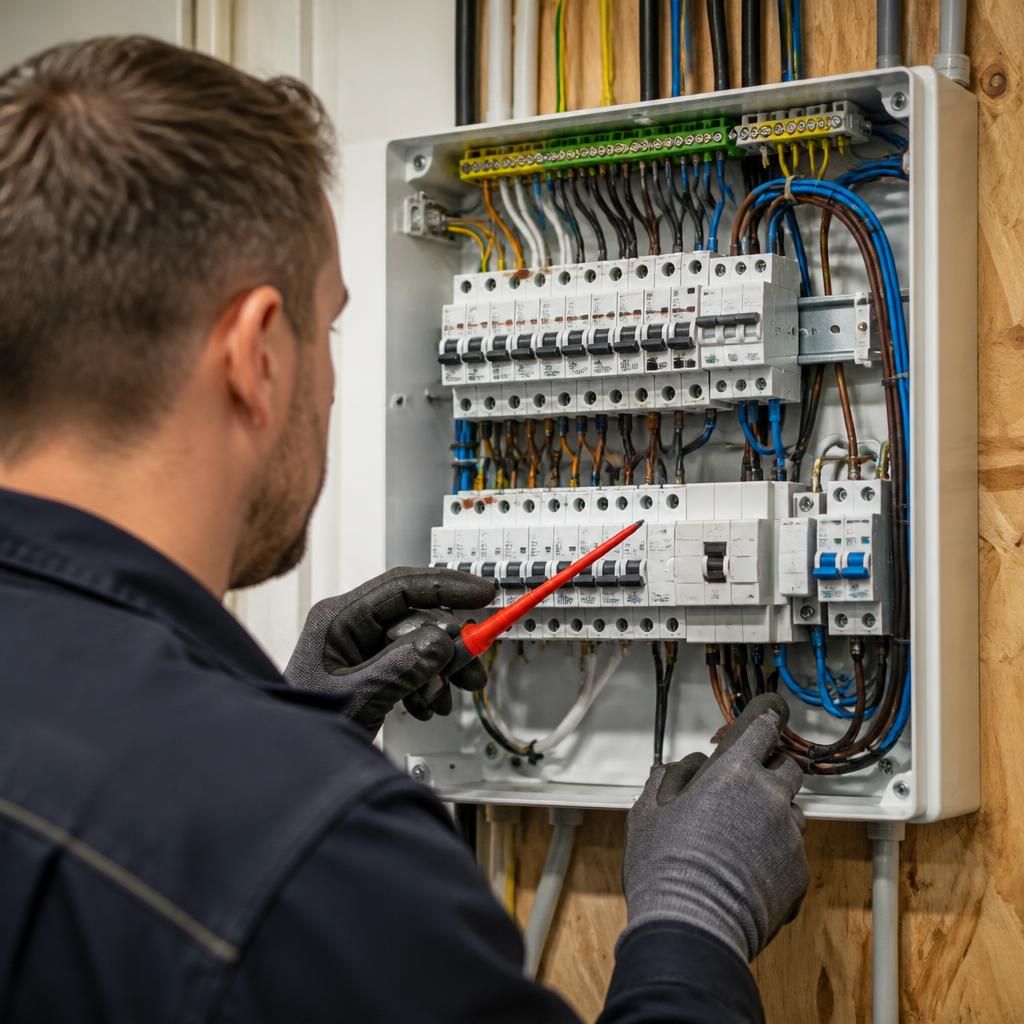
A distribution board upgrade also involves coordinating the protective devices so that they operate appropriately when a fault occurs. The electrician considers the relationship between devices at the board and any upstream protection, aiming to prevent a fault on one circuit from unnecessarily disconnecting other circuits.
This may affect whether individual RCBOs, grouped RCD protection or another arrangement is suitable. The choice depends on the circuit layout, the characteristics of the supply and the equipment being protected. Devices must be compatible with the board and correctly rated for the conductors and expected load; simply installing higher-rated protection is not a safe way to address an overloaded circuit.
Testing should confirm that the selected protection responds as intended and that the circuit remains adequately protected under its designed operating conditions. Where the upgrade changes the protective arrangement, the circuit schedule and user instructions should be updated so the board can be operated and maintained correctly.
Request a distribution board upgrade assessment
If you are unsure whether your existing board can be upgraded safely, request a distribution board upgrade assessment from RJW Electrical. The assessment can identify the appropriate scope of work and provide a clear quote with no call-out fee.