
RJW Electrical
When should a commercial property replace its distribution board?
A commercial property should replace its distribution board when it is damaged, obsolete, unable to accommodate the building’s electrical demand, or no longer provides adequate protection. Replacement may also be necessary when inspection identifies faults, overheating, deterioration, or non-compliance that cannot be safely resolved through repair or a minor upgrade.
A commercial distribution board should be replaced when its design, condition or protective performance no longer provides a suitable basis for the building’s electrical installation. The decision is normally made after a competent inspection, review of the installation’s present and planned use, and consideration of whether the board can be safely modified or tested. There is no universal replacement age: a well-maintained board may remain suitable for many years, while an earlier replacement may be justified by changes to the premises or the electrical system.
Age is a prompt for assessment, not proof that replacement is necessary. Older boards may still be serviceable, but their construction and protective arrangements should be reviewed against current requirements. Particular attention is needed where the board uses obsolete fuse carriers, has limited space for modern protective devices, lacks clear circuit identification, or has no reliable means of isolating the relevant circuits. These issues do not automatically require a new board, but they can make alterations, fault-finding and safe maintenance more difficult.
A replacement is also worth considering when the electrical installation has changed substantially since the board was installed. Examples include:
- new machinery, heating or ventilation equipment;
- additional office, retail or workshop areas;
- electric vehicle charging equipment or other high-demand loads;
- changes in occupancy or the way the premises is used; and
- additional lighting, security, IT or specialist equipment circuits.
These changes can affect the board’s circuit arrangement, spare capacity, discrimination between protective devices and the suitability of the incoming supply. A board that was appropriate for the original installation may no longer provide a practical or maintainable distribution point after several extensions. Simply adding circuits without reviewing the overall design can result in poor circuit separation, insufficient capacity or inadequate fault protection.
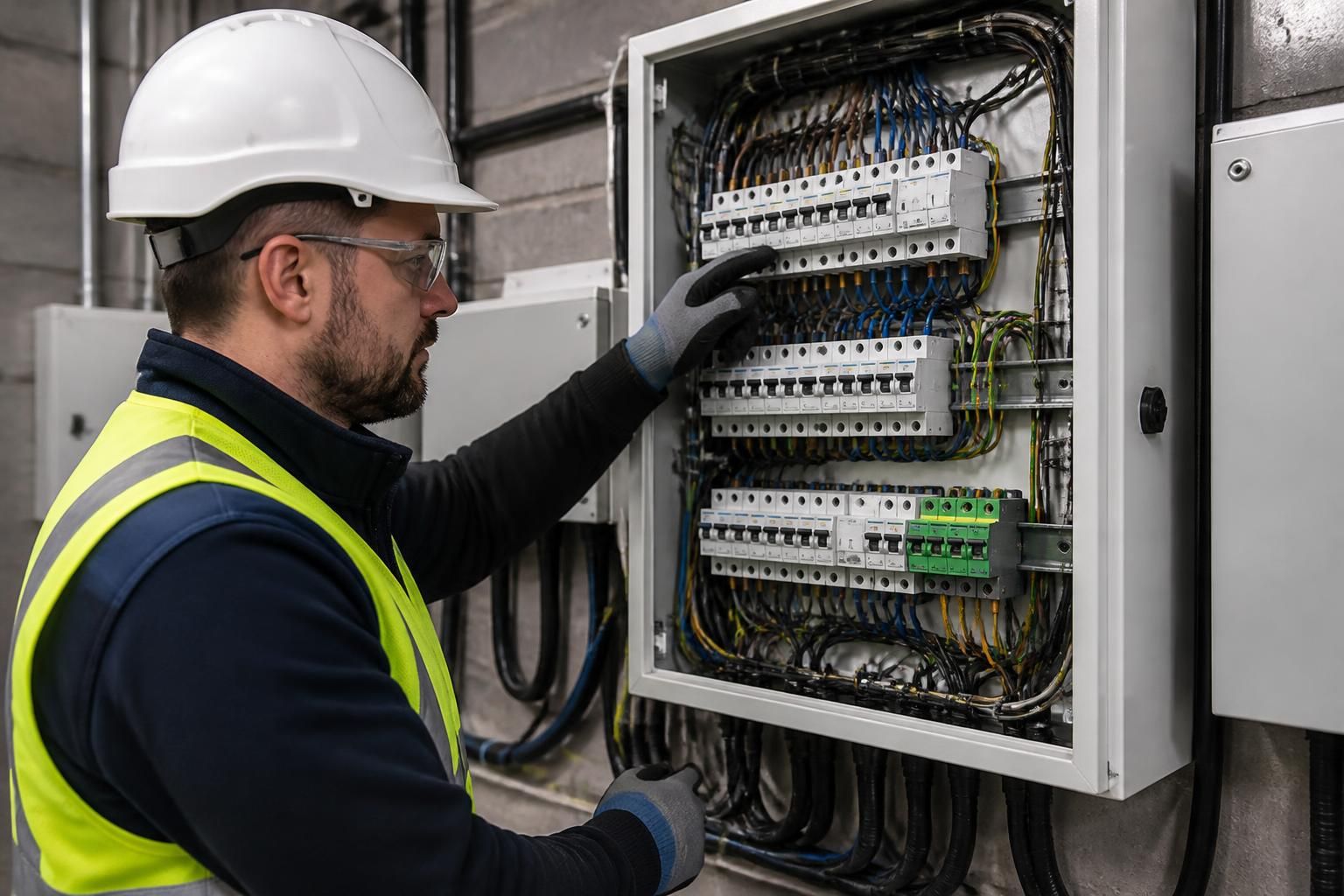
Inspection results should guide the decision. An Electrical Installation Condition Report or targeted inspection may identify loose terminations, damaged enclosures, signs of arcing, inaccessible components, inadequate labelling, missing blanks or unsuitable protective devices. The report should distinguish between an item that can be corrected safely and a defect that affects the board as a whole. Replacing an isolated accessory may be reasonable where the enclosure, busbar arrangement and protective design remain suitable. A complete replacement is more appropriate where safe remedial work would be extensive, incompatible with the existing board or unable to address the underlying limitation.
The operating environment is another consideration. Boards located in areas exposed to dust, moisture, impact, heat or corrosive substances require an enclosure and installation method suited to those conditions. Commercial premises may also need improved access control, segregation or circuit identification so that maintenance can be carried out without unnecessary disruption or confusion. The board should be assessed in its actual location rather than judged only by its appearance.
Before replacement, the contractor should establish the characteristics of the supply, record the existing circuits and assess the connected loads. The design should then cover the required number of outgoing ways, main isolation, earthing and bonding arrangements, fault protection, residual current protection where appropriate, surge protection where required by the installation risk assessment, and coordination between protective devices. Any provision for future circuits should be based on a realistic development plan rather than an assumed need.
A commercial replacement should be planned carefully because circuits may supply lighting, refrigeration, computers, fire or security systems, machinery and other operational equipment. The work may involve temporary isolation and a defined sequence for disconnecting, installing, testing and re-energising circuits. The responsible person for the premises should understand which systems are affected and ensure that any necessary operational, fire-safety or business-continuity arrangements are addressed before work begins.
On completion, the new installation should be inspected and tested, with results recorded in the appropriate electrical certification. Circuit schedules and labels should be updated so that future isolation and maintenance can be carried out accurately. The distribution board should then be included in the property’s planned inspection and maintenance programme, particularly where the premises contains equipment that places a continual demand on the electrical system.
In practical terms, replacement is most defensible when inspection shows that the existing board cannot be brought to a suitable standard through proportionate remedial work, or when the requirements of the premises have outgrown its original design. A qualified electrical contractor can compare repair, modification and full replacement options, explaining the technical reason for each recommendation rather than treating the board’s age alone as the deciding factor.
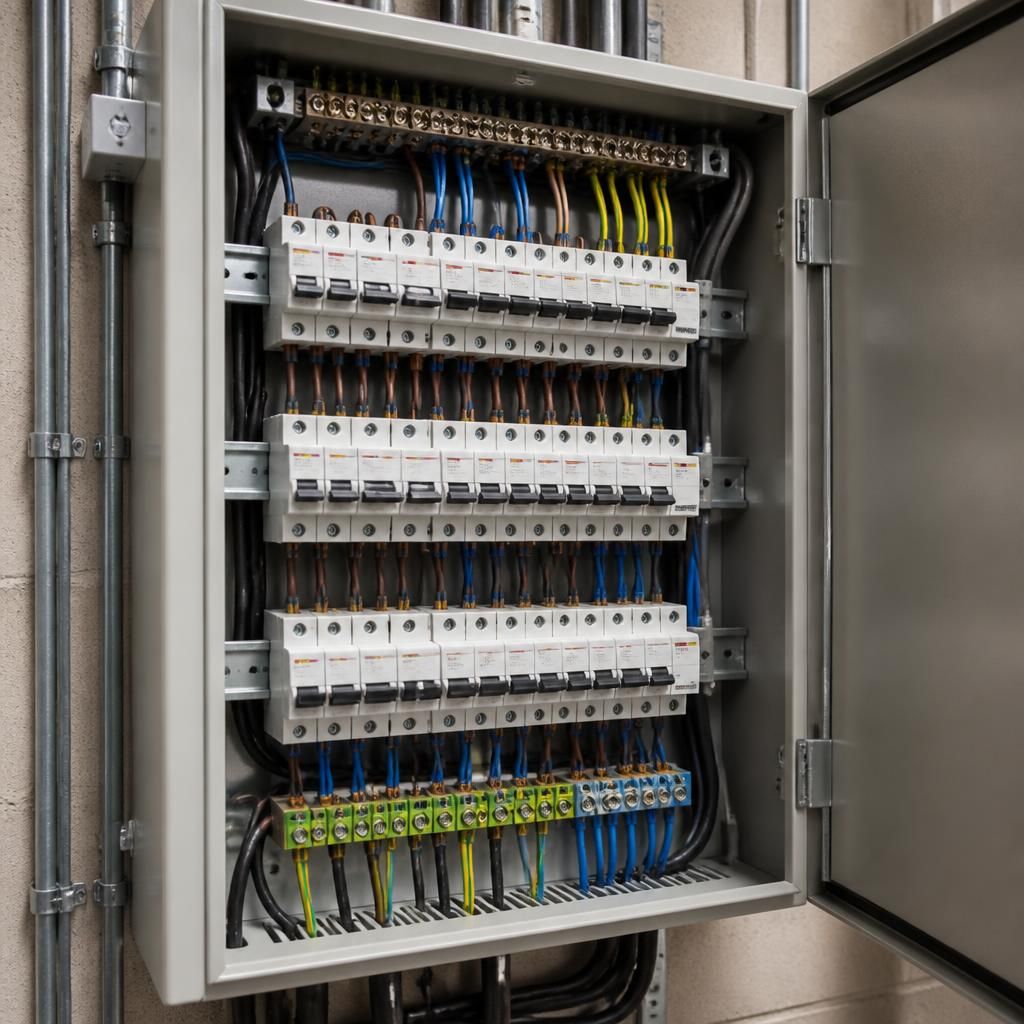
A commercial distribution board can require replacement even when the building’s lights, sockets and equipment still operate normally. Everyday functionality does not confirm that the board can safely interrupt a fault, withstand the connected load or support reliable maintenance. Protective equipment can deteriorate or become unsuitable without producing an obvious operational failure.
For that reason, the decision should be based on the board’s protective capability and condition rather than whether the circuits are currently working. Where testing identifies a fundamental limitation, replacing the board provides a more appropriate basis for continued use than relying on normal operation as evidence that the installation remains suitable.
Discuss your commercial distribution board replacement
If you are unsure whether your commercial distribution board needs replacement, contact RJW Electrical to arrange an assessment and discuss the most suitable next step. You can request a quote with no call-out fee.