
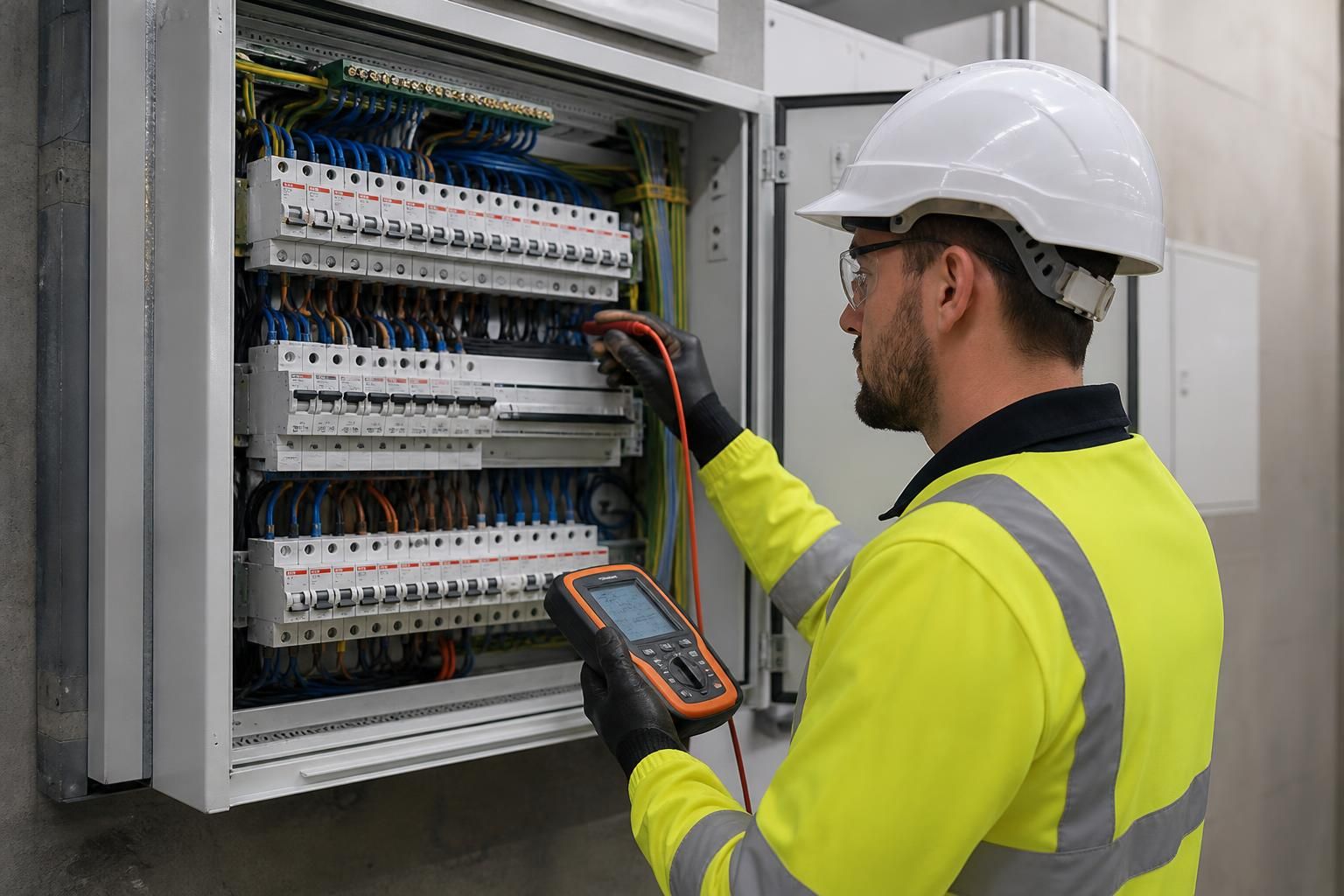
RJW Electrical
What should a commercial electrical survey cover?
A commercial electrical survey should assess the installation’s condition, safety, performance and compliance with current requirements. It typically includes a visual inspection, appropriate electrical testing, checks on distribution equipment, wiring, protective devices, earthing, lighting and emergency systems, followed by a report detailing defects, risks and recommended remedial work.
A commercial electrical survey should establish whether an installation is suitable for the building’s use, adequately maintained, reasonably safe and supported by appropriate records. It should examine the installation as a system rather than looking only for isolated faults, taking account of how electricity is supplied, distributed and used throughout the premises.
The survey scope should reflect the premises. An office, shop, warehouse, workshop, restaurant and communal building may have very different electrical risks. The person carrying out the survey should consider:
- the building’s type, age, layout and occupancy;
- the activities carried out in each area;
- the presence of heat, moisture, dust, chemicals or other environmental conditions;
- the electrical demands of fixed machinery, catering equipment, IT systems and other specialist equipment;
- areas accessible to staff, visitors, contractors or members of the public; and
- any changes, extensions or equipment additions since the original installation.
This information helps determine whether the inspection needs to be visual, non-invasive or supported by further investigation. A survey based on an incorrect understanding of the premises may overlook risks created by the way equipment is operated, even where the installation appears satisfactory at first sight.
Records and history should be reviewed. Available documents can help the electrical contractor understand the installation and identify unresolved issues. These may include:
- previous electrical installation certificates and inspection reports;
- records of alterations, extensions or refurbishment;
- equipment schedules and circuit identification information;
- maintenance and fault records;
- records of previous remedial work; and
- information about specialist systems or equipment connected to the installation.
Documents do not replace an inspection, and missing records do not automatically prove that an installation is unsafe. However, gaps in documentation should be noted because they can make it harder to confirm the design, history or extent of the installation.
The survey should define its boundaries. A commercial premises may contain several supplies, separate occupier areas, landlord-controlled equipment, outbuildings or systems maintained by other contractors. The report should state which areas and circuits were included, which were inaccessible, and whether any equipment was excluded. It should also identify limitations caused by locked rooms, concealed parts, live business operations, lack of isolation or equipment that could not safely be operated during the visit.
Where the condition of concealed equipment cannot be established without opening fabric, removing finishes or interrupting operations, the survey should say so clearly. Further investigation may then be recommended rather than presenting an assumption as a confirmed finding.
Testing should be proportionate and safe. The extent of testing depends on the installation, its condition and the purpose of the survey. Some tests require circuits or equipment to be isolated, so the method should be agreed with the person responsible for the premises before work begins. Sensitive electronic equipment, data systems, security equipment and process machinery may require special precautions.
A competent surveyor should record relevant results in a way that allows them to be understood alongside the installation’s design and intended use. A single result should not be considered in isolation: the significance may depend on the circuit arrangement, connected load, environment and protection provided elsewhere in the system.
Findings should be prioritised. A useful commercial survey distinguishes between defects requiring prompt attention, issues that could create danger if left unresolved, and recommendations for improvement that do not represent an immediate safety failure. Where an issue cannot be confirmed without additional work, it should be recorded as requiring further investigation.
Each finding should identify its location, describe the condition found and explain the relevant risk. Photographs, circuit references or other clear descriptions can help the responsible person locate the issue and obtain comparable remedial quotations. Vague wording such as “installation needs attention” is less useful than a specific explanation of what was found and why it matters.
The final report should support practical decisions. It should normally include the premises and areas covered, the inspection method, limitations, relevant observations, test information where applicable, a clear schedule of findings and an overall conclusion. It should make a distinction between:
- conditions that affect immediate safety;
- defects that should be addressed as part of planned remedial work;
- improvements that would bring the installation to a better standard; and
- items that need additional investigation before a conclusion can be reached.
The report should not imply that every part of a commercial building has been approved simply because one area or sample was examined. The responsible person should compare the stated scope with the premises and arrange follow-up work for excluded areas, inaccessible equipment or unresolved findings.
After the survey, remedial work should be planned according to risk, operational requirements and the responsibilities of the owner, landlord or occupier. Any alterations should be documented properly, with updated records provided where the work changes the installation. A further inspection may be appropriate once remedial work is complete, particularly where the original report identified a serious defect or recommended additional investigation.
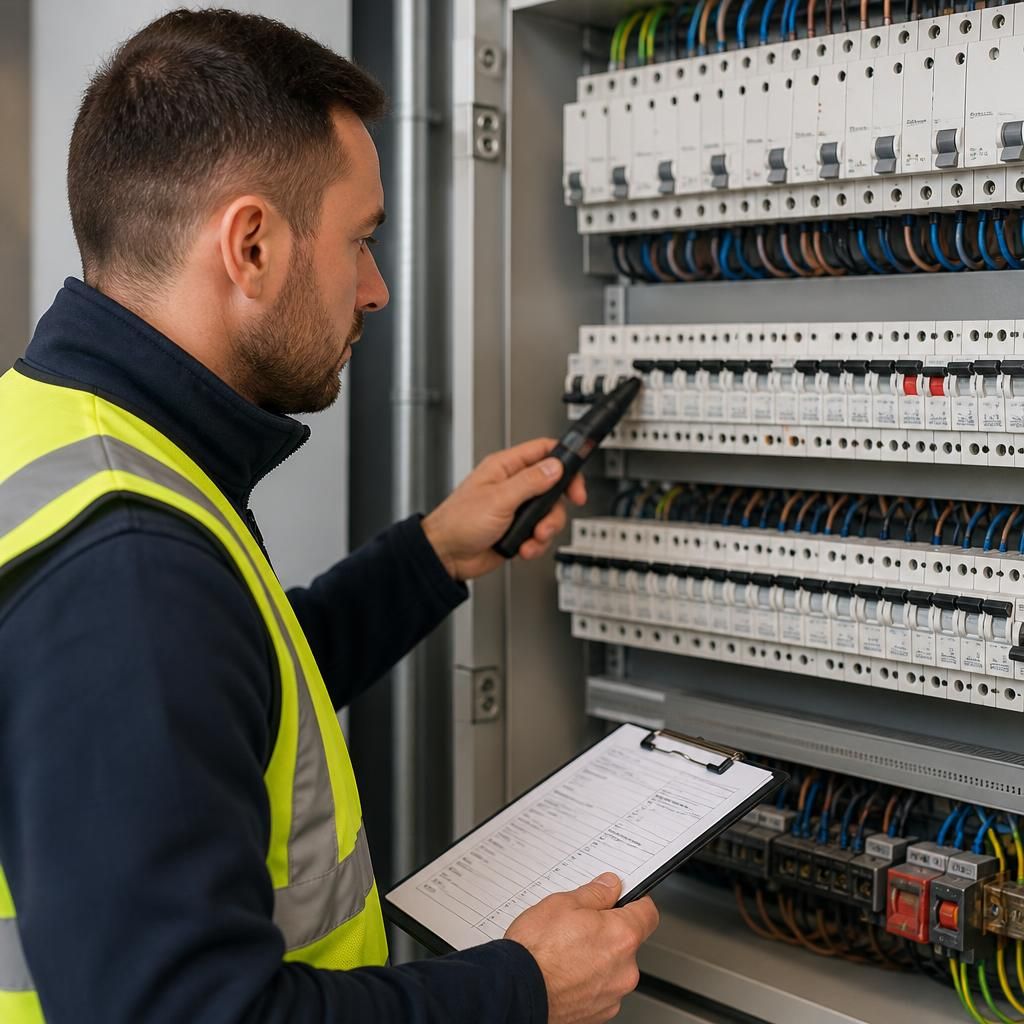
A commercial electrical survey should examine the distribution board and protective devices in enough detail to identify conditions that may affect safe operation. Where access and safe working conditions allow, this can include checking the enclosure, circuit identification, device ratings, signs of overheating or physical damage, and the apparent suitability of the protection provided.
These details help connect a reported defect with the circuit or equipment it serves. For example, heat damage at a termination may indicate a connection or loading issue rather than a cosmetic fault, while unclear identification can make isolation more difficult during maintenance. The report should explain the significance of any such observation and state whether further testing or investigation is needed.
Discuss your commercial electrical survey requirements
Discuss your commercial electrical survey requirements with RJW Electrical Ltd so the proposed scope reflects your premises, records and intended use. Request a no-call-out-fee quote for the survey work required.