
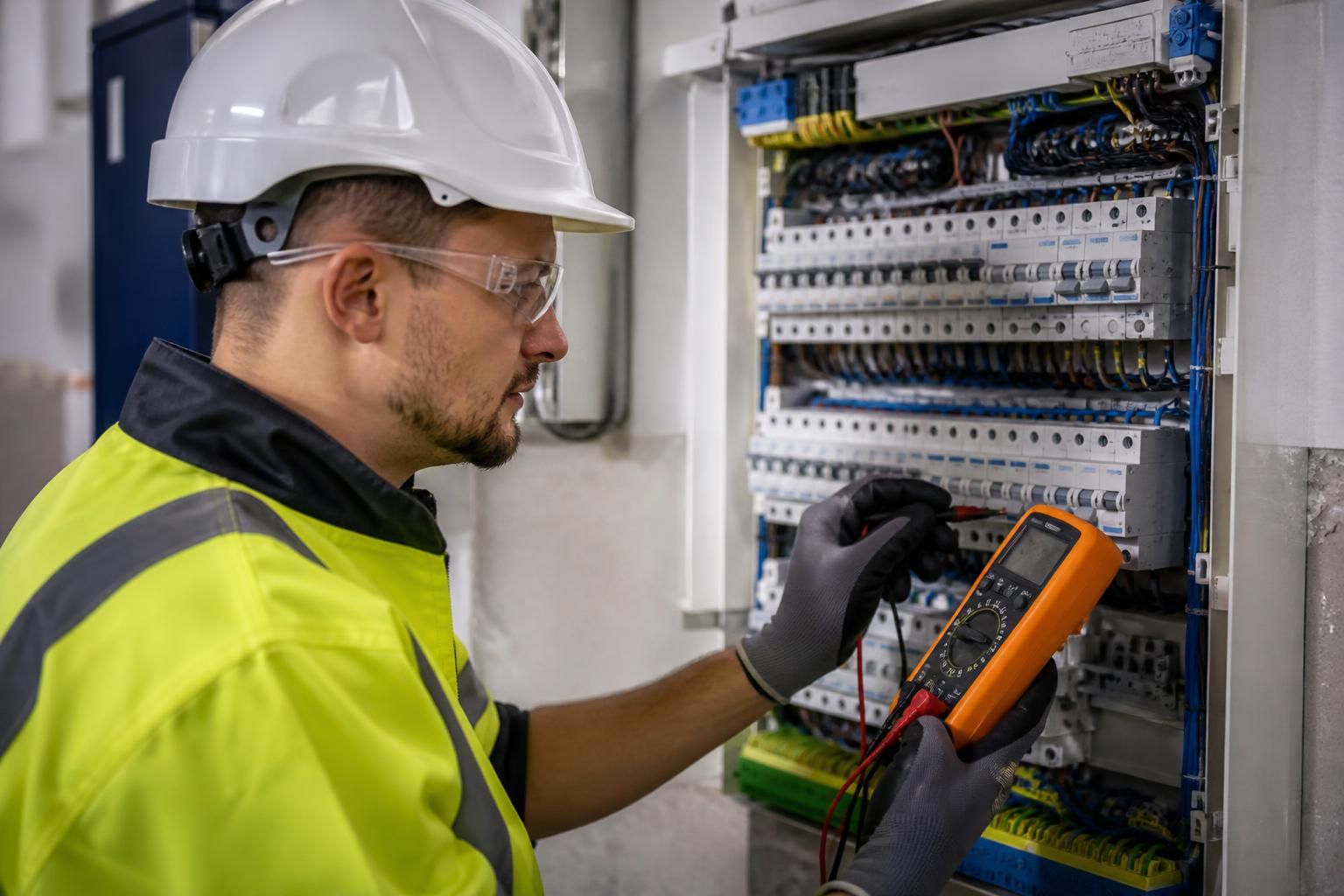
RJW Electrical
What happens if an electrical issue is found during commercial testing?
If commercial electrical testing identifies an issue, the tester records the finding, assesses its severity and explains the recommended action to the responsible person. Immediate risks may require affected equipment or circuits to be isolated, while less urgent defects can be scheduled for repair and confirmed through appropriate follow-up testing.
If commercial electrical testing finds an issue, the outcome depends on its risk, condition and effect on the installation. The finding is classified, documented in the test report and used to determine whether the appropriate next step is immediate restriction, remedial work, further investigation or monitoring.
Not every finding means that the whole electrical installation must be replaced. A competent tester considers the nature of the defect, the likelihood of harm, the equipment or circuit affected and whether the installation complies with the requirements applicable to it. Common findings include damaged accessories, exposed conductors, inadequate earthing or bonding, overloaded circuits, deterioration caused by heat or moisture, incorrect protective devices and missing or unreliable records.
How findings are classified
- C1 – danger present: there is an immediate risk of injury, so urgent action is required to remove the danger or prevent access to the affected part.
- C2 – potentially dangerous: the defect could become dangerous under foreseeable conditions and should be dealt with as a priority.
- C3 – improvement recommended: the installation is not necessarily unsafe, but improvement would raise its standard or reduce future risk.
- FI – further investigation required: the available evidence is insufficient to reach a proper conclusion without additional inspection, testing or access to concealed parts.
The classification is recorded alongside the location and description of the issue. This gives the person responsible for the premises a usable record rather than a general statement that the installation has failed.
What happens immediately
Where a defect presents a direct hazard, the affected part may need to be taken out of service until it is made safe. This may involve isolating an individual item, socket, circuit or section of the installation rather than disconnecting the entire premises. The responsible person should be told what has been isolated, why it was necessary and what restrictions apply. Any temporary measure should be treated as a safety control, not as a permanent repair.
For less urgent findings, the business can normally plan the work around operational requirements, provided the risk assessment supports continued use. The tester's report should be reviewed by the person responsible for the building, electrical systems and affected business activities. In a workplace, this may also involve facilities management, health and safety personnel, a landlord or a managing agent.
What the report should explain
- the circuit, equipment or location concerned;
- the observed defect or non-compliance;
- the classification assigned to the finding;
- any immediate restriction or isolation applied;
- whether further investigation is needed;
- the recommended corrective action; and
- the tests or evidence needed to confirm that the issue has been resolved.
Photographs, circuit references and test results can be useful where several defects are present or where the report will be passed to another contractor. They reduce the risk of the wrong equipment being repaired and help the person authorising the work understand its scope.
Repairing the problem
Remedial work should address the cause as well as the visible symptom. For example, replacing a damaged accessory may not be sufficient if the damage resulted from loose connections, water ingress, excessive load or unsuitable equipment. Depending on the finding, the work may involve replacing components, improving protective measures, correcting connections, upgrading earthing and bonding, repairing cable routes or investigating concealed wiring.
Before work begins, the scope should be agreed with the person responsible for the premises. It is sensible to clarify whether the quotation covers only the recorded defect or also any additional faults discovered once equipment is opened or access is provided. If further defects are found, they should be documented and explained before additional work is authorised, unless an immediate safety measure is necessary.
Testing after the repair
Repairing an item does not by itself demonstrate that the circuit or installation is safe. The affected work should be inspected and tested using appropriate methods, with results recorded. Where a test report contains coded observations, the completed work should be linked to those observations so there is a clear audit trail.
The documentation issued after remedial work depends on what was done. It may include updated test results, a minor works certificate, an electrical installation certificate or other relevant completion records. If the original testing was a periodic inspection, the original report remains part of the history; the follow-up documentation shows how the recorded defects were dealt with.
When further investigation is needed
An FI observation should not be ignored simply because no immediate danger was confirmed. It means the tester could not establish the condition conclusively. Further investigation may require opening accessories, tracing circuits, accessing distribution equipment or arranging a controlled shutdown. Until the uncertainty is resolved, the responsible person should understand any limitations placed on reliance on the report.
Once the work and follow-up testing are complete, the business should retain the reports, certificates and records of isolation or repair with its property and maintenance information. Keeping this evidence helps demonstrate what was inspected, which defects were identified and what action was taken. RJW Electrical can provide commercial testing and explain the remedial options identified by the inspection, with a clear quote before agreed corrective work proceeds.
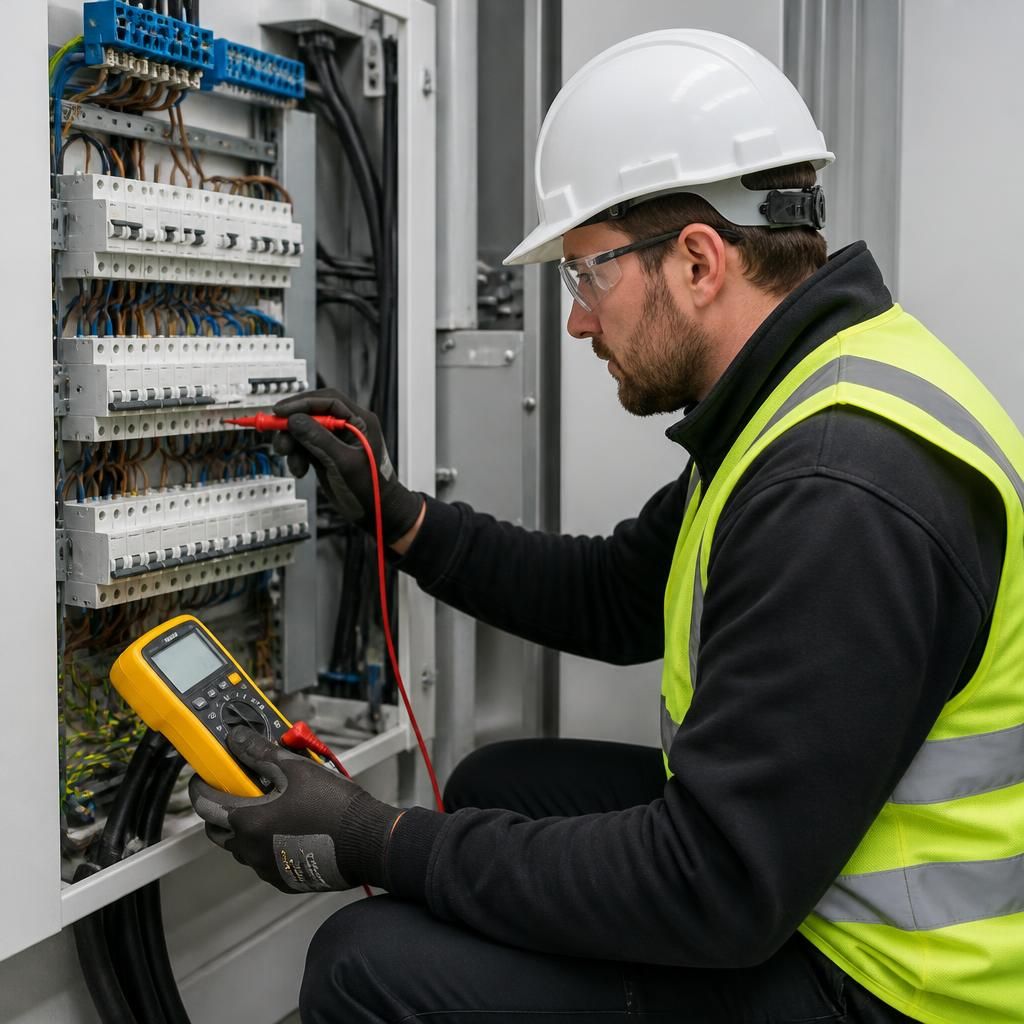
An issue found during commercial testing should be assessed in the context of how the premises are used. The same defect may have different consequences depending on whether it affects general lighting, office equipment, refrigeration, security systems or other business-critical equipment.
Where several findings are recorded, the person responsible for the premises can use the report to create a prioritised action plan. This should distinguish between safety-critical work, repairs that affect business operations and longer-term improvements. It also helps coordinate responsibilities between an occupier, landlord, facilities manager or contractor, particularly where access, shutdown arrangements or approval for remedial work are required.
The test report is an important technical record, but it should be read alongside the building’s risk assessments, maintenance information and operational requirements. This provides a more accurate basis for deciding what needs to happen next than treating every observation as an instruction to replace the whole installation.
Discuss Your Commercial Electrical Testing Findings
Discuss your commercial electrical testing findings with RJW Electrical to clarify the report and determine the appropriate next step.