
RJW Electrical
What distinguishes commercial lighting systems from domestic lighting?
Commercial lighting systems are designed for larger, more demanding environments, with greater emphasis on illumination levels, energy efficiency, durability, controls, maintenance and compliance. Domestic lighting is usually planned around the comfort, appearance and practical needs of a home, whereas commercial systems must also support workplace activities, occupancy patterns and operational safety.
Commercial lighting systems differ from domestic lighting primarily in their electrical architecture, technical design, documentation and relationship to the building’s wider operation. A domestic installation is generally arranged around individual rooms and relatively straightforward circuits, while a commercial system must coordinate lighting across multiple areas, users, circuits and types of equipment.
Electrical distribution is usually more involved. Commercial premises may contain several distribution boards, larger cable runs, dedicated lighting circuits and, where appropriate, three-phase electrical supplies. The design must account for the combined demand of lighting and other building services, including the effect of long cable runs, circuit grouping and potential future alterations. Cable routes may use containment systems such as trunking, conduit or cable tray, with appropriate separation from data, fire alarm and other services.
This means commercial lighting cannot normally be designed by counting fittings and connecting them to the nearest available circuit. The installation requires assessment of circuit capacity, protective devices, voltage drop, fault protection and the arrangement of isolation points. These details affect both the performance of the lights and the ability to inspect, repair or modify the system safely.
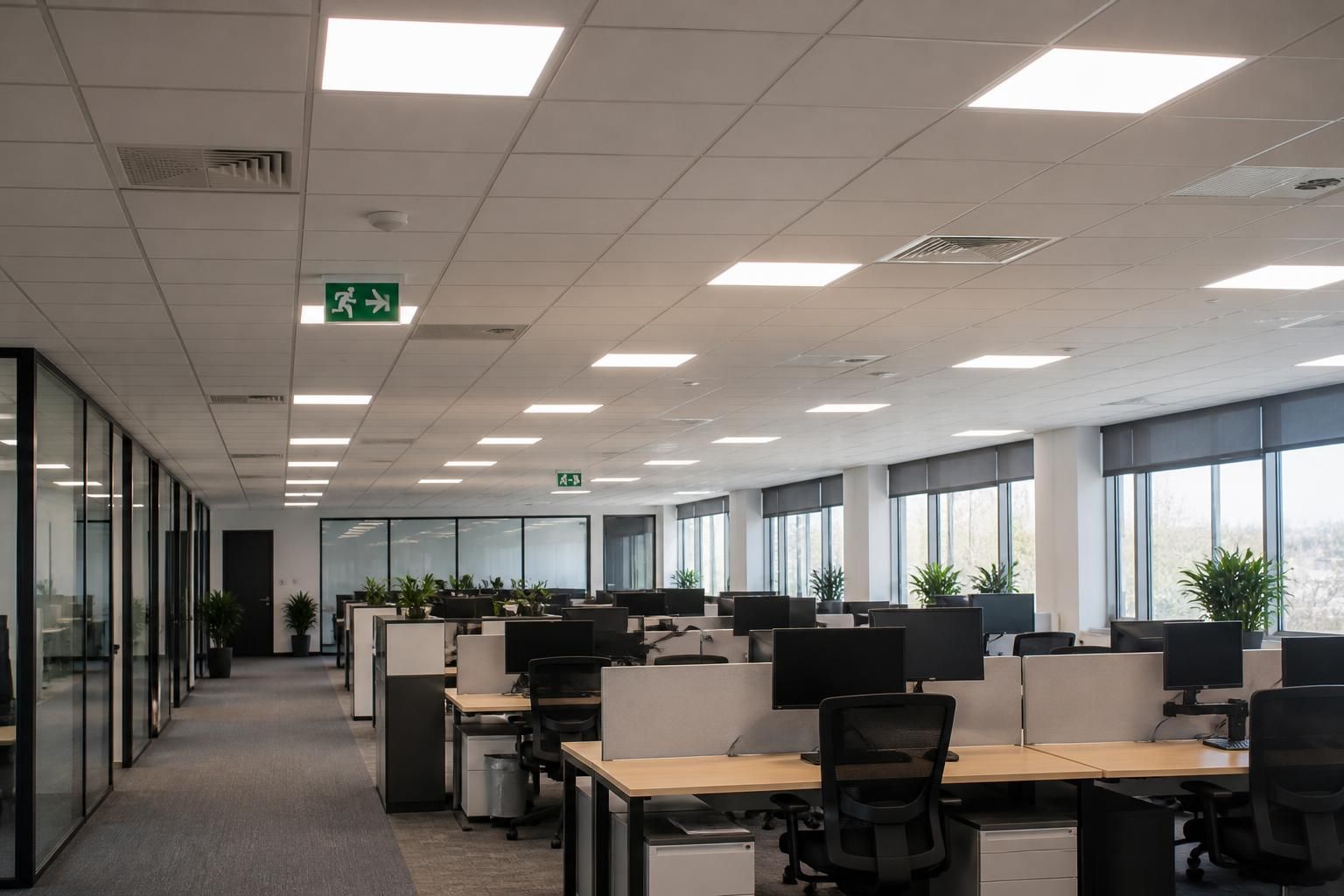
Commercial systems are also planned around the use of particular spaces. An office, workshop, retail unit, warehouse, school or communal area may each require a different combination of light distribution, glare control, colour appearance and visual consistency. The position and beam spread of fittings can affect computer screens, shelving, machinery, display areas and circulation routes. In a home, lighting decisions are more often made room by room; in a commercial property, they need to work as part of a coordinated layout across the whole premises.
The fittings and installation methods are selected for the environment. A fitting for a clean office may not be suitable for a dusty workshop, damp service area or exposed external location. Factors such as ingress protection, impact resistance, ambient temperature, mounting height and access for inspection can all influence the specification. Commercial projects may also require a consistent appearance across a large number of fittings, rather than a collection of individually selected domestic luminaires.
Emergency lighting is a separate consideration within many commercial schemes. It is designed to provide sufficient illumination if the normal lighting supply fails, helping people identify escape routes, changes in level, exits and safety equipment. Its fittings, circuits, testing arrangements and records must be considered alongside the normal lighting installation, rather than treated as an optional decorative addition.
Controls are generally more structured in commercial premises. Although domestic properties can also use dimmers, sensors and automated controls, commercial installations may divide a building into defined lighting zones and coordinate operation with room use, daylight or a building management system. The control strategy must be understandable to staff and facilities teams. Poorly planned controls can result in lights being left on, areas becoming difficult to operate or users overriding the intended settings.
Documentation is an important distinction. A commercial project may require circuit schedules, installation records, test results, layout drawings, product information, emergency-lighting records and instructions for operation or maintenance. These documents help the responsible person understand what has been installed and provide a reference for future works. They are particularly valuable where the premises are leased, managed by several people or subject to regular changes.
There is also a practical difference in how alterations are approached. Changing a domestic fitting may involve replacing a single luminaire or switch. In a commercial building, the same change can affect circuit loading, ceiling layouts, emergency-lighting coverage, access equipment, fire compartmentation and the operation of controls. Any modification should therefore be assessed as part of the complete installation rather than considered in isolation.
In summary, domestic lighting is usually centred on the requirements of a household and individual rooms. Commercial lighting is a coordinated electrical system that must support a building’s layout, activities, users and management arrangements. The correct solution depends on the premises, the tasks carried out there, the existing electrical infrastructure and the records required for safe ongoing operation. RJW Electrical can assess these factors as part of commercial lighting design, installation, inspection or testing, with work carried out to the applicable wiring requirements.
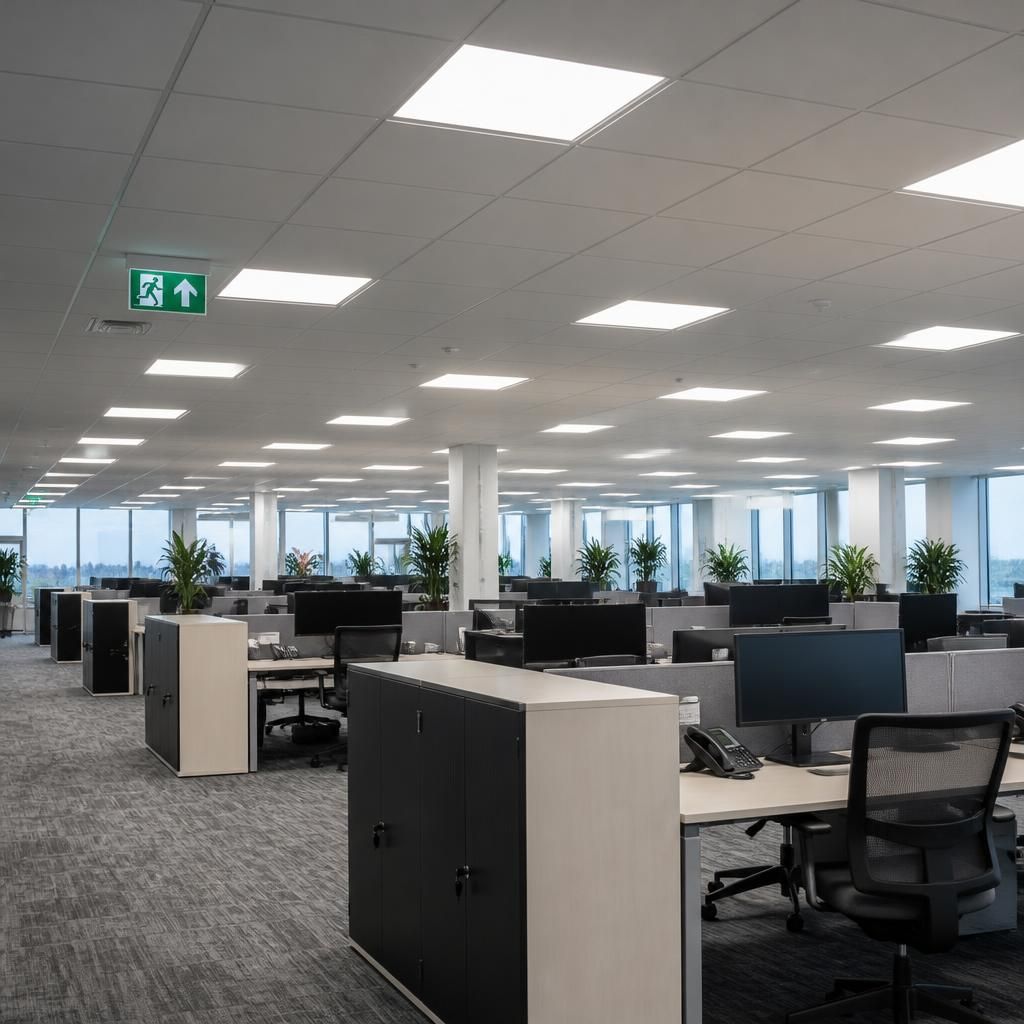
Commercial lighting is typically verified against the way a workplace is used, rather than judged only by whether each fitting operates. After installation, checks may consider the distribution and consistency of light across work areas, visibility at circulation points, glare affecting screens or machinery, and whether the installed arrangement matches the intended lighting design.
This commissioning approach is less common in domestic lighting, where the assessment is usually based on comfort, appearance and individual preference. In a commercial setting, verification can identify poorly positioned fittings, distracting reflections or areas that are inadequately lit before they affect day-to-day work. RJW Electrical can inspect the completed installation and assess whether its performance is appropriate for the premises and the activities carried out there.
Discuss your commercial lighting requirements with RJW Electrical
Contact RJW Electrical to discuss your commercial lighting requirements and request a quote based on your premises, intended use and existing installation.