
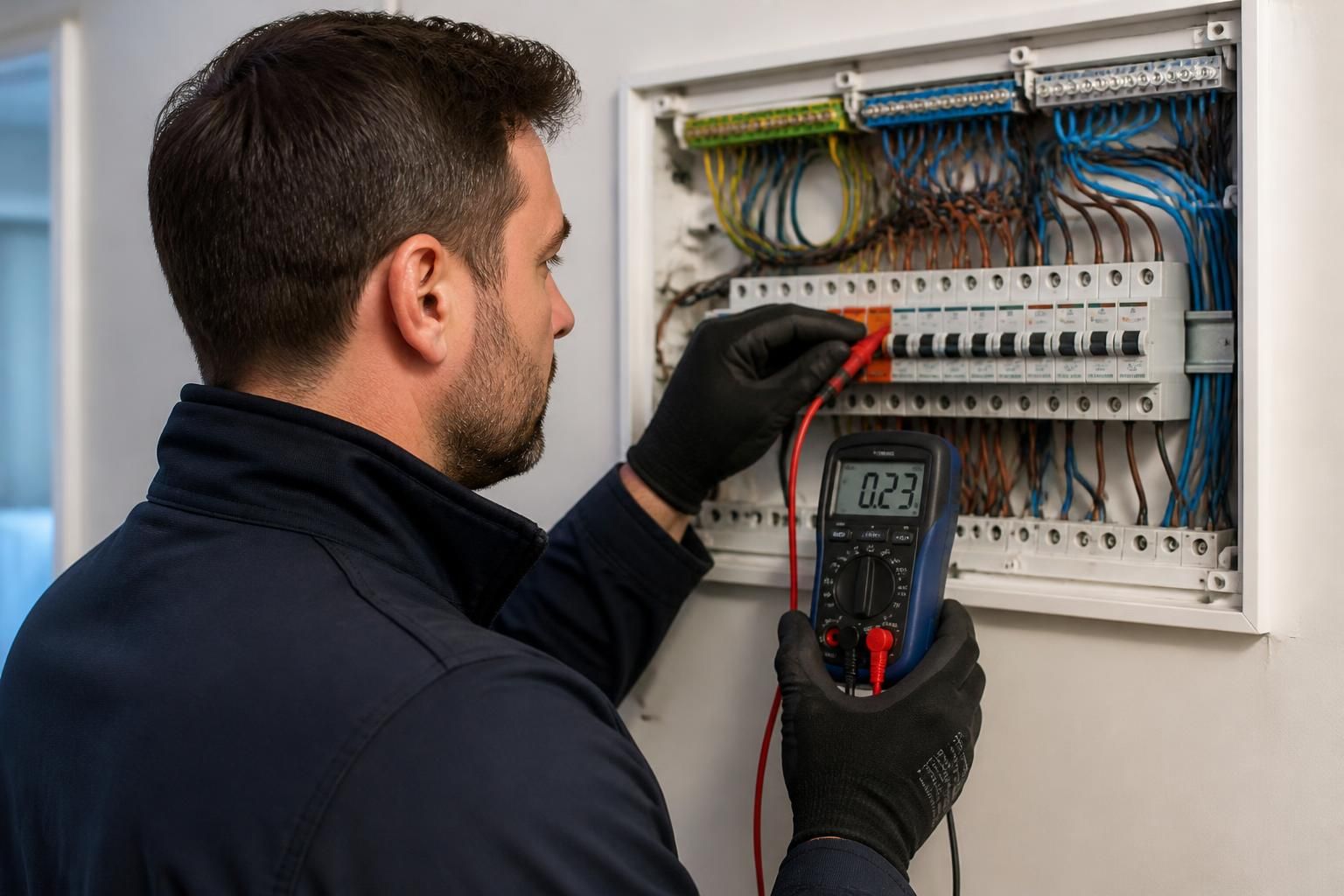
RJW Electrical
When should electrical inspection and testing be arranged?
Electrical inspection and testing should be arranged when an installation is ageing, has been altered, or shows signs of damage, and at suitable intervals for the property’s use and condition. It is also sensible before buying or letting a property, after significant electrical work, or when checking that an installation remains safe and compliant.
Electrical inspection and testing is a structured assessment of an installation’s condition, safety and compliance. A competent electrician examines the visible parts of the system, carries out electrical tests on circuits and protective devices, and records any defects that could create a risk of electric shock, fire or equipment damage.
There is no single inspection interval that applies to every property. The appropriate timing depends on the installation’s age and condition, how heavily it is used, the environment in which it operates and whether the property is domestic, rented or commercial. An installation in a dry, lightly used home will not face the same demands as one supplying machinery, communal areas or a business open to the public.
For an owner-occupied home, periodic inspection is generally a matter of prudent maintenance rather than a universal legal requirement. It can provide useful evidence about the condition of fixed wiring, the consumer unit, earthing and bonding, socket outlets, switches and other permanently connected equipment. The electrician should explain the recommended interval for the specific installation rather than applying a standard date without considering its circumstances.
Private landlords in England have specific duties under the Electrical Safety Standards in the Private Rented Sector Regulations. The fixed electrical installation must be inspected and tested at intervals of no more than five years, or sooner if the previous report requires an earlier assessment. The landlord must retain the report and provide the relevant documentation to tenants and, where required, the local authority. These duties relate to the fixed installation; they do not make a portable appliance test a substitute for an electrical installation condition report.
Commercial premises should be assessed through a risk-based maintenance programme. The Electricity at Work Regulations require electrical systems to be maintained so they remain safe, but they do not impose one universal testing interval for every business. Factors such as operating hours, the type of equipment connected, moisture, heat, dust, vibration, public access and the consequences of an electrical failure should all influence the schedule. Records should also be reviewed when the use of the premises or the electrical load changes.
A proper inspection and test may include:
- checking the condition of cables, accessories, distribution boards and connection points;
- verifying earthing and bonding arrangements;
- testing protective devices, circuit continuity, insulation resistance and polarity where appropriate;
- checking whether circuits are suitably identified and protected;
- looking for evidence of overheating, overloading, deterioration, unsuitable alterations or inadequate protection; and
- recording observations in a formal report, with coded descriptions of defects and recommended action.
The result is usually an Electrical Installation Condition Report, commonly called an EICR. The report classifies observations according to their safety significance. A C1 observation indicates danger that is present, while C2 identifies a potentially dangerous condition. C3 indicates an improvement that is recommended but not considered immediately unsafe, and an FI code means further investigation is required. A report should not be judged solely by whether it is described as satisfactory; the observations and any recommended remedial work also need to be understood.
Inspection should be arranged sooner if an installation develops recurring faults, unexplained tripping, heat or discolouration around accessories, burning smells, buzzing, damaged cables or electric shocks. These symptoms should not be treated as evidence that a periodic report is sufficient: the affected circuit may need prompt investigation and isolation to reduce risk.
Testing is also relevant when a property is being used for a different purpose, when an older system has become heavily loaded, or when records are missing and the condition of the installation cannot be established. New circuits and equipment such as electric vehicle chargers, solar generation systems, additional heating or commercial machinery should have the appropriate inspection, testing and certification for the work carried out. This confirms that the new equipment has been connected safely and that its interaction with the existing installation has been considered.
Before arranging an inspection, gather previous certificates, reports and records of alterations if they are available. Tell the electrician about known faults, equipment that must remain operational and any areas with restricted access. During the assessment, some circuits may need to be switched off briefly so that tests can be completed safely. Any remedial work should be quoted separately where further repair or upgrading is needed, because an inspection identifies the condition of the installation but does not automatically include correction of every defect.
RJW Electrical carries out inspection and testing for domestic and commercial installations across its Midlands service area. Its qualified, insured and DBS-checked engineers work to the 18th edition wiring regulations, with NAPIT membership, TrustMark membership and registration on the Electrical Safety Register providing relevant professional assurance for clients arranging an EICR or related testing.
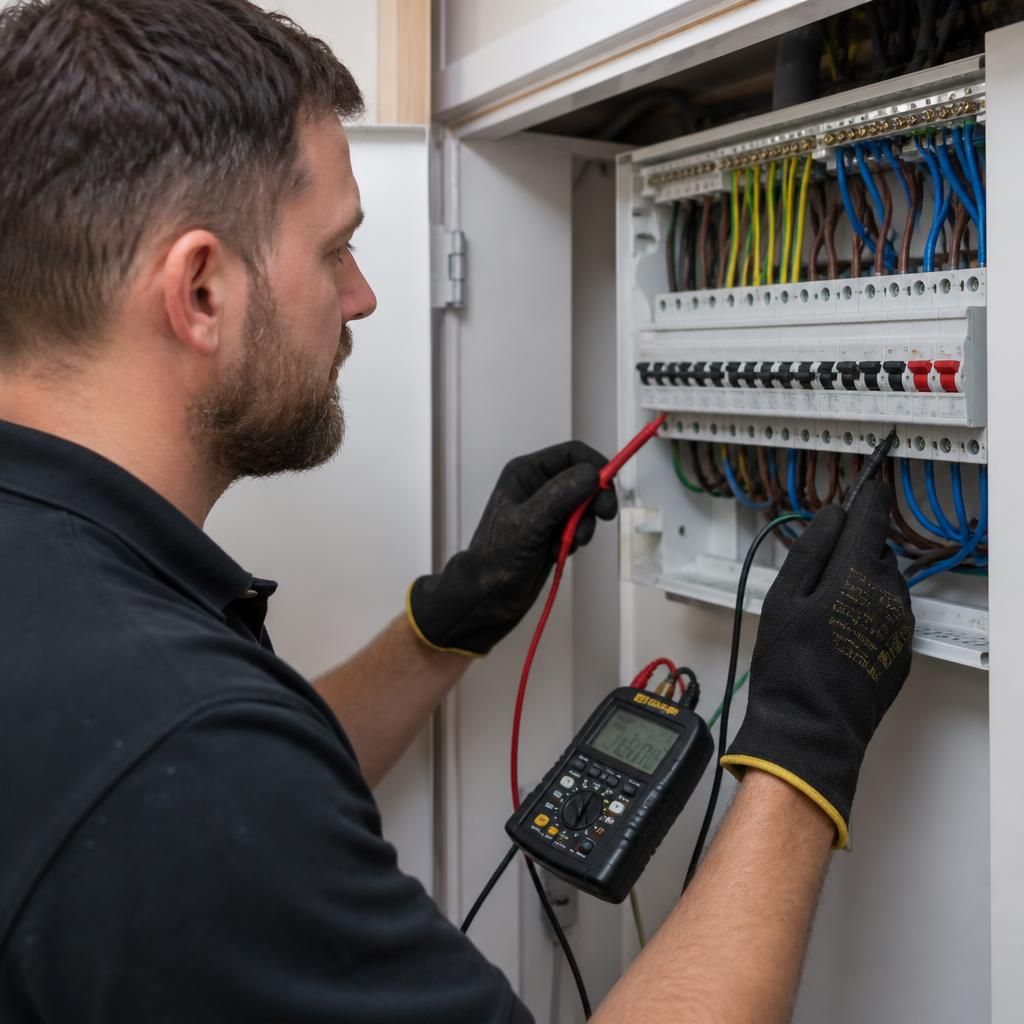
An electrical inspection should cover every part of the installation that is relevant to the property’s use, not just the main consumer unit. Before arranging the assessment, confirm whether the scope includes extensions, garages, outbuildings, external supplies, communal areas, landlord-owned equipment and any distribution boards serving separate parts of the premises.
Access restrictions or inaccessible components should be recorded in the report, because an inspection cannot confirm the condition of wiring or equipment that could not be examined or tested. Providing existing plans, circuit schedules and details of previous alterations helps the electrician identify the installation’s full extent and avoid important areas being overlooked.
For commercial premises, the scope should also reflect how the building operates. Areas containing machinery, specialist equipment, high electrical loads or increased exposure to moisture, heat, dust or vibration may need particular attention. Agreeing these details before the inspection produces a more useful report and makes any recommendations easier to act on.
Arrange an Electrical Inspection and Test
Contact RJW Electrical to discuss the scope of your inspection and testing requirements and request a no-call-out-fee quote for the work involved.