
RJW Electrical
What signs indicate that an electrical fault needs professional attention?
Signs that an electrical fault needs professional attention include repeated circuit-breaker trips, flickering lights, buzzing or crackling sounds, burning smells, scorch marks, damaged sockets or switches, and electric shocks or tingles. Stop using affected equipment where safe to do so and arrange qualified fault finding, as continuing to use a faulty installation can increase the risk of fire, injury or further damage.
An electrical fault needs professional attention when an installation, circuit or appliance behaves abnormally, loses reliability, or shows signs of overheating, deterioration or unsafe protection. Some faults are intermittent and may not produce an obvious visible mark, so a problem that appears to correct itself should not automatically be treated as resolved.
Less obvious warning signs include:
- Partial loss of power: one room, a group of sockets or a particular circuit may stop working while the rest of the property remains energised. This can indicate a fault affecting a cable, connection, accessory or protective device.
- Unusual dimming when equipment starts: lights that dip noticeably when a motor, heater or other high-demand appliance operates may point to a supply, connection or circuit issue. Occasional minor changes can occur with normal electrical demand, but a persistent or worsening pattern should be investigated.
- Intermittent operation: equipment that cuts out, resets, loses power or only works when a plug, switch or cable is moved may have a loose connection or damaged component. Do not keep moving the equipment to recreate the fault.
- Unexpected smells from electrical equipment: an acrid or hot-plastic odour, even without visible damage, can indicate insulation or components are overheating. Isolate the affected item only if it is safe to do so and arrange an assessment.
- Excessive warmth: plugs, adaptors, sockets, switches, extension leads and consumer-unit components should not become unusually hot during ordinary use. Heat can result from overloading, a poor connection, an unsuitable accessory or a failing component.
- Unusual appliance behaviour: an appliance that operates at an inconsistent speed, makes an unfamiliar electrical noise, resets unexpectedly or affects other equipment may have an internal fault or may be exposing a problem with the circuit supplying it.
- Inadequate or improvised extensions: extensive use of extension leads, multiple adaptors, trailing cables or domestic accessories in unsuitable locations can indicate that the fixed installation no longer meets the property's needs. This is a reason to review the circuit arrangement rather than continually add further adaptors.
- Persistent moisture near electrical equipment: water ingress, condensation or damp around accessories, outdoor equipment or wiring can reduce insulation performance and create a risk of electric shock. The affected area should not be used until it has been made safe and assessed.
Some situations require immediate caution. If there is smoke, visible arcing, a rapidly heating accessory, or a fire, move away from the danger area and contact the emergency services. Do not put yourself at risk by attempting to remove covers, handle damaged wiring or use water on an electrical fire. If an appliance is suspected, disconnect it only where this can be done safely; otherwise, leave it isolated and seek qualified assistance.
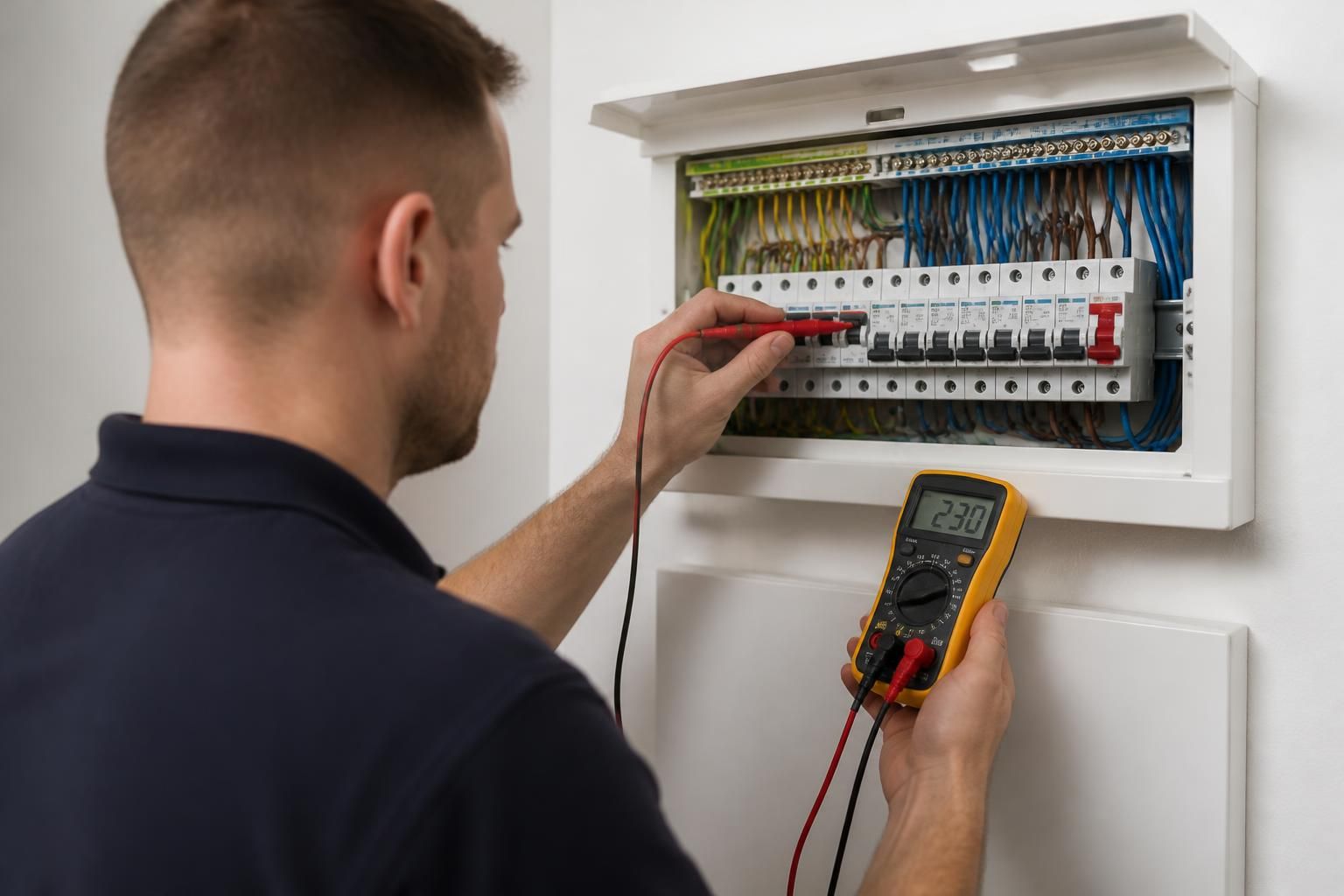
A professional fault-finding visit normally begins with questions about when the problem occurs, which circuits or equipment are affected, and whether any changes were recently made. The electrician may then carry out visual checks, test protective devices, inspect accessible connections and measure the relevant circuits. Testing can help distinguish between a faulty appliance, an accessory problem, a damaged cable, an insulation issue, an earthing or bonding concern, and a supply-related fault. The defective part should not simply be replaced without establishing why it failed.
Do not remove a consumer-unit cover, alter fixed wiring, bypass a protective device or rely on a higher-rated fuse to prevent a fault recurring. These actions can conceal the underlying problem and increase the risk of overheating or electric shock. Keep a note of affected rooms, appliances, times and operating conditions, as this information can help identify an intermittent fault without repeatedly recreating it.
For rented, commercial or managed properties, recurring electrical faults should be recorded and reported to the responsible person rather than treated as isolated inconveniences. In workplaces, a fault may also affect machinery, IT equipment, lighting controls or other connected systems, so the relevant equipment should be taken out of use where necessary and the affected area managed safely.
RJW Electrical provides professional fault finding for domestic and commercial installations across the Midlands, with work carried out by qualified, insured and DBS-checked engineers. As a NAPIT and Trustmark member working to the latest 18th edition wiring regulations, the company can investigate the cause of an electrical fault and explain whether repair, replacement or a wider installation assessment is appropriate. A no-call-out-fee quote can be provided before work is undertaken.
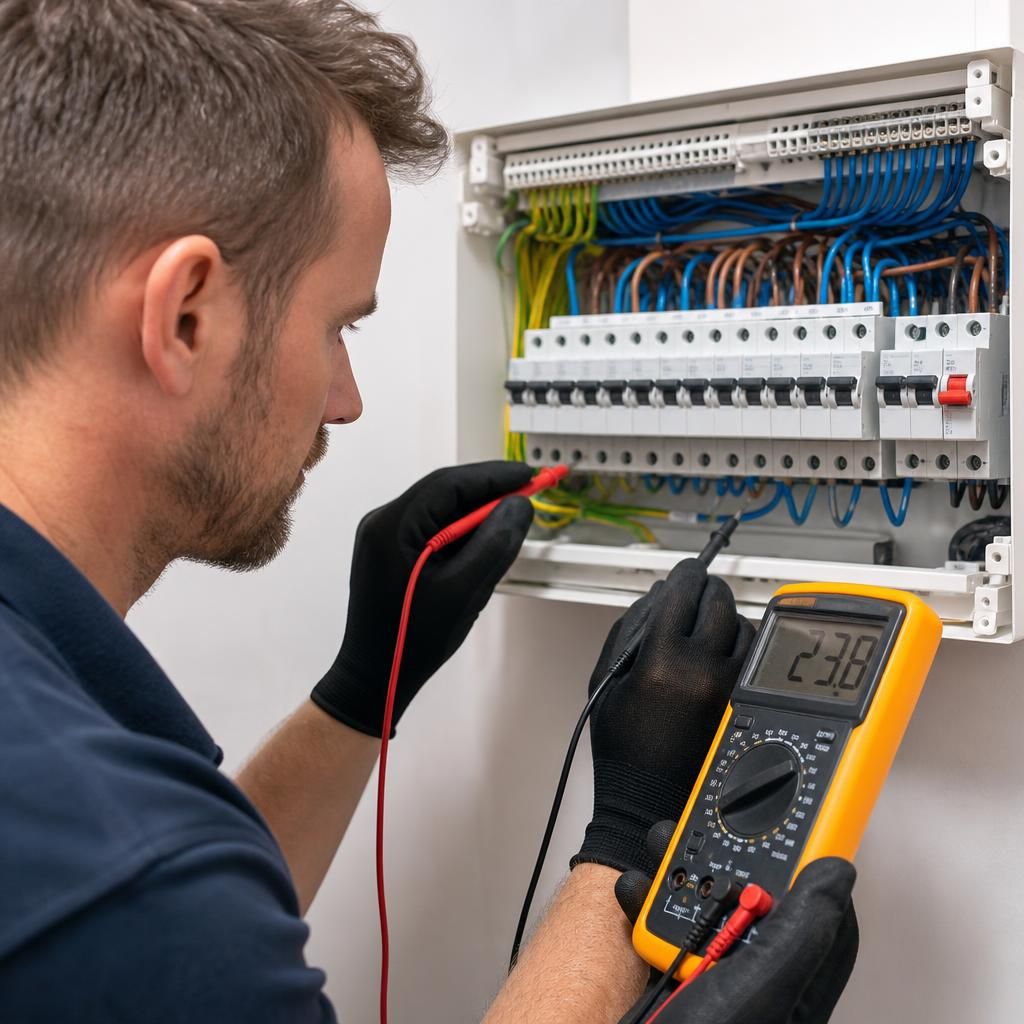
The type of protective device that operates can provide an initial clue, but it does not identify the fault on its own. A circuit-breaker may disconnect a circuit because of excessive current, a short circuit or a defective component, while an RCD may operate when current is escaping from the intended circuit path. Modern consumer units may combine these functions in RCBOs, so the indication should be interpreted alongside the affected circuit and equipment.
Do not repeatedly reset a device simply to restore power. Record which device operated and what was connected at the time, then leave the suspected circuit or appliance isolated where it is safe to do so. Qualified testing can establish whether the cause is an appliance, accessory, cable or protective-device issue without relying on guesswork or replacing parts unnecessarily.
Discuss an electrical fault with RJW Electrical
Contact RJW Electrical to discuss an electrical fault and identify the appropriate next step based on the symptoms and affected installation.