
RJW Electrical
What should an electrical installation quotation include?
An electrical installation quotation should clearly describe the proposed work, materials and equipment, labour, any preparation or remedial work, and the total price. It should also state whether inspection, testing, certification and necessary notifications are included, so you can compare quotations on a like-for-like basis.
A useful electrical installation quotation should be a written specification of the proposed installation, not simply a single total. It should allow the client to understand exactly what will be installed, where responsibilities begin and end, which assumptions affect the price, and what will happen if site conditions differ from those identified during the assessment.
Scope of work
The quotation should describe the installation in practical terms. Depending on the project, this may include the number and location of socket outlets, switches, lighting points, dedicated appliance supplies, external equipment, distribution boards, data points or other connected systems. For a commercial project, the scope may also need to identify each area, floor or unit included.
Where drawings, schedules or a specification have been provided, the quotation should refer to the relevant revision. This helps prevent an outdated plan or later design change being treated as part of the agreed work. If the quotation is based on a site survey rather than a complete design, that limitation should be stated clearly.
Design details and technical assumptions
A detailed quotation should identify important technical assumptions, such as:
- the available electrical supply and the capacity of the existing installation;
- the condition and suitability of existing circuits, earthing and bonding;
- the intended route for cables and whether concealment, containment or surface mounting is proposed;
- the position and type of distribution equipment and protective devices;
- the environmental conditions affecting equipment selection, such as damp, heat, dust or outdoor exposure; and
- whether the design allows for future equipment or additional load.
These details are particularly important where a new installation will connect to an existing system. A quotation should not imply that existing equipment will be reused unless its suitability has been assessed or the assumption is expressly identified.
What the price includes and excludes
The document should separate the main cost elements and identify any work that is excluded. Possible exclusions include decoration, plastering, joinery, trenching, making good, specialist access equipment, alterations to utility supplies, removal of hazardous materials or repairs to unrelated defects. If another contractor, the client or a site manager must complete part of the preparation, this should be recorded.
Any allowances or provisional sums should be explained rather than presented as fixed costs. For example, the quotation may depend on opening up a wall, confirming the incoming supply, or investigating an inaccessible cable route. A clear allowance gives the client a basis for understanding when the final cost could change.
Site conditions and variations
A quotation should explain how unforeseen conditions and requested changes will be managed. It should state whether additional work requires written approval before proceeding, how the price will be calculated, and whether a revised quotation will be issued. This is preferable to leaving variations to informal conversations, particularly on larger commercial installations.
The quotation should also record practical assumptions about access, parking, working space, isolation of supplies, protection of furnishings, storage of materials and coordination with other trades. Where the work forms part of a refurbishment or new build, responsibilities for first-fix access, ceiling closure, fire stopping and final decoration should be allocated clearly.
Commercial terms
Clients should look for the quotation date, its validity period, the treatment of VAT, the proposed payment stages and any deposit requirement. The terms should identify who is responsible for arranging access and approvals, and whether the price depends on information from the client, designer, landlord or main contractor.
A quotation should also distinguish between a fixed price and an estimate. A fixed price normally applies only to the defined scope and stated assumptions. An estimate indicates that the final amount may change as more information becomes available. This distinction is important when comparing quotations from different electrical contractors.
Completion information
The quotation should explain what the client will receive when the installation is complete, including the relevant electrical records and any required notification or handover information. It should identify who will make statutory notifications where applicable and whether operating instructions, schedules, drawings or maintenance recommendations form part of the handover.
For commercial premises, the handover arrangements may need to include asset information, circuit identification, access to distribution equipment and records needed for future inspection or maintenance. For domestic work, the client should still know which documents relate to the completed installation and where they will be provided.
Questions to ask before accepting a quotation
- Does the description match the design, survey or schedule provided?
- Are existing defects, remedial work and access requirements dealt with?
- Are all exclusions and allowances understandable?
- Is the price fixed, estimated or subject to specified conditions?
- Are VAT, payment stages and quotation validity stated?
- Does the completion information meet the needs of the property owner, occupier or facilities manager?
- Is the process for approving changes set out in writing?
When comparing quotations, the lowest total is not necessarily the most useful comparison. Check that each contractor has priced the same specification, included the same level of preparation and allowed for the same completion requirements. RJW Electrical can assess the proposed work and set out the relevant scope and assumptions for domestic and commercial installations across the Midlands, including Sutton Coldfield, Streetly, Walmley, Erdington, Lichfield, Aldridge, Walsall and Shenstone.
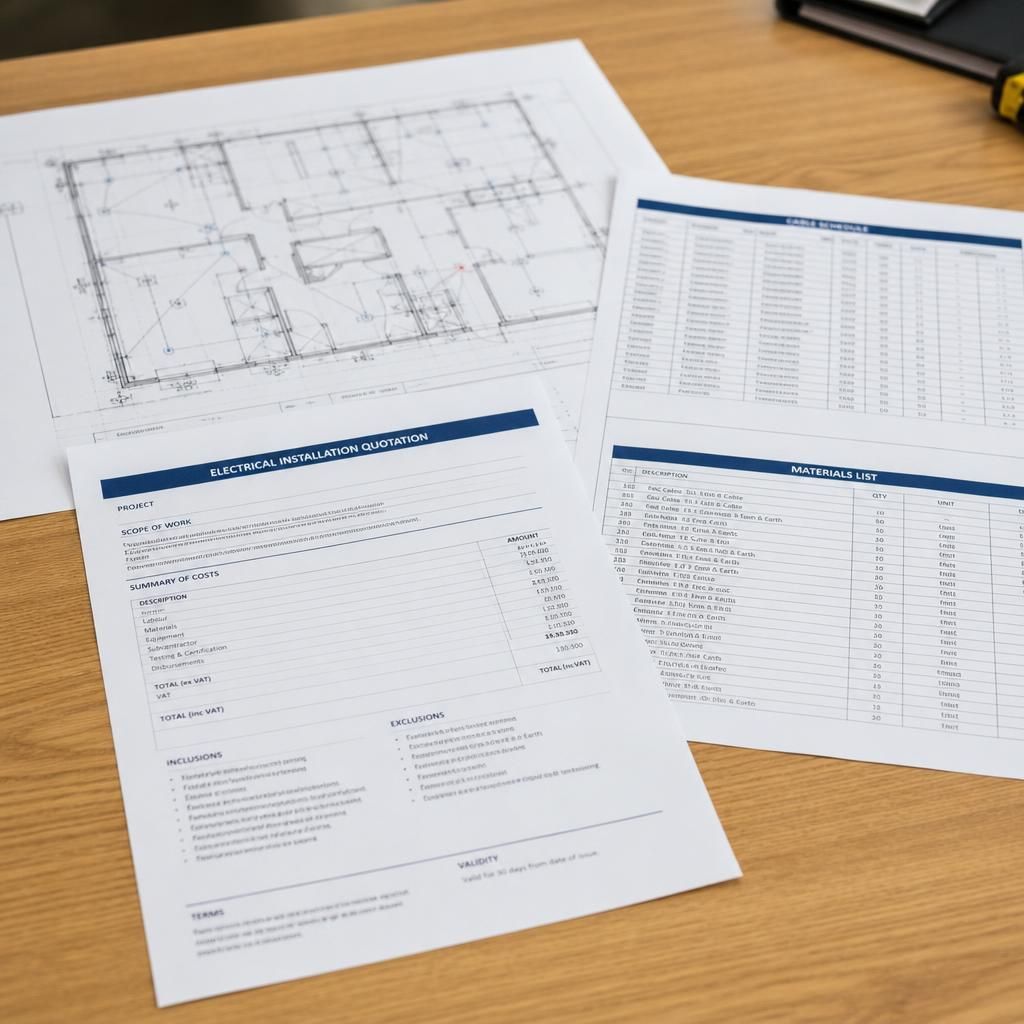
An electrical installation quotation should state whether equipment supplied by the client is included, excluded or subject to approval before installation. This matters for items such as light fittings, appliances, chargers and control equipment, because the installer may need to confirm that the product is suitable for the intended circuit, location and method of connection.
The quotation should also clarify who is responsible for providing product instructions, checking dimensions and dealing with defects in client-supplied equipment. If a selected item is incompatible or cannot be installed safely, the quotation should explain how an alternative will be agreed and whether any additional labour or materials would affect the price.
Discuss your electrical installation quotation
Have an electrical installation quotation you would like to clarify? Contact RJW Electrical to discuss the proposed scope, assumptions and completion requirements before you approve the work.