
RJW Electrical
Which EV charger installation option suits your property?
The most suitable EV charger installation depends on your property type, parking arrangement, available electrical capacity and expected charging demand. A home will usually need a conveniently positioned domestic charge point, while a business may require a higher-capacity installation designed around multiple vehicles, users and parking spaces.
The most suitable EV charger installation option is determined by how the property is used, where vehicles can be parked lawfully, the route between the charger and the electrical supply, and whether charging needs to be shared. The best choice is therefore not necessarily the highest-powered unit; it is the installation that can be positioned safely, supplied reliably and used conveniently without creating avoidable limitations for the property.
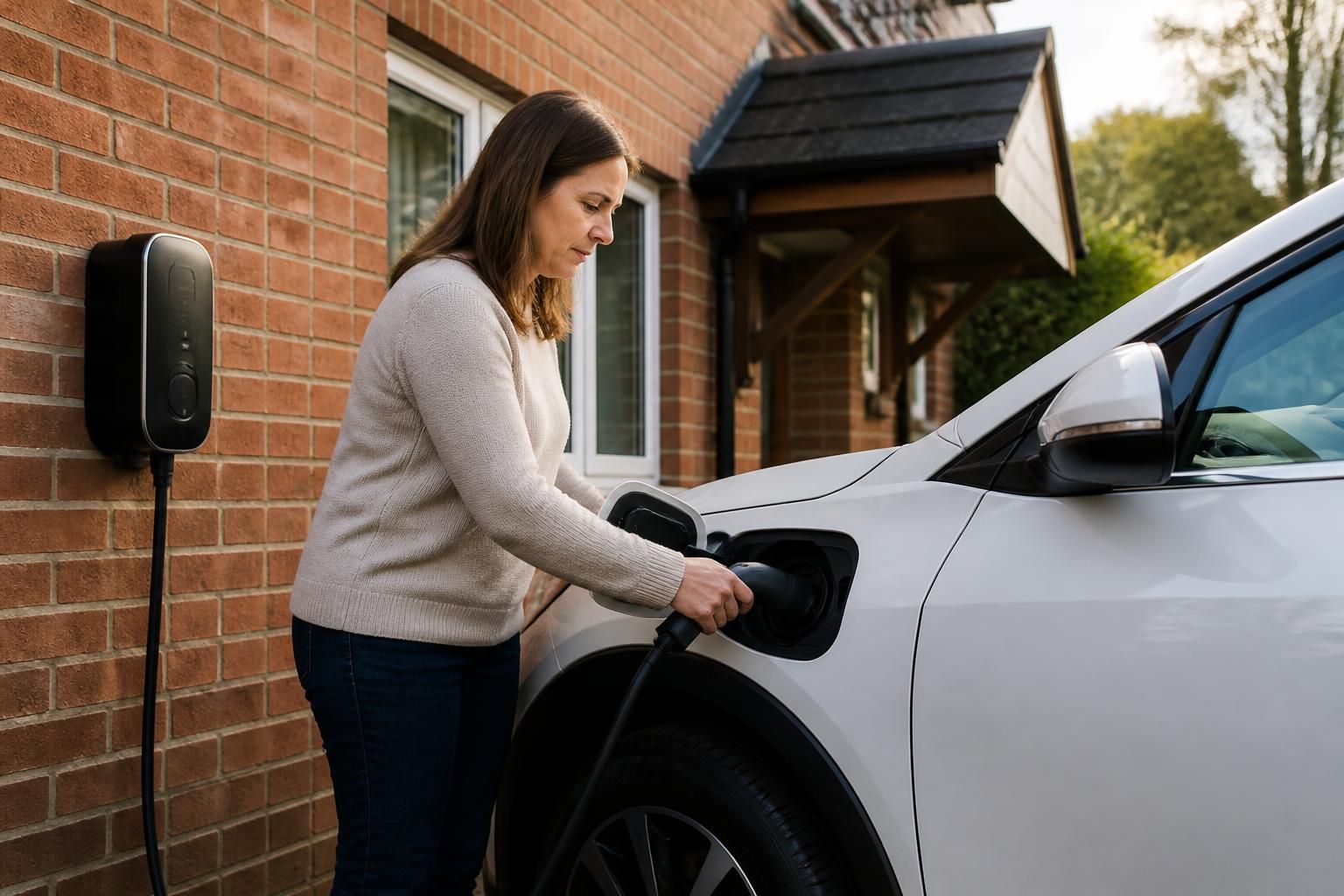
For a house with private parking, a dedicated home charge point is usually the most straightforward option. A driveway, garage or hardstanding area can provide a predictable place for the vehicle to be connected. The charger may be mounted on an external wall, inside a garage or on a suitable post, depending on the parking layout and the available cable route. The installation design should account for vehicle access, protection from impact, cable management and the position of the consumer unit or other electrical equipment.
A driveway installation can suit a property where the car is parked directly beside the house, but the cable route still needs careful consideration. Cables should not create a trip hazard or cross a public footpath without an appropriate arrangement. If the vehicle is parked some distance from the building, a longer route may require additional containment, groundworks or a different mounting position. Where a garage is used, the installer must consider whether the charger, cable and controls will remain accessible without interfering with the garage door or stored items.
For a property without private parking, the practical options are more restricted. A charger cannot simply be positioned where a cable would cross a pavement or other public area. The installation may need to be reconsidered around an alternative parking space, an approved cable-management system or a different charging arrangement. Permissions from the relevant landowner, property manager or local authority may also be necessary. These matters should be resolved before choosing equipment, because a technically suitable charger may still be unsuitable for the parking arrangement.
For flats and leasehold properties, the installation involves both the individual dwelling and the wider building. The decision may depend on whether the parking bay is allocated, whether the bay is close to the building’s electrical infrastructure, and who controls the external walls, car park and communal supply. A survey should establish the proposed cable route, access requirements and responsibility for future maintenance. In a communal car park, a system that can identify users and manage several charge points may be more appropriate than a standalone domestic arrangement.
For workplaces and commercial premises, the suitable option depends on the number of vehicles, how long they remain parked and whether the chargers are for staff, visitors, fleet vehicles or a combination of users. A small workplace may need a limited number of charge points positioned near staff parking, while a larger site may require phased installation, access controls, usage records and load management. The design should also consider delivery vehicles, fleet scheduling, disabled parking arrangements, future parking changes and the effect of charging equipment on other electrical loads within the premises.
For rented or mixed-use premises, responsibility and permissions are as important as the electrical design. Written approval may be needed from a landlord, freeholder, managing agent or commercial property owner. The proposed installation should make clear which equipment is being installed, where it will be located, how the supply will be connected and who will deal with maintenance or removal later. This avoids selecting a charger that cannot be installed under the property's ownership or management arrangements.
The electrical supply is another deciding factor. Before installation, a qualified electrician should assess the consumer unit, earthing arrangement, protective devices, cable route and the existing electrical demand at the property. If other substantial loads are present, the charger may need dynamic load management or another controlled arrangement so that charging is coordinated with the rest of the installation. Where the existing supply or equipment is unsuitable, remedial electrical work may be required before the charge point can be commissioned.
The physical style of the charger also affects suitability. A tethered unit has a permanently attached charging cable, which can be convenient when the same vehicle is normally charged at the property. An untethered unit has a socket and may be preferable where different vehicles use the charger or where a neater appearance is important. The choice should take account of storage, weather exposure, user access and whether the cable will be left connected between charging sessions.
Smart features can be useful where charging needs to be controlled around the property's electrical demand or where different users need access. However, connectivity and app-based functions should be treated as part of the wider installation decision rather than the sole reason to choose a particular unit. The charger must first be compatible with the electrical system, suitable for its location and practical for the people who will use it.
A professional assessment should result in a clear installation plan covering the proposed charger position, cable route, protective equipment, isolation arrangements, testing and user guidance. RJW Electrical carries out EV charging work for domestic and commercial properties, with qualified engineers working to current wiring regulations and membership of NAPIT, TrustMark and the Electrical Safety Register. This provides a basis for assessing the property-specific factors before an installation option is selected.
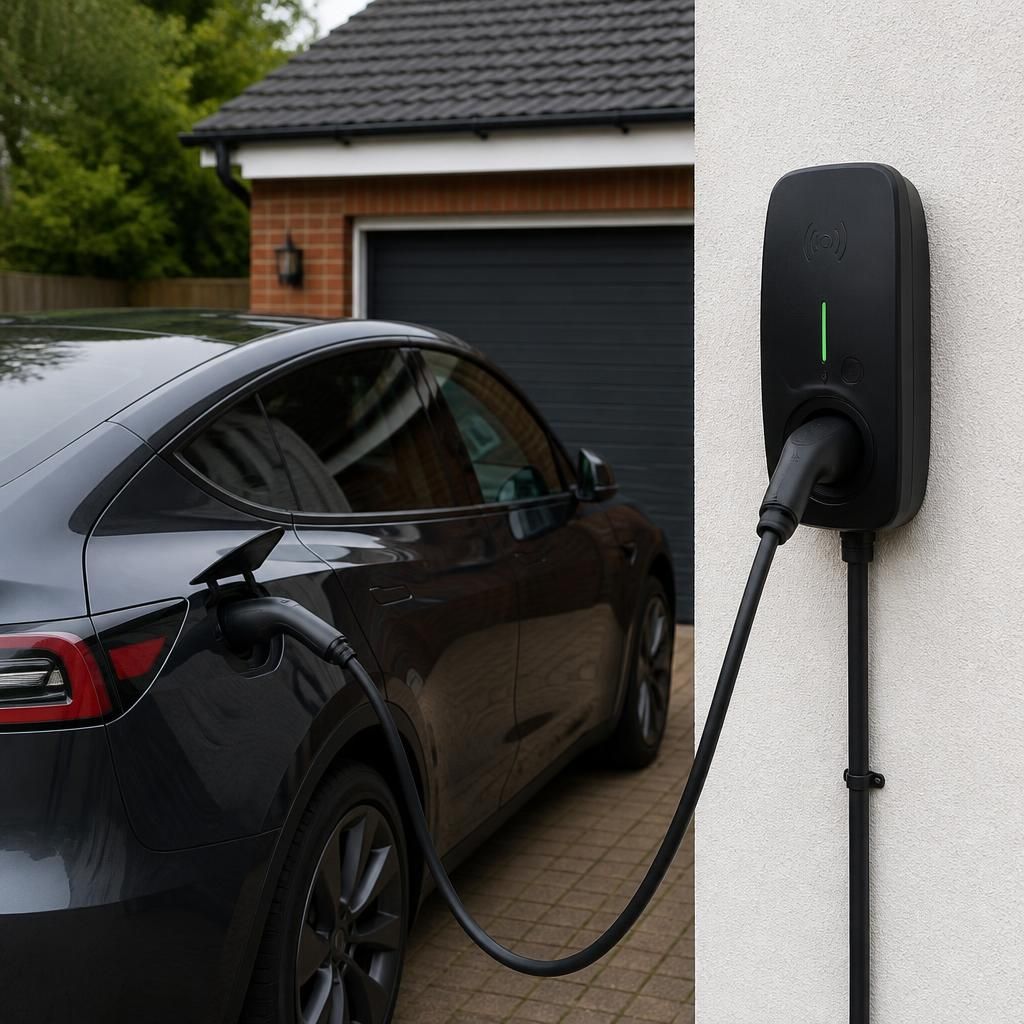
For a property with a detached garage or outbuilding, the most suitable EV charger installation depends on how that building is supplied electrically. The choice may be between extending the existing installation from the main property, connecting to a suitable distribution board in the outbuilding, or locating the charger closer to the property's main electrical equipment.
A longer cable route can affect the installation design. The electrician may need to assess cable capacity, voltage drop, protective devices, earthing and whether the route requires underground containment or other groundworks. The outbuilding's existing electrical demand should also be considered, particularly if it supplies lighting, tools or other substantial equipment.
This means a detached garage should not be treated as simply another wall-mounting location. A site assessment can establish whether the existing supply is suitable, whether additional electrical work is needed and which installation option provides a safe, practical route without compromising the outbuilding's other uses.
Discuss your EV charger installation options
Discuss your EV charger installation options with RJW Electrical to identify a suitable arrangement for your property. Request a no-call-out-fee quote based on your proposed installation.