
RJW Electrical
What equipment is needed for a TV and AV installation?
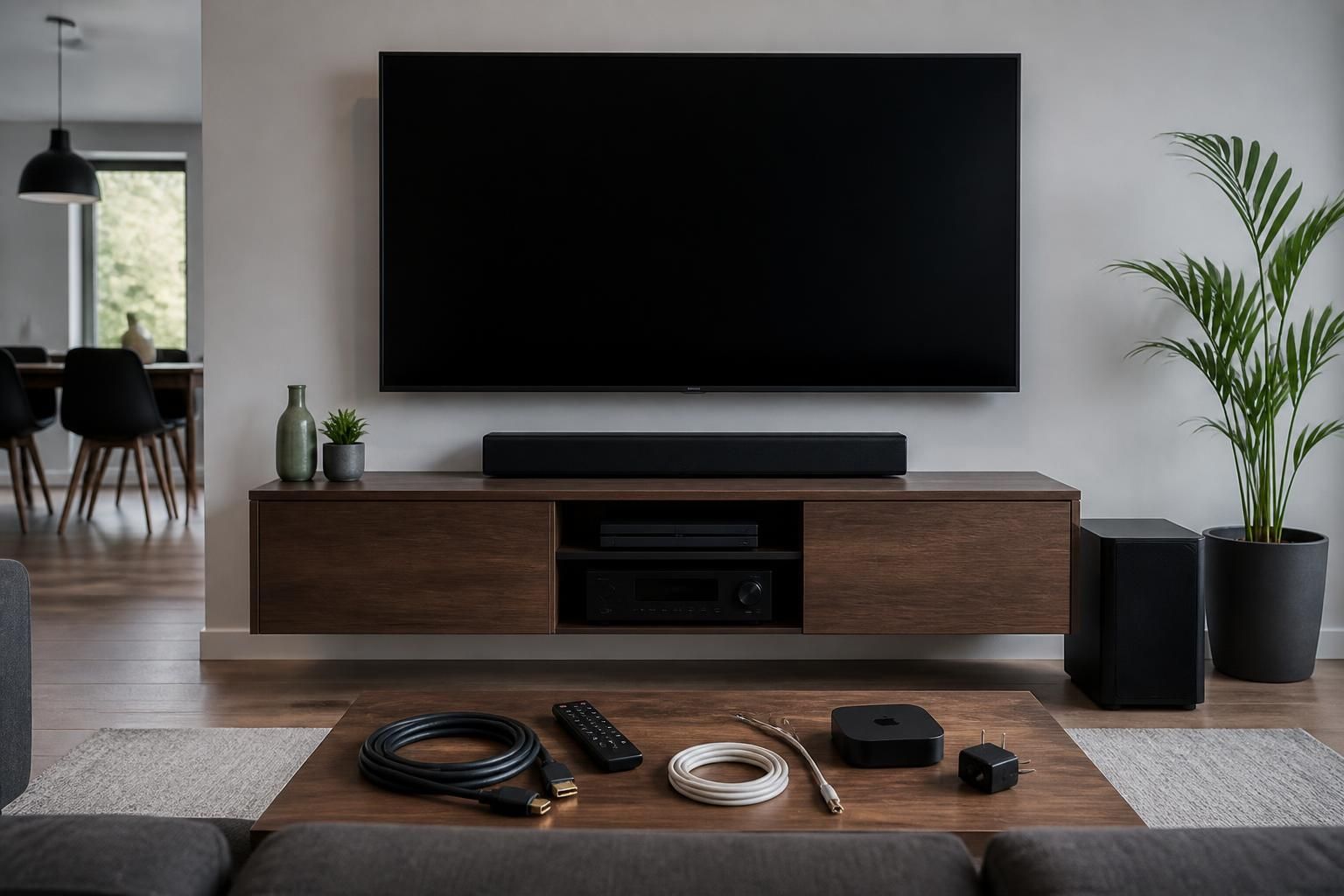
A TV and AV installation typically needs a screen, suitable wall bracket or stand, power supply, HDMI and aerial or network cables, and any source equipment such as a set-top box, games console or streaming device. Depending on the setup, it may also require a soundbar or amplifier, speakers, signal distribution equipment and cable-management components.
The equipment required for a TV and AV installation depends on the intended layout, the available signal sources and how the system will be controlled. In addition to the main display and source devices, a properly planned installation may need compatible brackets, connection hardware, signal-distribution equipment, audio components, control accessories and suitable cable-management materials.
Display and mounting equipment
- A wall bracket must match the screen’s size, weight and mounting pattern. Fixed, tilting and swivelling brackets suit different viewing positions and wall arrangements.
- For a freestanding installation, the TV stand must support the display securely and leave enough space for connected equipment and ventilation.
- Fixings should be appropriate for the wall construction. Brick, blockwork, stud partitions and plasterboard may each require different anchors or a reinforced mounting point.
- A spirit level, measuring equipment and suitable installation tools are needed to position the screen accurately and avoid stressing the wall or bracket.
Connection and signal equipment
- HDMI leads are used for many modern video and audio connections, but their specification must suit the required resolution, refresh rate and features of the connected devices.
- An aerial outlet, suitable coaxial cable and, where necessary, a signal amplifier or splitter may be needed for terrestrial television.
- Network equipment can include an Ethernet cable, network outlet or wireless connection, depending on whether the TV or streaming device is connected to the home or business network.
- Adapters, couplers, HDMI switches or audio extractors may be required when the available connections on the display and source equipment do not match.
- For installations serving more than one room, the system may need a distribution amplifier, splitter or matrix device selected for the number of outputs and the type of signal being shared.
Audio equipment
- A soundbar is a compact option for improving dialogue and general audio from the television. It may require an HDMI audio connection, optical cable or another compatible input.
- An AV receiver or amplifier is used where the installation includes separate speakers or several audio and video sources.
- Passive speakers need correctly rated speaker cable and suitable positions, while active speakers require both signal and mains connections.
- A subwoofer can be included where deeper bass is required, although its position and connection method should be considered as part of the overall layout.
Power and cable management
- Power sockets should be positioned so that plugs, transformers and surge-protection equipment do not place strain on cables behind the screen.
- Cable trunking, conduit, brush plates and recessed connection plates can help route cables neatly between the TV and connected equipment.
- Power and signal cables should be planned carefully, particularly where cables pass through furniture, walls or service voids. Permanently concealed wiring must be installed in accordance with the relevant electrical requirements.
- Ventilation space must be retained around amplifiers, media players and other equipment that produces heat. Enclosing these devices in a sealed cabinet can cause overheating.
Control and commissioning equipment
- Remote controls, infrared repeaters or network-based control equipment may be needed where source devices are stored in a cabinet or located away from the screen.
- Devices should be labelled during installation so that inputs, outputs and power connections can be identified later without tracing every cable.
- Testing equipment and configuration tools are used to check picture quality, audio output, aerial or network performance, source switching and remote-control operation.
Before equipment is selected, the installer should confirm the screen position, wall construction, viewing arrangement, number of sources, audio requirements and whether signals need to reach other rooms. This prevents incompatible connections, inaccessible sockets and insufficient cable capacity. RJW Electrical can assess these points as part of a TV or AV installation, with electrical work carried out by qualified engineers in line with current wiring requirements.
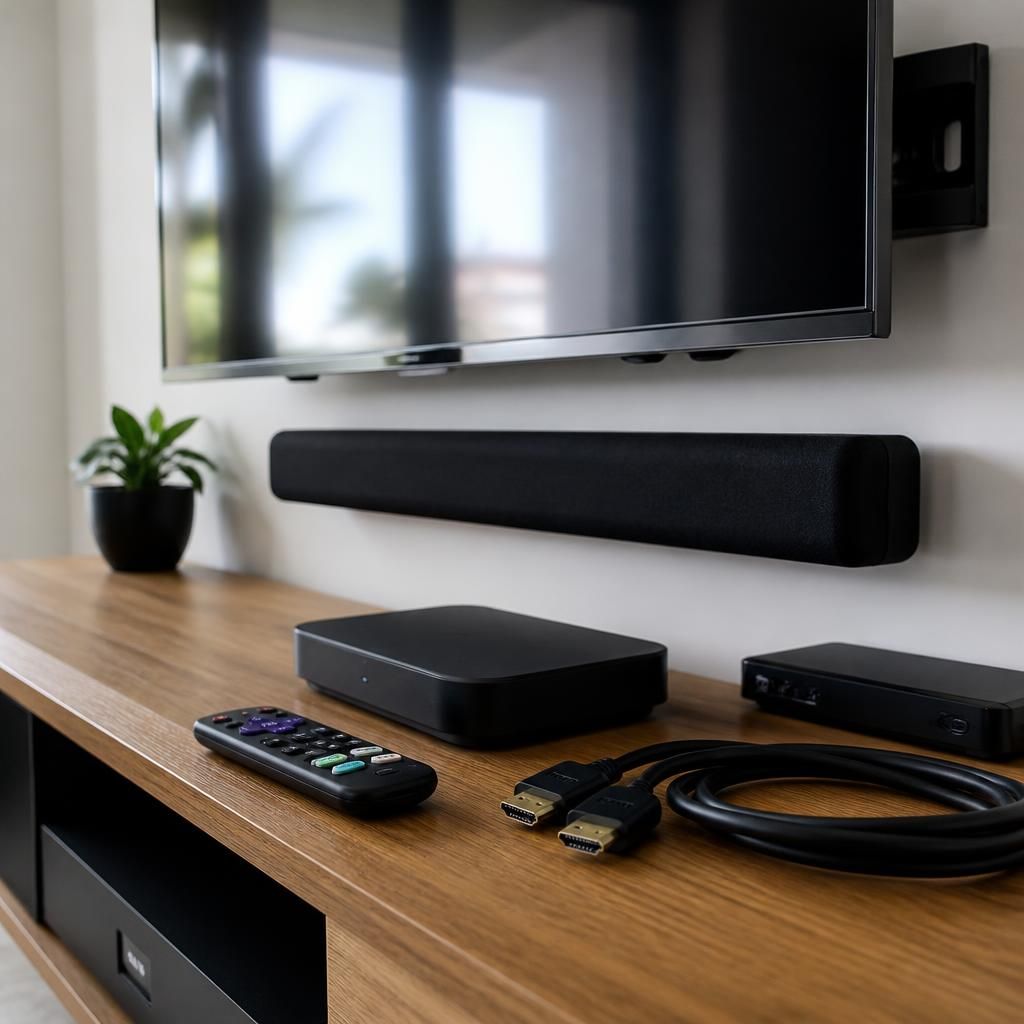
The equipment list for a TV and AV installation should reflect how the system will be used. A television with a built-in tuner and smart functions may be sufficient for basic viewing, while additional equipment is needed for subscription services, gaming, recording or playback from other media.
- A set-top box or receiver may be required for certain television services.
- A streaming player can be useful where the television does not support the required applications or features.
- A games console or media player should be allowed for when planning the position of the screen and associated equipment.
- A recording device may be needed if programmes must be stored and viewed later.
Before equipment is purchased, check that each device supports the functions required and can connect to the rest of the system. This avoids adding unnecessary hardware and helps ensure the finished installation is straightforward to operate.
Plan your TV and AV installation
Contact RJW Electrical to discuss your proposed TV and AV installation and obtain a quote based on the equipment, connections and layout required.