
RJW Electrical
How can a television aerial signal be distributed to multiple rooms?
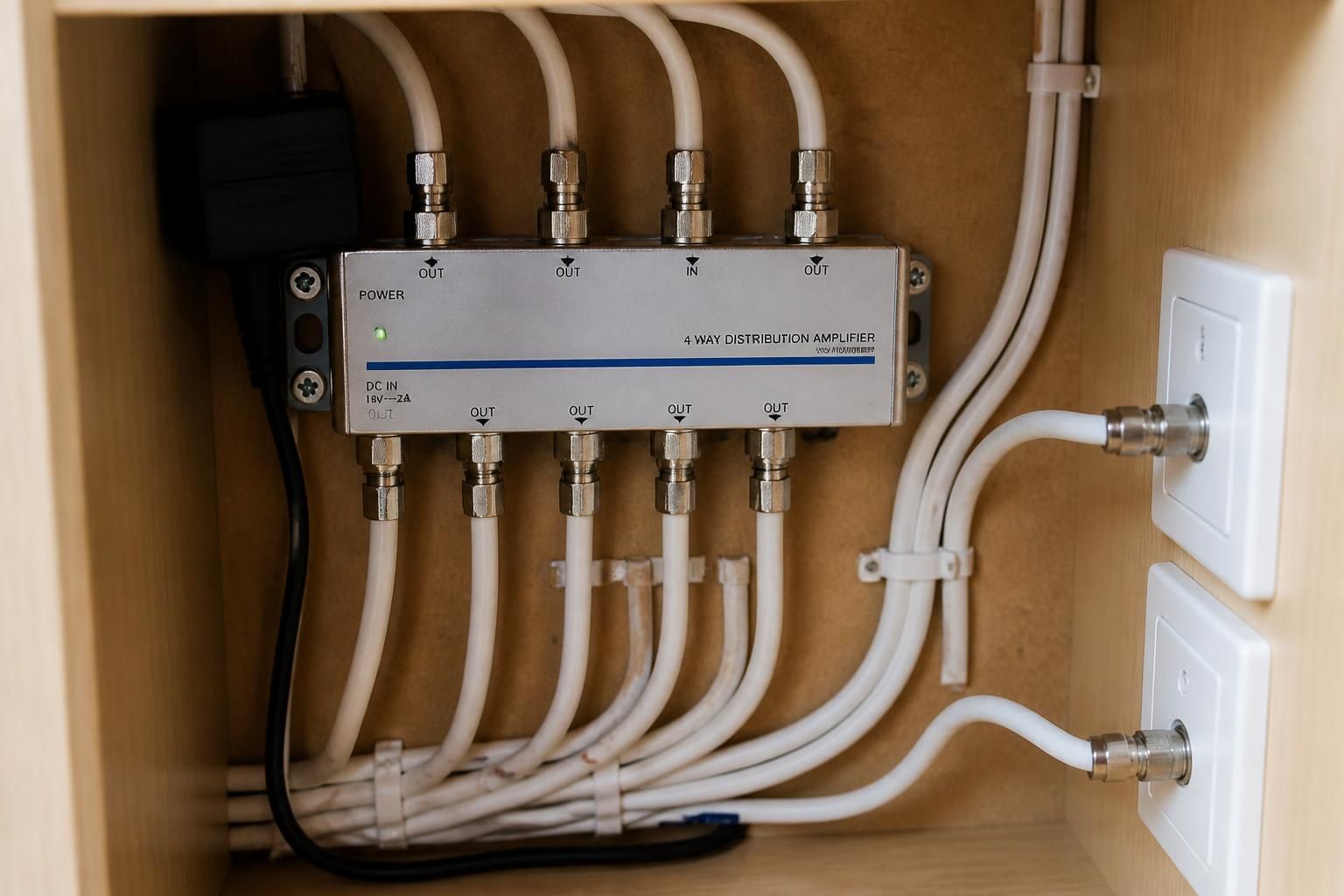
A television aerial signal can be distributed to multiple rooms using a suitable splitter or powered distribution amplifier connected to the aerial’s coaxial cable. The amplifier sends the signal through separate coaxial cables to each room, helping maintain adequate signal strength where several outlets are required.
A multi-room television aerial system takes the feed from one aerial and routes it through a planned distribution network to individual wall outlets. Each outlet then connects to a television, set-top box or recorder using a suitable coaxial lead. The correct arrangement depends on the number of rooms, the length and condition of the cable runs, and the strength and quality of the incoming signal.
A passive splitter may be sufficient where there are only a small number of outlets and the incoming signal is strong. It divides the signal between the connected cables, but each additional output introduces some loss. If the signal is already weak, or several rooms are being served, a powered distribution amplifier is generally more appropriate. This device uses a mains supply to provide separate amplified outputs and can help maintain a usable signal across the network. Amplification cannot correct a poor-quality source signal, however, so the aerial, connections and cabling should be checked before an amplifier is selected.
- Splitter: a simple, passive option for a small installation with adequate signal strength.
- Distribution amplifier: a powered unit with multiple outputs for larger systems or longer cable routes.
- Coaxial cable: carries the radio-frequency signal from the aerial or distribution equipment to each outlet.
- Wall outlets: provide a neat connection point in each room and can be configured for the required television equipment.
The distribution equipment is normally positioned near where the aerial cable enters the property, although the most practical location depends on access to power and the routes available for the outgoing cables. From there, separate cables can be run to each room in a star arrangement. This approach makes each outlet independent and helps with fault-finding. Existing coaxial wiring may also be usable, but it should be inspected for damaged sections, loose terminations, unsuitable joins or obsolete components before being connected to a new system.
Signal quality is affected by more than the number of televisions. Long cable runs, excessive bends, poor-quality connectors, water ingress, interference and unused or badly terminated outlets can all reduce performance. A distribution system should therefore be designed with appropriate equipment rather than relying on several basic splitters connected together. Testing the signal at the incoming point and at the completed outlets helps identify whether any problem originates with the aerial, the distribution equipment or a particular cable run.
For a standard terrestrial television service, the system can distribute the aerial feed to compatible televisions and receivers in different rooms. Satellite television uses different distribution requirements because the receiver may need control of the satellite signal, so a conventional terrestrial splitter is not automatically suitable. The intended service and equipment should be confirmed before installation.
A properly planned installation can also allow spare outputs for future rooms without repeatedly disturbing the existing cabling. Any unused amplifier outputs should be terminated as recommended by the equipment manufacturer, and cables should be routed and secured so that they are protected from damage. Where cables pass through walls, floors or other building elements, the installation should also take account of safe routing and the condition of the surrounding structure.
RJW Electrical can assess the existing aerial feed, cable routes and outlet requirements before recommending a suitable distribution method. Its engineers can install and test the associated cabling and equipment for domestic or commercial premises, with advice based on the property rather than simply adding more splitters.
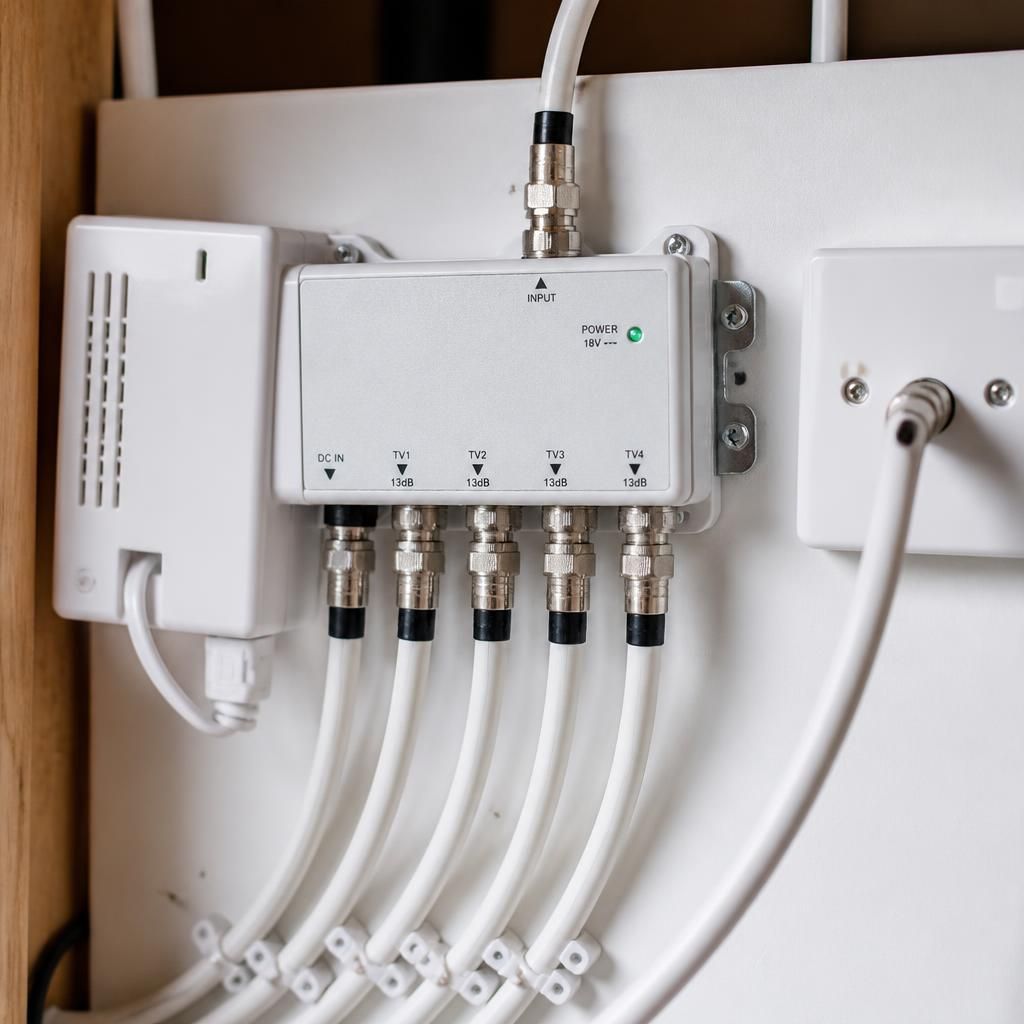
A multi-room aerial system allows each connected television to select its own channel from the shared terrestrial feed. The televisions are not locked to the same programme, provided each room has a correctly connected outlet and a compatible tuner or receiver.
This arrangement distributes the aerial signal rather than duplicating a television subscription or a particular receiver’s output. If a separate set-top box is used in one room, its menus and channel selection normally remain local to that room. The system should therefore be planned around the equipment intended for each outlet, including televisions, recorders and receivers.
Discuss your multi-room TV aerial installation
Contact RJW Electrical to discuss your multi-room aerial requirements and arrange a no-call-out-fee quote for your property.