
RJW Electrical
Can existing cables be concealed during TV installation?
Yes, existing TV, HDMI and network cables can often be concealed during a TV installation, subject to the wall construction, cable condition and the available route. They may be recessed into the wall, routed through a suitable conduit or concealed in a floor or ceiling void, while mains cables must be installed safely and in accordance with current wiring regulations.
Concealment is normally possible, but existing cables should only be buried after their condition, route and electrical classification have been checked. A neat finish depends on more than hiding the visible cable: the installation must remain safe, accessible where required and suitable for the equipment connected to it.
Before work begins, the cable route is assessed to identify what is already installed. This may include power leads, HDMI cables, aerial cables, speaker wiring and network cables. Their destinations, connector sizes and approximate lengths matter, particularly where a television is being repositioned or connected to equipment in a cabinet. A cable that is long enough for a surface-mounted television may not reach once it has been routed through a wall.
The wall itself also affects the available options:
- Stud or partition walls: cables can often be routed within the cavity, provided they are protected from fixings and kept clear of other services.
- Solid masonry walls: chasing may be needed for a recessed route, followed by suitable making-good. The depth and position of the chase must not weaken the wall or interfere with existing services.
- Plastered or finished walls: access can involve local disruption, and the final surface may require plastering and redecoration.
- Walls containing insulation or other obstructions: a conduit or alternative route may be more practical than attempting to pass cables directly through the wall.
Existing cables should not automatically be left loose inside a wall. Damaged, poorly terminated or unsuitable wiring may need replacing rather than concealing. Mains wiring requires particular care: it must be installed using an appropriate method, protected against damage and kept separate from low-voltage signal cables where necessary. Concealing an extension lead, trailing power cable or unsuitable connector inside the fabric of a wall is not an acceptable substitute for a properly installed supply.
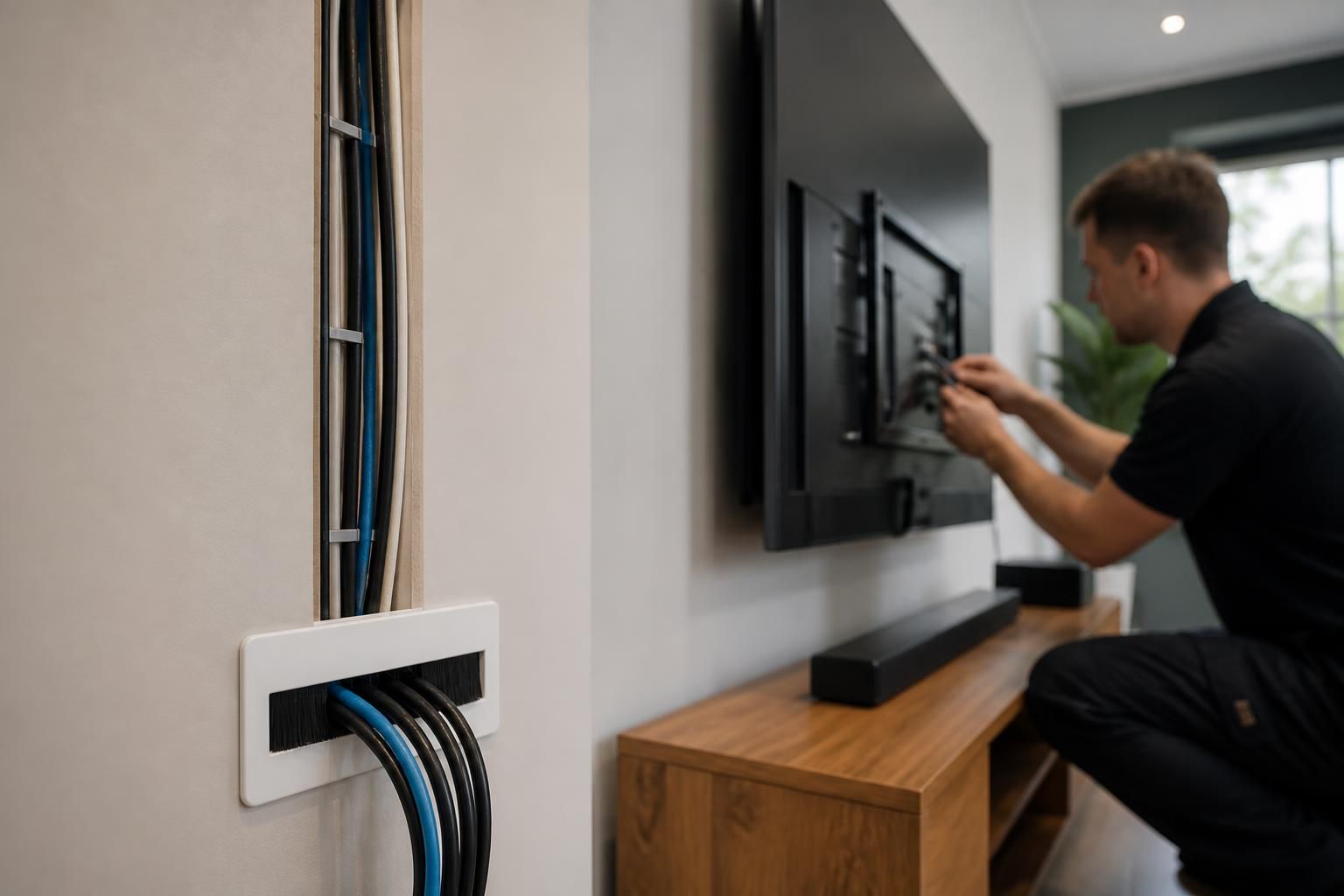
For HDMI, aerial, network and similar signal cables, conduit can provide a useful compromise. It offers a cleaner appearance while making it easier to replace or upgrade cables later. This is especially relevant where the television may be connected to changing equipment, higher-bandwidth video sources or a network connection. Conduit needs to be sized and routed sensibly; forcing large plugs through a narrow route can damage the cable or make future access impossible.
Where a cable enters or leaves the wall, the termination should be planned rather than hidden behind the television without thought. Suitable brush plates, faceplates or connection points can keep the installation tidy and reduce strain on plugs. Any equipment that generates heat should also have adequate ventilation, and cables should not be sharply bent behind a slim television or trapped by its bracket.
A professional installation will normally involve the following steps:
- Inspect the wall, existing cables and proposed television position.
- Confirm which cables can be reused and whether their length and specification are appropriate.
- Trace or establish the route, taking account of structural elements and other services.
- Choose a suitable method, such as a cavity route, conduit, recessed channel or an alternative concealed path.
- Install, protect and terminate the cables without placing stress on plugs or connections.
- Test the power and signal connections after the television and associated equipment are connected.
- Explain any remaining access points and complete or identify the required making-good.
Concealment can make a television installation considerably tidier, but it should not remove the ability to inspect or replace essential components. Before agreeing to the work, it is worth confirming whether the price includes cable replacement, faceplates, testing, chasing and making-good, as these are separate parts of the installation and may depend on what is found behind the wall.
RJW Electrical can assess the existing arrangement as part of a TV installation and advise whether reuse, rerouting or replacement is the most appropriate option. Electrical work is carried out by qualified engineers in accordance with current wiring requirements, with the final method selected for the particular wall, equipment and cable route.
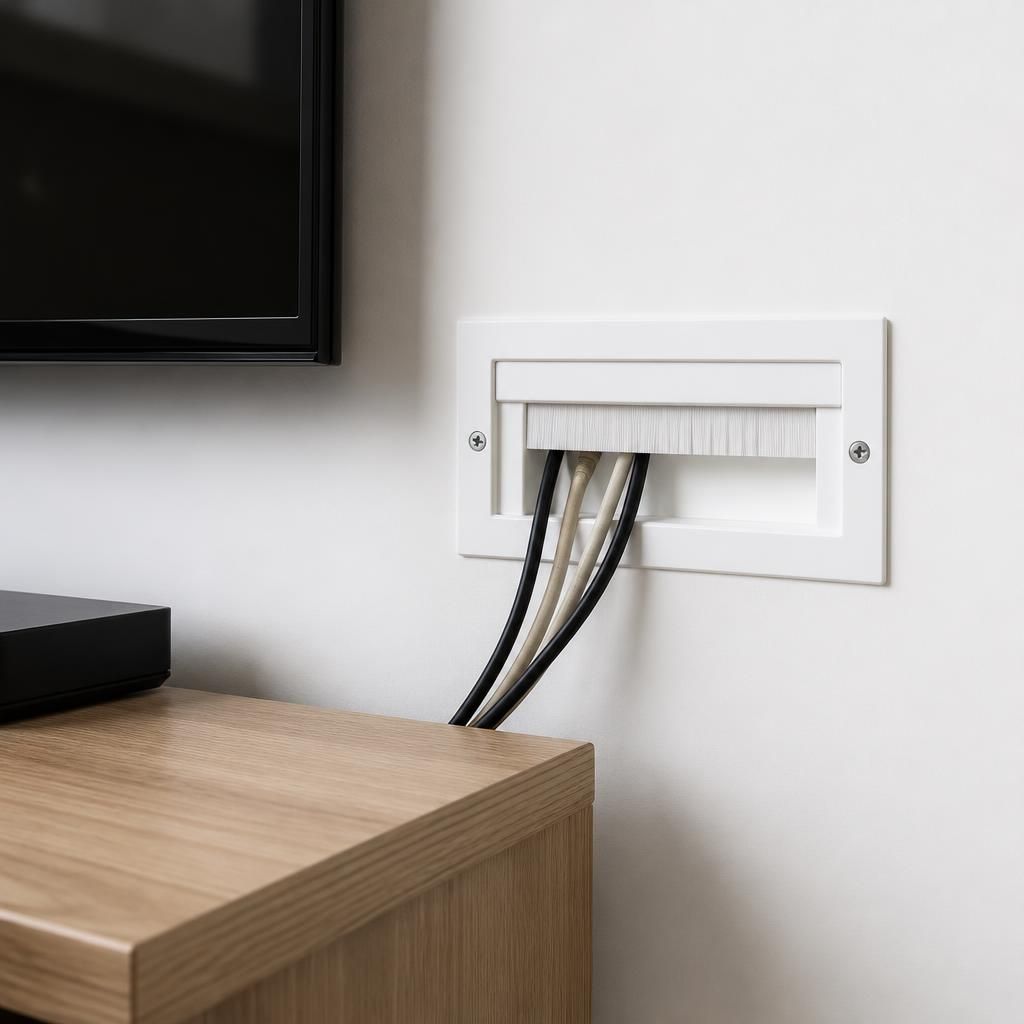
When cables pass through a stud wall, ceiling or floor, the opening must not compromise the building’s construction. In particular, a route through a fire-resisting partition may require suitable fire stopping around the penetration so that the wall or floor continues to perform as intended. The material used should be appropriate for the construction and the cables passing through it; ordinary filler or expanding foam is not automatically a suitable solution.
This is one reason concealed TV cabling should be planned as part of the wider installation rather than simply fed through the nearest available opening. The route, entry points and any required protection can then be selected without creating an unsafe or poorly finished penetration.
Discuss concealing your existing TV cables
Discuss concealing your existing TV cables with RJW Electrical and arrange an assessment of the proposed route, wall construction and equipment connections. You can request a no-call-out-fee quote before deciding on the most suitable installation method.