
RJW Electrical
Can a TV be mounted on any wall?
No, a TV cannot be safely mounted on every wall. The wall’s construction and condition determine the suitable fixings: masonry and timber-stud walls can usually support a bracket when correctly secured, while plasterboard, partition walls and walls containing cables or pipes require careful assessment and appropriate installation methods.
Most walls can support a television, but not every wall is suitable for direct fixing. A safe installation depends on the wall’s structure, the television and bracket’s combined load, the fixing points available, and the location of concealed electrical cables or pipework.
Solid masonry walls, such as brick or concrete, are generally suitable when the correct plugs, anchors and screws are selected for the substrate. The condition of the masonry matters: loose mortar, damaged brickwork, crumbling plaster or hollow blocks may not provide a reliable fixing. A suitable bracket should be secured into sound material rather than relying on the surface finish alone.
Stud and partition walls can also accommodate a mounted television, but the fixing method must match the internal framework. Ideally, the bracket is attached to one or more timber or metal studs. Where the bracket position does not align with the studs, a suitable reinforced mounting arrangement may be required. Hollow-wall fixings may be appropriate for some lightweight, fixed brackets, but they are not automatically suitable for heavier televisions or brackets that tilt, swivel or extend from the wall.
Plasterboard requires particular care. Plasterboard itself is a facing material, not normally the main structural support. The installer needs to establish what is behind it, how thick the board is, whether there is a cavity, and where the supporting framework is located. Dot-and-dab plasterboard over masonry presents a further issue because there may be a gap between the board and the wall; fixings must be long enough and selected so that the load is transferred safely to the masonry without crushing the board.
The television’s weight is only part of the calculation. A fixed bracket usually places less leverage on the wall than a full-motion bracket, which can project forwards and apply greater force to the fixings when the screen is moved. The bracket must be compatible with the television’s mounting pattern, often referred to as its VESA pattern, and its stated load capacity must be suitable for the screen. The wall, fixings and bracket should be considered as one system rather than assessed separately.
Some wall locations need additional checks before drilling:
- Walls containing electrical cables or pipework must be surveyed carefully to avoid damage.
- Chimney breasts and areas above fireplaces may have heat, flue or ventilation considerations that affect the suitable position.
- Tiled, heavily textured or fragile finishes may need specialist drilling techniques and appropriate spacers.
- External walls can contain insulation or damp-proofing details that should not be compromised.
- Walls with previous damage, hidden voids or uncertain construction should not be treated as standard masonry or plasterboard.
Position also affects the installation. The screen should be placed where it can be viewed comfortably without obstructing doors, windows, radiators or ventilation openings. The bracket needs enough clearance for its mechanism, and connections for power, aerial, network and other AV equipment should not be sharply bent or placed under strain. Any new or altered electrical work should be completed in accordance with the current wiring requirements.
A competent installer will normally identify the wall construction, locate suitable structural fixing points, check for concealed services, confirm the bracket and screen specifications, and inspect the finished mount for stability. If the wall cannot safely take the required load, alternatives may include a reinforced mounting panel, a different bracket, a floor-standing solution or a different position. RJW Electrical can assess the electrical and installation requirements for domestic and commercial TV and AV projects, with qualified engineers working to the 18th edition wiring regulations.
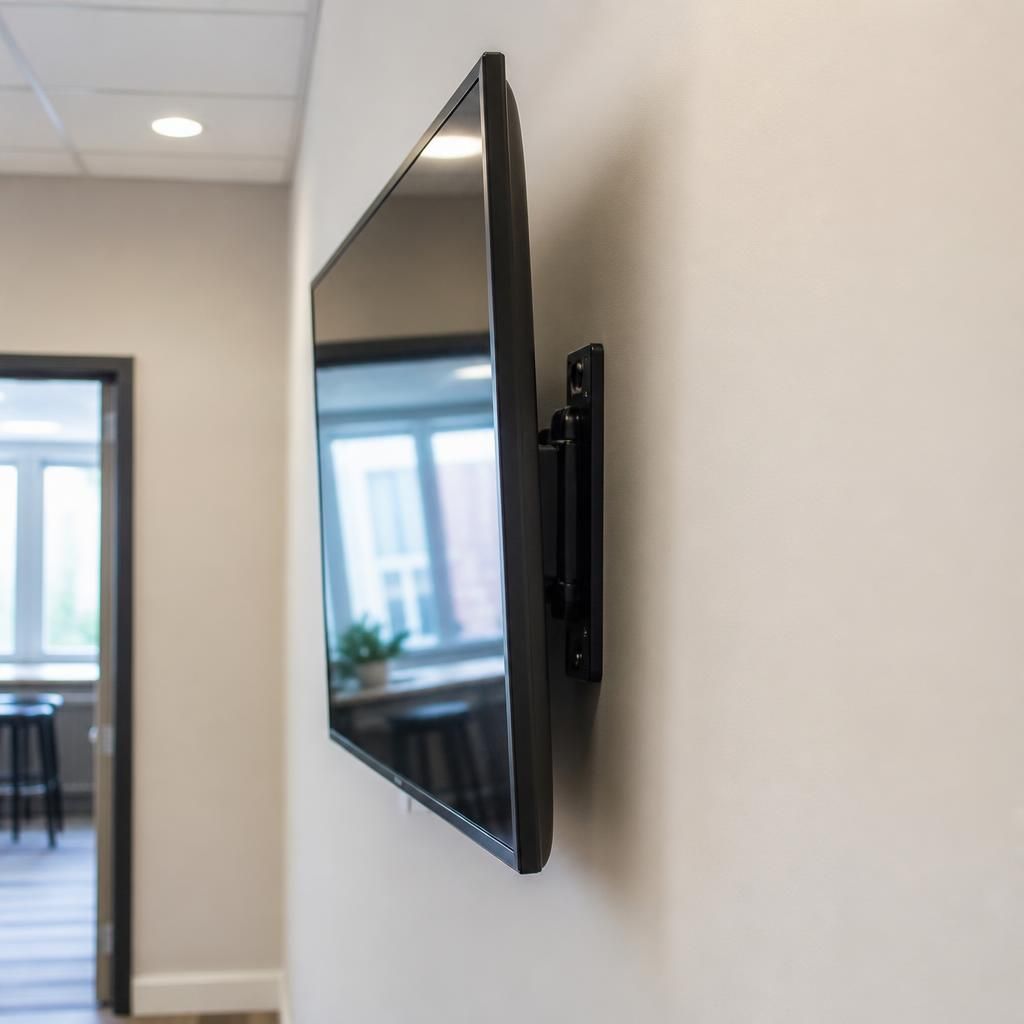
A wall may be physically strong enough for a television but still unsuitable for the proposed mounting position if the installation would obstruct access to electrical accessories, ventilation or other building services. This is particularly relevant in offices, reception areas and other commercial spaces, where the screen may need to remain accessible for maintenance and equipment changes.
Before drilling, consider how the television, bracket and connected equipment will be serviced in the future. A suitable installation should allow necessary connections to be reached without placing strain on cables or requiring avoidable removal of the screen. Where these requirements cannot be met, repositioning the television or using a floor-standing display solution may be more appropriate than mounting it directly to the wall.
Arrange a TV wall-mounting assessment
If you are unsure whether your chosen wall can support a television, contact RJW Electrical to arrange a TV wall-mounting assessment and receive a No Call Out Fee Quote.