
RJW Electrical
When is a solar panel upgrade necessary?
A solar panel upgrade is necessary when the system’s output has fallen, components are ageing or damaged, or the existing electrical installation cannot safely support additional generation or storage. A qualified inspection and testing process can identify whether the appropriate solution is replacement panels, updated control equipment, improved protection, or remedial electrical work.
A solar panel upgrade is necessary when the existing system can no longer deliver its intended performance, when key equipment is no longer suitable, or when the installation needs to be altered to support additional generation, battery storage or electrical demand safely. The correct remedy depends on the cause: an upgrade may involve panels, the inverter, protection and control equipment, cabling, monitoring, or associated electrical work rather than replacing the entire system.
Falling output is an important warning sign. A gradual reduction in generation may indicate ageing equipment, panel degradation, inverter problems, shading changes or a fault within the installation. However, low output does not automatically mean that the panels need replacing. Before specifying an upgrade, the system should be assessed against its original design, recent generation records and the conditions affecting the array. Persistent underperformance, unexplained changes between panels or repeated inverter faults all justify further investigation.
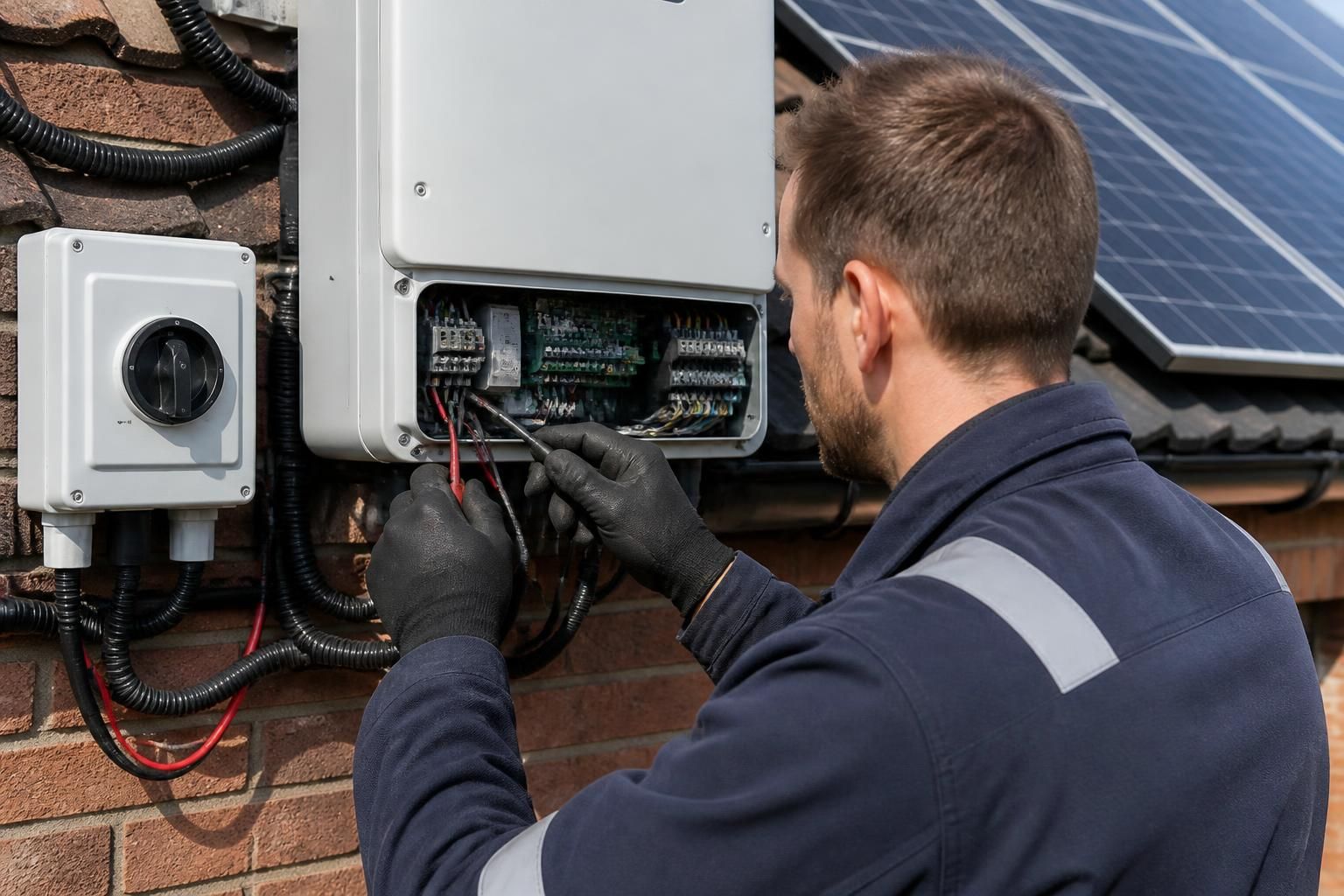
An upgrade should also be considered where the system contains obsolete or unreliable control equipment. The inverter converts the panels’ direct current into alternating current for use within the property, so a fault or limitation in this unit can affect the whole installation even when the panels remain serviceable. Problems with monitoring equipment, isolation devices, protection or connection points can have a similar effect. Replacing one part may restore suitable operation, but compatibility with the existing panels, wiring and protection must be checked first.
Visible damage requires a safety assessment rather than a cosmetic repair. Cracked panels, damaged frames, loose components, deteriorated cable insulation, water ingress, signs of overheating or insecure mounting can affect both performance and electrical safety. Storm damage, building work and changes to the roof may also leave an array unsuitable for continued use. Do not remove panels, disconnect cables or attempt to inspect live equipment yourself, as solar circuits can remain energised in daylight.
The electrical installation may need upgrading if it was designed before the solar system was added, or if further equipment is now being connected. Additional panels, a battery, an electric vehicle charger or other substantial loads can alter the demands placed on the consumer unit, cabling and protective devices. An assessment should establish whether the existing installation has adequate capacity, earthing, isolation and overcurrent protection, and whether the arrangement remains suitable under current wiring requirements.
Signs that the wider installation needs attention can include:
- protective devices operating unexpectedly;
- heat, discolouration, burning smells or buzzing from electrical equipment;
- inverter shutdowns or fault indications that keep recurring;
- exposed, loose or poorly supported solar cabling;
- inconsistent readings between the generation meter, inverter and monitoring system; and
- an absence of suitable isolation or labelling following earlier alterations.
Some apparent performance problems have simpler causes. New shading from trees, extensions or nearby construction can reduce generation without a fault in the panels. Dirt, bird fouling, damaged connectors and monitoring failures can also create misleading readings. These possibilities should be eliminated through inspection and testing before replacement equipment is selected. Upgrading panels without correcting shading, cabling or control faults may not resolve the underlying problem.
A system may require an upgrade when the property’s energy use has changed. A household or commercial premises that now uses more electricity during the day may benefit from a revised system design. Battery storage can change how generation is managed, while an electric vehicle charger or other new load may require a review of supply capacity and protective arrangements. The appropriate solution is not necessarily a larger array; it may be improved control, storage, rewiring or a combination of measures.
Age and condition should be considered together. Equipment that has been in service for a long period may still be suitable if it passes inspection and performs correctly, while a relatively recent installation may need remedial work after damage or poor alterations. A qualified assessment should review the panels, mounting system, inverter, DC and AC cabling, isolation, earthing, protective devices, labelling and connection to the property’s electrical installation.
Testing should be carried out after remedial work or an upgrade to confirm that the altered system is safe and operating as intended. This can include checks on continuity, insulation resistance, polarity, protective measures, earthing and the operation of relevant equipment. Records should identify what was inspected, what work was completed and whether any restrictions or further recommendations remain. Where the design or connection has materially changed, the relevant notification and approval requirements should also be considered.
The most appropriate upgrade therefore depends on evidence from inspection and testing. A qualified electrical contractor can distinguish between a panel replacement, inverter replacement, repair to cabling or protection, a revised system design and a wider electrical installation upgrade. RJW Electrical provides assessment and electrical installation support for domestic and commercial properties, with qualified engineers working to the latest 18th edition wiring regulations. A no call out fee quote can be requested before deciding whether remedial work or replacement is appropriate.
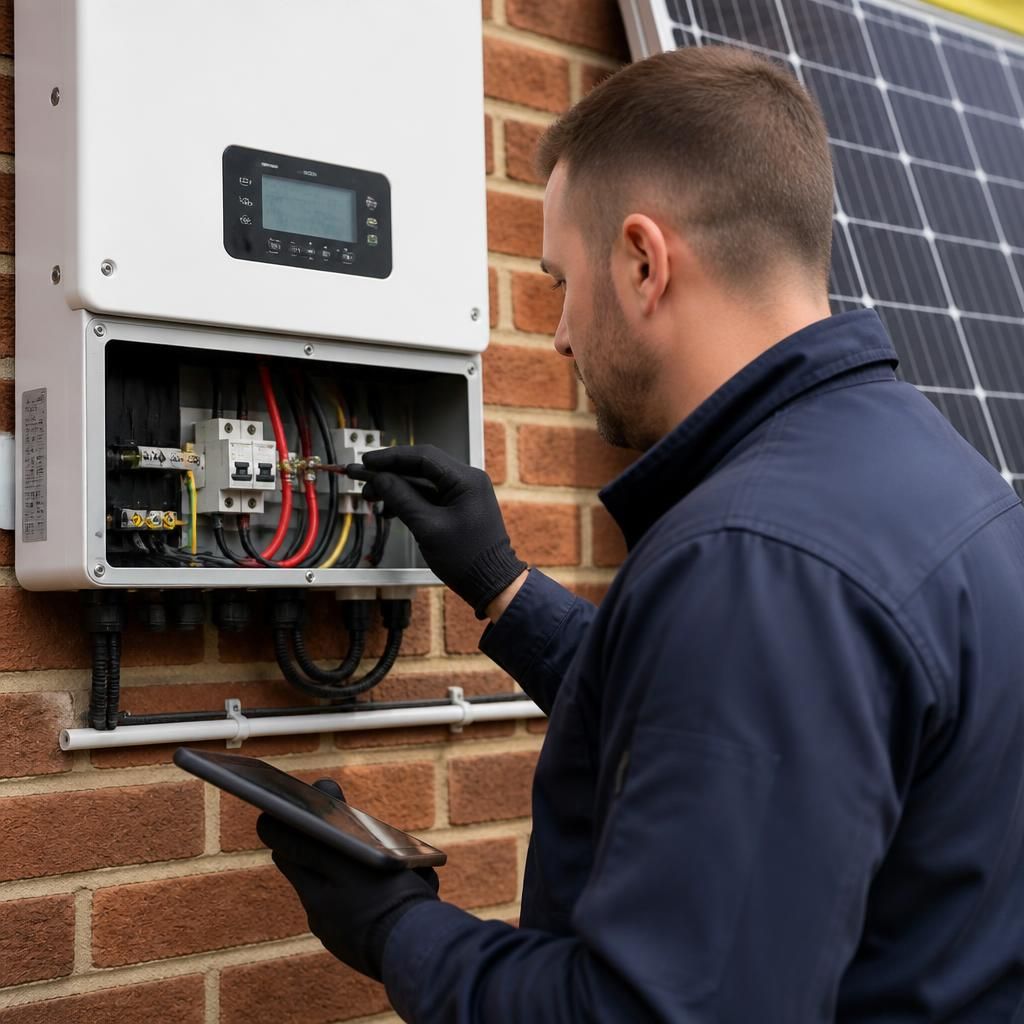
A solar panel upgrade may be necessary when the system’s design limits prevent it from making effective use of available generation. For example, an inverter may restrict the output from an array during periods of strong sunlight, or an export-control setting may limit how much electricity can be sent to the grid. These limitations do not automatically mean that the panels are faulty, but they can indicate that the inverter, control equipment or system design needs review.
Before any equipment is changed, the installer should compare the array size, inverter rating, export settings and recorded operating data. The aim is to identify the limiting component and confirm that any alteration remains compatible with the existing wiring, protection and connection arrangements. In some cases, updating control equipment is more appropriate than replacing otherwise serviceable panels.
Find out whether your solar panel system needs an upgrade
If you are unsure whether your solar panel system needs upgrading, arrange a qualified inspection to identify the cause and assess the safest solution. RJW Electrical can provide a no call out fee quote for assessment and any required electrical work.