
RJW Electrical
What testing is required after solar panel installation?
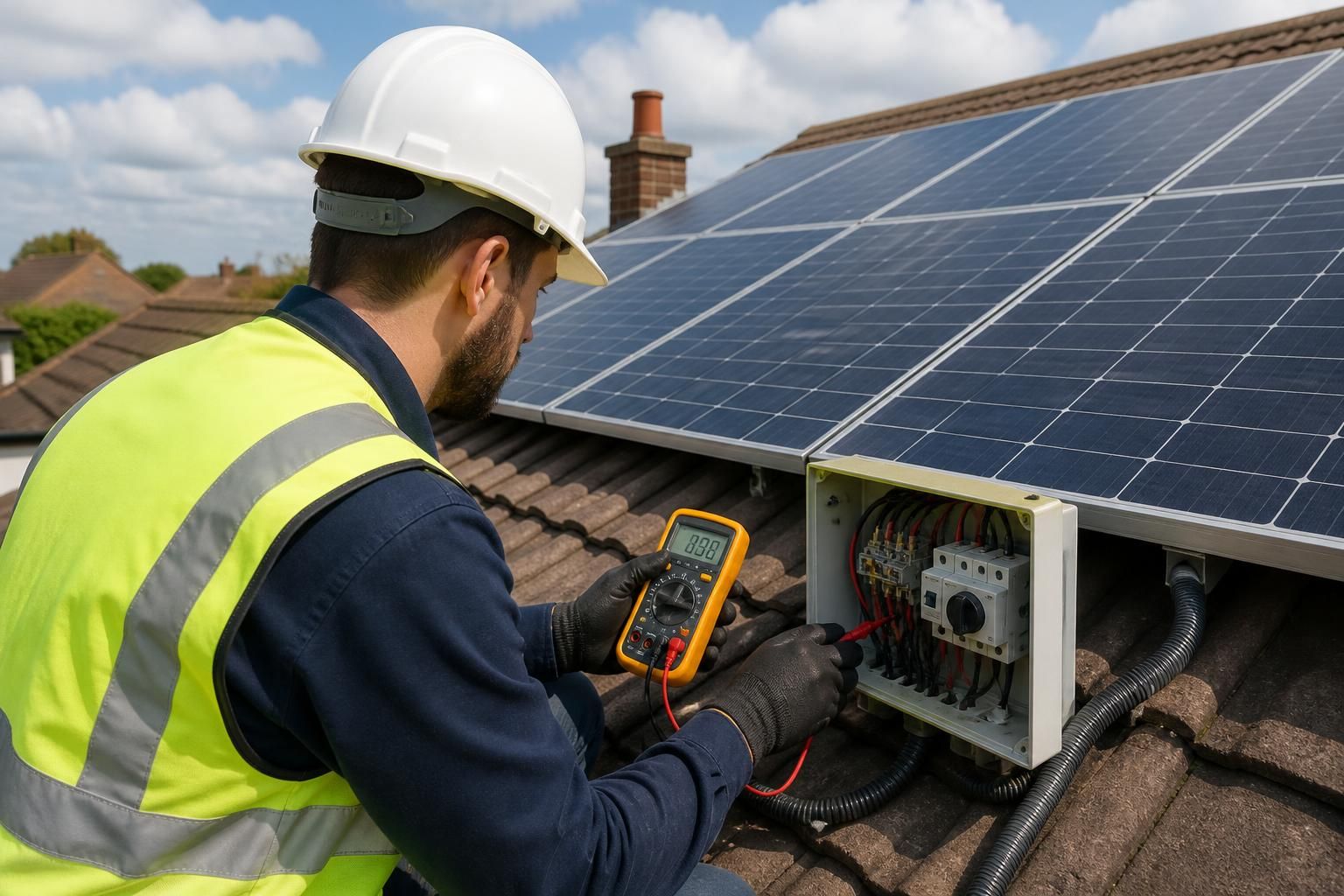
After a solar panel installation, the system should undergo electrical inspection and testing on both the DC and AC sides. This normally includes checks such as continuity, polarity, insulation resistance, earthing, protective devices, inverter operation and system performance, with the results recorded in the commissioning documentation.
Testing after a solar panel installation is the formal verification that the completed system has been installed correctly, interfaces safely with the property’s electrical installation and is ready to operate as designed. It should cover the workmanship, equipment configuration, protection arrangements, documentation and handover, rather than relying solely on the inverter starting up.
The inspection should begin with the completed installation. The engineer checks that the panels, mounting arrangement, cables, connectors, isolators, inverter and any associated equipment have been installed in accordance with the design and the manufacturer’s instructions. Particular attention is given to:
- the condition, routing and support of DC and AC cables;
- connectors and enclosures, including protection against water ingress and mechanical damage;
- the positioning and accessibility of isolating devices;
- the identification and labelling of circuits, switches and equipment;
- the condition of the roof-level installation and any visible signs of damage; and
- the connection between the solar system, consumer unit and wider electrical installation.
These visual checks can identify issues that an electrical measurement alone may not reveal, such as poorly supported cables, unsuitable enclosures, missing warning labels or inadequate segregation from other circuits.
Testing should also confirm that the protection and control arrangements are suitable. This includes checking that the inverter has been configured for the intended connection and that its protective functions operate appropriately. Where relevant, the engineer will consider the suitability of overcurrent protection, residual current protection, isolation facilities and surge protection. The existing consumer unit and supply arrangement may need particular attention because the solar installation becomes part of the property’s wider electrical system.
The engineer should verify that the inverter responds correctly to the conditions expected during normal operation and that it disconnects or ceases to energise the installation when the required conditions are no longer present. The exact procedure depends on the equipment and the design. Any battery storage, export limitation equipment, generation meter or monitoring hardware included in the system should be checked as part of the same commissioning process.
Performance checks are separate from safety verification. A system may be electrically safe but still have a performance problem caused by shading, incorrect configuration, a communication fault, a damaged module or an issue with the inverter. Commissioning should therefore include confirmation that the array is producing as expected for the available conditions, that the inverter displays the correct operating information and that monitoring or export-control equipment communicates correctly where fitted. A single output reading is not proof of long-term generation, since sunlight, temperature, shading and the time of day affect the result.
Testing is normally carried out against the requirements applicable to the installation, including BS 7671 and the relevant requirements for photovoltaic systems. The installer should use suitable calibrated test equipment and record actual results, not simply mark each item as satisfactory. The results provide a useful baseline for future fault finding, maintenance or inspection.
The handover documentation is an important part of completion. Depending on the installation and the work carried out, the customer should receive relevant records such as:
- an Electrical Installation Certificate or other appropriate electrical certificate;
- schedules of inspections and test results;
- solar PV commissioning information;
- details of the equipment installed and its settings;
- operating, shutdown and maintenance instructions;
- information about monitoring systems and any battery equipment; and
- confirmation of any required notification or compliance process.
The documentation should identify the circuits and equipment tested, the person responsible for the inspection, the date of testing and any limitations or outstanding work. If a defect is found, the installation should not simply be treated as complete because the inverter operates. The defect should be assessed, corrected where necessary and the relevant verification repeated.
It is also sensible to retain the commissioning records with the property’s electrical documents. They can help a future electrician understand the system, identify the original design assumptions and compare later readings with the installation’s initial condition. Any alteration to the solar array, inverter, consumer unit, battery or associated cabling should be followed by appropriate inspection and testing rather than relying on the original certificate.
Testing should be completed by a suitably competent electrical professional familiar with solar PV systems and the interaction between generation equipment and the existing installation. For a domestic or commercial property, RJW Electrical can advise on the inspection and testing requirements for the completed electrical work and explain what the resulting certification records show.
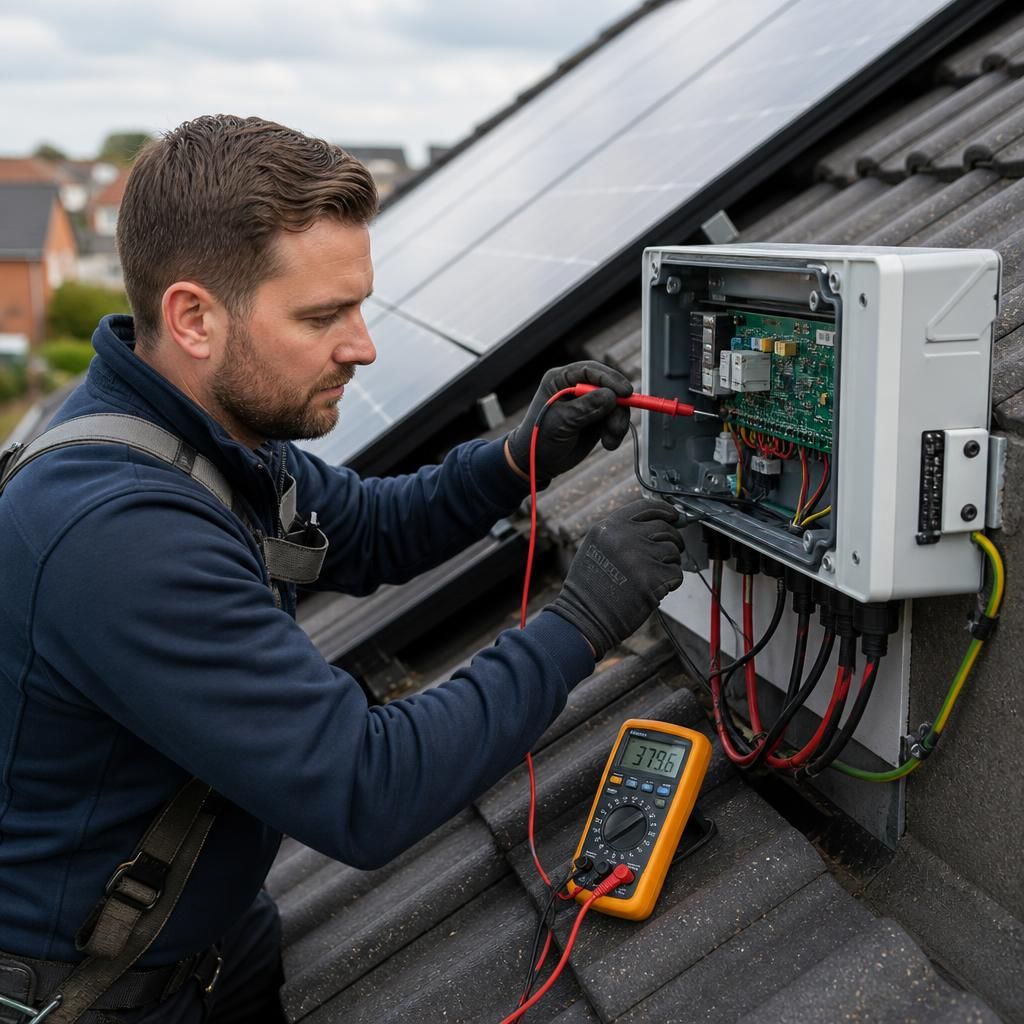
Solar installation testing must account for the fact that photovoltaic panels can generate DC voltage whenever they are exposed to light. Turning off the inverter does not necessarily make the array-side wiring safe to handle, so the engineer must follow a controlled isolation procedure and verify the condition of the circuit before carrying out any work.
Test instruments must also be connected in the correct sequence. Inappropriate insulation or continuity testing through an inverter, battery system or monitoring equipment could damage sensitive components or produce misleading results. The installer should therefore follow the equipment manufacturer’s instructions, isolate connected devices where required, and then complete the relevant electrical and functional checks before returning the system to service. This approach helps ensure that the recorded results relate to the installation itself rather than being affected by connected electronic equipment.
Discuss your solar panel installation testing requirements
For advice on the inspection and certification needed for your solar installation, speak to RJW Electrical about your project. You can request a no-call-out-fee quote based on the work required.