
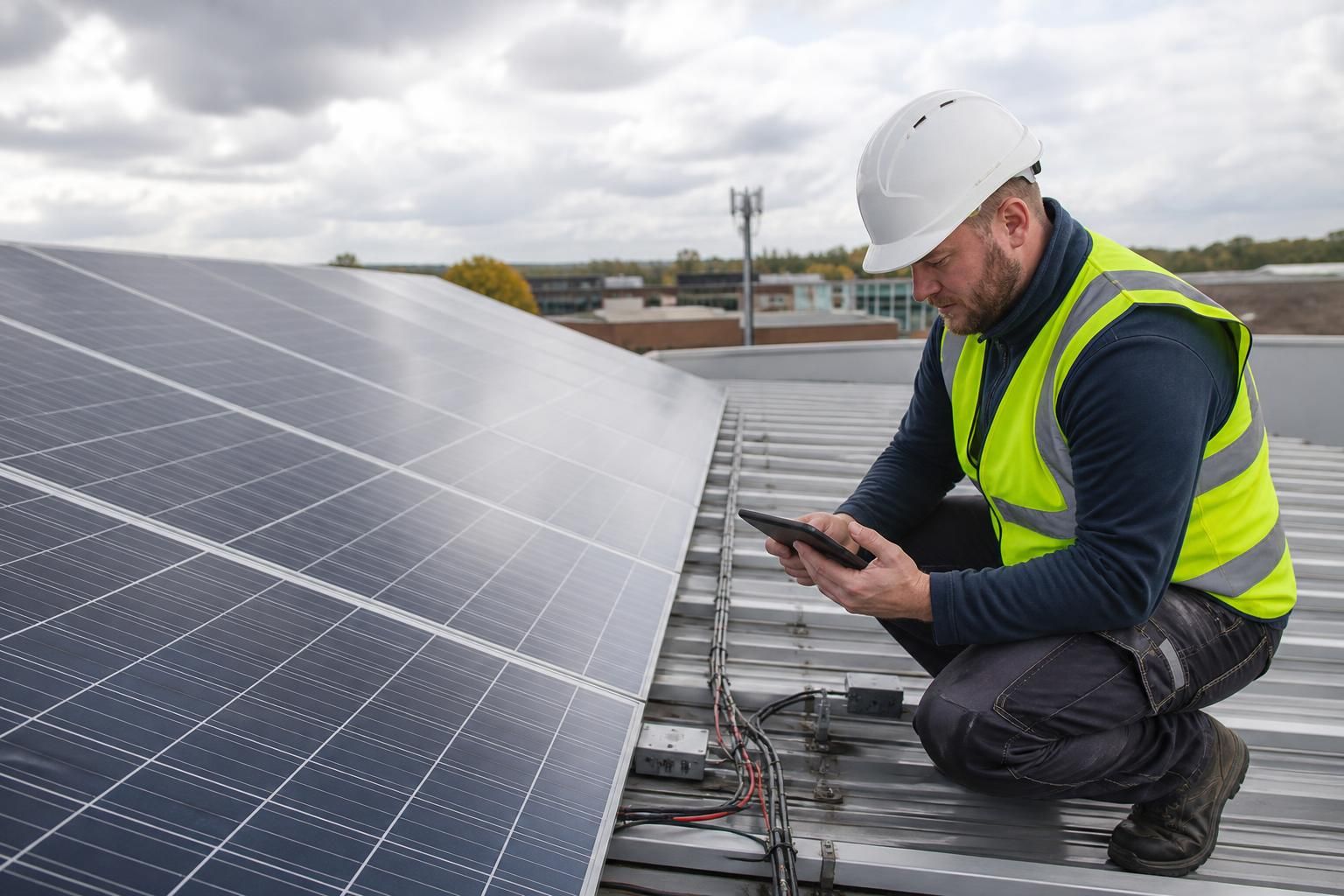
RJW Electrical
What should a solar panel installation risk assessment examine?
A solar panel installation risk assessment should examine electrical hazards, the condition and strength of the roof, safe access and work at height, weather exposure, fire risks, and potential harm to occupants or other workers. It should also set out suitable control measures, including isolation procedures, safe equipment use, fall protection and emergency arrangements.
A solar panel installation risk assessment is a documented review of the specific property, proposed system and installation method, used to identify foreseeable hazards and decide how they will be controlled. It should go beyond a general checklist by considering the building, the electrical design, the people affected and the work sequence from delivery through to commissioning and future maintenance.
Scope and site conditions
The assessment should define exactly what is being installed and which areas of the property are involved. This may include the panels, mounting system, inverter, isolators, cabling, monitoring equipment and, where relevant, battery storage. It should record the type and use of the building, access routes, nearby structures, roof features, plant, overhead services and any areas that could restrict installation or maintenance.
Domestic premises, offices, warehouses and other commercial buildings can present different risks. The assessment should account for occupants, visitors, tenants, delivery personnel and other contractors who may be present. It should also consider whether the work could affect business operations, shared access routes, fire exits, parking areas or neighbouring properties.
Electrical design and interaction with the existing installation
A key part of the assessment is checking how the proposed generation system will connect to the property’s existing electrical installation. This includes considering the consumer unit or distribution board, available capacity, protective devices, earthing and bonding arrangements, cable routes, isolation points and the effect of generation on existing circuits.
The assessment should identify the risks associated with direct current and alternating current separately. Solar arrays can remain electrically live in daylight, while the inverter and associated equipment introduce additional sources of supply. The design should therefore make clear how each part of the system can be isolated, how isolation will be verified and how the possibility of back-feed will be controlled during installation, testing and maintenance.
It should also consider the suitability of protective devices and residual current protection for the equipment being installed. Any limitations or defects found in the existing installation should be recorded rather than assumed to be resolved by the solar work. Where remedial electrical work is needed, that work should be clearly identified within the project scope.
Equipment, materials and installation methods
The assessment should examine the proposed components and how they will be handled, assembled and secured. Relevant considerations include the mass and dimensions of equipment, lifting arrangements, manual handling, sharp edges, tools, temporary supports and the storage of materials before installation.
It should identify how cables will be protected from abrasion, crushing, heat, movement and accidental damage. Cable routes should be assessed for their proximity to other services and for the need to maintain suitable separation, mechanical protection and clear identification. Penetrations through walls or other parts of the building should be planned so that they do not create avoidable routes for water ingress, damage or unauthorised access.
Where an inverter, battery or other electrical equipment is located internally, the assessment should consider ventilation, ambient conditions, clearance around the equipment, access for inspection and the consequences of placing it near combustible materials or occupied areas. Manufacturer instructions and relevant installation requirements should form part of the planning evidence.
Hidden hazards and vulnerable building materials
Before work begins, the assessment should consider whether asbestos-containing materials, fragile surfaces, concealed services, lead-based materials or other hazardous substances may be present. Older buildings and commercial premises may contain materials that cannot be safely disturbed without further investigation.
Information from the property owner, previous surveys, drawings and visual inspection should be reviewed. If the location or condition of a material is uncertain, the safe approach may be to obtain additional information before drilling, fixing, cutting or routing cables. The assessment should state what must happen if an unexpected material or service is discovered during the work.
Work sequence and coordination
Risks can change as the installation progresses, so the assessment should consider the order of activities rather than only the finished system. It should cover delivery, unloading, preparation, fixing, electrical connection, testing, removal of temporary equipment and handover.
Responsibilities should be clear where more than one contractor is involved. The assessment should explain how information will be shared, how changes to the design will be authorised and who can stop the work if conditions differ from those assessed. A method statement, site briefing and suitable supervision can translate the assessment into practical controls.
Protection of the property and surrounding area
The assessment should consider damage that could result from drilling, fixing, moving equipment or routing cables. It should address protection of finishes, stored goods, vehicles, landscaping and drainage, as well as the containment of dust and debris. On commercial sites, controls may also be needed around loading bays, machinery, customer areas and operational plant.
It should identify how tools, materials and waste will be managed so that they do not obstruct routes or create additional hazards. The condition of the work area should be checked throughout the installation, particularly where members of the public or other trades could approach it.
Testing, commissioning and handover
The risk assessment should include the hazards associated with inspection, testing and energisation. This includes confirming that isolation arrangements work as intended, preventing unauthorised operation, checking that the system is labelled correctly and ensuring that test equipment is suitable for the circuit under examination.
Completion records should identify the installed equipment, test results, protective measures, isolation points and any restrictions or outstanding actions. The property owner or responsible person should receive information needed for safe operation, routine inspection and future maintenance. Labels and documentation are particularly important because solar equipment can introduce more than one source of electrical supply.
Review and control of changing conditions
A risk assessment should be reviewed if the design changes, additional equipment is added, the installation location differs from the original plan or site conditions become unsuitable. It should also be revisited after an incident, near miss or discovery of an unanticipated hazard.
For a reliable assessment, the controls should be specific enough for the people carrying out the work to follow. Generic statements such as “take care” do not explain what must be done. A suitable document identifies the hazard, who could be harmed, the control measure, the person responsible and the point at which the control must be checked.
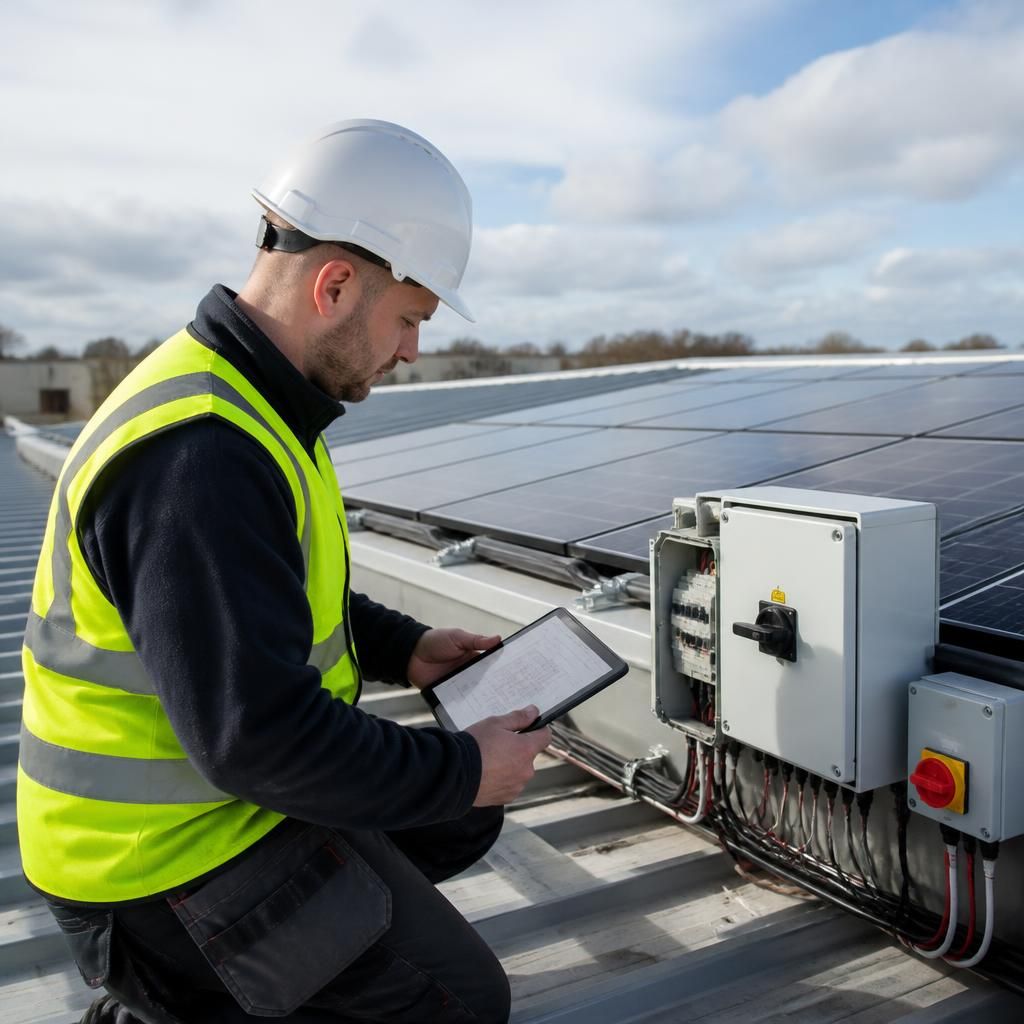
Weather and environmental conditions should be assessed because they can change the safety of solar panel installation work. The assessment should consider wind affecting panels, fixings and lifting operations; rain or frost making surfaces slippery; heat and sunlight affecting workers and equipment; and the possibility of lightning during work on an exposed roof.
It should define when activities must be paused, how materials will be secured, and how unfinished work will be left safe if conditions deteriorate. The assessment should also consider whether water, dust or temperature could affect electrical equipment, temporary connections or testing. These controls should be checked on the day of the work rather than relying solely on the original site assessment.
Discuss your solar panel installation risk assessment
If you need a site-specific review of the hazards associated with a proposed solar panel installation, discuss the project with RJW Electrical and request a no-call-out-fee quote.