
RJW Electrical
Can solar panels be added to an existing electrical installation?
Yes, solar panels can usually be added to an existing electrical installation, provided the system is assessed for safety, capacity and compatibility. The installation may require testing, remedial work or upgrades before the solar photovoltaic system and its associated protection equipment can be connected.
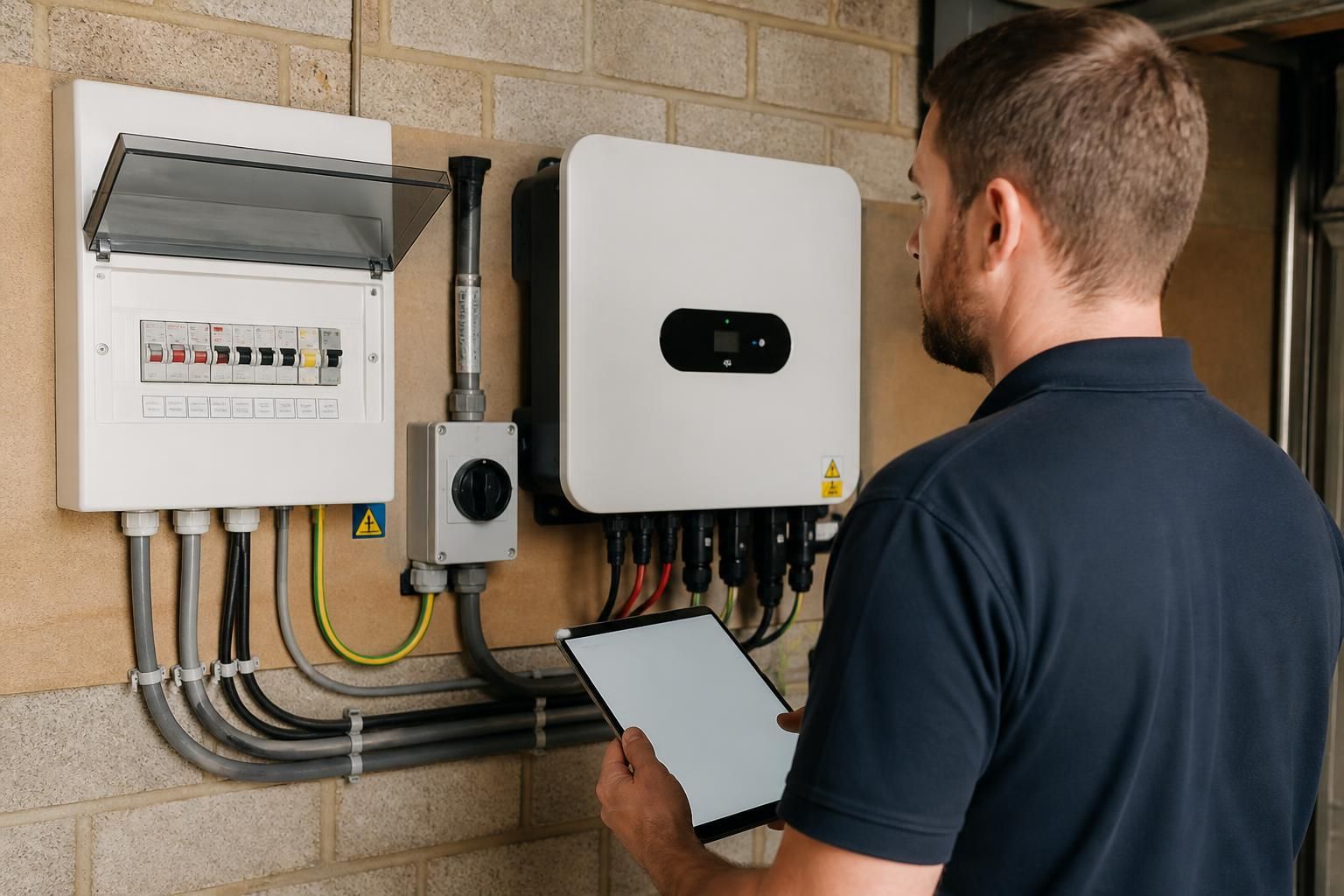
The key issue is whether the existing installation can safely accommodate the solar photovoltaic system and the additional generation current. An electrician must assess the installation as a whole rather than connect the inverter to an available spare way in the consumer unit.
Checks normally include:
- the condition, age and type of the consumer unit, including its main switch, protective devices and available capacity;
- the rating and condition of the meter tails, distribution cables and proposed AC connection;
- earthing and bonding arrangements, including whether they remain suitable for the proposed equipment;
- the presence and suitability of RCD or RCBO protection, where required by the design;
- the results of inspection and testing, including insulation resistance, polarity, continuity and earth fault loop impedance;
- the existing electrical load and any other generation, battery storage or high-demand equipment connected to the installation; and
- the route, protection and accessibility of the cables between the inverter and the connection point.
An older consumer unit may not provide the level of protection required for a new solar installation. In some cases, the unit can be adapted with suitable protective equipment. In others, replacement is the more appropriate option, particularly where the enclosure, internal wiring, earthing arrangement or existing devices are unsuitable or deteriorated.
The property's supply characteristics also matter. The installer needs to consider the incoming supply, maximum demand, prospective fault current and the effect of the inverter on the installation. Cable sizing must account for the current produced by the system, installation conditions, volt drop and fault protection. These calculations cannot be confirmed from the solar panel rating alone.
Where the existing installation does not meet the required standard, remedial work may be needed before the solar system is connected. This could include replacing damaged cables, correcting bonding or earthing defects, improving protective-device arrangements, installing a suitable consumer unit or separating circuits that are not adequately protected. The work should be completed and tested before the photovoltaic equipment is energised.
The connection must also follow the applicable distribution-network requirements. Depending on the equipment and installation, the network operator may require notification or approval before connection. The installer should establish the correct process rather than assuming that an existing electricity supply can accept any size of generation system.
After installation, the completed system and the associated existing circuits should be inspected and tested. Results should be recorded in the appropriate electrical certification, with details of the system, protective devices, test results and any limitations or recommendations. A clear handover should also explain the isolation arrangements and the operation of the inverter and monitoring equipment.
Solar panels therefore do not automatically require a complete rewiring of an existing property. The decision depends on the condition and design of the installation, the proposed system and the findings from inspection and testing. A suitably qualified electrician can identify compatibility issues early and specify any necessary remedial work before installation proceeds.
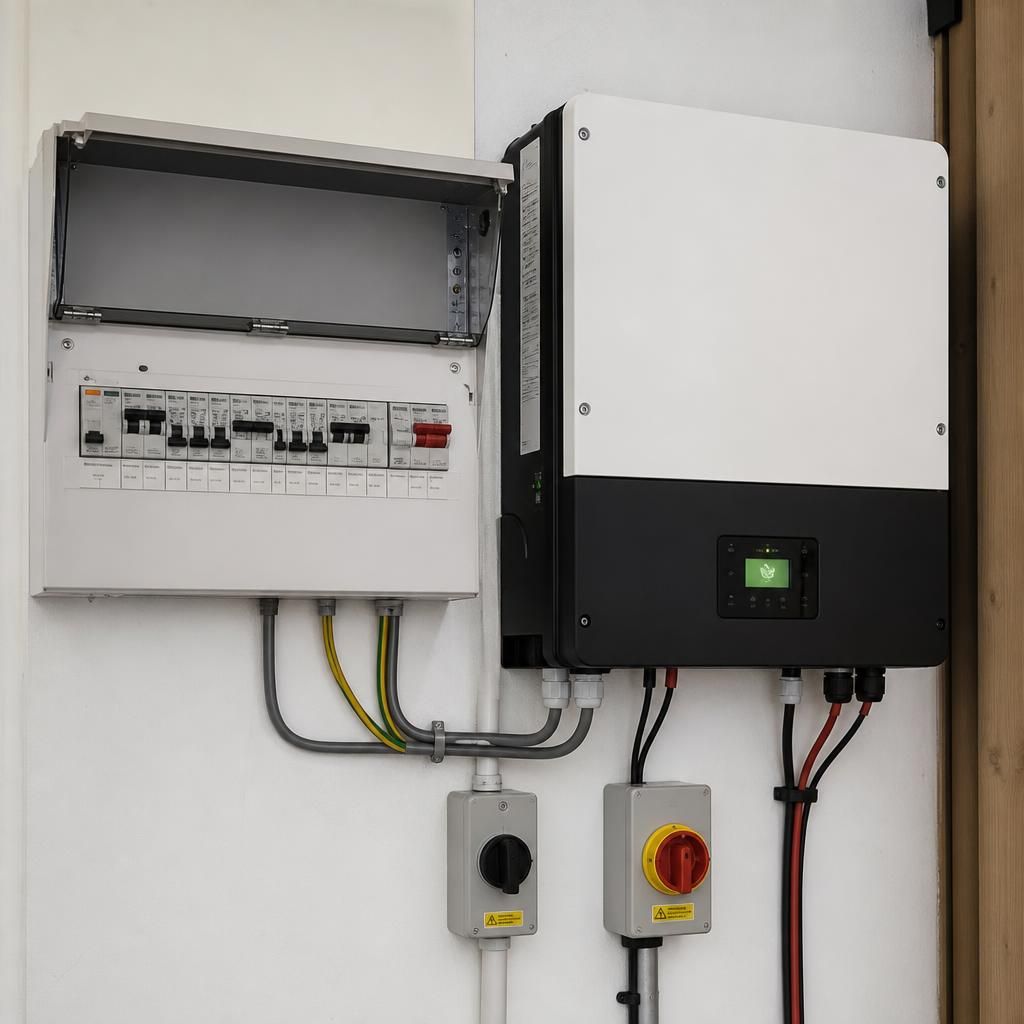
Adding solar panels does not simply extend the existing wiring: it introduces a generation source that can remain energised while the panels are receiving light. The installation must therefore provide clear, safe isolation for both the direct-current side between the panels and inverter and the alternating-current side connected to the property.
This is particularly important during future electrical work, maintenance or fault-finding. Isolation points should be accessible, clearly identified and suitable for the equipment installed. Labels and circuit schedules should show that the property has more than one potential source of supply, so that an electrician does not assume that switching off the main consumer unit has made every part of the system safe.
A proper handover should explain:
- which isolators control the panels, inverter and connection to the installation;
- how the system should be shut down before work is carried out;
- which warning labels and notices relate to the solar equipment; and
- where the system documentation and electrical certification are kept.
This operational information is an important part of adding solar panels to an existing electrical installation. It helps ensure that the new equipment can be understood and worked on safely alongside the property's original circuits.
Arrange an assessment for adding solar panels
Contact RJW Electrical to arrange an assessment of your existing electrical installation before solar panels are added.