
RJW Electrical
Can smart-home controls be added to an existing electrical installation?
Yes, smart-home controls can often be added to an existing electrical installation without replacing all the wiring. An electrician should first assess the circuit configuration, consumer unit, available connections and compatibility of the chosen controls before recommending wired, wireless or hybrid installation options.
Existing wiring can usually support smart-home controls, but the suitability of the installation depends on the equipment selected and the condition of the circuits. A qualified electrician will check how the lighting, sockets, heating controls or other equipment are wired before deciding whether the system can be added directly, connected wirelessly or installed as a combination of both.
Wired, wireless and hybrid options
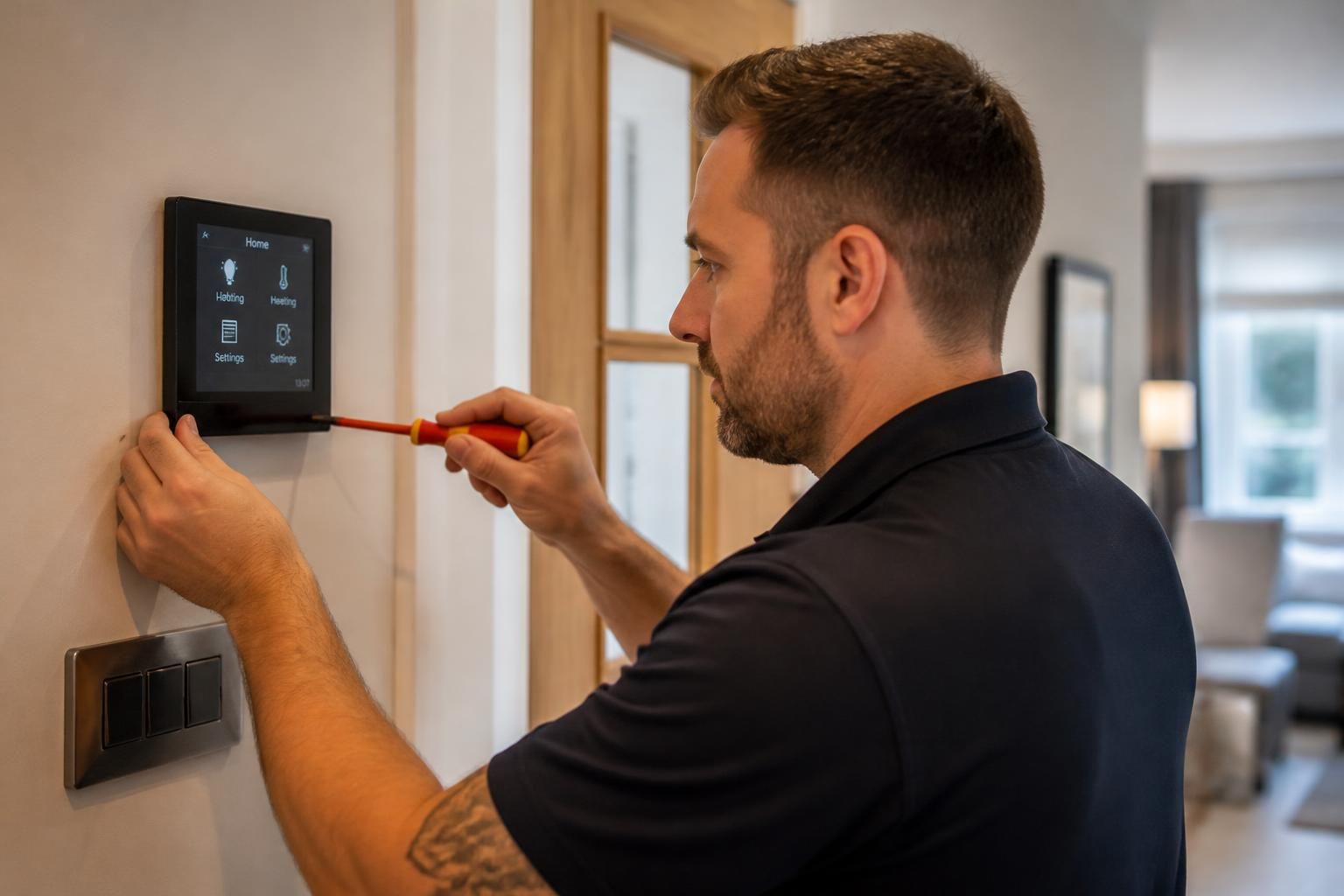
- Wired controls: These use the existing electrical infrastructure, with compatible switches, relays, sensors or control modules installed on the relevant circuits. They can be appropriate where reliable communication and fixed control points are important.
- Wireless controls: These communicate using radio or a home network, reducing the need to alter walls or install additional control cables. They still require safe electrical connections where equipment is powered from the mains.
- Hybrid systems: These combine wired power and control components with wireless sensors, applications or supplementary switches. This can be useful when some parts of an installation are easy to adapt but extending cables would be disruptive.
The existing wiring does not automatically determine which option is possible. Compatibility also depends on the control method, the load being switched, the presence of a neutral conductor at a switch position, the available space for modules and the communication requirements of the chosen system.
What is checked before installation?
An inspection should establish how the relevant circuits are arranged and whether they are correctly identified. The electrician may need to check the consumer unit, circuit protection, earthing and bonding, cable condition, connections, switch drops and the amount of space available behind accessories or within enclosures. Any defects, damaged accessories, unsuitable alterations or overloaded circuits should be addressed before smart controls are added.
Lighting circuits can present particular compatibility issues. Some smart modules require a neutral conductor, while older switch arrangements may only contain switched live conductors at the wall switch. In other cases, the electronic control may not operate correctly with a very low-wattage LED fitting or may require a compatible load interface. These points should be confirmed from the equipment's technical instructions rather than assumed from the appearance of the existing switch.
Heating controls, ventilation equipment, security devices and energy-management equipment each have their own connection and isolation requirements. A control that is suitable for lighting should not be presumed suitable for a heating circuit or another fixed appliance. The electrician should verify the control rating, switching method and manufacturer requirements before making any connection.
Will the whole installation need rewiring?
Not normally. A full rewire may be unnecessary where the existing circuits are in sound condition, adequately protected and compatible with the intended controls. Rewiring or partial rewiring may nevertheless be appropriate if inspection identifies obsolete cable types, inadequate protection, poor previous alterations, insufficient conductors or circuits that do not meet current safety requirements.
Sometimes a smaller change is more suitable than replacing an entire circuit. This might involve fitting a compatible module at an accessible point, replacing a switch with a suitable smart accessory, adding a correctly protected supply or using wireless control where additional cabling would create unnecessary disruption. The safest solution is determined by the installation rather than by whether a device is described as wireless.
Safety and testing considerations
Smart controls remain part of the electrical installation, even when they are operated through an application or connected over a home network. Installation work should include appropriate isolation, inspection and testing of the affected circuits. Testing can identify issues such as polarity errors, inadequate earth continuity, insulation faults or protective devices that are not suitable for the circuit.
Control equipment should also be installed where it can be accessed safely for inspection, resetting or replacement. Concealing a module in an inaccessible location can make future maintenance more difficult. Enclosures must provide suitable protection, and connections should not be left unsupported or placed where heat, moisture or mechanical damage could affect them.
What happens if the network fails?
A well-planned installation should consider local control as well as app-based operation. Depending on the system, lights or other equipment may continue to operate from physical switches even if the internet or home network is unavailable. This behaviour varies between systems, so it should be established before installation rather than assumed.
Where smart controls are connected to electrical safety equipment, access systems or other important services, the design should include appropriate fallback arrangements. Network configuration, device positioning and signal strength can affect operation, but they do not replace correct electrical installation and testing.
How the work is normally planned
- Identify the functions to be controlled and the locations where control is required.
- Inspect the relevant circuits, accessories, consumer unit and cable arrangements.
- Confirm equipment compatibility, electrical ratings, control requirements and any network dependencies.
- Decide whether the installation should be wired, wireless or hybrid, including any necessary alterations.
- Install, configure and test the controls, then explain normal operation and any limitations to the user.
For domestic or commercial premises, an existing electrical installation can therefore be adapted in many cases without replacing all its wiring. The important step is a site-specific assessment: it establishes whether the current circuits are safe and suitable, which components can be retained, and where additional work is needed for the smart controls to operate reliably.
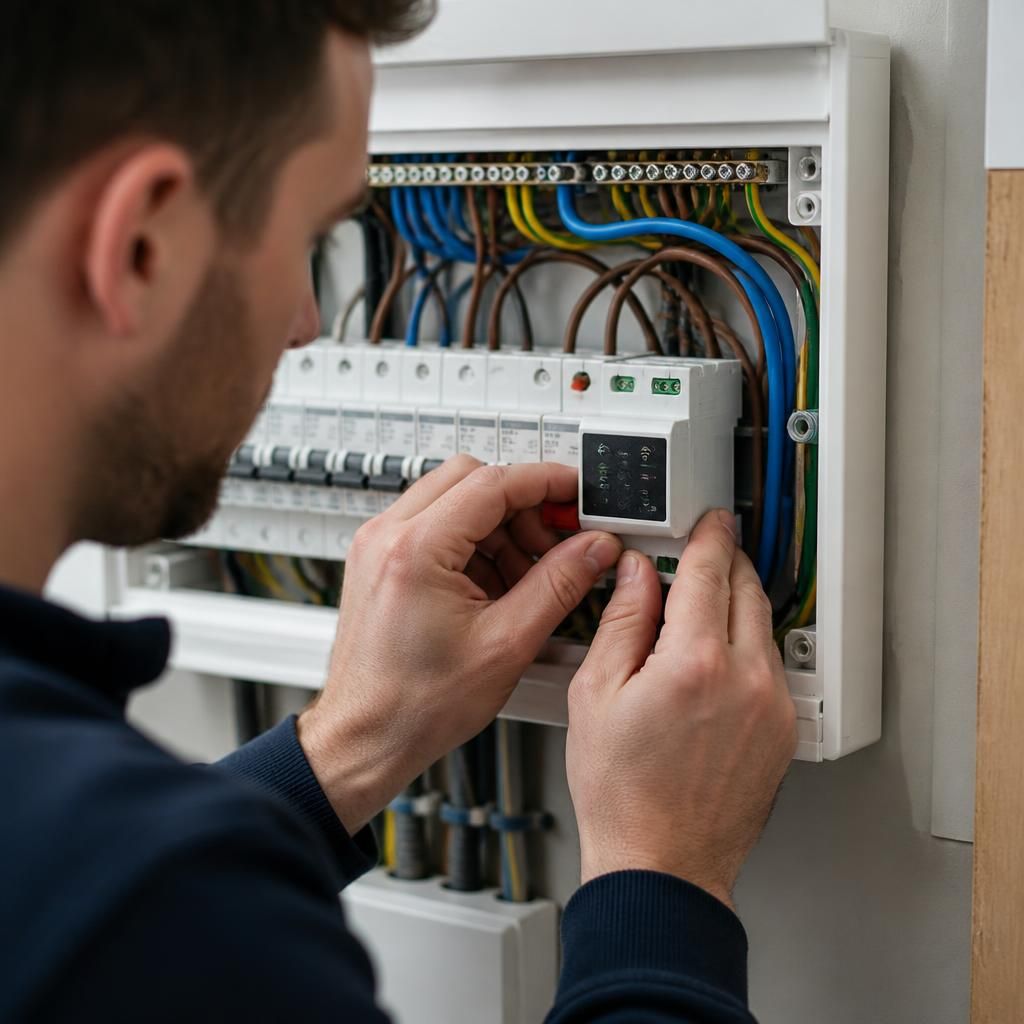
Smart-home controls can be added to an existing electrical installation in stages, rather than fitted throughout the property at once. A phased approach allows each selected circuit or function to be assessed, adapted and tested before further controls are introduced.
For example, a project may begin with lighting in key areas, followed by heating, energy-management equipment or other compatible devices. This approach helps identify how the controls interact with the existing installation and gives the property owner a clearer basis for deciding whether further additions are worthwhile.
Each stage should be recorded so that the location of modules, altered circuits, isolation points and control dependencies are clear for future inspection. Any later work can then be planned around the documented installation instead of relying on assumptions about concealed wiring or previously fitted equipment.
Discuss Adding Smart-Home Controls to Your Existing Installation
If you are considering adding smart-home controls, contact RJW Electrical to discuss your existing installation and the options available. A suitable quotation can then be prepared around the controls and circuits you want to adapt.