
RJW Electrical
Can a Myenergi installer integrate EV charging with smart-home controls?
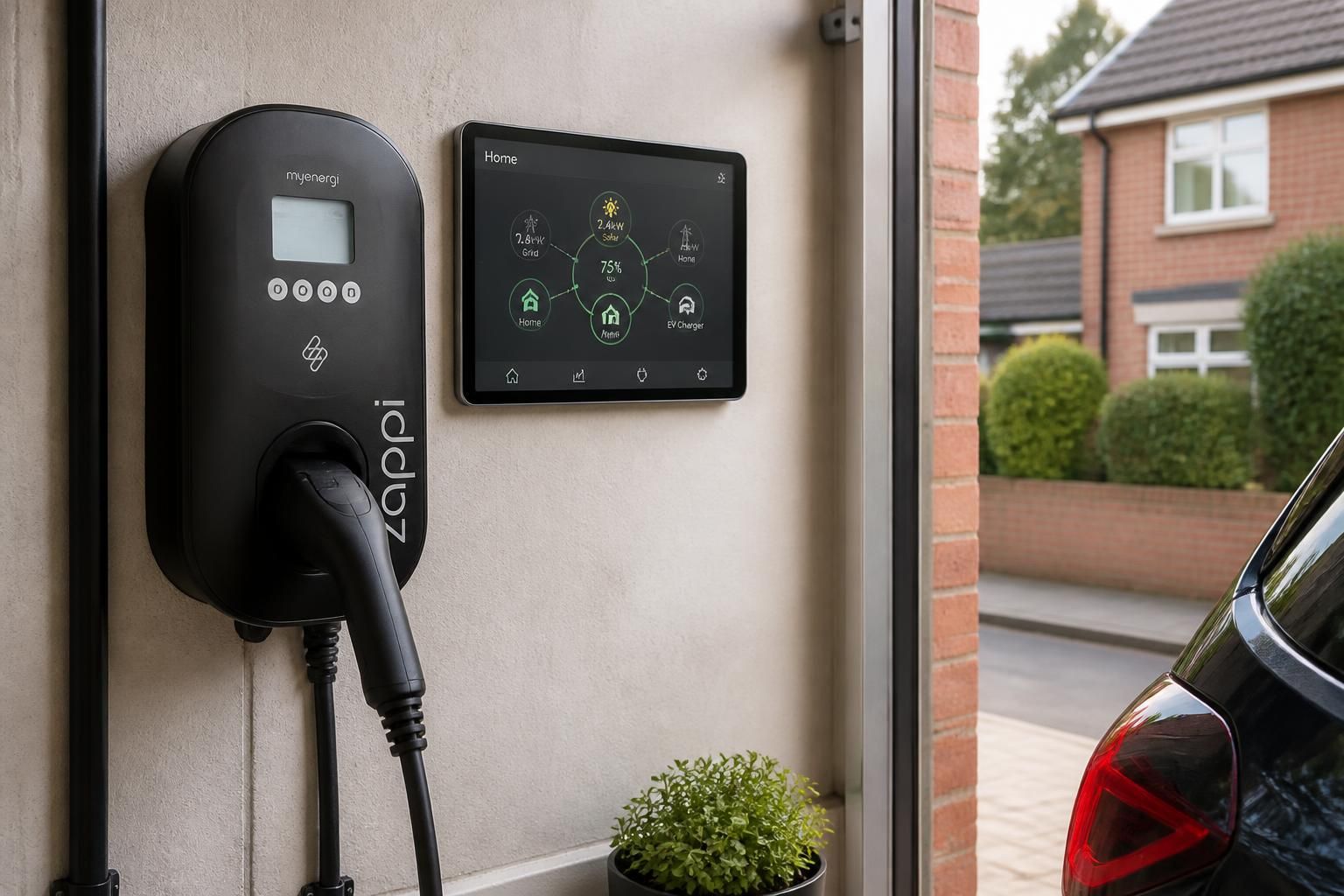
Yes. A Myenergi EV charger can be integrated with compatible smart-home controls, provided the existing electrical installation, control platform and connectivity are assessed for compatibility. RJW Electrical can plan the electrical connections and integration so the charger can be managed as part of the wider smart-home system.
Yes. A Myenergi EV charger can form part of a smart-home control system when the charger model, electrical installation, control platform and communications arrangements are compatible. The integration may allow charging to be scheduled, paused or adjusted through an approved smart-home interface, but the charger’s built-in safety functions and the electrical installation must remain the primary controls.
The first stage is to establish what the smart-home system is expected to do. Common requirements include:
- setting charging schedules to suit household routines;
- starting or stopping a charge through an app or central control interface;
- co-ordinating charging with other significant electrical loads;
- using available renewable generation where the system supports that function; and
- displaying charging status alongside other home energy information.
Not every smart-home platform can control every Myenergi function. Compatibility can depend on the charger model, firmware, supported integration method and whether the control system communicates locally or through a cloud service. A proper design therefore checks the manufacturer’s current integration information rather than assuming that a generic smart-home hub can operate the charger.
There are several possible approaches. A platform may have a direct integration, allowing it to exchange approved commands and status information with the charger. In other installations, a supported API or gateway may provide the connection between the charger and the wider automation system. A hardwired control arrangement may also be relevant in particular designs, although this must be specified carefully because an EV charger is a high-load appliance and should not be treated like a conventional lighting circuit.
The electrical assessment is separate from the software assessment. RJW Electrical would consider the consumer unit, available capacity, cable route, protective devices, earthing and bonding, isolation, and the proposed charger location. The design must account for the charger’s continuous load as well as other equipment that may operate at the same time. Where the existing installation cannot support the proposed arrangement, the solution may require alterations before smart controls are added.
Smart-home controls should issue permitted operating commands; they should not bypass the charger’s safety systems. Protection against fault conditions, temperature-related issues and other charging risks remains essential. Load management can be used where supported and correctly designed, but it must not be configured in a way that causes nuisance tripping, excessive demand or unsafe switching. Any automated control equipment connected to the installation must also be installed, tested and documented appropriately.
Connectivity needs consideration during commissioning. If the broadband connection, wireless network or cloud service is unavailable, the charger should have a sensible fallback mode rather than leaving the installation dependent on an automation command. The design should clarify which functions remain available at the charger itself, which require the app or smart-home platform, and how charging can be resumed after a communication failure. Network coverage at the charger location may need improvement before integration is attempted.
Access permissions are also important. The installer should establish who can change schedules, alter charging behaviour or access energy data. For a domestic system, this may involve separating household user access from installer settings. In a commercial property, additional consideration may be needed for staff permissions, facilities management and records of changes. Keeping the charger, control hub and relevant applications updated can help maintain compatibility, but updates should be checked if the installation relies on a particular integration.
Commissioning should test both the electrical and control sides of the system. This can include verifying protective measures, confirming charger operation, checking commands from the smart-home interface, testing scheduled behaviour, observing the response when another major load operates, and confirming the fallback behaviour if connectivity is interrupted. The final handover should explain the control hierarchy, user settings, reset procedures and any limitations of the integration.
A Myenergi installer can therefore integrate EV charging with smart-home controls, but the result should be treated as an engineered electrical system rather than simply an app connection. A written quotation should distinguish the charger installation, electrical alterations, communications equipment, software integration and commissioning, so that the proposed scope and any compatibility limitations are clear before work begins.
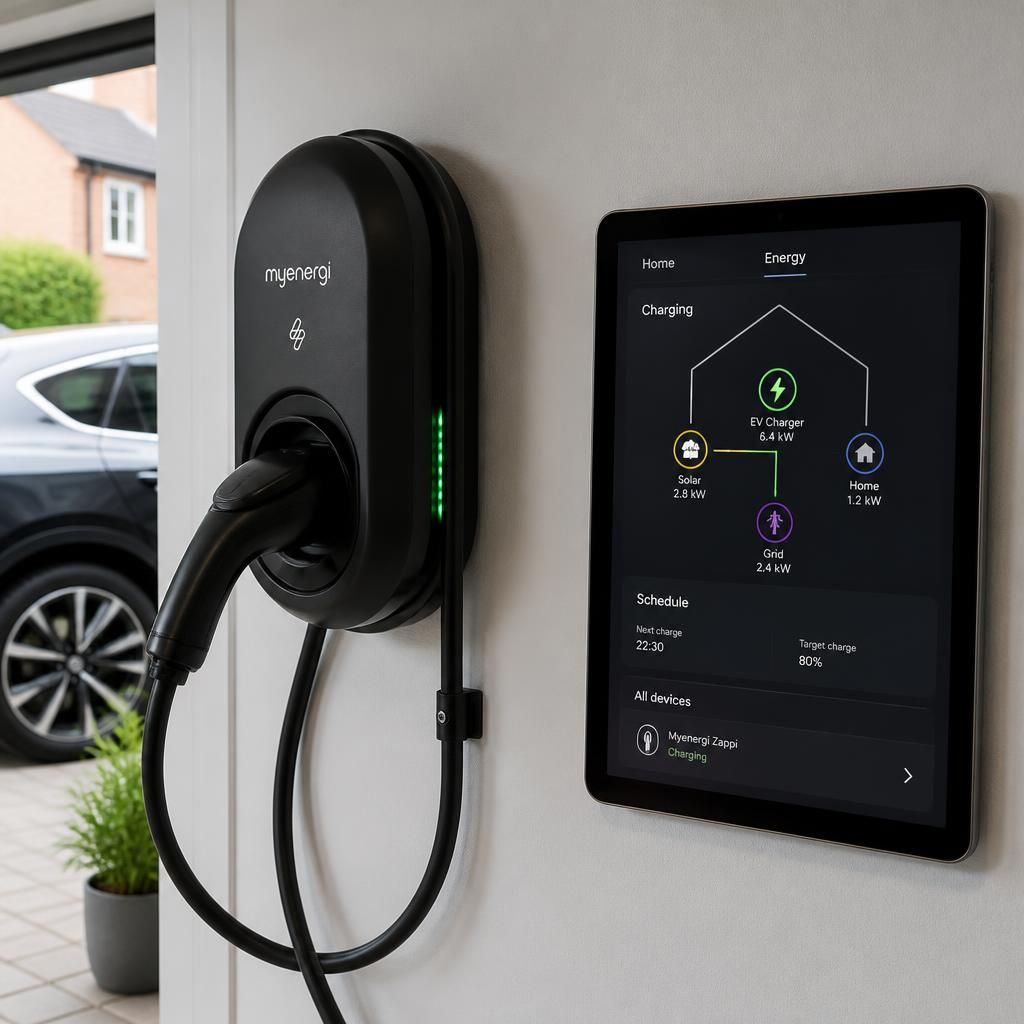
A successful Myenergi integration should have one clearly defined source of truth for charging schedules. If settings can be changed in the charger, its app and a separate smart-home platform, conflicting commands may result in unexpected charging behaviour. The installation should therefore document which system has priority, where schedules are maintained and how temporary overrides are applied.
This arrangement also makes the system easier to manage after handover. Users can identify the correct interface for routine changes, while installer-level settings remain protected from accidental alteration. Where a smart-home platform provides monitoring but not full charging control, that limitation should be explained rather than presenting the integration as more capable than it is.
Plan Your Myenergi Smart-Home Integration
If you are considering Myenergi integration with smart-home controls, contact RJW Electrical to discuss your existing system, charging requirements and proposed control arrangements. A clear quotation can then separate the electrical installation, integration work and commissioning involved.