
RJW Electrical
Should electrical work be repaired, replaced, or upgraded?
Electrical work should be repaired when the fault is isolated and the existing installation remains safe and compliant; replacement is more appropriate where equipment is damaged, deteriorated or no longer suitable. An upgrade may be the right option when the installation is serviceable but needs greater capacity, improved protection or new functionality, based on inspection and testing.
Electrical work should be repaired when the fault is limited and the rest of the installation remains suitable; it should be replaced when equipment or wiring is damaged, unsafe or beyond economical repair. An upgrade is appropriate when the installation is fundamentally sound but needs improved capacity, protection, efficiency or functionality. The correct option cannot be determined reliably from the visible symptom alone. Inspection and testing are needed to identify the cause, assess the condition of associated circuits and confirm whether the proposed work will comply with current requirements.
When repair is usually appropriate
A repair may be suitable where the defect is localised and the surrounding installation is in satisfactory condition. Examples include replacing a damaged accessory, correcting a loose connection, repairing a section of cable affected by mechanical damage, or resolving a fault caused by a failed protective device. The repair should address the underlying cause rather than simply restore power.
For example, a circuit breaker that trips may have developed a fault, but repeated resetting is not a repair. Testing may show a defective appliance, damaged cable, insulation breakdown, an overloaded circuit or a problem with the protective device itself. Replacing the breaker without investigating the reason for the trip could leave the underlying hazard unresolved.
When replacement is more suitable
Replacement is generally considered where an item is physically damaged, has deteriorated through age or environmental conditions, is showing signs of overheating, or is no longer compatible with the rest of the installation. It may also be more appropriate where a component has failed repeatedly or where a repair would be temporary and uneconomical.
- Burn marks, melting, cracking or heat damage around accessories can indicate that replacement and further testing are required.
- Frayed, perished or exposed cable insulation should not be treated as a cosmetic issue.
- Water ingress, corrosion or contamination can affect the safety of equipment even when it still appears to operate.
- Older consumer units, switches or protective devices may not provide the level of protection expected for the present installation and its use.
- Repeated faults in the same part of a system may indicate that replacing the individual component will not resolve the wider problem.
Replacement does not necessarily mean replacing an entire installation. A competent assessment should distinguish between an individual component, a circuit, a consumer unit and a complete rewiring project. The extent of replacement should reflect the actual condition and risk identified.
When an upgrade is the better option
An upgrade improves an installation that may still function but no longer meets the demands placed upon it. This can involve adding circuits, increasing capacity, improving earthing and bonding, installing additional protective devices, replacing outdated accessories or providing infrastructure for new equipment.
Common reasons for upgrading include a property extension, conversion of a room, installation of electric vehicle charging equipment, additional kitchen appliances, new lighting arrangements, security equipment or changes to the way a commercial premises is used. An installation may appear fault-free while still lacking the capacity or protection needed for these additions.
An upgrade should be planned as part of the wider installation rather than treating each new item in isolation. Factors include the available supply, maximum demand, cable sizes, circuit loading, protective-device coordination, earthing arrangements, voltage drop and the environment in which the equipment will operate. These checks help determine whether an existing circuit can be extended safely or whether a new circuit is required.
How the decision is assessed
- Establish the reported problem. The symptoms, affected equipment, operating conditions and history of previous faults are recorded.
- Inspect the installation. Visual checks can identify damaged accessories, poor connections, unsuitable enclosures, overheating and other obvious defects.
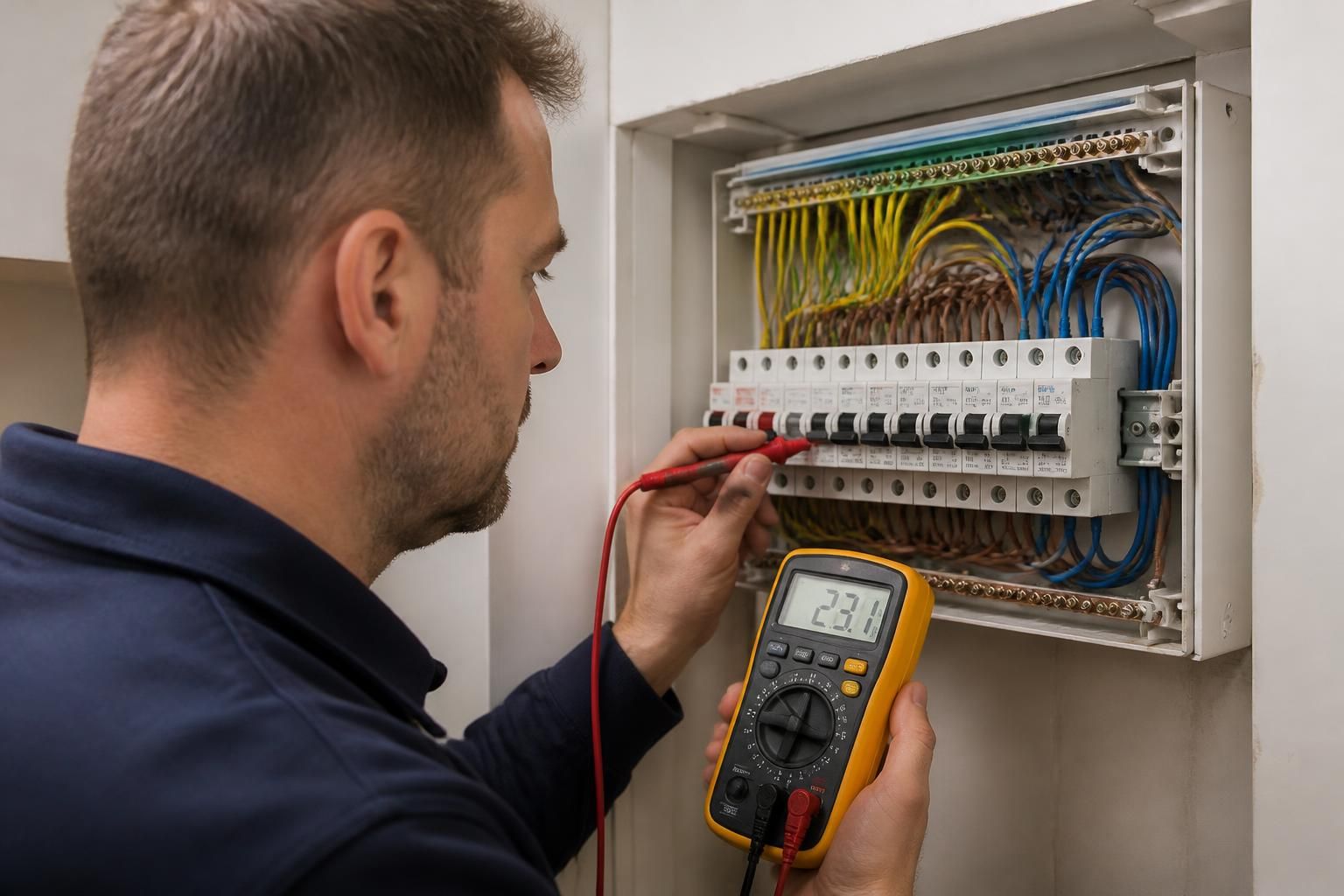
- Test relevant circuits and equipment. Testing may include continuity, insulation resistance, polarity, earth fault loop impedance and operation of protective devices, where appropriate to the installation.
- Assess compliance and suitability. The condition of the installation is considered against the current 18th edition wiring requirements and the way the property is being used. An older installation is not automatically unsafe, but known defects and changes to the installation must be considered.
- Compare practical options. The recommendation should explain whether repair, replacement or upgrade addresses the cause, how much of the installation is affected and whether further work is advisable.
Why diagnosis matters
Electrical symptoms are not always located at the point where they become noticeable. Flickering lights may relate to a loose connection, a failing fitting, a circuit fault or a supply issue. Warm sockets may result from a poor termination, overloading or an unsuitable accessory. Nuisance tripping may involve an appliance, cable, protective device or moisture. These conditions require investigation rather than a decision based solely on appearance.
Where there is burning, smoke, exposed live parts, electric shock, water near electrical equipment or repeated tripping, the affected equipment should be made safe without taking unnecessary risks and assessed by a qualified electrician. Covers should not be removed and damaged wiring should not be handled by an untrained person.
What a sound recommendation should include
A quotation or report should identify the observed defect, explain the proposed work and distinguish essential remedial work from optional improvements. It should make clear whether the recommendation covers a component, circuit or wider installation, the testing included, any access or making-good requirements, and the certification or notification that applies to the work.
RJW Electrical uses inspection, testing and the intended use of the property to determine whether repair, replacement or upgrading is the proportionate solution. This approach helps avoid replacing serviceable equipment unnecessarily while ensuring that defects, capacity limitations and protection requirements are not overlooked.
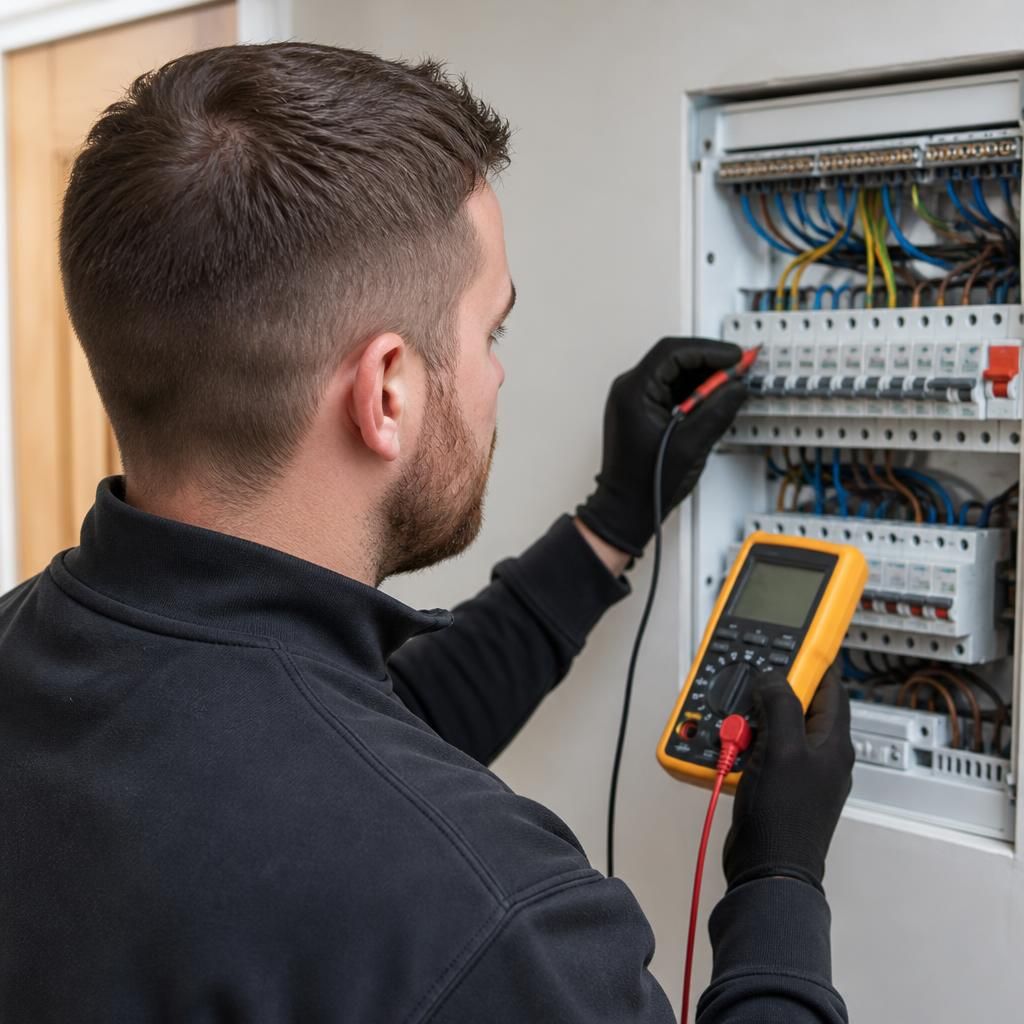
Repair, replacement and upgrading are not always separate alternatives. An installation may need an immediate repair to remove a defect, followed by a planned upgrade to improve its capacity or protection. In other cases, replacing one failed component may be the appropriate part of a wider improvement rather than a standalone fix.
This distinction helps ensure that urgent safety issues are dealt with without assuming that every older installation requires complete replacement. It also allows recommended work to be prioritised according to risk, compliance and the property’s intended use, while separating necessary remedial work from changes that can be planned for a later stage.
Discuss your electrical repair, replacement or upgrade requirements
If you are unsure whether your electrical work needs repair, replacement or an upgrade, contact RJW Electrical to discuss the issue and request a no-call-out-fee quote.