
RJW Electrical
What documentation should I receive after local electrical services?
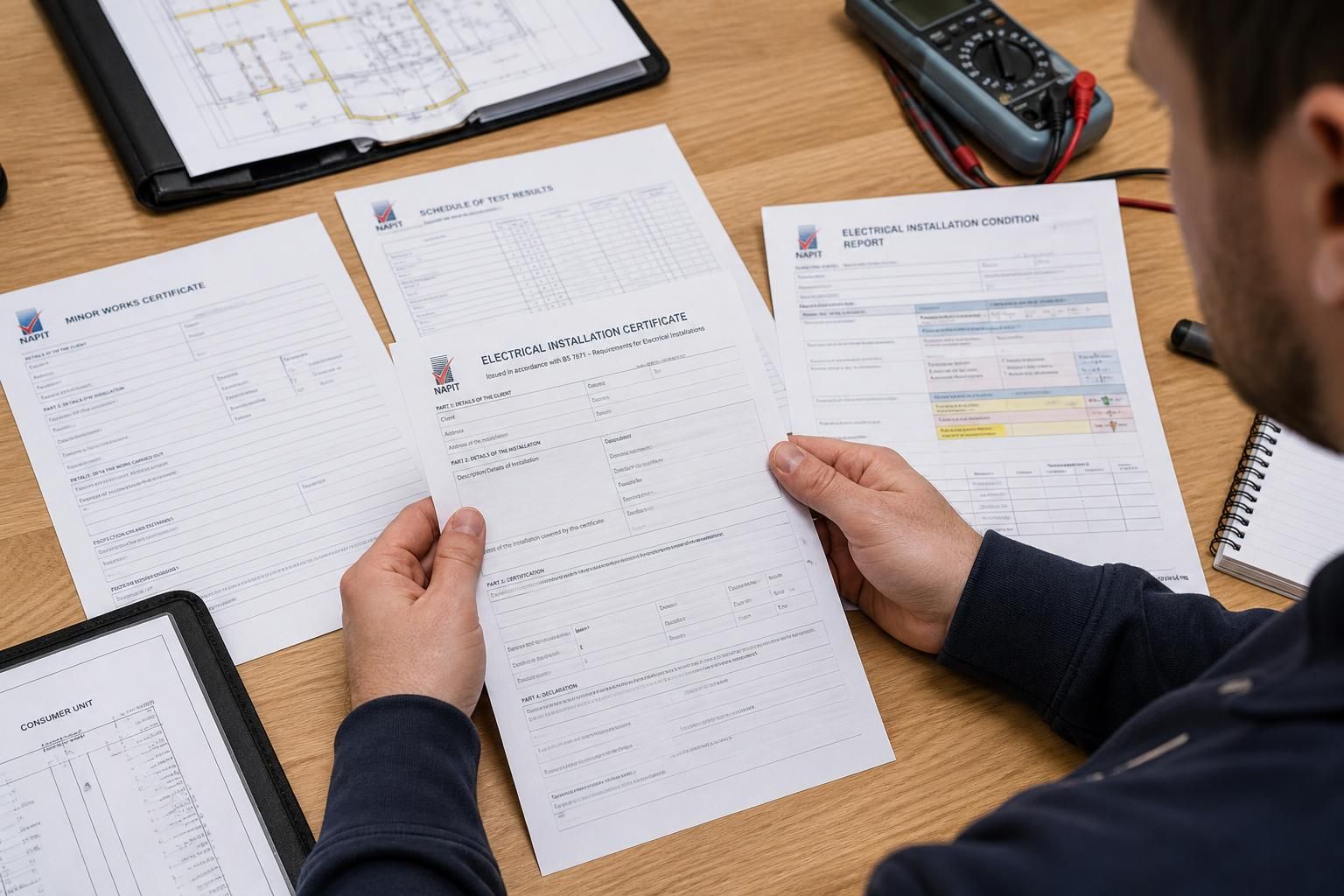
After local electrical services, you should receive documentation that records the work completed and confirms the relevant safety checks, such as an Electrical Installation Certificate, Minor Works Certificate or Electrical Installation Condition Report (EICR), depending on the type of work. The records should identify the installation tested, note any limitations or defects, and include the test results and recommendations where applicable.
The documentation you should receive after electrical work is the written record that identifies what was installed, altered or inspected, who carried out the work, and whether the installation met the relevant safety requirements. The exact documents depend on the scope of the work, the type of property and whether the work was domestic or commercial.
Check that the paperwork includes the following information:
- The property or premises address.
- The date the work was completed or the inspection was carried out.
- A description of the installation, circuit or equipment covered.
- The name and details of the electrical contractor.
- The extent of the inspection and any areas that could not be accessed or tested.
- The test results, where testing formed part of the work.
- Any defects, departures from the requirements or recommended remedial action.
- The name and signature of the person responsible for inspection, testing or certification.
For installation work, the certificate should make clear whether the work was a new installation, an addition, an alteration or a replacement. This helps you distinguish work covered by the certificate from older parts of the electrical system that were not included.
Installation and minor works records
An Electrical Installation Certificate is generally used for a new installation or significant work such as a new circuit, consumer unit replacement or substantial alteration. It normally records the design, construction and inspection of the work, together with the results of the required tests.
A Minor Works Certificate is used for smaller additions or alterations where a new circuit has not been installed. It should still identify the work completed and provide the relevant inspection and test information. The name of the document does not mean that the work is unimportant; it indicates the type and extent of the electrical alteration.
Ask for the schedules associated with an installation certificate where applicable. These provide more detail about the circuits, protective devices and test results than the front page alone. Without the supporting schedules, it may be harder for a future electrician to understand precisely what was inspected.
Inspection reports and remedial work
An Electrical Installation Condition Report records the condition of an existing installation at the time of inspection. It should identify observations using the appropriate classification codes and explain any recommended action. A report is not, by itself, confirmation that every defect has been corrected. If remedial work is subsequently carried out, retain both the original report and the certificate or invoice describing the corrective work.
Where an inspection identifies an immediate danger or a potentially dangerous condition, the documentation should make the risk and recommended action clear. If the contractor has made a repair, the updated record should specify what was repaired rather than simply stating that the installation is now satisfactory.
Building Regulations documentation
Some domestic electrical work is notifiable under the Building Regulations. Where this applies, you may also receive a compliance certificate or notification record confirming that the work has been notified through the appropriate competent person process. This is separate from the electrical installation certificate: one records the electrical design, construction and testing, while the other relates to Building Regulations compliance.
If a certificate is expected but has not arrived, check the quotation and scope of work first, then ask the contractor to confirm whether the work was notifiable and how the notification was handled. Keep any compliance document with the electrical certificate, particularly if the property may later be sold or transferred.
Commercial and managed premises
Commercial clients may need a wider record set than a domestic customer. Depending on the work, this can include a circuit schedule, updated distribution-board labels, emergency lighting test records, equipment test records, commissioning information, operating instructions and maintenance recommendations. A commercial contractor may also provide a handover pack containing drawings, photographs or marked-up plans where these are relevant to the project.
Responsibility for maintaining these records normally sits with the duty holder, property owner or facilities manager. Store the documents in a controlled location and update the records when circuits, protective devices or fixed electrical equipment are changed. The information should remain available to anyone responsible for future inspection, maintenance or work on the installation.
Invoices, quotations and supporting records
Keep the quotation, variations, invoice and certificate together. The invoice should correspond with the work described in the certificate, while any changes agreed during the project should be recorded in writing. Supporting records such as photographs of concealed cabling, product instructions, equipment settings and warranty documents may also be useful, especially where cables or connections are no longer visible.
Review the paperwork before filing it. Check the address, dates and description of work, and compare the circuits or equipment listed with what was actually altered. Make sure outstanding recommendations have not been mistaken for completed repairs, and query unexplained gaps or inconsistent information while the details are still clear.
Keep electronic copies in a secure, backed-up location and retain the originals where provided. These records can help a future electrician plan work safely, support maintenance decisions and demonstrate the history of the installation to a buyer, landlord, insurer or facilities manager. If documentation is missing or appears inaccurate, do not alter it yourself; ask a qualified electrical contractor to clarify the record and advise whether further inspection is needed.
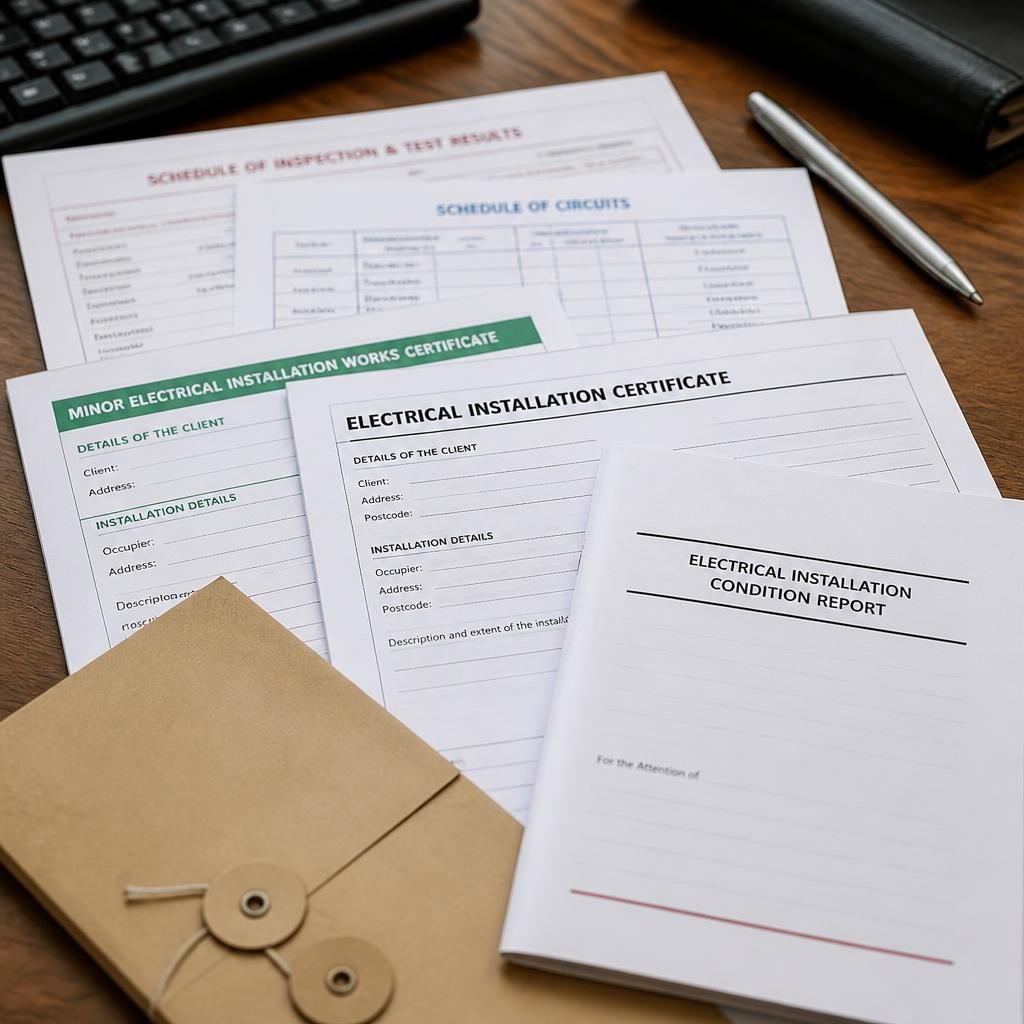
Electrical certificates do not usually have a fixed expiry date. An Electrical Installation Certificate records work at the time it was completed, while an Electrical Installation Condition Report describes the condition of an existing installation on the inspection date. Neither document confirms that the installation will remain safe indefinitely.
Check any recommended date for a further inspection, but do not treat it as a replacement for monitoring changes to the installation. Alterations, damage, changes in use or the introduction of new equipment may require further inspection before that date. Keep the documentation available so a qualified electrician can review the installation history when assessing future work.
Need advice on your electrical documentation?
If you are unsure whether your electrical paperwork is complete or accurately reflects the work carried out, contact RJW Electrical for advice. The team can review the available documentation and explain whether further inspection or certification may be appropriate.