
RJW Electrical
What does a lighting electrician check when repairing a faulty circuit?
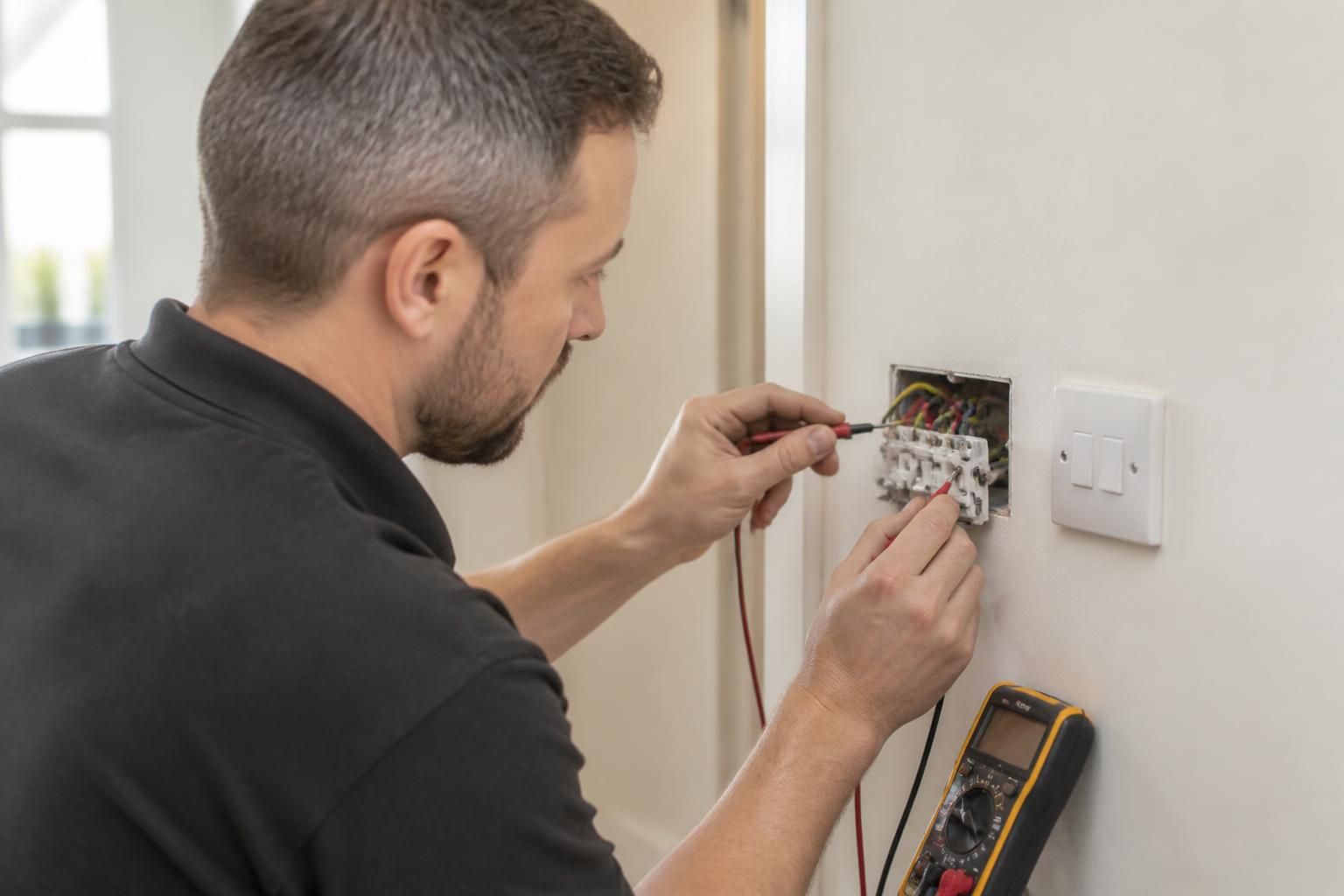
A lighting electrician checks the circuit’s wiring, switches, connections, fittings and protective devices to identify the source of the fault. They then carry out appropriate safety tests, such as checking continuity, insulation resistance and polarity, before confirming whether repair or replacement is needed.
Fault-finding a lighting circuit is a staged process: the electrician establishes exactly when the fault occurs, isolates the affected section, examines the installation for physical or wiring-related causes, and uses test results to decide whether a component can be repaired or should be replaced.
Understanding the symptoms
The reported symptom helps narrow the investigation. A complete loss of lighting may indicate a supply problem or a break affecting more than one point, while a single lamp failing repeatedly can point towards a defective fitting, unsuitable lamp, heat damage or a poor connection. Flickering, intermittent operation, nuisance tripping and switches that feel hot each suggest different lines of investigation. The electrician will also establish whether the problem affects one light, several lights, one switch position or the whole circuit.
Checking how the circuit is arranged
Before changing anything, the electrician identifies how the lighting points are controlled. This may include one-way or two-way switching, dimmers, pull cords, sensors or other control equipment. Understanding the arrangement matters because a fault at one control point can affect another light or switch. Any recent alteration, new fitting, drilling, decorating or water ingress is also relevant, as these events can damage cables or introduce a fault.
Looking for physical signs of failure
With the circuit made safe, accessible parts are checked for cracked or discoloured accessories, heat marks, melted insulation, corrosion, moisture, loose components and signs of arcing. The electrician may inspect the ceiling rose, switch boxes, junction points and light fittings where they are accessible. Particular attention is given to areas that have been disturbed during building work or where a fitting has been exposed to damp conditions.
Separating the circuit into sections
If the cause is not immediately visible, the electrician works through the circuit methodically rather than replacing parts at random. Sections can be isolated and assessed to establish whether the fault lies between the consumer unit and the first lighting point, within a switch drop, at an individual fitting or further along the circuit. This approach is especially important where several lights share the same route or where the wiring is concealed.
Assessing switches, controls and fittings
A faulty switch may have worn internal contacts, while a dimmer or sensor may be unsuitable for the connected load or may have developed an internal fault. Light fittings can fail because of damaged internal wiring, degraded insulation, moisture or heat. The electrician checks whether the symptom follows a particular component and whether that component is suitable for the circuit. Simply replacing a lamp will not resolve an underlying fault that is causing repeated failure or intermittent operation.
Deciding between repair and replacement
A repair may be appropriate where the fault is limited to a replaceable accessory, damaged termination or accessible section of cable. Replacement or partial rewiring may be more suitable where insulation has deteriorated, concealed cable has been damaged, a fitting is beyond repair or previous alterations are unsafe. The decision depends on the condition of the existing installation, the location of the fault and whether the repaired arrangement can be left safe and compliant.
Checking the completed work
Once the repair has been made, the electrician confirms that the affected lights operate correctly from every relevant control point. They also check that covers, cable entries and accessories are secure, that no exposed conductors remain, and that the installation has been left in a suitable condition for normal use. Where the circuit has been altered, the test results and any recommendations should be explained to the customer.
Faults that involve burning, water, damaged cables, repeated tripping or heat at a switch should not be investigated by removing covers without suitable competence. A qualified electrician can determine whether the problem is a straightforward component failure or evidence of a wider issue within the lighting installation. RJW Electrical provides lighting fault-finding and repair services for domestic and commercial properties across the Midlands, including Sutton Coldfield, Streetly, Walmley, Erdington, Lichfield, Aldridge, Walsall and Shenstone.
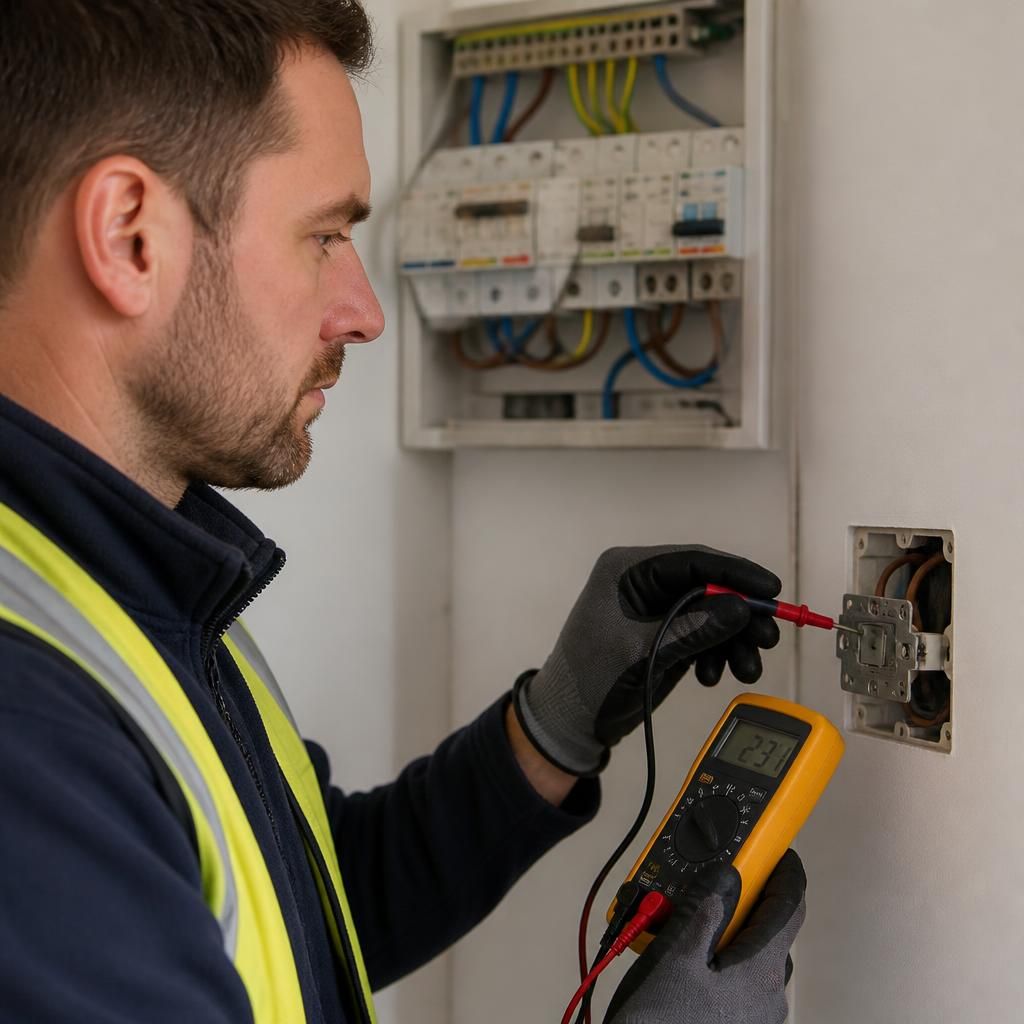
A lighting electrician also checks that the circuit’s protective devices are suitable and operating correctly after a fault. An MCB or fuse must be appropriate for the circuit, while an RCD may need to be assessed if it has tripped repeatedly or will not reset. The electrician considers whether the fault is confined to the lighting circuit or whether another connected load, alteration or damaged cable could be causing the protective device to operate.
This check helps prevent a faulty component from being replaced without addressing the condition that caused the circuit to trip. Once the source has been dealt with, the protective arrangement should remain stable when the lighting is returned to normal use.
Need help with a faulty lighting circuit?
If a lighting fault remains unresolved or involves damaged wiring, contact RJW Electrical to arrange an assessment and discuss the appropriate repair. A no-call-out-fee quote can be provided before work is agreed.