
RJW Electrical
What should I prepare before an electric gate or shutter inspection?
Before an electric gate or shutter inspection, ensure the equipment and its controls can be accessed safely, and gather any installation or repair records. Note the fault symptoms, when they occur, and which remotes, keypads or other controls are affected so the inspection can focus on the relevant components.
Preparation for an electric gate or shutter inspection should focus on safe working conditions, relevant site information and the people responsible for operating the equipment. In addition to making the installation accessible and documenting any symptoms, arrange suitable permission, clear hazards around moving parts and have the correct keys, codes or isolation information available.
Before the visit, consider the following points:
- Confirm who can authorise access and testing. For a home, this may be the property owner or managing agent. At commercial premises, identify the responsible person, facilities manager or site contact who can explain how the gate or shutter is used and approve any necessary operational tests.
- Keep the working area free from avoidable hazards. Remove stored items, vehicles, packaging and other obstructions from the travel path, guide rails, threshold and equipment enclosure. Do not attempt to move a jammed gate or shutter manually unless the manufacturer’s release procedure is known and it is safe to do so.
- Identify site-specific risks. Tell the engineer about pedestrians, children, pets, delivery traffic, public access, uneven surfaces, restricted visibility or other conditions that could affect testing. At business premises, consider whether the inspection area needs to be separated from staff, customers or vehicles while the equipment is operated.
- Locate isolation points and associated equipment. If known, identify the relevant consumer unit, fused connection unit, local isolator, control panel, photocells, safety edges, warning lights and emergency release. Do not remove covers, alter wiring or isolate circuits yourself unless this is part of an established procedure carried out by a competent person.
- Prepare access credentials securely. Where the system uses a coded keypad, proximity device, intercom or restricted control cabinet, make sure the engineer can use the necessary access method. Provide codes discreetly rather than leaving them in an exposed location, and explain any separate access arrangements for plant rooms, compounds or service areas.
- Gather operating and maintenance information. Useful documents may include the original handover information, user instructions, previous inspection reports, maintenance log, electrical test records and details of alterations to the premises. For a commercial installation, include any site risk assessment, safe system of work or incident record that relates directly to the gate or shutter.
- List recent changes. Note building work, resurfacing, impact damage, replacement controls, changes to access arrangements, new security equipment or modifications to the electrical supply. These details can help distinguish an equipment fault from an issue caused by its surroundings or a recent alteration.
- Make relevant users available for questions. A person who regularly operates the gate or shutter may be able to explain unusual noise, intermittent stopping, changes in travel or problems with safety devices. Their information should supplement, not replace, the engineer’s inspection.
An inspection may involve visual examination, checks of mechanical movement, assessment of protective devices, review of control functions and electrical testing where appropriate. The engineer may need to operate the installation more than once, so plan the visit around the safe management of people, vehicles and access routes rather than treating it as a purely paperwork exercise.
Do not try to improve the result by adjusting force settings, bypassing photocells, wedging open a shutter, bridging a safety device or repeatedly resetting a tripped circuit. These actions can hide the original fault and may create an unsafe condition. Leave suspected damage or defective protection unchanged and explain what has happened.
For an inspection at a rented property, managed site or workplace, obtain the relevant owner’s permission before arranging access. If the installation forms part of a wider security or fire-control arrangement, tell the responsible person that the equipment may need to be tested and that any linked system should be considered in the site’s operating procedure. RJW Electrical can use the information provided to assess the installation methodically and advise on any further testing or remedial work identified during the inspection.
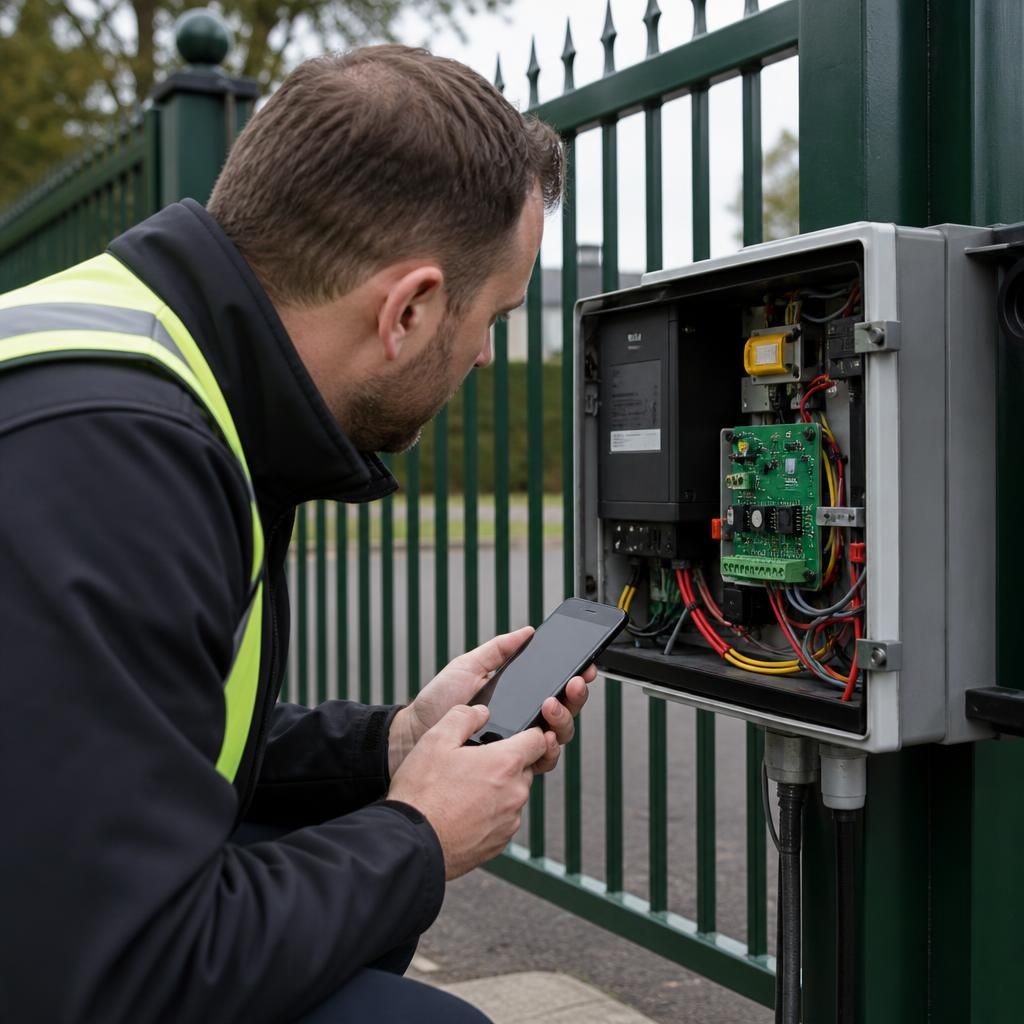
Record the installation’s visible details before the inspection, without removing covers or interfering with its controls. Photographs of the gate or shutter, control panel, warning displays, damaged components and any identification labels can help show the equipment’s condition and configuration before testing begins.
Include the make or model information if it is clearly visible, along with any error messages shown by the controller or keypad. Avoid photographing access codes, keys or other security details, and do not attempt to expose labels inside live equipment. This evidence can help the engineer understand the installation before carrying out controlled checks.
Arrange Your Electric Gate or Shutter Inspection
Once the relevant information has been gathered, contact RJW Electrical to arrange an electric gate or shutter inspection and discuss the installation with a qualified engineer.
Request a no-call-out-fee quote based on the inspection requirements and any remedial work identified.