
RJW Electrical
What safety checks are carried out after electric gate repairs?
After an electric gate repair, safety checks normally include electrical testing, inspection of protective devices, and confirmation that the gate’s sensors, safety edges and controls operate correctly. The engineer should also check opening and closing movement, stopping and reversal functions, obstacle detection, and the manual release before confirming the system is safe to use.
Post-repair safety checks are a structured verification that the gate, its electrical installation and its safety features have been restored correctly before it is returned to normal use. The checks should cover the quality of the repair, the condition of associated components and the way the complete installation performs as a system, rather than focusing only on the part that was replaced.
Inspection of the repaired area
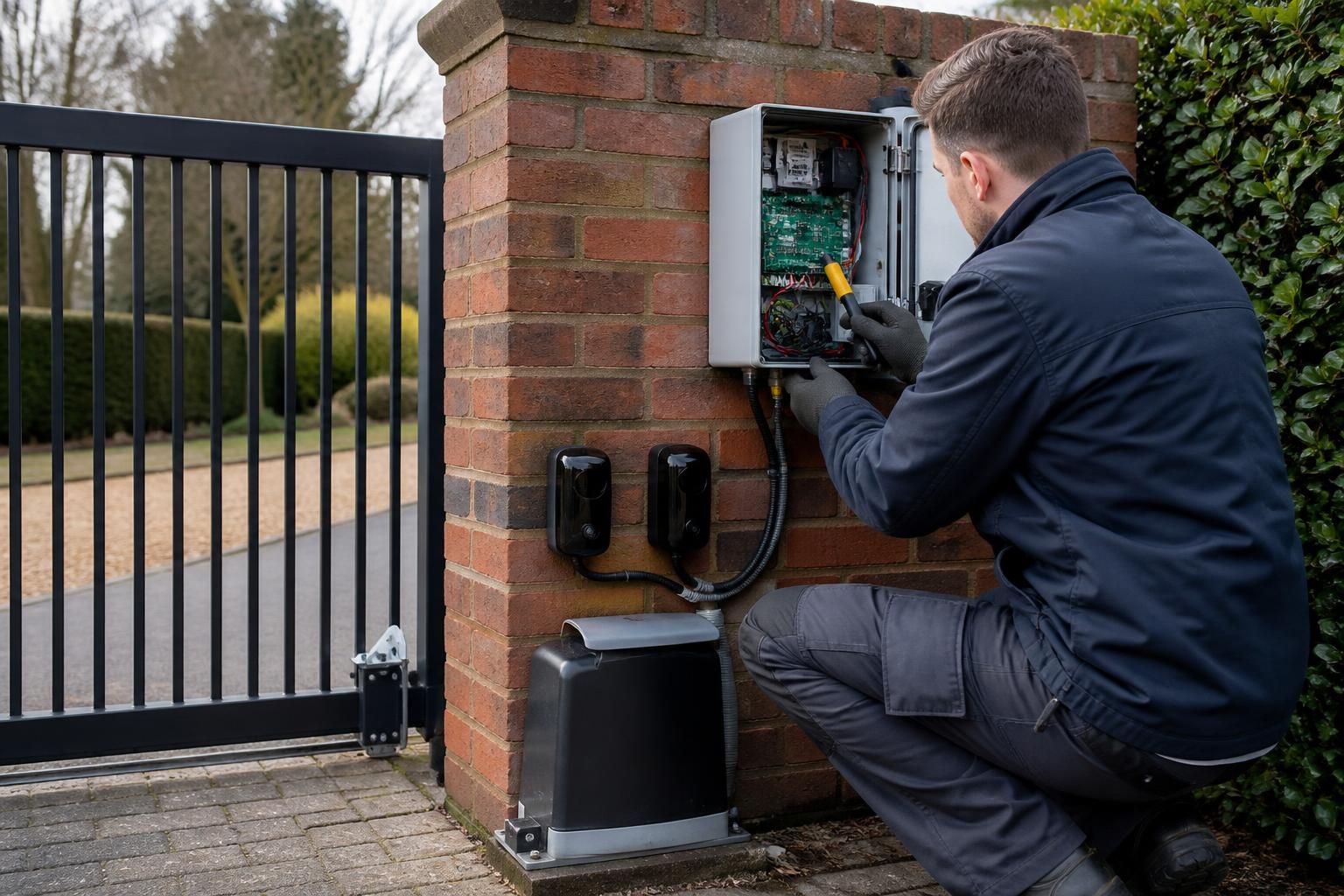
- Wiring should be checked for secure connections, suitable routing, insulation damage and protection from movement, moisture or abrasion.
- Enclosures, junction boxes, glands and covers should be properly closed and suitable for their location.
- Replacement components should be securely mounted and compatible with the existing gate equipment and control arrangement.
- Mechanical parts affected by the repair should be checked for loose fixings, excessive play, obstruction or signs that the gate is placing unusual strain on the motor and drive system.
Electrical condition and protection
Where the repair involved the electrical supply or control wiring, the engineer may carry out relevant tests for continuity, insulation resistance, polarity and earthing. The precise tests depend on the work completed and the design of the installation. The purpose is to identify damaged conductors, poor connections or faults that may not be visible during a visual inspection.
The supply arrangement should also be reviewed to confirm that isolation points are accessible, protective devices are correctly connected and the equipment is not showing signs of overheating or water ingress. Any exposed or damaged cable should be dealt with before the gate is considered ready for use.
Checks around the gate and its operating area
Safety verification should include the physical surroundings. The engineer may look for new obstacles, uneven surfaces, loose paving, vegetation or objects that could interfere with the gate’s travel. Clearances around moving sections should remain appropriate, and accessible trapping or crushing points should be considered in relation to the gate’s layout and use.
Where a repair has altered the gate’s force, travel or control settings, these settings should be assessed rather than assumed to remain suitable. The gate should not be left operating with unusually high force, uncontrolled momentum or a movement pattern that could create an avoidable hazard.
Controls and access equipment
Any equipment connected to the gate may need a functional check, including keypads, remote controls, push buttons, intercom release units, coded access devices and vehicle detection equipment. The check should confirm that each control produces the intended response and that users cannot unintentionally trigger an unsafe operation.
Where the gate forms part of a wider entrance system, the engineer should consider whether the repair has affected connected equipment or the way access is granted. A gate that operates correctly from one control but behaves unpredictably from another has not been fully verified.
Standards, records and handover
The completed work should be assessed against the relevant electrical requirements, applicable machinery and gate safety principles, and the equipment manufacturer’s instructions where these are available. The appropriate reference point depends on the gate design, the nature of the repair and whether the work involved the fixed electrical installation.
A useful handover record should identify the work carried out, the parts or circuits affected, the checks completed and any restrictions or recommendations. Electrical test results or a minor works record may be appropriate for certain repairs, while more extensive alterations may require fuller certification. The documentation should make clear whether any separate defect remains outside the repair scope.
If a check produces an unsatisfactory result, the gate should not simply be put back into routine service. The issue should be explained, the risk reduced where possible and further remedial work agreed before the installation is treated as safe for normal operation. A properly completed post-repair process therefore combines inspection, testing, functional verification and clear records.
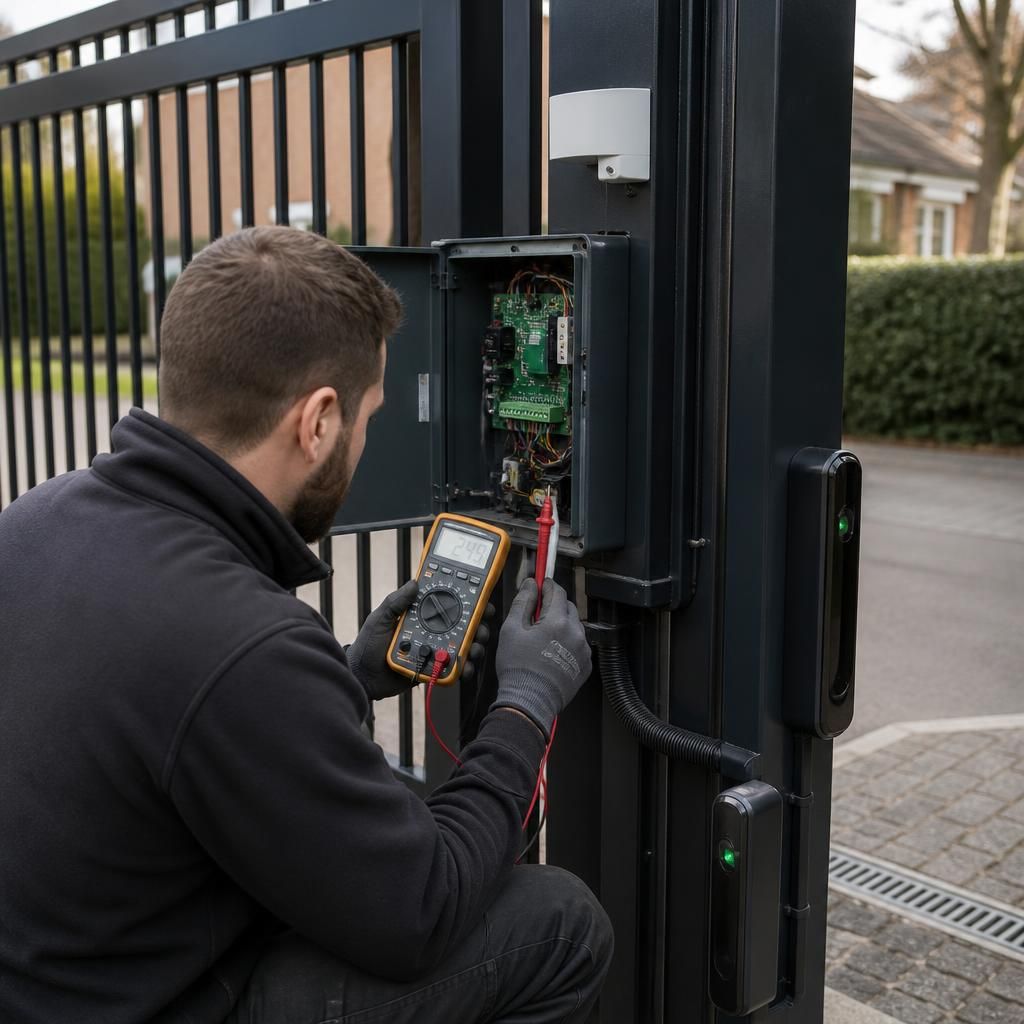
A key post-repair check is confirming that a fault in a safety device does not allow the gate to continue operating normally. The engineer may verify that an interrupted safety circuit, failed connection or loss of power places the gate in a safe state and prevents automatic movement until the fault has been addressed. Power restoration should also be checked so the gate does not restart unexpectedly. These tests help confirm that the repair has restored the protective logic, not just the gate’s ability to move.
Arrange Safety Checks After Your Electric Gate Repair
Contact RJW Electrical to discuss arranging post-repair safety checks for your electric gate, including the testing and functional verification appropriate to the work completed.