
RJW Electrical
What happens if an electric gate or shutter fault is found?
If an electric gate or shutter fault is found, the equipment should be made safe first, followed by targeted electrical and functional testing to identify the cause. The findings can then be explained clearly, with any required repair or remedial work identified before the system is returned to service.
A fault in an electric gate or shutter does not automatically mean the whole system needs replacing. The next step is to establish whether the problem is caused by the electrical supply, control equipment, safety devices, motor, cabling or the mechanical movement, then decide whether the system can be repaired safely and economically.
The equipment is assessed in a controlled sequence. Where the fault could create a risk of electric shock, unexpected movement, trapping or damage to the installation, the supply may be isolated and the gate or shutter prevented from operating. A failed safety device should not be bypassed simply to restore movement, as this can leave the system operating without an important protective function.
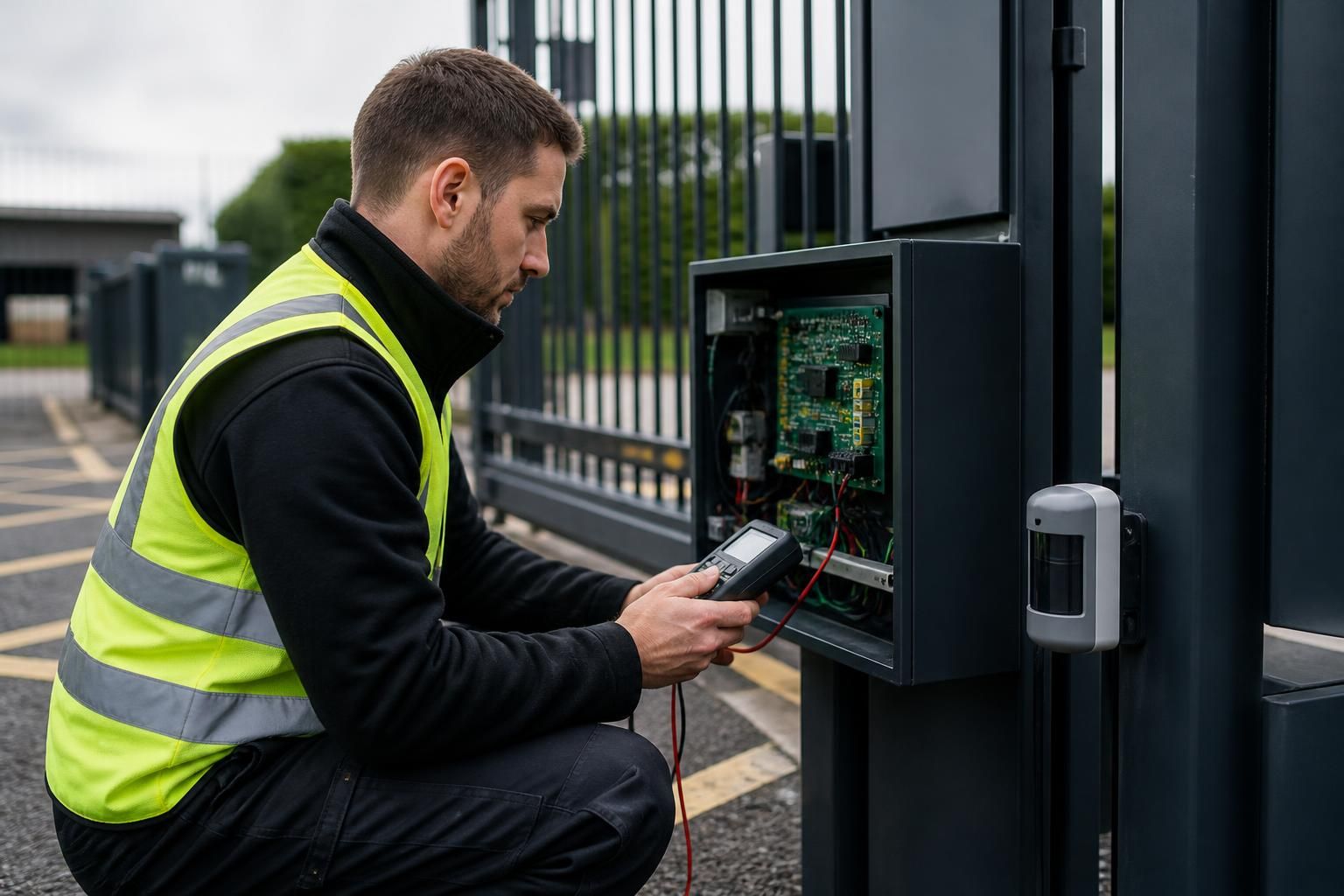
Fault-finding normally considers several connected parts of the installation:
- the local electrical supply, isolators, protective devices and connections;
- the control panel, relays, switches and operating controls;
- photocells, safety edges, stop circuits and other protective devices;
- the motor, drive components and associated wiring;
- cables, terminations, earthing and signs of water ingress or physical damage; and
- mechanical resistance, such as a distorted track, stiff hinge, damaged slat or obstruction that may be placing excess demand on the motor.
Testing helps distinguish a component failure from a wider installation problem. For example, a gate that fails to move may have a supply or control fault, but it could also be responding correctly to a blocked photocell or excessive mechanical resistance. A shutter that trips its protective device may have damaged cabling or a motor problem, rather than a defect in the protective device itself. Replacing a part without identifying the underlying cause can result in the fault returning.
Once the cause has been identified, the findings should be separated into immediate safety issues and recommended remedial work. A minor defect may be corrected during the same visit if the necessary repair is practical and suitable parts are available. Other faults may require replacement components, cable repairs, adjustment of the operating mechanism or further work to the surrounding electrical installation. If the existing equipment is obsolete, badly damaged or unsuitable for safe operation, replacement may be more appropriate than repeated repairs.
The proposed work should be explained before non-essential repairs proceed. This should cover the defect found, the part of the system affected, whether the equipment can remain in use, and any limitations that apply until the work is completed. For a commercial premises, the consequences may include restricted vehicle access, a shutter remaining open or closed, or the need for a temporary access arrangement. For a domestic property, the key concern may be preventing unintended gate movement and maintaining secure access.
After a repair, the system should be checked as a complete installation rather than tested only at the failed component. This includes confirming correct operation of the controls and protective devices, checking that movement stops or reverses where intended, and verifying that the electrical installation is safe to energise. The gate or shutter should not be put back into normal use if a safety-critical fault remains or if the repair has not addressed the condition that caused the original problem.
Where a defect cannot be rectified immediately, the safest outcome may be to leave the equipment isolated and provide clear advice about its use until further work is carried out. RJW Electrical can assess electric gate and shutter faults for domestic and commercial installations across the Midlands, including Sutton Coldfield, Streetly, Walmley, Erdington, Lichfield, Aldridge, Walsall and Shenstone.
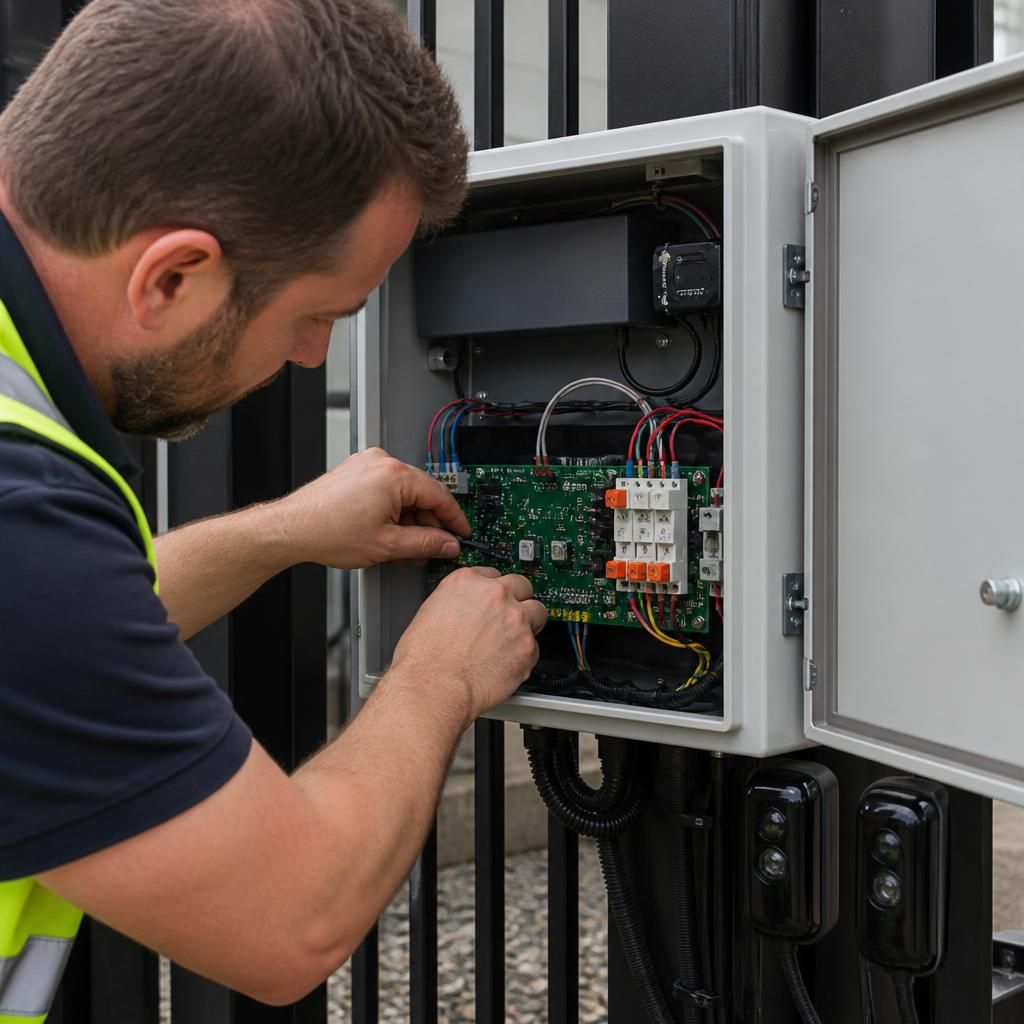
A fault that clears after a reset should not automatically be treated as resolved. Intermittent problems can return when the gate or shutter is under load, when a safety sensor is affected by its surroundings, or when a connection changes with vibration or moisture. Repeatedly resetting the equipment or forcing it to operate can obscure the original symptom and place additional strain on the motor and controls.
Where the equipment is still operating, note what happens immediately before the fault: whether the system stops, reverses, trips a protective device, responds inconsistently or operates only from one control. This information helps distinguish a single operating incident from a recurring defect and supports a more accurate assessment of what needs to happen next.
Discuss Your Electric Gate or Shutter Fault
Discuss the electric gate or shutter fault with RJW Electrical and provide details of the symptoms, controls affected and any safety concerns. This allows the appropriate assessment and next steps to be considered before remedial work is agreed.