
RJW Electrical
What documentation is provided after electric gate or shutter work?
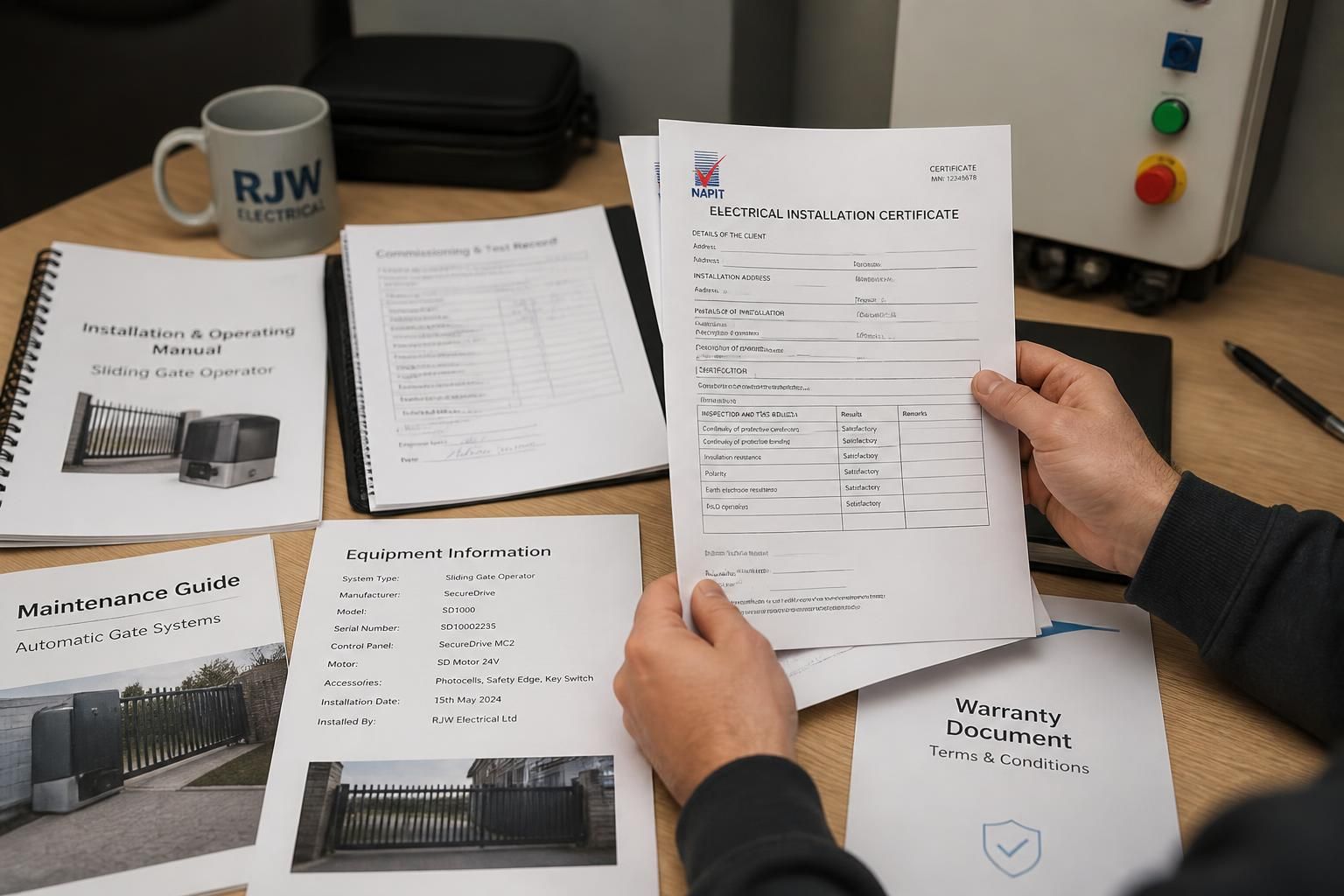
After electric gate or shutter work, you should receive a written record of the work completed, together with any relevant electrical test or inspection documentation. Where applicable, this may also include operating instructions, maintenance information, warranty details and certificates for replaced or newly installed equipment.
The exact paperwork depends on whether the job involved a repair, alteration, replacement or a new installation. Electrical work will normally be supported by test results and, where the work falls within the relevant certification requirements, an electrical installation certificate or minor works certificate. A report may instead be appropriate where the work was an inspection or testing exercise rather than an alteration.
Electrical documentation may record:
- the property or installation address;
- the work covered and any limitations;
- the circuit or equipment tested;
- the inspection and test results;
- details of protective devices, earthing and bonding where relevant;
- the date of the work; and
- the name and qualifications or registration details of the person responsible for the certificate.
For a gate or shutter, the electrical certificate may cover the supply, isolator, control equipment, safety devices and associated wiring. It does not necessarily provide a full mechanical assessment of every moving part. If the work also involved the gate or shutter mechanism, the handover information should make clear what was adjusted, repaired or replaced and which parts were outside the scope of the visit.
Where a new control panel, motor, photocell, safety edge, key switch or other component has been fitted, the documentation should identify the equipment sufficiently for future maintenance. This can include model information, settings or configuration details, wiring changes and the location of isolation points. Keeping these details with the electrical certificate helps another competent person understand the installation without relying on assumptions.
Commissioning or functional test records can be particularly useful. They may confirm that controls operate correctly, safety devices respond as intended and the gate or shutter stops, reverses or remains inhibited in the relevant circumstances. The precise checks depend on the equipment and the work undertaken. A test record is evidence of the condition observed at handover; it is not a substitute for ongoing maintenance or periodic inspection.
You may also receive practical handover information, such as:
- operating instructions for normal and emergency use;
- instructions for manual release or safe isolation;
- maintenance requirements and recommended inspection intervals;
- information about cleaning, obstructions and visible damage;
- details of replaced parts or components retained for reference; and
- contact or reference details for the completed job.
Warranty information should state what product or workmanship is covered, the applicable terms, any exclusions and the evidence that may be needed if a problem is reported later. A warranty document is separate from an electrical safety certificate: one sets out cover, while the other records compliance or test findings at the time of the work.
For commercial premises, the handover file may also need to be matched to the site's own records. The responsible person may require copies of certificates, test results, risk information, equipment instructions and maintenance records for audit, facilities management or future contractors. If the gate or shutter forms part of a controlled access route or emergency arrangement, the operating and release instructions should be kept where relevant staff can find them.
Review the paperwork before the engineer leaves and check that the address, equipment description and scope of work are accurate. Ask for clarification if a certificate refers only to the electrical supply but the mechanical equipment or safety controls were also worked on. Keep digital and paper copies with the property's electrical records, particularly if the equipment is later repaired, inspected, altered or replaced.
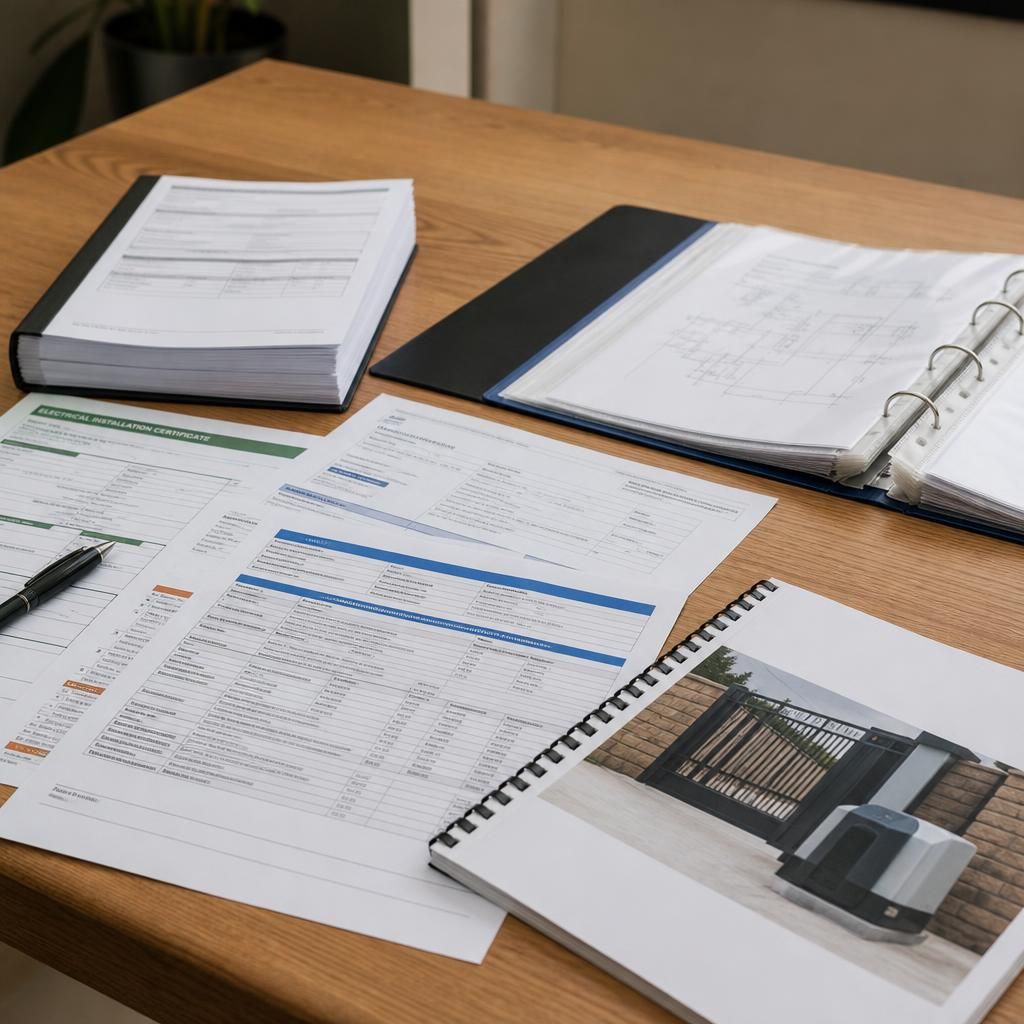
Documentation from electric gate or shutter work can also be useful if the property is sold, leased or transferred to a new facilities team. A future owner or responsible person may need to understand what equipment is installed, what work was carried out and which safety features were tested, rather than commissioning an assessment based only on visible components.
For that reason, retain the completed report, certificates, test records and equipment information together. If the paperwork is passed to another person, identify any restrictions or outstanding recommendations clearly so that the installation is not treated as fully assessed beyond the work originally covered.
Ask about your electric gate or shutter documentation
If you are arranging electric gate or shutter work, contact RJW Electrical to discuss the scope and documentation required for your property before the work begins.