
RJW Electrical
How disruptive is electric gate or shutter repair?
Electric gate or shutter repair is often limited to the affected control, safety or operating components, so disruption may be relatively contained. More extensive faults involving mechanical damage, access equipment or wiring can require the gate or shutter to remain out of use for longer while testing and remedial work are completed.
Electric gate or shutter repair is usually disruptive in proportion to the fault, the equipment’s position and the access arrangements needed to work safely. A straightforward control or sensor issue may only restrict operation during testing, whereas damage to the drive mechanism, wiring, safety edges or supporting structure can affect vehicle, pedestrian or premises access until the system has been made safe.
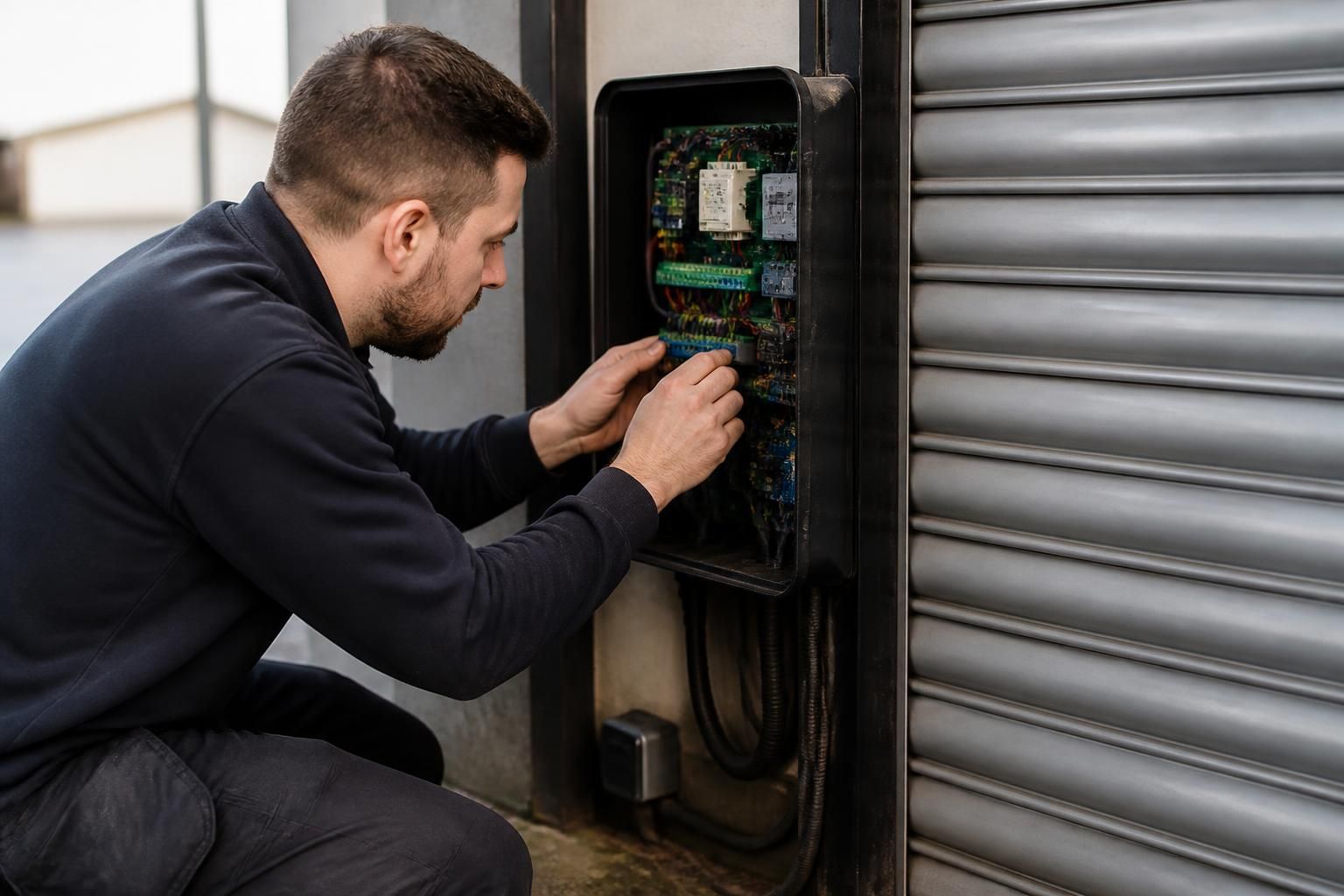
The main sources of disruption are not limited to the repair itself. The engineer may need to isolate the power supply, prevent the gate or shutter from moving, remove covers, inspect concealed components or operate the equipment repeatedly during diagnosis. This can temporarily change how people, vehicles or goods enter and leave a property.
What can affect the level of disruption?
- Type of equipment: Sliding gates, swing gates, roller shutters and sectional doors have different drive systems, safety devices and access requirements.
- Location: Equipment installed across a driveway, loading area, shopfront or principal entrance can have a greater operational impact than a unit serving a secondary opening.
- Fault location: A fault within an accessible control enclosure may be simpler to investigate than a problem involving underground cabling, concealed wiring, the motor or the gate structure.
- Condition of the installation: Corrosion, impact damage, worn hinges, distorted tracks or poor previous modifications can add inspection and remedial work.
- Site conditions: Restricted working space, parked vehicles, stored goods, public access and the need to use access equipment may all affect how the work is carried out.
What happens during a repair?
- The equipment and reported symptoms are assessed before work starts. This helps establish whether the issue is electrical, mechanical, control-related or caused by a safety device.
- The system is isolated where necessary so that covers can be removed and components can be examined without creating an unexpected movement hazard.
- Fault-finding may involve checking supplies, controls, motors, photocells, limit settings, emergency release arrangements and other protective devices.
- The affected component is repaired, adjusted or replaced where appropriate. Some parts may need to be removed from service while their condition is assessed.
- The gate or shutter is operated through its intended cycle and the safety functions are checked before normal use resumes.
During these stages, the gate or shutter may need to remain closed, secured in a safe position or operated only under supervision. An electric gate should not be forced manually or bypassed simply to maintain access, as this can create additional damage or defeat protective features. Shutters should also not be operated if they are binding, dropping, making unusual noises or showing signs of structural damage.
Domestic disruption
At a home, the main inconvenience is often temporary loss of vehicle access or the need to use another entrance. Residents may need to keep the driveway or opening clear so the system can be inspected and tested. If the gate forms part of the property’s security boundary, it may need to be secured by an agreed temporary arrangement while it is not operating. The appropriate arrangement depends on the gate design, the fault and the site’s security requirements.
Commercial disruption
For a business, the effect can include altered traffic flow, restricted loading access, disruption at a shopfront or the need to control pedestrian movement around the work area. Planning is easier when the engineer knows how the opening is used, whether deliveries depend on it and whether there are separate entrances or access controls. A clear description of the symptoms and any recent impact or electrical work can also reduce unnecessary investigation.
Where safe operation cannot be restored immediately, the engineer should explain what remains unusable, what temporary precautions are required and whether further parts or specialist work are needed. The system should not be returned to service until its operating and safety functions have been assessed. This is particularly important where the gate or shutter is used by members of the public, employees, children, vehicles or people who may not know that a fault has occurred.
RJW Electrical approaches electric gate and shutter work by separating diagnosis, safe isolation, repair and post-repair testing rather than treating a failed opening as a simple reset. This allows the likely operational impact to be identified before remedial work proceeds. For properties in Sutton Coldfield, Streetly, Walmley, Erdington, Lichfield, Aldridge, Walsall, Shenstone and the wider Midlands, the practical question is therefore not only how long the repair takes, but which access arrangements are safe throughout each stage.
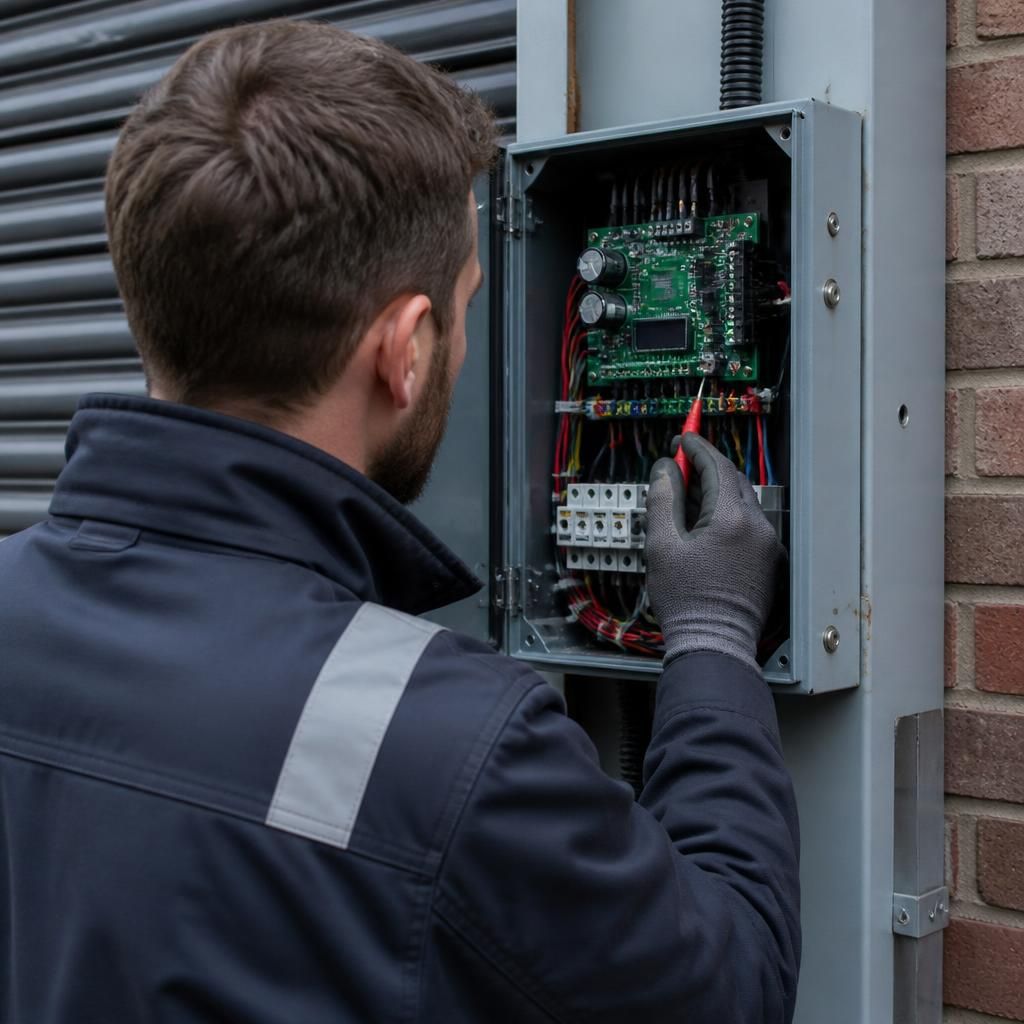
The practical result of an electric gate or shutter repair should be recorded as either fully operational, operating with stated restrictions, or isolated from use. These are different outcomes: a system may be physically repaired but still require controlled operation while a safety device, access control or related component is being verified.
If the equipment cannot be returned to normal service, the safe condition should be clear to everyone using the entrance. This may mean securing a gate in position, preventing a shutter from being operated, or applying temporary access controls. A manual release should only be used where the equipment is designed for it and the arrangement has been assessed as safe; forcing a powered mechanism can increase damage and create a further hazard.
Discuss your electric gate or shutter repair
If you are assessing an electric gate or shutter fault, discuss the equipment and its symptoms with RJW Electrical before arranging repair work. This allows the likely scope of the investigation and any access considerations to be considered from the outset.