
RJW Electrical
What documentation should I receive after domestic electrical servicing?
After domestic electrical servicing, you should receive written confirmation of the work completed, together with any relevant inspection report, test results or electrical certificate. The exact documents depend on the checks and remedial work carried out, so ask the electrician to explain what each document records and whether any further action is recommended.
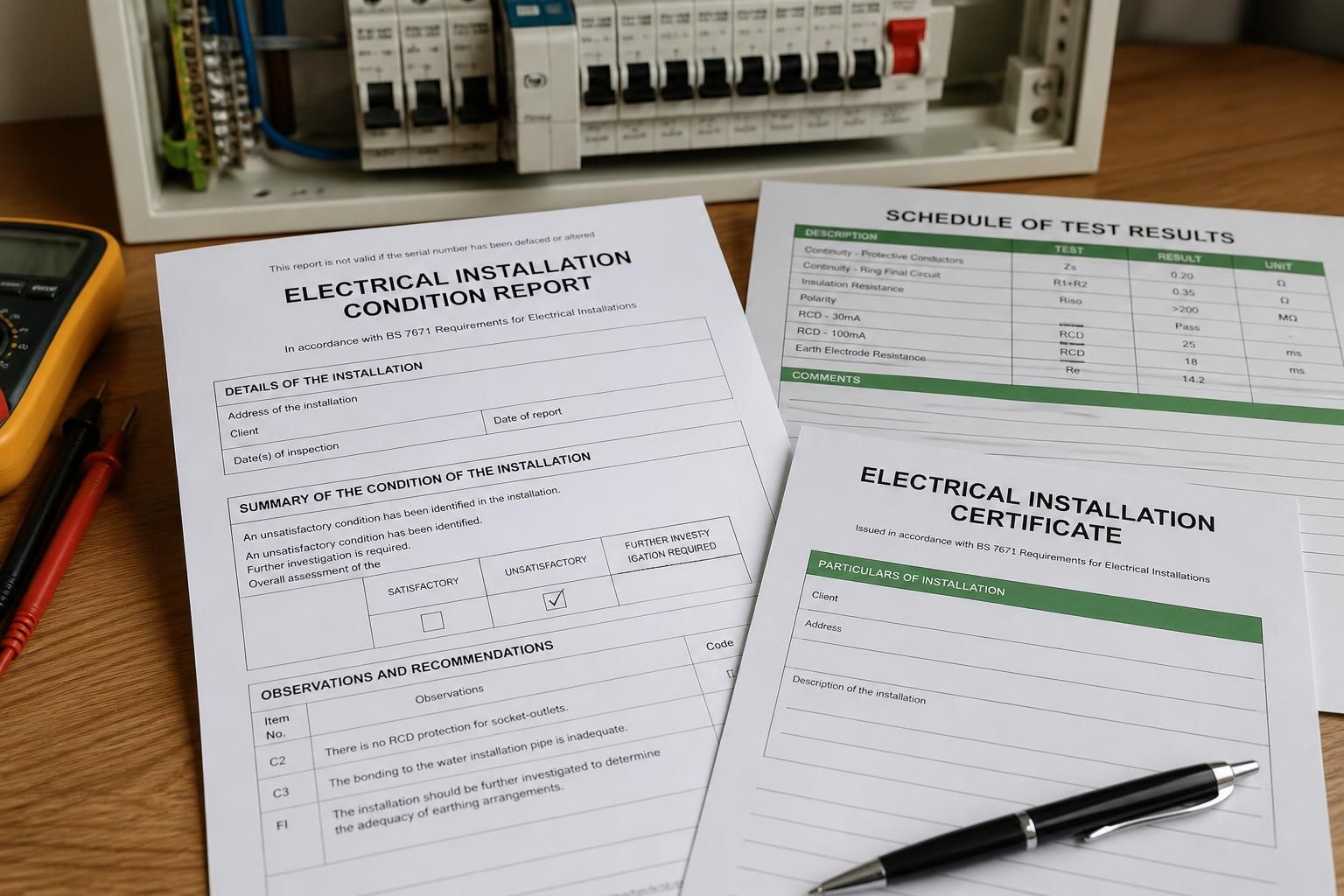
The documents issued after domestic electrical servicing depend on the type and extent of work carried out. A periodic inspection normally produces an Electrical Installation Condition Report (EICR), while repair, alteration or installation work may require an Electrical Installation Certificate (EIC) or Minor Electrical Installation Works Certificate. These records should identify what was inspected or changed, the results obtained and any action still required.
- Electrical Installation Condition Report: An EICR records the condition of the existing electrical installation at the time of inspection. It usually identifies the installation covered, the parts that were inspected, the limitations of the inspection, test results and any observations.
- Electrical Installation Certificate: An EIC is generally used for a new installation, a consumer unit replacement or a significant alteration or addition. It confirms the design, construction and inspection and testing of the work covered by the certificate.
- Minor Electrical Installation Works Certificate: A minor works certificate is used for certain smaller additions or alterations that do not require a full EIC. It should describe the work and confirm the relevant inspection and test results.
- Schedule of inspections and test results: Depending on the certificate, supporting schedules may show which circuits, accessories and protective devices were examined, together with readings such as continuity, insulation resistance and protective conductor tests. These details provide technical evidence behind the overall conclusions.
- Remedial work records: If a defect was corrected during or after the inspection, ask for a description of the repair and the certificate relating to that work where one is required. If further work is recommended but has not been authorised, the report should make that distinction clear.
Read the report's observations and classification codes carefully. An EICR may use codes such as C1 for danger present, C2 for potentially dangerous conditions, C3 for an improvement recommended, or FI where further investigation is needed. The code explains the significance of the observation; it does not by itself describe the repair. The report should also state which circuit or location the observation relates to, so that the issue can be identified accurately.
A satisfactory outcome does not mean that every component is new or that no future maintenance will be needed. It means that, within the scope and limitations recorded by the inspector, no relevant unsatisfactory condition was identified. Conversely, an unsatisfactory report does not necessarily mean that the whole installation must be replaced. The recommended work should be considered against the specific observations, the risks involved and the results of any further investigation.
Check the personal and property details before filing the paperwork. The address, inspection date, description of the installation, supply characteristics and distribution equipment should be correct. The report should also make clear what was excluded or inaccessible. For example, concealed wiring cannot normally be assessed fully without opening walls or floors, and equipment that could not be safely isolated may be outside the inspection scope.
Where a certificate covers installation or alteration work, check that it identifies the work completed rather than referring only generally to an entire property. It should include the relevant circuit or equipment, the inspection and testing information, the person responsible for the work and the date of completion. If the work falls within building regulations notification requirements, ask what completion or compliance record applies and how it will be provided.
Keep the documentation with previous certificates, electrical reports, appliance instructions and records of later repairs. A future electrician can use this information to understand the installation's history and avoid treating known limitations as new defects. It is also useful when arranging a later inspection, carrying out alterations or responding to questions about the property's electrical condition.
If a document is missing or unclear, ask the contractor to identify which certificate applies to the work, what areas were included and whether any recommendations remain outstanding. A quotation, invoice or booking confirmation may describe the service, but it does not replace the appropriate inspection report or electrical certificate. The technical document should relate specifically to the inspection, testing or installation work undertaken.
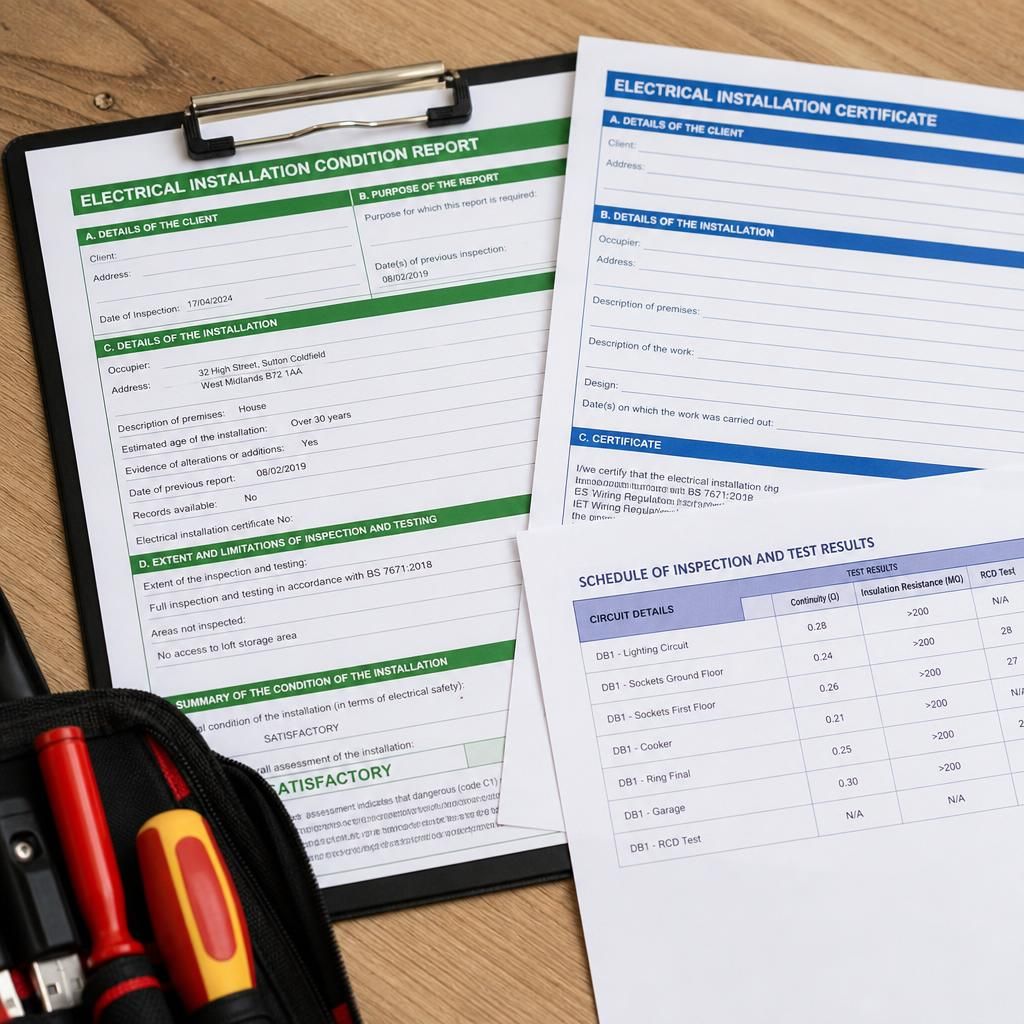
For a rented property, the electrical report should be treated as part of the tenancy records rather than kept solely by the contractor. The landlord or managing agent should retain the relevant documentation and provide copies to the appropriate occupants or authorities where applicable under current electrical safety requirements. Tenants should check that the report relates to their property and understand whether it records a satisfactory result or recommends further work.
Keeping the report accessible also helps clarify responsibilities if an electrical issue is later reported. The document records the installation’s condition and inspection scope at the time it was completed; it does not replace the need to address recommendations or investigate new faults.
Need help interpreting your electrical servicing documents?
Contact RJW Electrical to discuss your domestic electrical servicing requirements and request a no call out fee quote for any follow-up inspection or work.