

RJW Electrical
What insurance should an electrician have?
An electrician should normally have public liability insurance to cover injury or property damage caused to others, while professional indemnity insurance can cover claims arising from negligent advice, design or specifications. If the electrician employs staff, employers’ liability insurance is generally required, and appropriate tools, equipment and commercial vehicle cover may also be relevant.
The right insurance for an electrician depends on the work undertaken, who carries it out and the risks created by the project. A suitable policy should cover the electrician’s actual activities rather than simply provide a certificate with a high-looking limit.
Public liability insurance is usually the main policy clients ask to see. It is intended to respond if a third party is injured, or if their property is damaged, as a result of the electrician’s work. When checking the policy, confirm that electrical installation, testing and maintenance are included, rather than assuming that every type of electrical work is covered.
The policy should also be appropriate for the setting. Domestic work, commercial premises, work at height, work in occupied buildings and work involving existing installations may all be assessed differently by an insurer. A contractor working for a business may need cover that satisfies the terms of the client’s contract, including a specified level of liability cover or particular extensions.
Professional indemnity insurance is relevant where an electrician provides design input, calculations, technical advice or specifications. It deals with a different type of risk from physical damage: a client may claim that negligent advice or a design error caused financial loss or required remedial work. Not every installation electrician needs the same level of this cover, but it is worth asking about when the contractor is responsible for more than carrying out instructions.
Employers’ liability insurance applies to businesses with employees and should reflect the people involved in the work. A contractor should be able to clarify whether its policy covers employed electricians, apprentices, temporary staff and anyone else treated as an employee for insurance purposes. Using subcontractors does not automatically mean that they are covered by the main contractor’s policy, so their own insurance arrangements may also need to be checked.
Other policies may be appropriate depending on the contract:
- Contract works cover: may protect unfinished installation work and materials during a project.
- Cover for existing structures or property: may be relevant where work could affect a client’s building, fixtures or installed equipment.
- Tools and equipment cover: may protect business-owned equipment against risks such as theft or damage, subject to the policy terms.
- Commercial vehicle insurance: is needed where vehicles are used for business purposes and carry tools or materials.
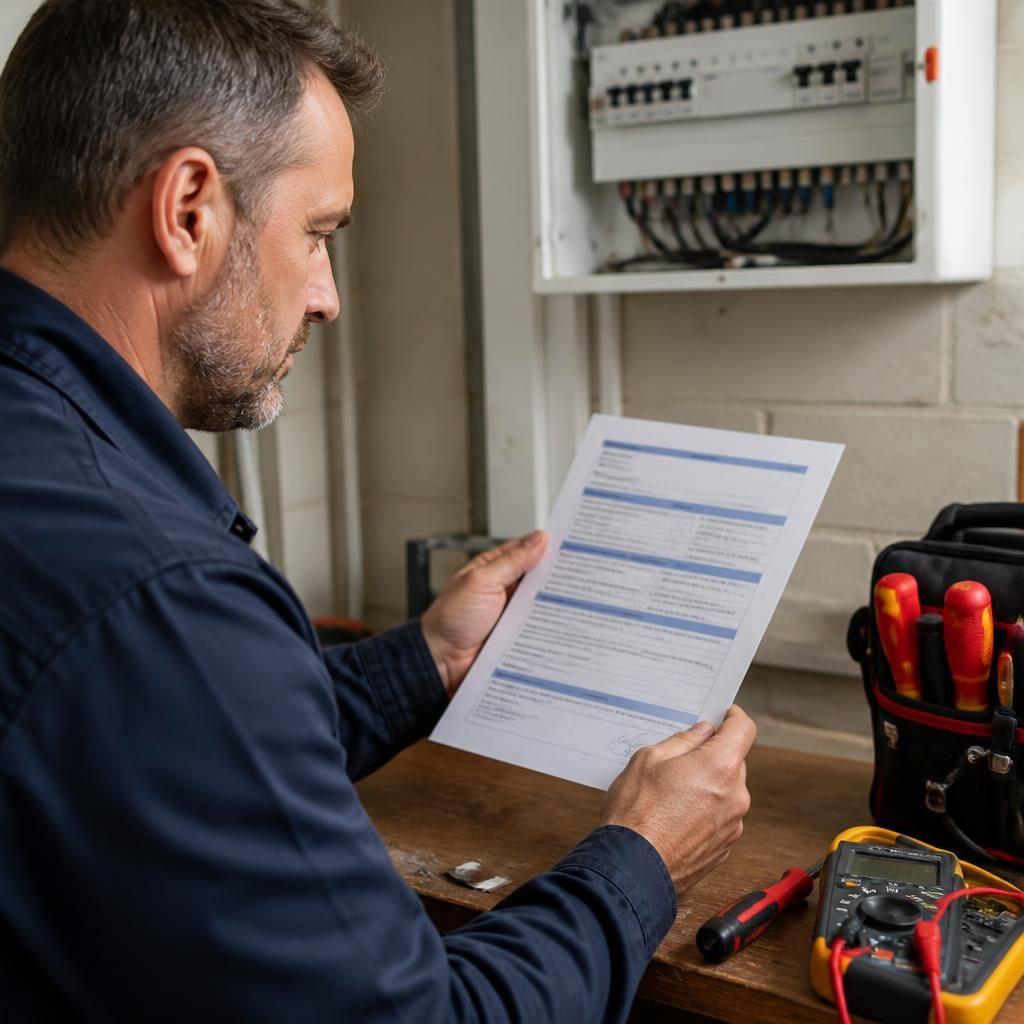
When comparing electricians, ask to see a current insurance certificate and, where necessary, the policy schedule. Check the insured business name, expiry date, types of work covered, geographical scope, liability limit and any excess. A certificate confirms that a policy exists, but it does not show every exclusion or condition. The policy wording is therefore important if the project involves specialist equipment, design responsibility, high-risk premises or substantial existing assets.
Pay particular attention to exclusions. Common areas requiring clarification include defective workmanship, damage to the part being worked on, work carried out by subcontractors, unapproved alterations, asbestos-related work and activities outside the contractor’s declared trade. Insurance may cover resulting damage in some circumstances without paying to correct the original poor workmanship, so it should not be treated as a workmanship guarantee.
Insurance is only one part of due diligence. A sensible comparison also considers the electrician’s qualifications, inspection and testing arrangements, written quotation, responsibility for notifying or certifying work, and experience with the type of property. For a larger commercial project, ask for evidence that the proposed insurance meets the contract requirements before work begins.
Insurance policies do not all respond in the same way: some cover incidents occurring during the policy period, while professional indemnity policies may depend on when a claim is made and whether the relevant work falls within the policy’s dates. This distinction matters if an electrician provides design advice, calculations or specifications.
For professional indemnity cover, ask whether the policy includes a suitable retroactive date and whether the work being proposed is covered. Confirm how long the policy must remain in place after completion, particularly where a design fault might only become apparent later. The electrician should also explain who is responsible for design decisions and for correcting any errors identified during inspection.
- Check that the insured name matches the business named in your quotation.
- Ask whether the policy is suitable for the specific work, premises and level of design responsibility.
- Keep the insurance evidence with the quotation, scope of work and certification documents.
Ask RJW Electrical About Its Insurance Cover
Ask RJW Electrical to confirm that its insurance covers your proposed work and request the relevant evidence alongside your quotation.