
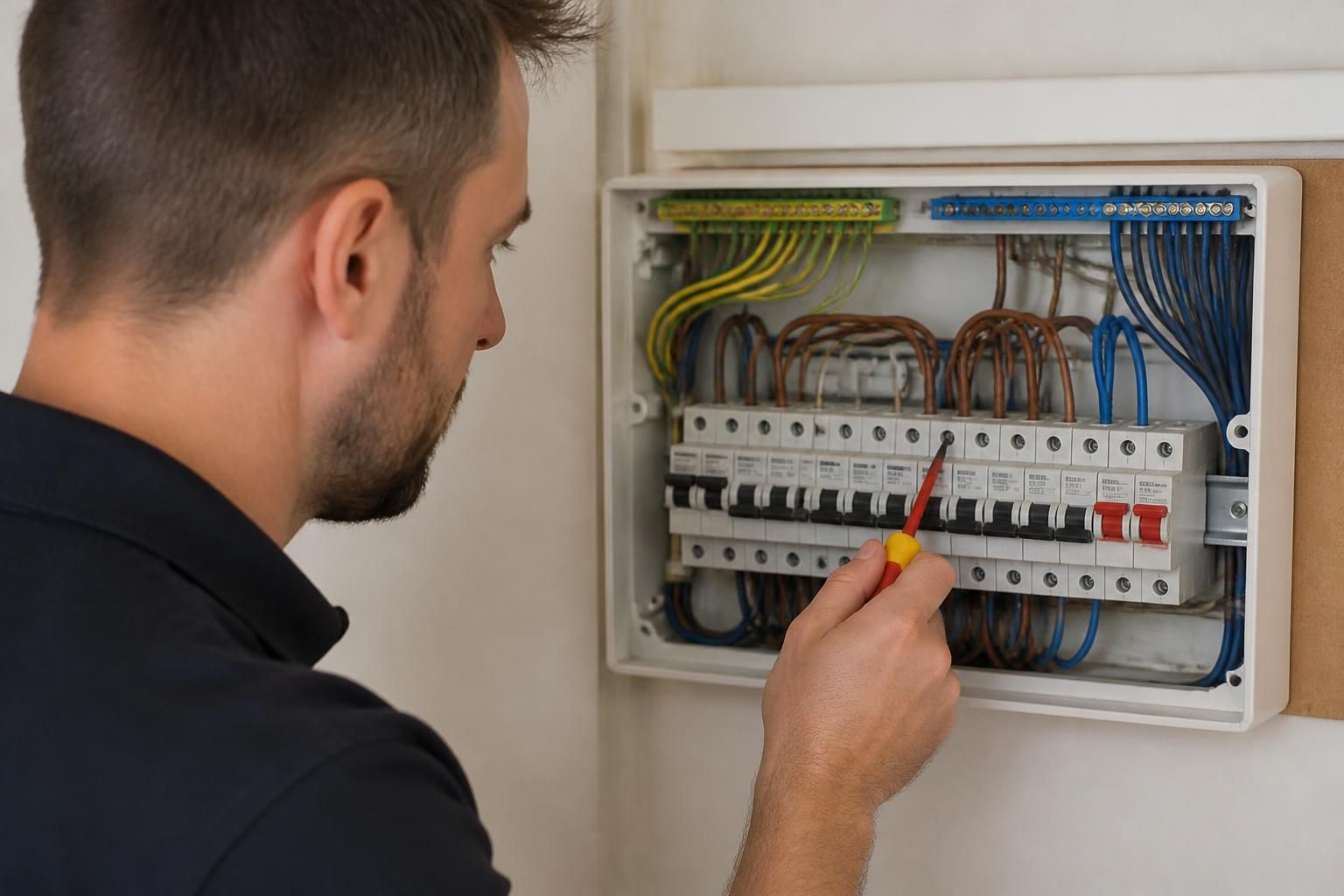
RJW Electrical
When should a domestic consumer unit be replaced?
A domestic consumer unit should be replaced when it is obsolete, damaged, unsuitable for the installation or unable to provide the level of protection required by current electrical standards. Replacement may also be recommended after an inspection identifies defects, repeated circuit tripping, overheating, or a need for additional circuits and modern protective devices.
A domestic consumer unit should be replaced when its construction, condition, capacity or protective equipment is no longer suitable for the home’s electrical installation. The decision should be based on inspection and testing rather than age alone: an older unit is not automatically unsafe, while a relatively modern unit may still need replacement if it has been damaged, poorly installed or cannot safely support changes to the installation.
Replacement is commonly considered in the following circumstances:
- Obsolete protective equipment: Older fuseboards may use rewireable fuses or provide limited protection against electric shock. A modern replacement can incorporate suitable RCD or RCBO protection, where appropriate for the installation, to reduce risk from certain fault conditions.
- Physical deterioration: Cracks, missing covers, corrosion, water contamination, loose components, discolouration or scorch marks should be assessed by a qualified electrician. A burning smell, buzzing or visible arcing should be treated as a safety concern, and the affected equipment should not be disturbed by an unqualified person.
- Unsuitable capacity: A unit may no longer have enough usable ways for planned additions such as an extension, electric heating, an outbuilding supply, a cooker circuit or an electric vehicle charge point. Adding equipment without considering spare capacity, cable sizes and protective devices can create an unsafe installation.
- Unsatisfactory inspection results: An electrical inspection may identify defects relating to the consumer unit, its connections, earthing, bonding or the way circuits are protected. The inspection outcome should explain whether replacement is essential, recommended or simply an improvement that can be considered alongside other work.
- Alterations to the property: Major refurbishment, an extension or changes to how rooms are used can expose limitations in an existing consumer unit. Replacement may form part of bringing the distribution system into a suitable condition before new circuits are installed.
- Inadequate isolation or identification: Every circuit should be capable of being isolated and identified clearly. If the arrangement makes safe maintenance difficult, or circuit labelling is inaccurate, corrective work may be required. This does not always mean the whole unit must be replaced, but it is a reason for professional assessment.
A consumer unit replacement is not the same as replacing the electricity meter. The meter is associated with the energy supplier, whereas the consumer unit distributes electricity around the property and houses the circuit protection. Work on the consumer unit also needs to take account of the earthing arrangement, main bonding, cable condition and the suitability of every connected circuit. Replacing the enclosure without addressing defects elsewhere will not resolve the underlying risk.
Current wiring requirements are relevant, but they do not mean that every existing installation must automatically be upgraded whenever standards change. Electrical standards develop over time, and an assessment considers the condition and characteristics of the actual installation. Where work is carried out, the replacement must be designed and tested in accordance with the requirements applicable to that work, including suitable protection, correct conductor connections and effective earthing.
The work normally involves isolating the supply, checking the existing installation, selecting a suitably rated consumer unit, transferring or modifying circuit conductors, installing the required protective devices, and carrying out inspection and testing. Testing should cover the consumer unit and the connected circuits, not just whether power has been restored. The electrician should provide the appropriate electrical installation documentation and explain any limitations or further remedial work identified.
In England and Wales, replacing a consumer unit in a dwelling is generally work that falls within the scope of Building Regulations requirements for domestic electrical installations. Using an appropriately qualified and competent electrician helps ensure that the work is tested, documented and notified through the applicable process. A certificate confirms what work was completed and records the test results; it does not replace the need to correct defects that were outside the replacement itself.
Do not remove the cover, tighten connections or attempt to replace fuses inside a consumer unit yourself. If there is visible damage, a burning odour, unusual noise or evidence of water ingress, avoid using the affected equipment where it is safe to do so and arrange an assessment. An electrician can determine whether the appropriate solution is a complete replacement, repair, improved labelling, additional protection or remedial work to another part of the installation.
RJW Electrical can assess domestic consumer units as part of electrical installation work, inspections and safety investigations. The assessment establishes whether replacement is justified, what protective arrangement is appropriate and whether other parts of the installation need attention before the work is completed.
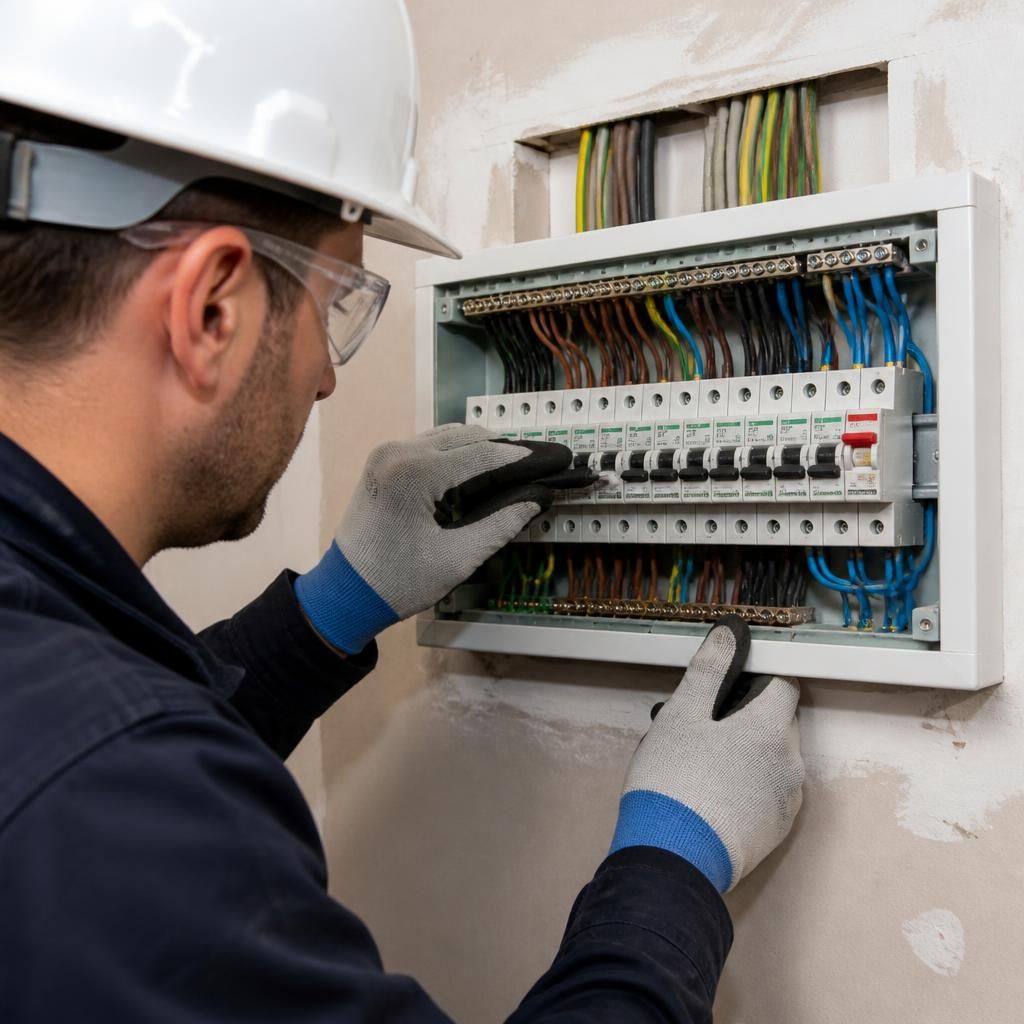
A consumer unit replacement should be planned as work on the whole distribution point, rather than treated as a simple swap of one box for another. The supply will normally need to be isolated, so essential equipment such as alarms, heating controls, refrigeration and computers should be considered before the work begins.
- Ensure the electrician can access the consumer unit and all relevant circuits.
- Keep details of any equipment that must be safely shut down or restarted.
- Ask for the completed circuit schedule and test documentation after the work.
- Check whether any circuits cannot be fully tested or require separate remedial work.
These practical checks help distinguish a properly assessed replacement from a cosmetic upgrade and provide a clearer record of the installation for future maintenance or alterations.
Arrange a domestic consumer unit assessment
If you are unsure whether your domestic consumer unit needs replacing, arrange an assessment with RJW Electrical. The inspection can identify whether replacement, remedial work or no immediate action is appropriate.