
RJW Electrical
When is rewiring a house necessary?
Rewiring a house is necessary when the existing electrical installation is unsafe, seriously deteriorated or no longer suitable for the demands of the property. Warning signs can include damaged wiring, repeated electrical faults, outdated accessories and an installation that fails inspection or testing; a qualified electrician should assess the condition before recommending a full or partial rewire.
The decision to rewire a house should be based on the condition, safety and capacity of the electrical installation rather than its age alone. A qualified electrician may recommend a full rewire where defects are widespread, the installation lacks essential protective measures, or upgrading individual circuits would not provide a reliable and compliant result.
Age is an indicator, not proof of failure. Older installations deserve closer examination because wiring methods, protective devices and earthing arrangements may no longer meet current requirements. However, an older system is not automatically unsafe, and a relatively modern installation can still contain defects caused by damage, unsuitable alterations, overloading or poor workmanship. Testing and inspection are needed before deciding whether rewiring is necessary.
Problems with earthing and bonding can make rewiring necessary. Earthing provides a path for fault current so protective devices can disconnect the supply, while bonding helps reduce dangerous differences in voltage between exposed metalwork. If these arrangements are absent, inadequate or defective, the installation may require substantial remedial work. The electrician should also assess the condition of the incoming supply and the suitability of the consumer unit before work is planned.
A failed inspection does not always mean the whole house must be rewired. An electrical installation condition report identifies defects using observation and testing. Some findings can be corrected through local repairs, replacement accessories or improvements to a particular circuit. A full rewire becomes more likely when defects are present throughout the property, circuits cannot be safely separated, or the existing wiring cannot be tested or repaired without extensive disturbance.
Rewiring may be appropriate during major renovation. Removing walls, ceilings or floors can make access to cables easier and may avoid paying for separate work later. Extensions, loft conversions, changes to room layouts and the addition of high-demand equipment can also expose limitations in the existing installation. The design should account for the intended use of each room, the number and position of sockets, lighting controls, fixed appliances and any future electrical requirements.
Capacity matters as well as safety. An installation may need significant alteration if it has too few circuits for the way the property is used, relies on extension leads as a permanent solution, or cannot accommodate planned equipment safely. High-load appliances should be assessed individually rather than connected to an unsuitable general-purpose circuit. The electrician can determine whether new circuits, a consumer unit upgrade, or more extensive rewiring is the appropriate solution.
Signs that justify an assessment include:
- cracked, scorched or loose socket outlets, switches or connection points;
- fuses or circuit-breakers operating repeatedly without an identified cause;
- visible cables with damaged insulation or unsuitable exposed connections;
- tingling from metal electrical equipment or unexplained burning smells;
- an absence of suitable residual current protection where it is required;
- evidence of unrecorded alterations, including DIY wiring or mixed wiring methods; and
- an inspection report that records potentially dangerous or urgent defects.
These signs should not be used to diagnose the installation without testing. Damage, overheating or a recurring trip should be treated as a safety concern, and the affected equipment or circuit should not be used until it has been assessed by a competent electrician.
What a domestic rewire involves
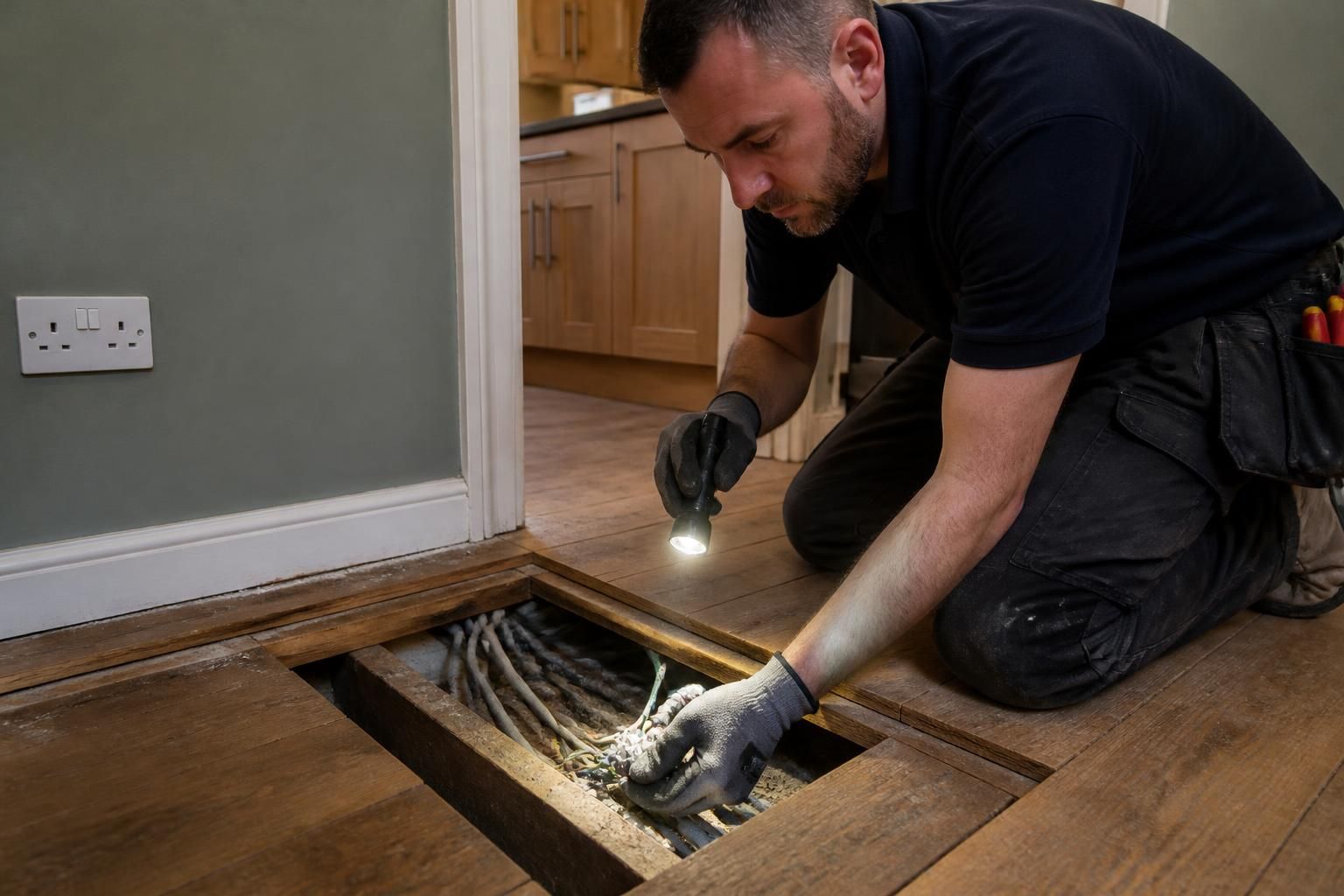
A rewire normally involves designing the circuit arrangement, isolating the supply, removing or disconnecting unsuitable wiring, installing new cables and accessories, and testing each circuit. The work may require access beneath floors, within loft spaces and behind walls. Chasing walls and lifting floor coverings can create making-good requirements, so the electrician should explain the expected access and the responsibilities for plastering, decorating and flooring before work begins.
The installation should be tested as work progresses and on completion. The owner should receive the relevant electrical installation certification and information about any limitations or remaining recommendations. Where the work falls within the applicable building regulations requirements, the necessary notification or certification arrangements should also be addressed. Keeping these documents is useful for future inspections, alterations, property transactions and maintenance.
A partial rewire can be suitable where only defined circuits are defective and the existing installation can be safely integrated with the new work. It is not suitable simply to avoid replacing wiring that cannot be verified or that presents a wider risk. The proposed scope should identify which circuits are being replaced, which are retained, how they will be tested and whether the retained parts meet the required standard.
Before arranging an assessment, provide details of any previous inspection reports, recurring faults, planned building work and equipment you expect to install. Information about access restrictions and areas that have already been refurbished can also help establish a practical approach. RJW Electrical can assess domestic installations and explain whether the evidence supports a full rewire, a partial rewire or targeted remedial work across the Midlands, including Sutton Coldfield, Streetly, Walmley, Erdington, Lichfield, Aldridge, Walsall and Shenstone.
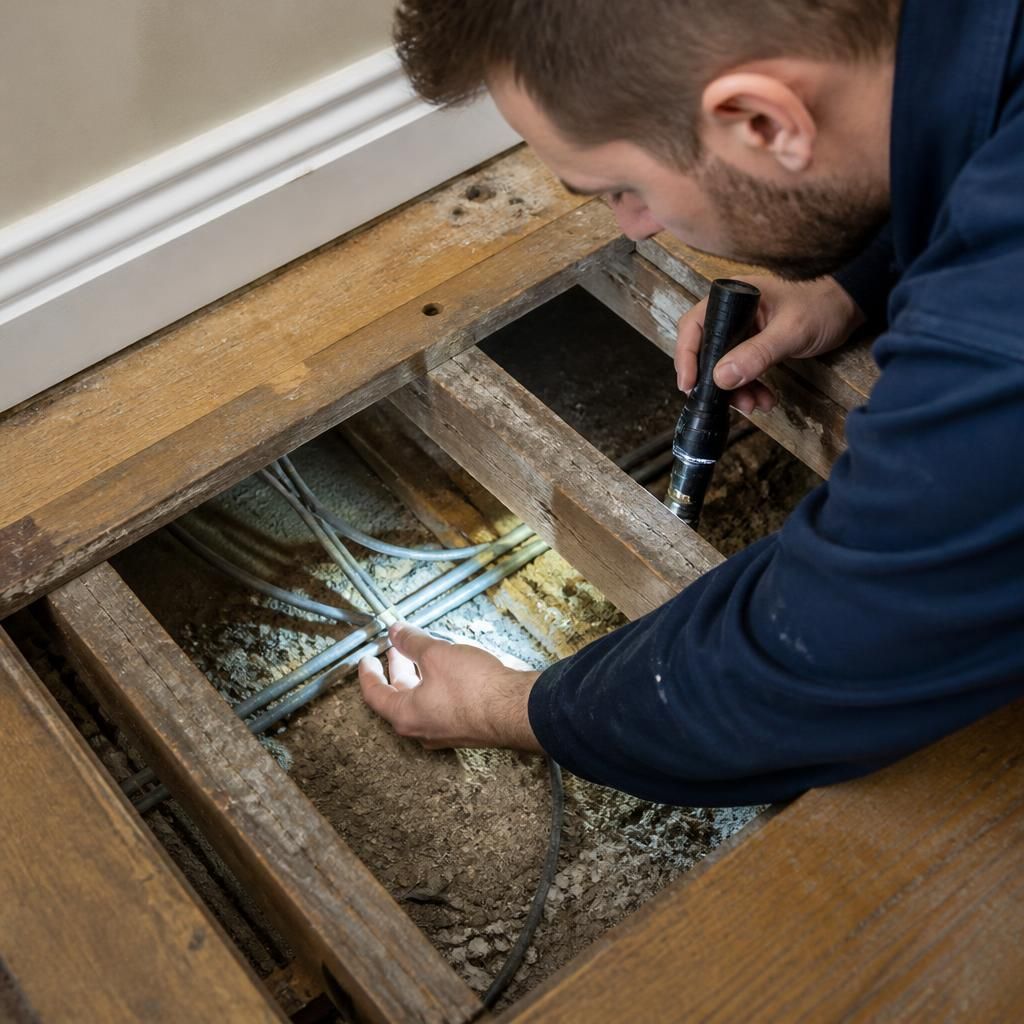
Missing electrical records do not, by themselves, prove that a house needs rewiring. However, if there is no evidence of previous installation work, alterations or inspection results, the condition of the wiring cannot be assumed. A qualified electrician can inspect the installation, identify how the circuits have been arranged and carry out the tests needed to establish whether the existing work is safe to retain.
This is particularly important where a property has changed ownership, been extended or had rooms refurbished. Unrecorded changes may leave circuits incorrectly connected or protective measures incomplete. The decision should be based on the condition and test results of the installation, rather than on the absence of paperwork alone.
Find out whether your house needs rewiring
If you are unsure whether your house needs a full rewire, arrange an assessment with RJW Electrical to establish whether rewiring, partial replacement or targeted remedial work is appropriate. Provide any previous inspection reports and details of recurring faults or planned alterations so the electrician can advise on the next step.