
RJW Electrical
What information should I provide before arranging domestic electrical work?
Before arranging domestic electrical work, provide the property address, its type and age, details of the work required, and any relevant plans or previous electrical paperwork. Also mention symptoms such as faults, tripping or damage, and explain any access restrictions or safety concerns so the work can be assessed accurately.
Beyond the basic property and job description, provide information about the intended result, the equipment involved, the areas affected and any practical constraints. This helps an electrician judge whether the work can be quoted from the available information or whether an inspection is needed before a firm price can be given.
Explain what you want the completed installation to do. For example, say whether you need additional sockets, replacement light fittings, improved outdoor power, a new cooker connection or changes to an existing circuit. Include the number of points or fittings where known, their approximate positions and whether they are for general use or a specific appliance. If the work forms part of a renovation, describe the planned layout so that cable routes and connection points can be considered properly.
Identify appliances and electrical loads that may affect the design. Give the make and model only where it is relevant to the electrical requirements, and provide the rated power or current shown on the appliance label if available. This is particularly useful for cookers, showers, heating equipment, hot tubs, workshops, home offices, air-conditioning equipment, battery storage and vehicle charging. Existing and proposed appliances may need to be considered together rather than as separate jobs.
Photographs can provide useful initial context. Clear images of the relevant rooms, existing switches and sockets, light fittings, outdoor areas and the consumer unit may help show the scale of the work. Photograph labels and warning notices where they can be read, but do not remove covers or expose wiring to obtain a better image. Photos support an initial assessment; they cannot always reveal cable routes, connections concealed behind walls or the condition of equipment that requires testing.
Describe the building work around the electrical work. Say whether walls, ceilings, floors, cupboards or fitted units are being removed, opened or redecorated. Mention planned extensions, loft conversions, kitchen or bathroom alterations and any building materials that could affect access for cables. It is also useful to explain whether you want surface-mounted or concealed wiring, and whether the finish needs to match existing accessories. These choices can affect labour, materials and the extent of making good.
Explain how the property is used. Information about children, tenants, home working, business equipment, medical or mobility-related electrical needs, pets, or areas that must remain operational can affect how the work is planned. For rental properties, confirm who is authorising the work and whether the landlord or managing agent has particular requirements. For a property with shared or managed parts, establish whether permission from a freeholder, management company or other responsible party is needed before work is arranged.
State any relevant legal or project requirements. If the work is connected with a sale, letting, insurance matter, renovation or building project, explain this at the outset. Ask which inspection, test result or certificate will be appropriate when the work is complete. Some domestic electrical work may also interact with Building Regulations or other permissions, depending on its nature and location. The electrician can explain what applies, but the responsible person should not assume that an electrical certificate automatically covers every separate building-control requirement.
It is sensible to ask how the quotation will be prepared. Clarify whether it will identify labour, materials, testing, certification, removal of old equipment and any making-good separately, and ask which assumptions or exclusions apply. If the electrician cannot confirm the condition of concealed wiring or existing circuits without testing, the quotation may need to distinguish between the known work and possible remedial work. Agree that additional work will be discussed before it proceeds.
When comparing quotations, check that the contractor is suitably qualified and insured, follows the current wiring regulations and explains what documentation will be supplied. RJW Electrical Ltd is a NAPIT member and part of the TrustMark scheme and Electrical Safety Register. It also provides a no call out fee quote, allowing the initial information to be considered without treating a call-out charge as part of that quotation.
Providing accurate, specific information does not replace an inspection where testing or direct examination is necessary. It does, however, give the electrician a clearer basis for assessing the installation, identifying the right questions and explaining the likely scope before domestic electrical work is arranged.
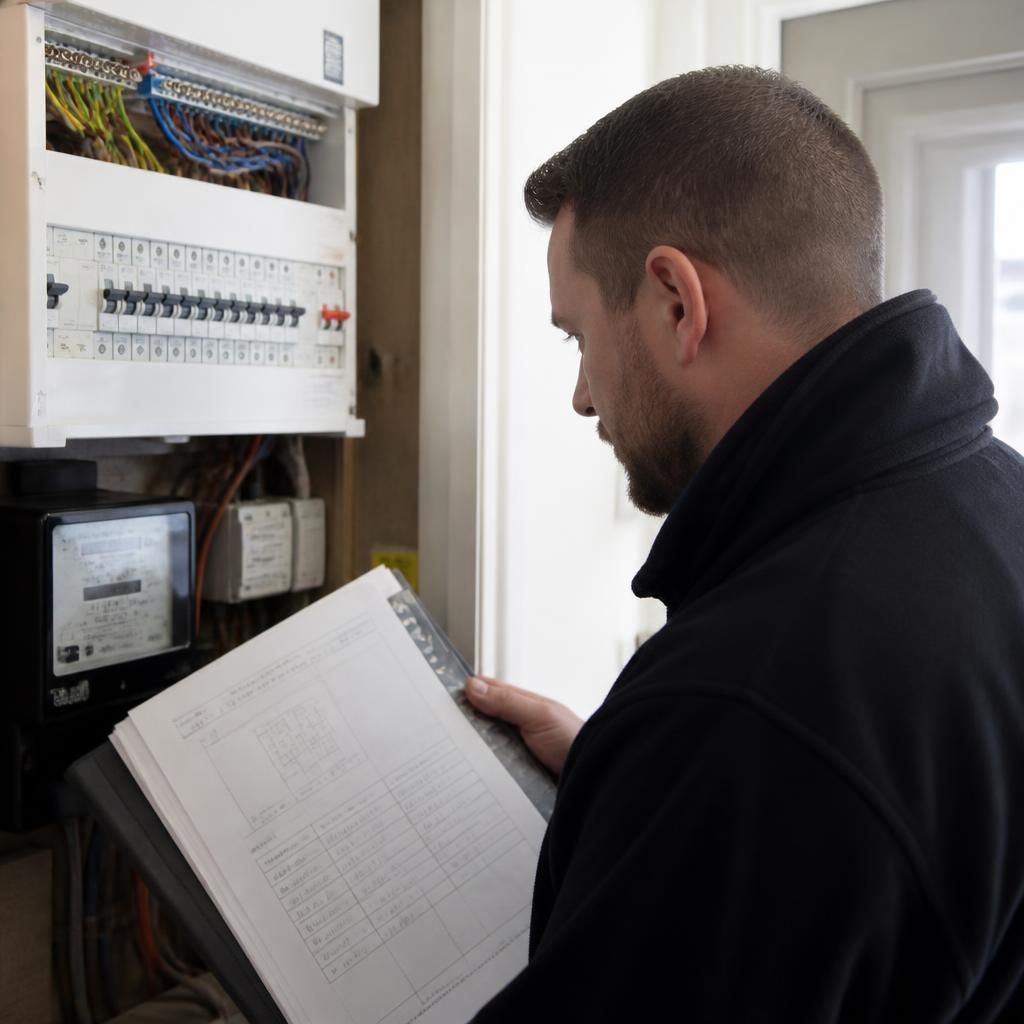
Separate any immediate safety concern from the ordinary description of the work. If there is a burning smell, smoke, unusual heat, arcing, water near electrical equipment or exposed conductors, explain exactly what was observed, where it occurred and whether it is still present. Also state whether the issue followed a leak, impact, alteration or other event, and whether any equipment or circuit has already been switched off.
Do not remove covers or touch damaged wiring to investigate. If it is safe to do so, keep people away from the affected area and avoid using the equipment until it has been assessed. This information helps distinguish a routine planned alteration from a request where the condition of the installation needs to be considered before a quotation is prepared.
Discuss your domestic electrical work requirements
Contact RJW Electrical Ltd to discuss your requirements and provide the information needed to assess the proposed domestic electrical work. Where the installation cannot be evaluated from the initial details, an inspection can establish the appropriate scope.